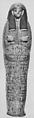
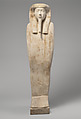
Mummy Board used by Itamun, inscribed for Nesiamun
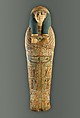
The layout and decoration of the mummy board is similar to that of the inner and outer coffins, with the deceased in a tripartite wig with floral fillet, elegant features and large ears, and hands fisted over the chest. A winged figure of Nut again divides the upper and lower parts of the lid. In this case, the space above contains a djed pillar flanked by "Abydos fetishes" (like the djed pillar symbols of the god Osiris); the lower part is divided by bands of inscription into 10 symmetrical sections containing images of various deities. Like the inner coffin, this mummy board was inscribed for the priest and copper engraver of the temple, Nesiamun.
Artwork Details
- Title: Mummy Board used by Itamun, inscribed for Nesiamun
- Period: Third Intermediate Period
- Dynasty: early Dynasty 21
- Date: ca. 1000–945 BCE
- Geography: From Egypt, Upper Egypt, Thebes, Unfinished Temple ("Seankhkare") Valley, Pit Tomb MMA 1008/1016 (Mond 8), MMA excavations, 1920–21
- Medium: Wood, paste, paint
- Dimensions: L. 167 cm (65 3/4 in)
- Credit Line: Rogers Fund, 1926
- Object Number: 26.3.3
- Curatorial Department: Egyptian Art
More Artwork
Research Resources
The Met provides unparalleled resources for research and welcomes an international community of students and scholars. The Met's Open Access API is where creators and researchers can connect to the The Met collection. Open Access data and public domain images are available for unrestricted commercial and noncommercial use without permission or fee.
To request images under copyright and other restrictions, please use this Image Request form.
Feedback
We continue to research and examine historical and cultural context for objects in The Met collection. If you have comments or questions about this object record, please contact us using the form below. The Museum looks forward to receiving your comments.
Content Notice
The Metropolitan Museum of Art presents over 5,000 years of art from around the world, and our online collection reflects ongoing work conducted over the course of our more than 150-year history. You may encounter objects or images that may be inappropriate for some viewers or information that may be outdated.