Audioguía
613. Raphael as Architect (Conclusion)
What was Raphael’s legacy?
ISABELLA ROSSELLINI (NARRATOR): Raphael frequently used architecture as a dramatic element in his paintings. But he also designed actual buildings. This aspect of his career really took off when he became chief architect of the new Saint Peter’s Basilica. It was a prestigious role—and one that he inherited from a mentor, the architect Bramante.
CARMEN BAMBACH: And what the two architects share is a love for antiquity, the ancient monuments, the idea of trying to reconstruct ancient Rome.
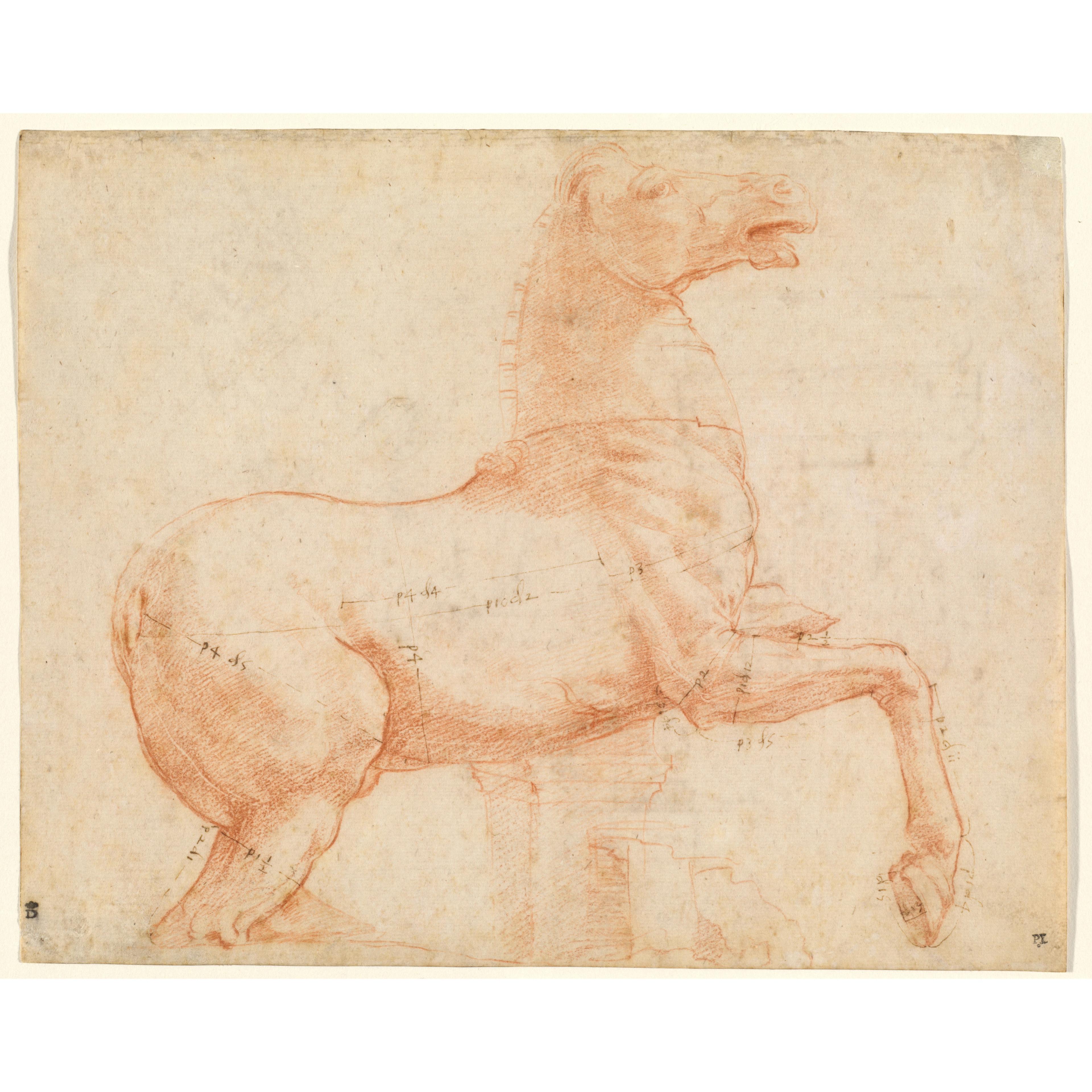
ROSSELLINI: Look for the red chalk study of a horse. It’s in the corner, to the left of the text panel.
This is one of Raphael’s famous studies after an ancient Roman statue. He hoped to recreate ancient monuments like this one in all their glory… and down to their exact proportions. So, he had an assistant climb all over the original to take measurements and then noted them here in pen and ink.
Many of Raphael’s architectural projects were completed after his death at the age of only thirty-seven.
Scholars today still speculate about the true cause of Raphael’s untimely demise. Some believe he was poisoned by rivals. But according to a biography written by Vasari in the sixteenth century:
BAMBACH: He was also somebody who was pretty sensual, loved his mistress, dies because he catches fever after having partied too long…
ROSSELLINI: Either way, in spite of his early death, Raphael’s fame and influence have lived on.
BAMBACH: He trains an amazing number of artists of the next generation. And when Raphael died, there were at least forty young artists who carried all these torches in a procession.
ROSSELLINI: He also taught many future generations of artists indirectly, through prints that reproduced his most famous designs.
BAMBACH: Because really until the 1850s, Raphael’s compositions, Raphael’s way of using color, Raphael’s figural types, all of these were key elements in the study and training of young artists in the academies.
ROSSELLINI: Think back on all you’ve seen in this exhibition. Can you help but marvel at just how much Raphael achieved?
BAMBACH: It’s one of those things that, I must say, it never ceases to amaze me. It’s just astonishing.