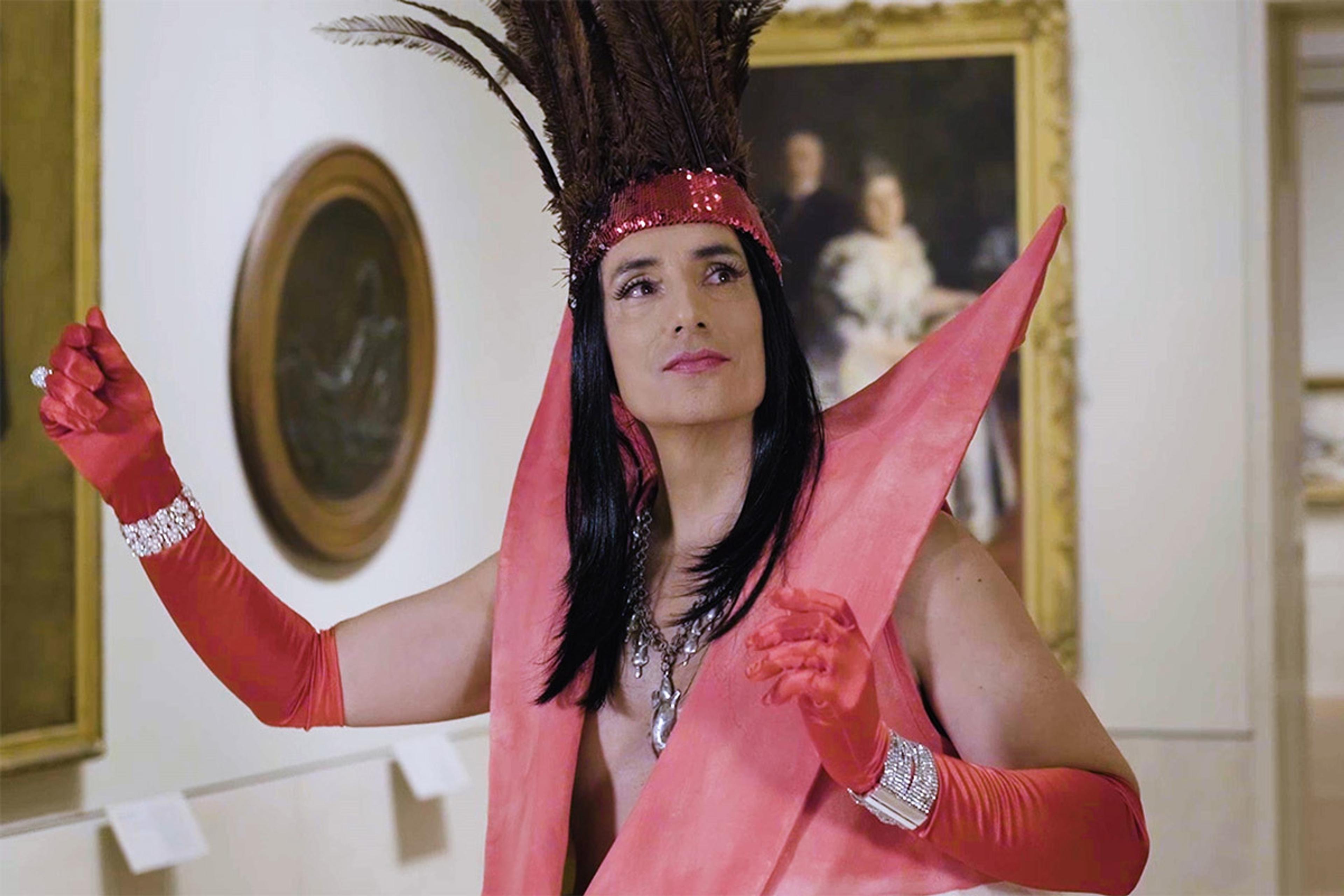
Listen to the interview
Kent Monkman discusses his alter ego, Miss Chief Eagle Testickle.
Transcript
My name’s Kent Monkman. I’m a Cree artist.
For many years I worked as an abstract painter. I realized that left my audience outside my work so I returned to a representational language of painting because it was able to communicate to such a broad base of people.
I became very interested in European painting when I realized that there was an opportunity to paint Indigenous experience and histories and kind of authorize them into this art history that pretty much neglected our perspective.
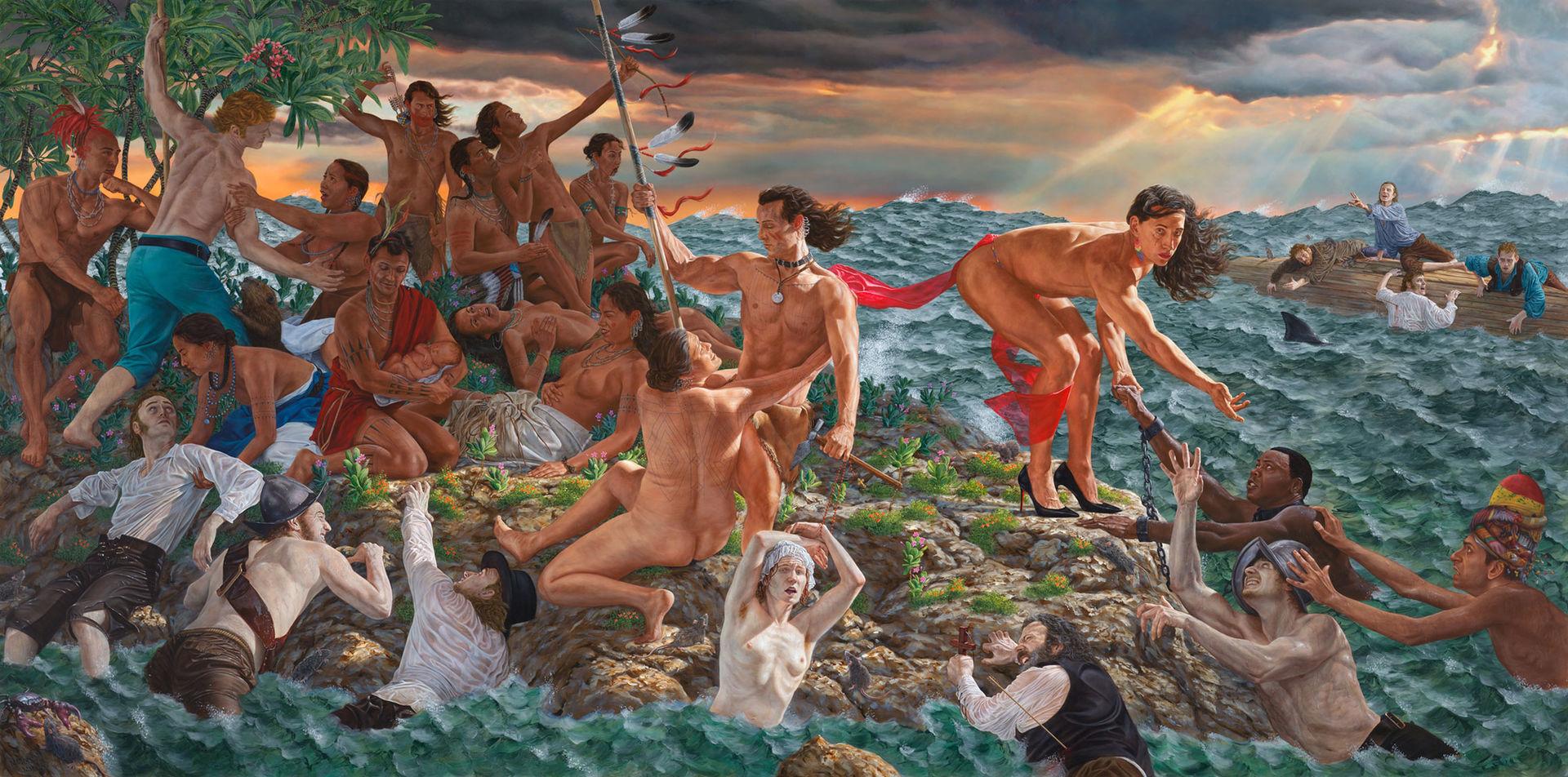
Kent Monkman (Cree, b. 1965). mistikôsiwak (Wooden Boat People): Welcoming the Newcomers, 2019. Acrylic on canvas, 132 x 264 in. (335.28 x 670.6 cm). The Metropolitan Museum of Art, New York, Purchase, Donald R. Sobey Foundation CAF Canada Project Gift, 2020. Image courtesy of the artist © Kent Monkman
I wanted a persona to really reflect our point of view at the time that the colonial policies were beginning. So the singing of the treaties, the beginning of the residential school system, the removal—the dispossession—of my own people from our own land.
So I created Miss Chief Eagle Testickle to offer an Indigenous perspective on the European settlers and to also present a very empowered point of view of Indigenous sexuality pre-contact. We had our own traditions of gender and sexuality that didn’t fit the male-female binary.
Miss Chief is a legendary being. She comes from the stars. There’s something very liberating about having an alter ego because it allows me to kind of act in a way different than I would normally act.
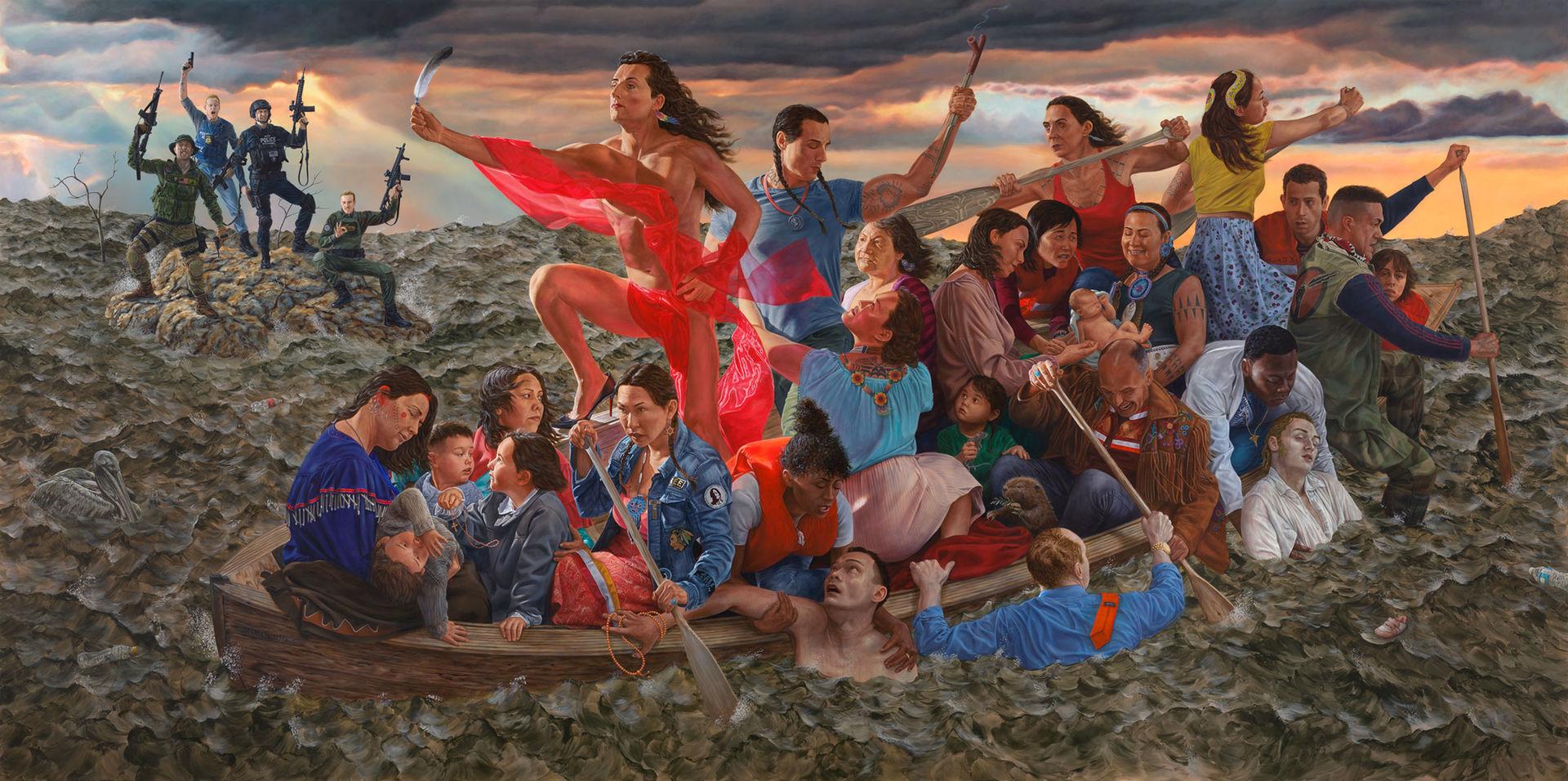
Kent Monkman (Cree, b. 1965). mistikôsiwak (Wooden Boat People): Resurgence of the People, 2019. Acrylic on canvas, 132 x 264 in. (335.28 x 670.6 cm). The Metropolitan Museum of Art, New York, Purchase, Donald R. Sobey Foundation CAF Canada Project Gift, 2020. Image courtesy of the artist © Kent Monkman
Miss Chief brings something to my practice that I didn’t have as just a painter. She allows me to be more playful in my work because she inhabits a sexiness and sassiness. She allows me to lighten how I treat sometimes very dark subject matter because I’m looking at effectively a genocide.
This 150th celebration at The Met is a real opportunity to think about the experience of Indigenous people. There have been a lot of dark chapters that have really impacted us.
A lot of museums are predominantly colonial institutions in that they’re inherently from this tradition of Western art-making. I think this is a turning point. The Met is encouraging shared perspectives on its own history and its own collection. You can decenter the conversation.
— As told to Will Fenstermaker


