“The Visitation, Two Figures” by Mary Szybist
The Visitation, Two Figures
Mary Szybist
From the soft, slow time of the uncarved tree,
feeling the sounds of the fruits
as they dropped. There was a sky
behind us into which grooms tossed the fruit
like coins, and the young sang obscene songs
as they caught them. Come, who wants to be fertile,
who thinks luck is something to catch.
As soon as I heard your voice, I knew.
I listened for the sound of my name
in your mouth, felt it ignite
the translucence of my body, felt you
could see what caught there—in my pretty belly,
in my ankles hereafter. Sun drifted
over your soft mouth colors.
Now we can be placed in any sky.
In the chapel’s low flickering, we’re side by side
like organ pipes, like strands
of hammered tinsel. Like two hovering bells, no—
Not bells. Only their hanging tongues.
And who are we now, that you should visit us.
Two women, palm to palm, stilled
in the moment before our gilding.
The last gold leaves on a linden tree
on which the wind is resting.
From the soft, slow time of the uncarved tree,
feeling the sounds of the fruits
as they dropped. There was a sky
behind us into which grooms tossed the fruit
like coins, and the young sang obscene songs
as they caught them. Come, who wants to be fertile,
who thinks luck is something to catch.
As soon as I heard your voice, I knew.
I listened for the sound of my name
in your mouth, felt it ignite
the translucence of my body, felt you
could see what caught there—in my pretty belly,
in my ankles hereafter. Sun drifted
over your soft mouth colors.
Now we can be placed in any sky.
In the chapel’s low flickering, we’re side by side
like organ pipes, like strands
of hammered tinsel. Like two hovering bells, no—
Not bells. Only their hanging tongues.
And who are we now, that you should visit us.
Two women, palm to palm, stilled
in the moment before our gilding.
The last gold leaves on a linden tree
on which the wind is resting.
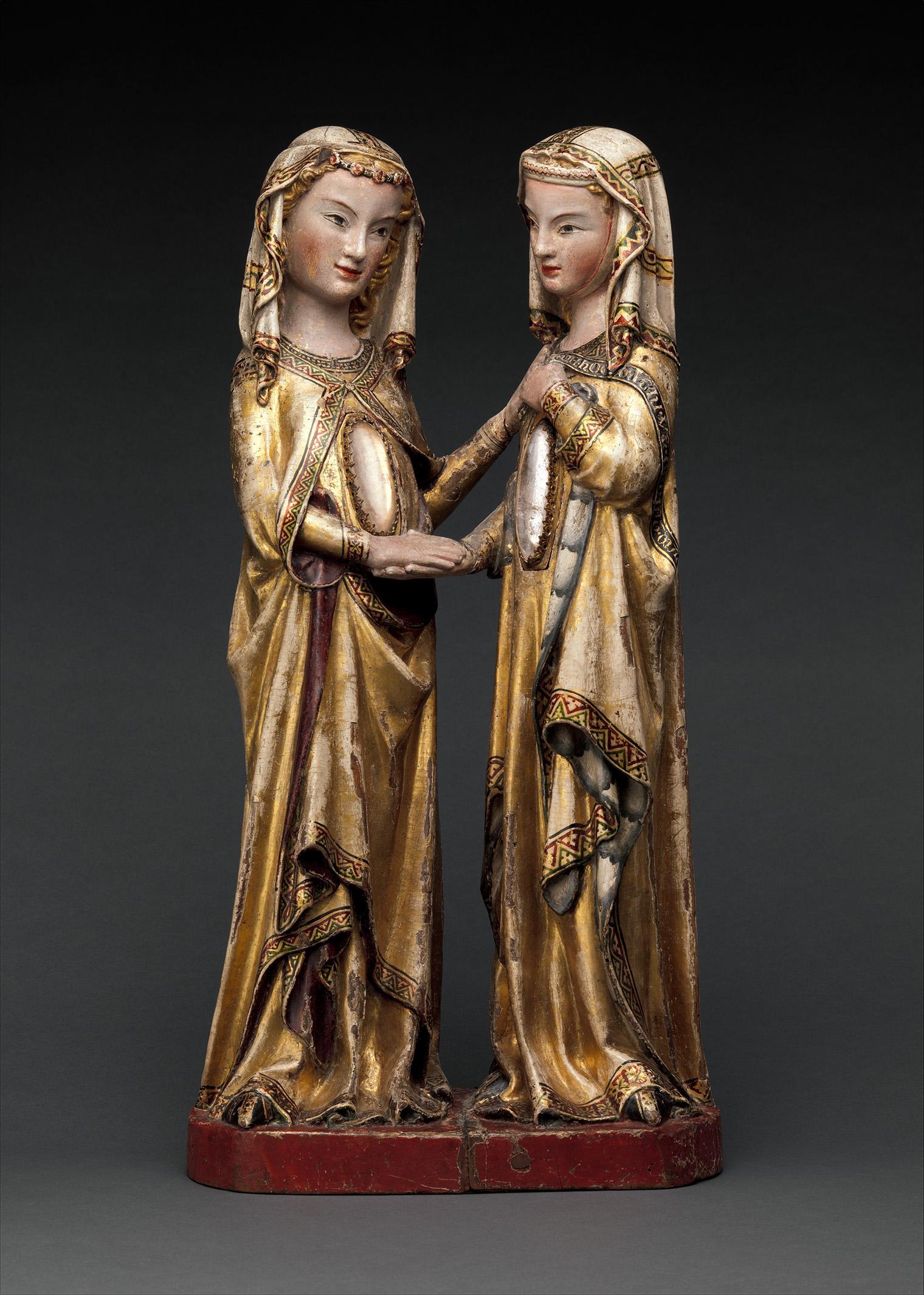
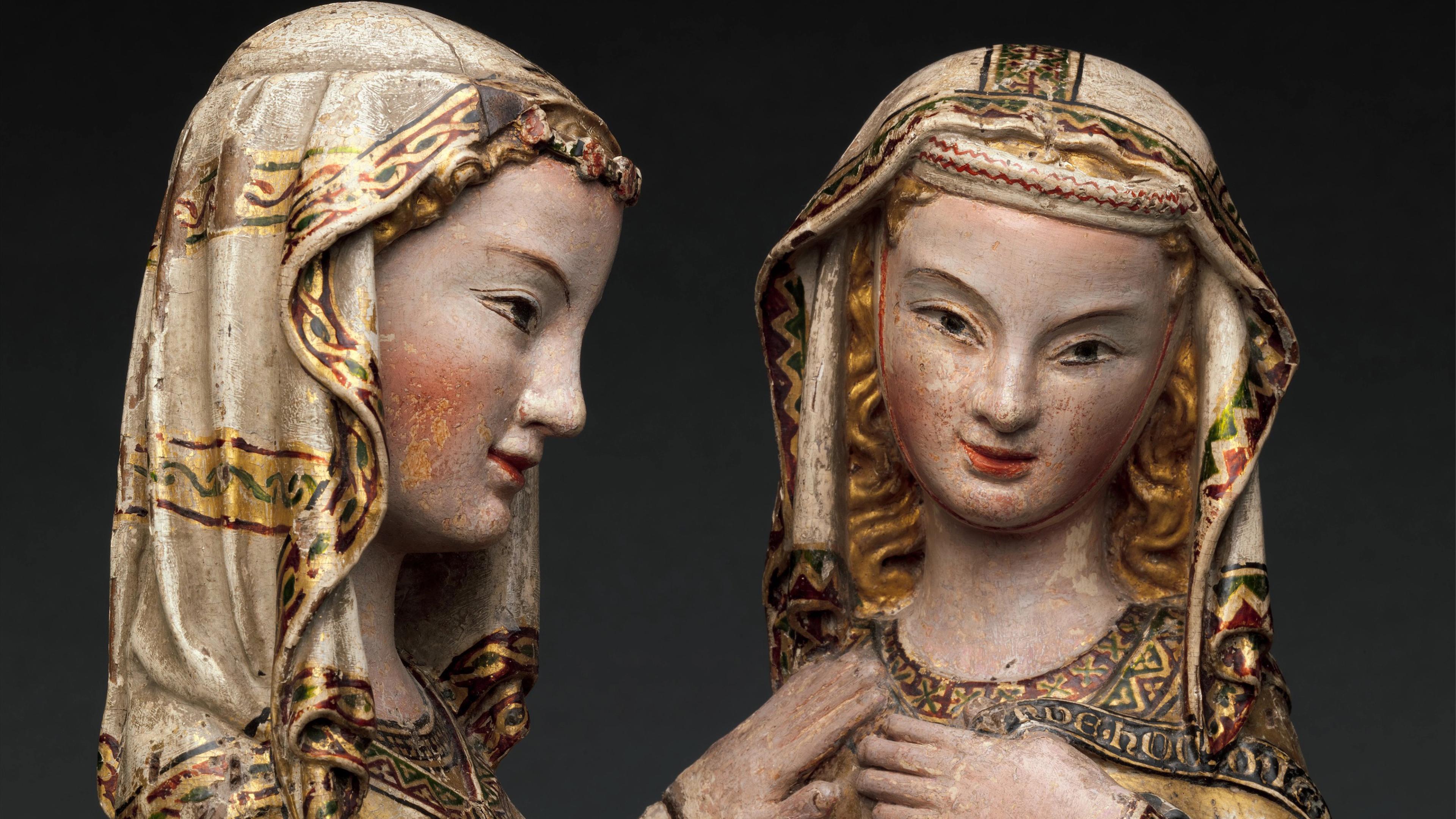
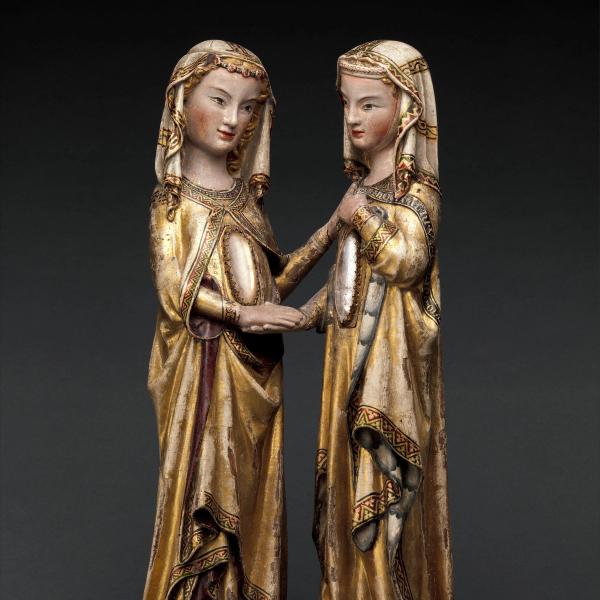
Attributed to Master Heinrich of Constance (German, active in Constance, ca. 1300). The Visitation, ca. 1310–20. Walnut, paint, gilding, rock-crystal cabochons inset in gilt-silver mounts, 23 1/4 × 11 7/8 × 7 1/4 in. (59.1 × 30.2 × 18.4 cm). The Metropolitan Museum of Art, New York, Gift of J. Pierpont Morgan, 1917 (17.190.724)
Author’s note
What is happening in this embrace? Quiet acquiescence to supernatural events that these women don’t understand? I think it is something beyond that.
In Luke’s gospel, Mary reveals to Elizabeth her almost ecstatic readiness to bring change into the world: Let those who have been laid low be lifted, let the proud be scattered in their inmost thoughts. It’s the only moment in the Bible where Mary’s voice really emerges, and it arrives not through prayer but through an intimate conversation with her cousin. This all makes intuitive sense to me. Sometimes I feel like the only time I even come close to knowing myself is when I’m engaged with the right listener.
I feel a kind of ache imagining what might have once been visible behind the crystals at the women’s bellies. I also appreciate that the obscuring effect emphasizes how hard it is to reveal one’s inner life to someone else. But the tenderness between these cousins doesn’t depend on transparency. It depends on the closeness of their bodies.
I wanted to stay close to the material embodiment of these figures as I wrote. They are carved from walnut. Perhaps their maker began to envision them at a wedding ceremony as the groom tossed walnuts to a receptive, celebratory crowd. Perhaps, flickering in the illumination of an altar’s low candlelight, these gilded figures once appeared more luminous than solid. I tried not to get distracted by a desire to see inside these figures. I wanted their bodies to guide me.
This poem is published in conjunction with the exhibition Spectrum of Desire: Love, Sex, and Gender in the Middle Ages, on view through March 29, 2026.