Upon entering The Met, some of the first artworks visitors may encounter are those of the Byzantine world. Surrounding the Museum’s Great Hall stairs, Galleries 300 to 303 display art of the Byzantine Empire, the eastern continuation of the Roman Empire centered in Constantinople (modern-day Istanbul) from the fourth through fifteenth centuries. The Met’s collection of Late Antique and Byzantine art is among the most comprehensive in the world, encompassing monumental sculpture, mosaics, icons, metalwork, jewelry, and luxury objects produced across the eastern Mediterranean, North Africa, and West Asia. Together, these galleries introduce visitors to a richly interconnected medieval world shaped by Christianity, imperial power, trade, and artistic exchange across Europe, Africa, and Asia.
The reinstallation of the Byzantine galleries, completed in April 2026 as part of The Met’s Great Hall Project, offered an opportunity not simply to update displays and exhibits but to reconsider how Byzantium is encountered within the Museum. Through new casework, expanded interpretive frameworks, and research-driven interventions, the reinstallation advances a vision of the Byzantine world that is at once more interconnected, more expansive in chronology, and more attuned to the perspectives of the communities for whom these traditions remain meaningful.
New casework: Reframing the collection
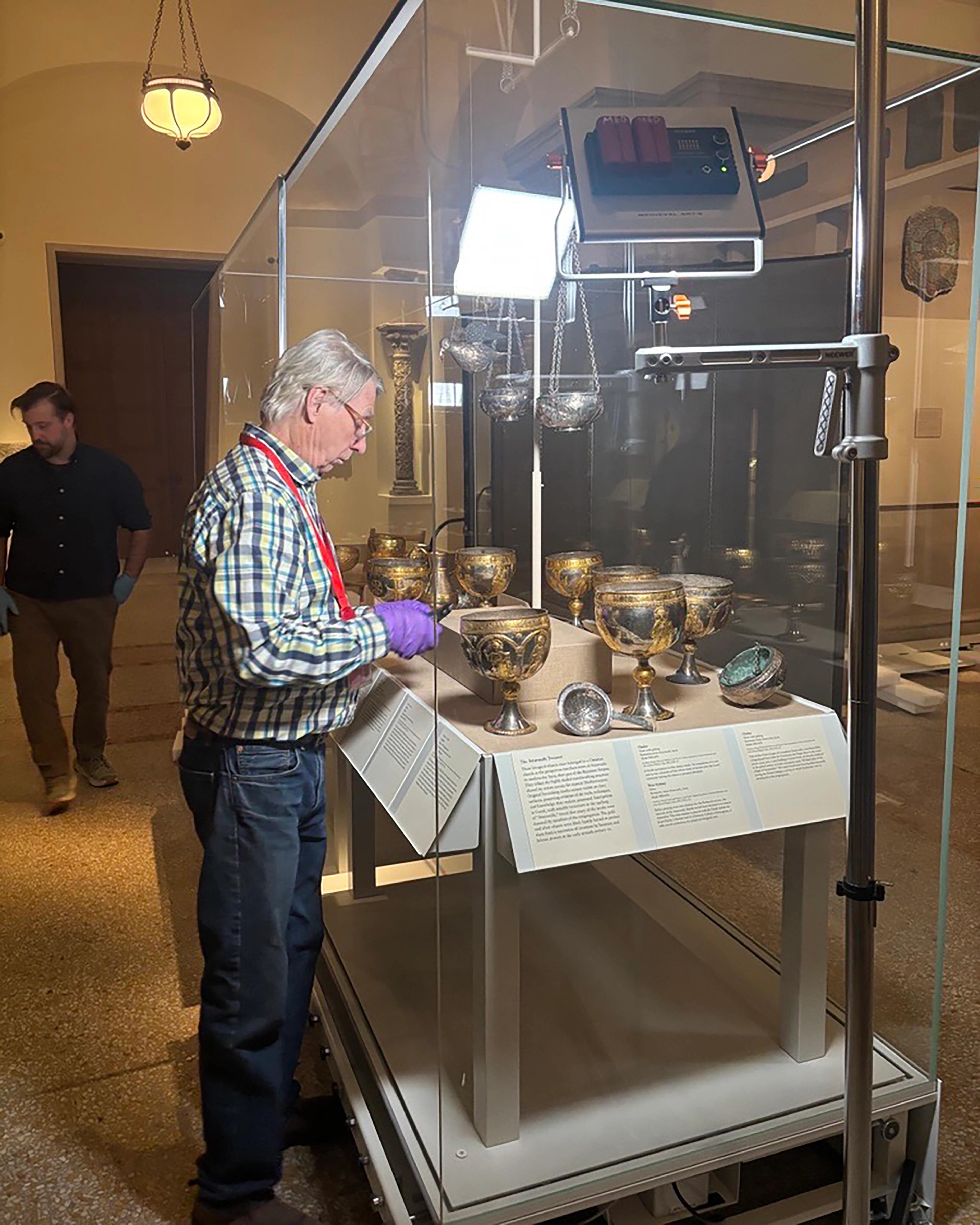
Managing Conservation Preparator Fred Sager installs the Attarouthi Treasure.
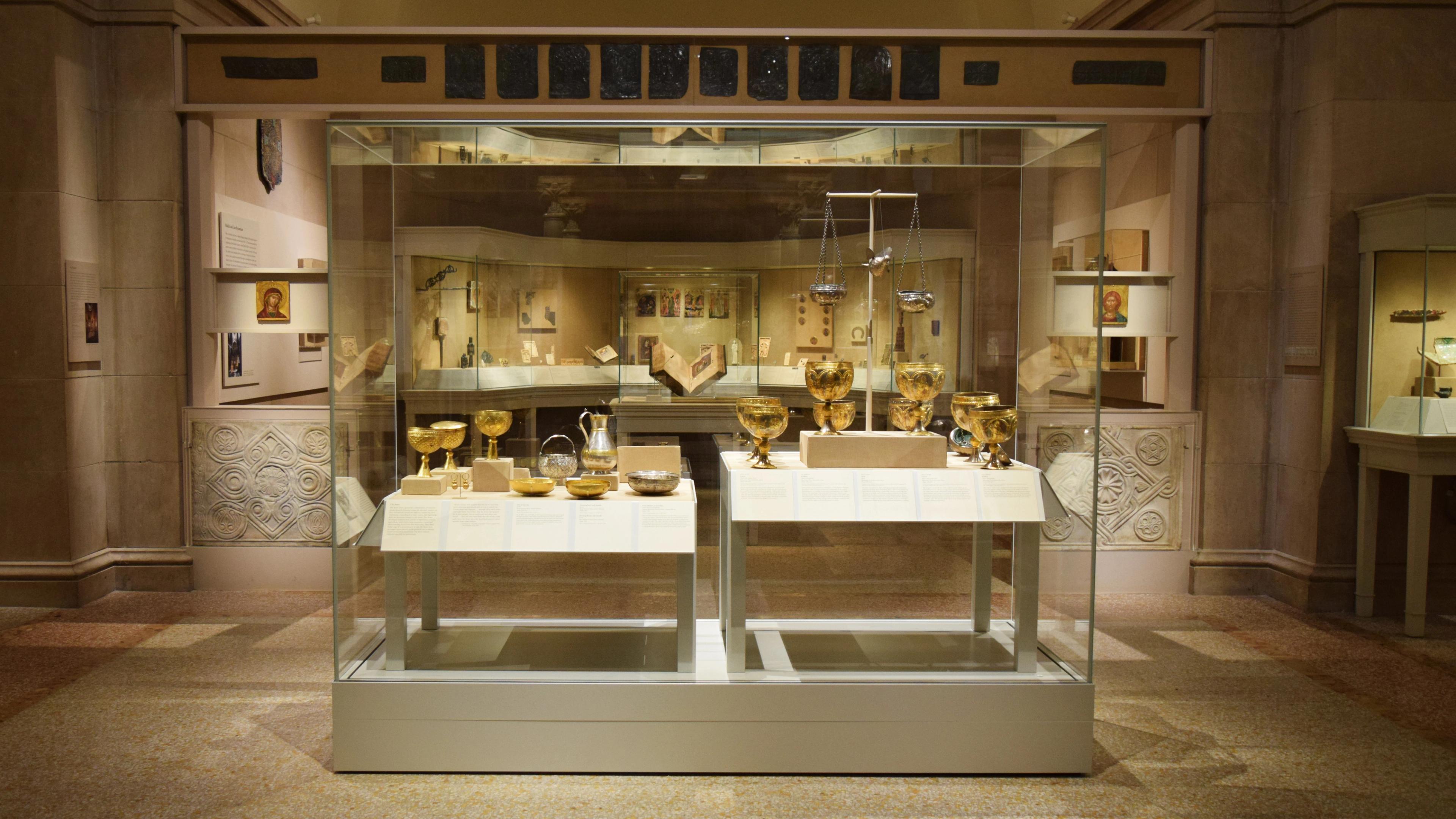
At the center of this transformation is the introduction of new casework for the Attarouthi and Avar Treasures. These gold and silver vessels—long recognized for their technical virtuosity—are now presented in an installation that allows for closer visual engagement and renewed comparative study. The reframing of Frankish material within similarly upgraded cases further encourages dialogue across regions, underscoring the permeability of artistic, technological, and cultural boundaries in the medieval Mediterranean. Rather than isolating these objects within discrete traditions, the installation invites viewers to consider them within a shared material and aesthetic landscape.
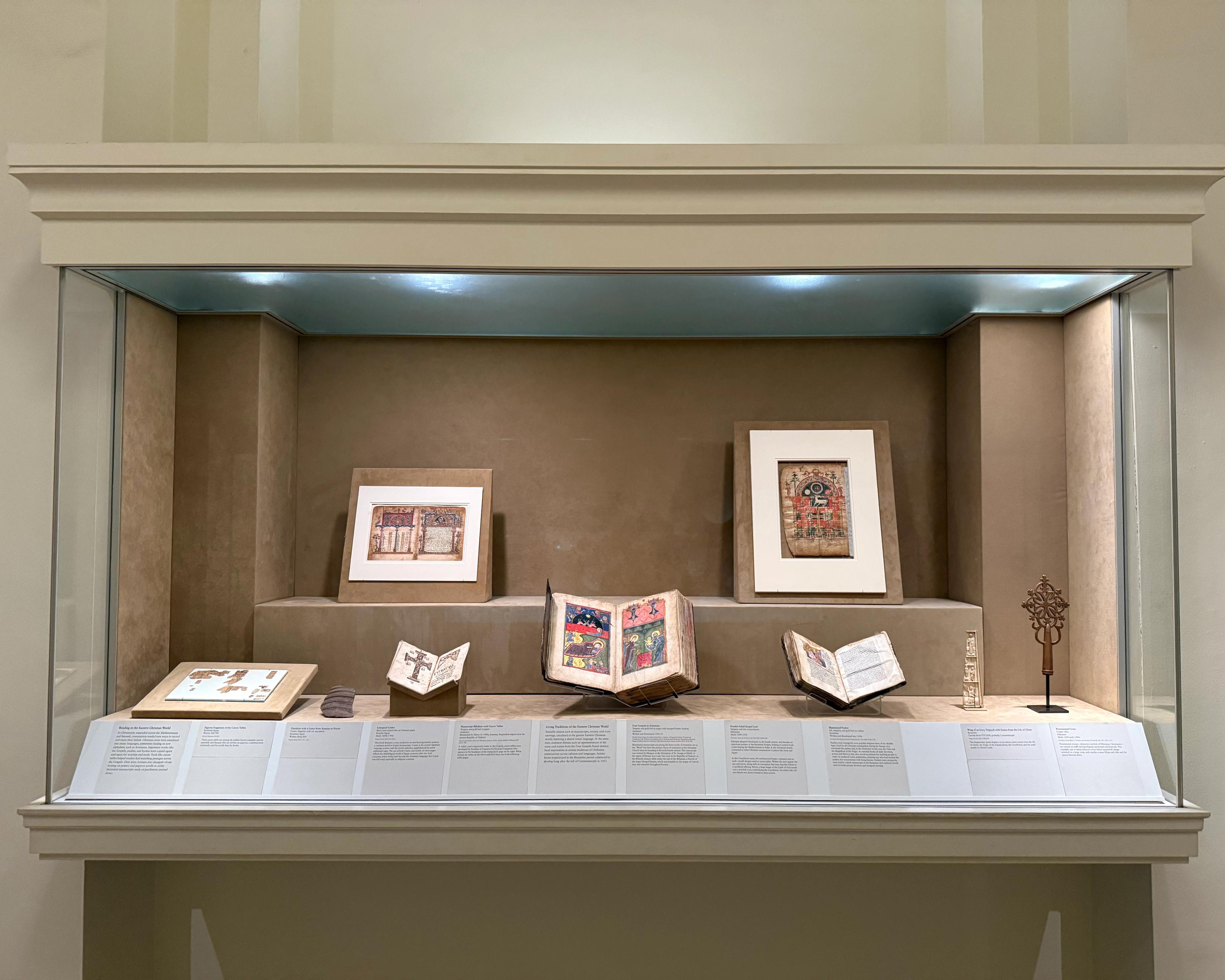
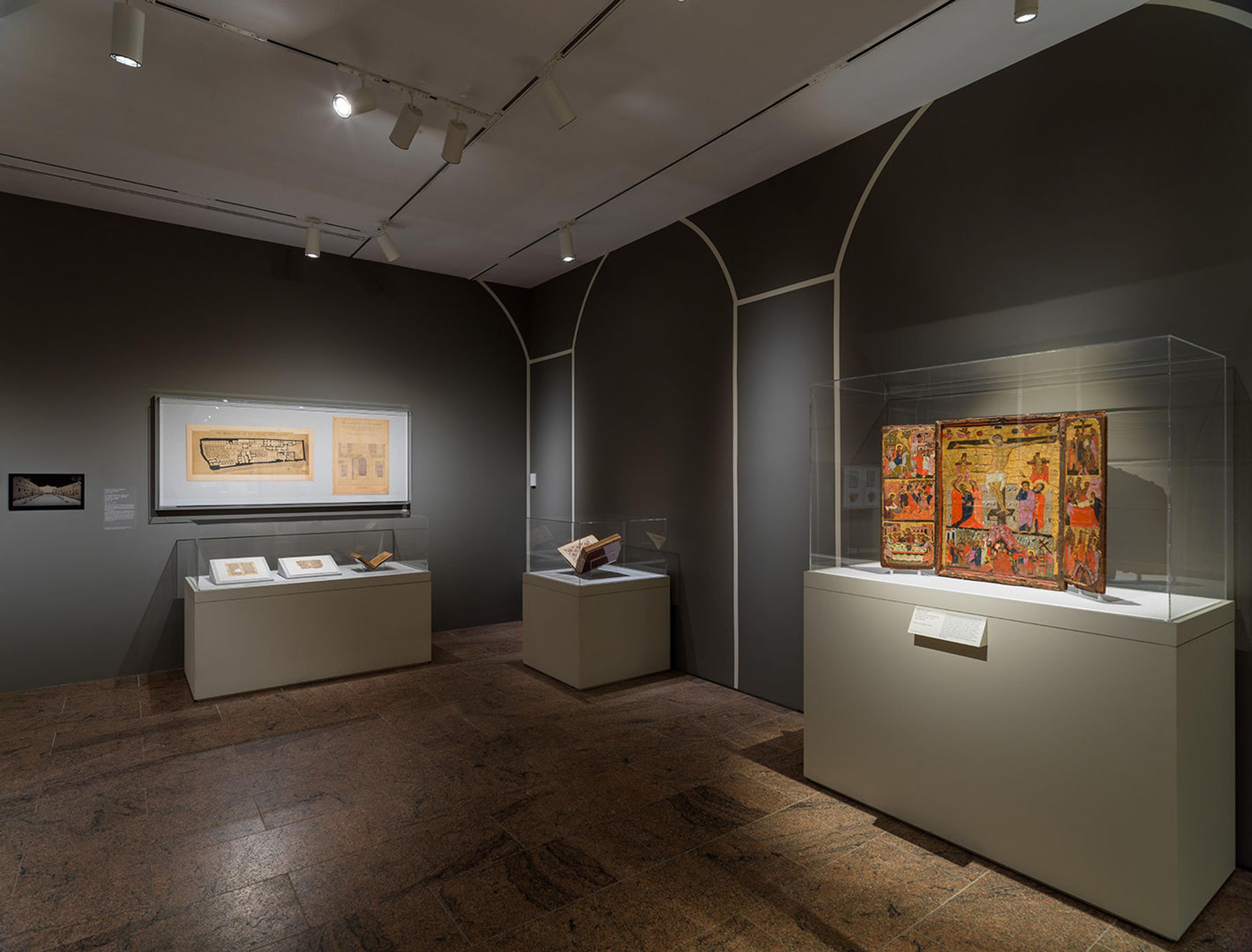
A new case in Gallery 300 displays east Christian art.
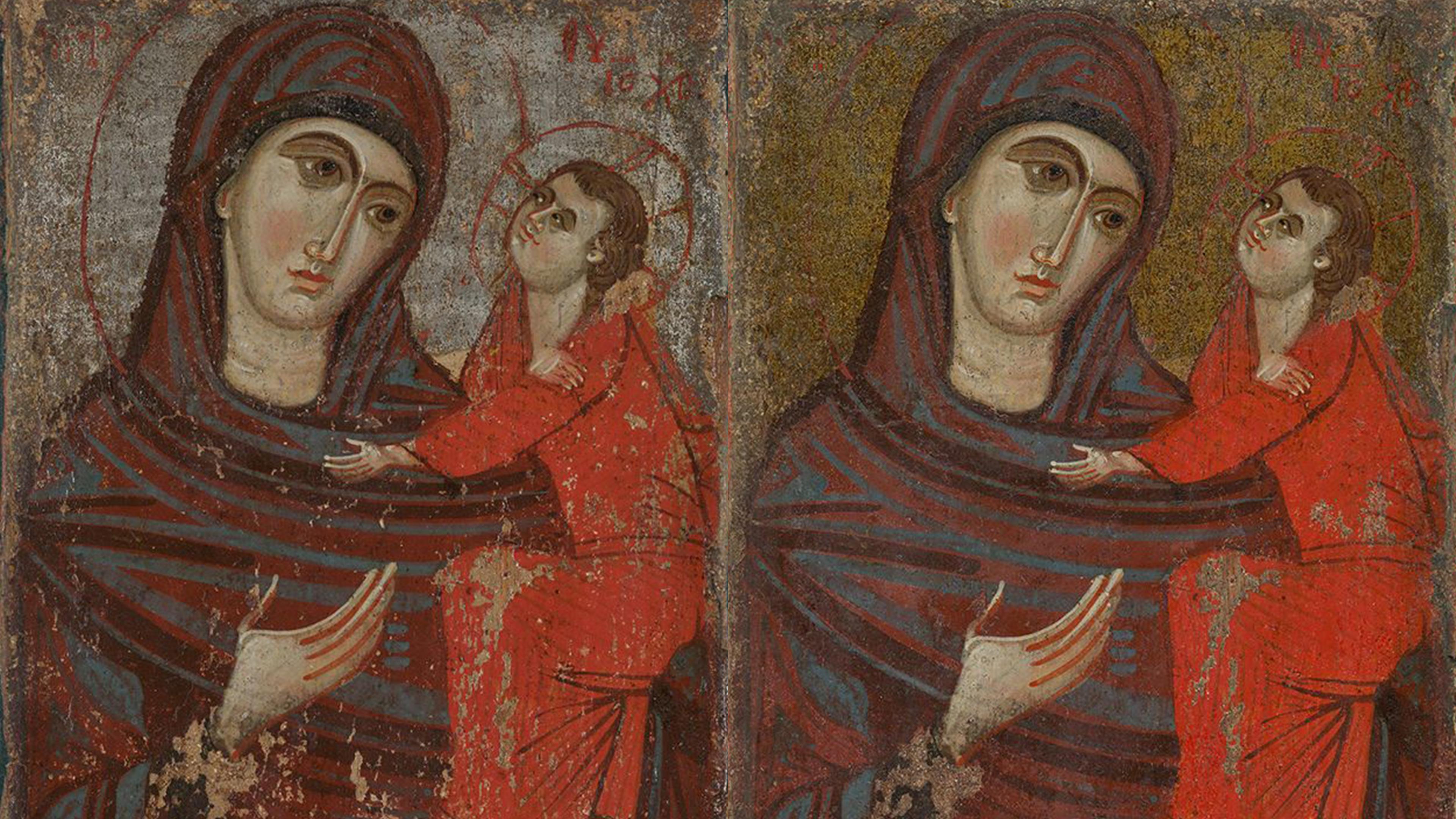
Equally significant is the creation of a new east Christian case in Gallery 300, which brings into view works that until now have largely remained in storage. Thanks to contributions from Research Assistant Earnestine Qiu, this installation builds on a lineage of exhibitions—including The Glory of Byzantium, Byzantium: Faith and Power, Armenia!, and Africa & Byzantium—that have progressively expanded the geographic and conceptual scope of Byzantine studies. This new case will have regular object rotations that continue this trajectory, presenting manuscripts, icons, and liturgical textiles that speak to the persistence and transformation of Byzantine artistic traditions beyond the fall of Constantinople in 1453.
New voices: Engaging communities of faith
Crucially, the development of the east Christian case has been shaped through direct engagement with living faith communities. In fall 2025, Mary Jaharis Intern Suzana DeRosa-Farag organized a study day, bringing together members of St. Antonious and St. Mina Coptic Orthodox Church and students and faculty from Saint Nersess Armenian Seminary. Participants’ insights foregrounded the devotional, cultural, and historical significance of these objects, reframing them not only as artifacts of the past but as active participants in ongoing traditions. The perspectives generated through these conversations will be integrated into the gallery’s interpretive materials, ensuring that the installation speaks to scholarly and community contexts alike.
New research: Fellowships at The Met
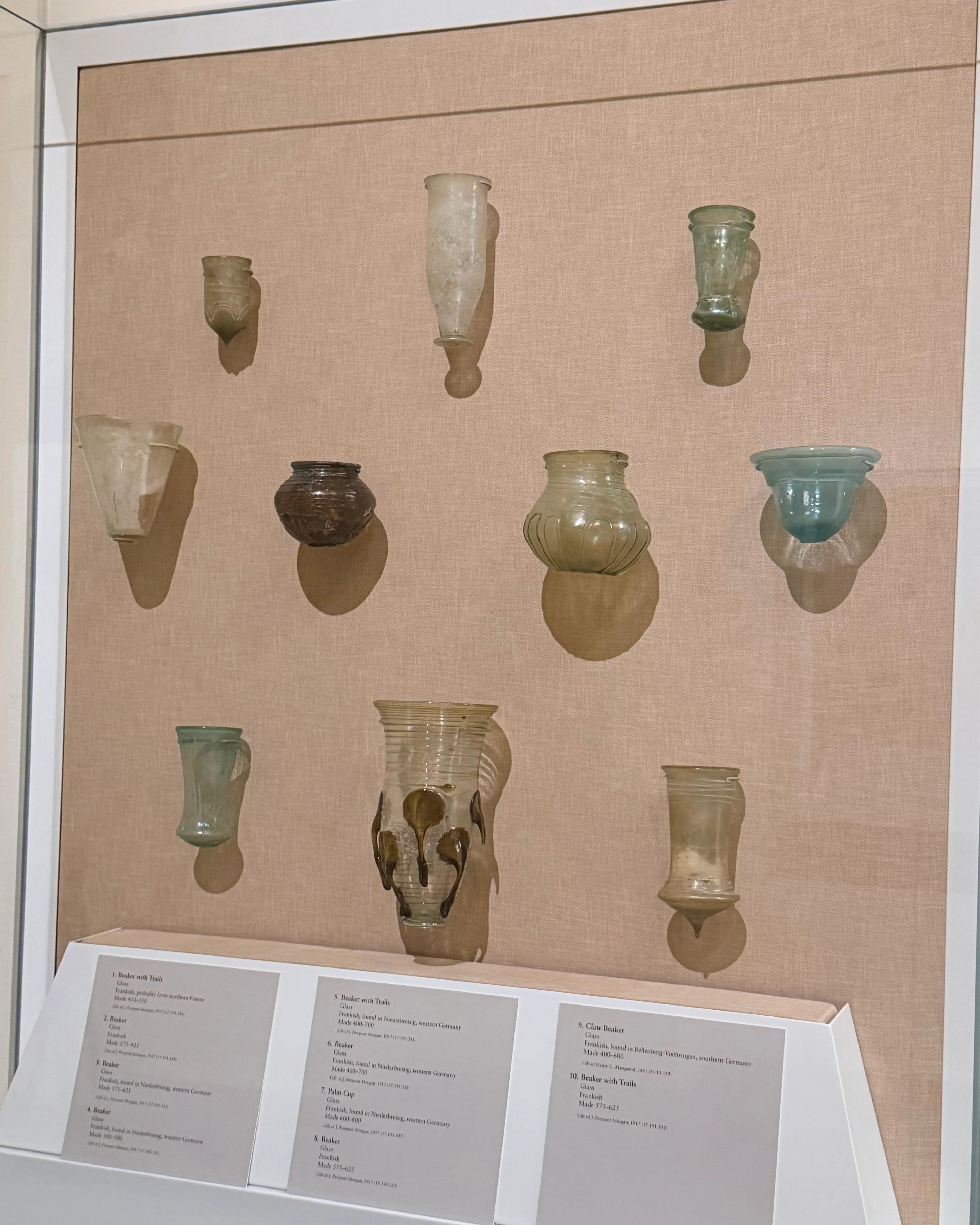
Fellow Quinn R. Bolte has contributed new research to The Met’s Frankish glass collection.
The reinstallation project is inseparable from the research that underpins it. Through the Vilcek Curatorial Fellowship, Quinn R. Bolte has contributed to both the reconceptualization of the galleries and broader curatorial initiatives within the department. Her work on glass in the eastern Mediterranean between 300 and 1150 CE offers a particularly generative lens through which to understand material experience. By approaching glass not merely as a medium but as an agent shaping light, space, and social interaction, her research opens new ways of interpreting objects that have often been understood in purely formal or technical terms.
The glass vessels among the Frankish material have provided a productive point of entry for comparative analysis, illuminating how similar materials operated within different cultural and social frameworks. Bolte’s ongoing catalogue of the Museum’s Kharga Oasis glass further extends this inquiry, bringing into focus a body of material that bridges the collections of the Departments of Medieval Art and The Cloisters, Greek and Roman Art, and Egyptian Art. This cross-disciplinary work reveals networks of exchange and continuity that are essential to understanding the broader medieval world.
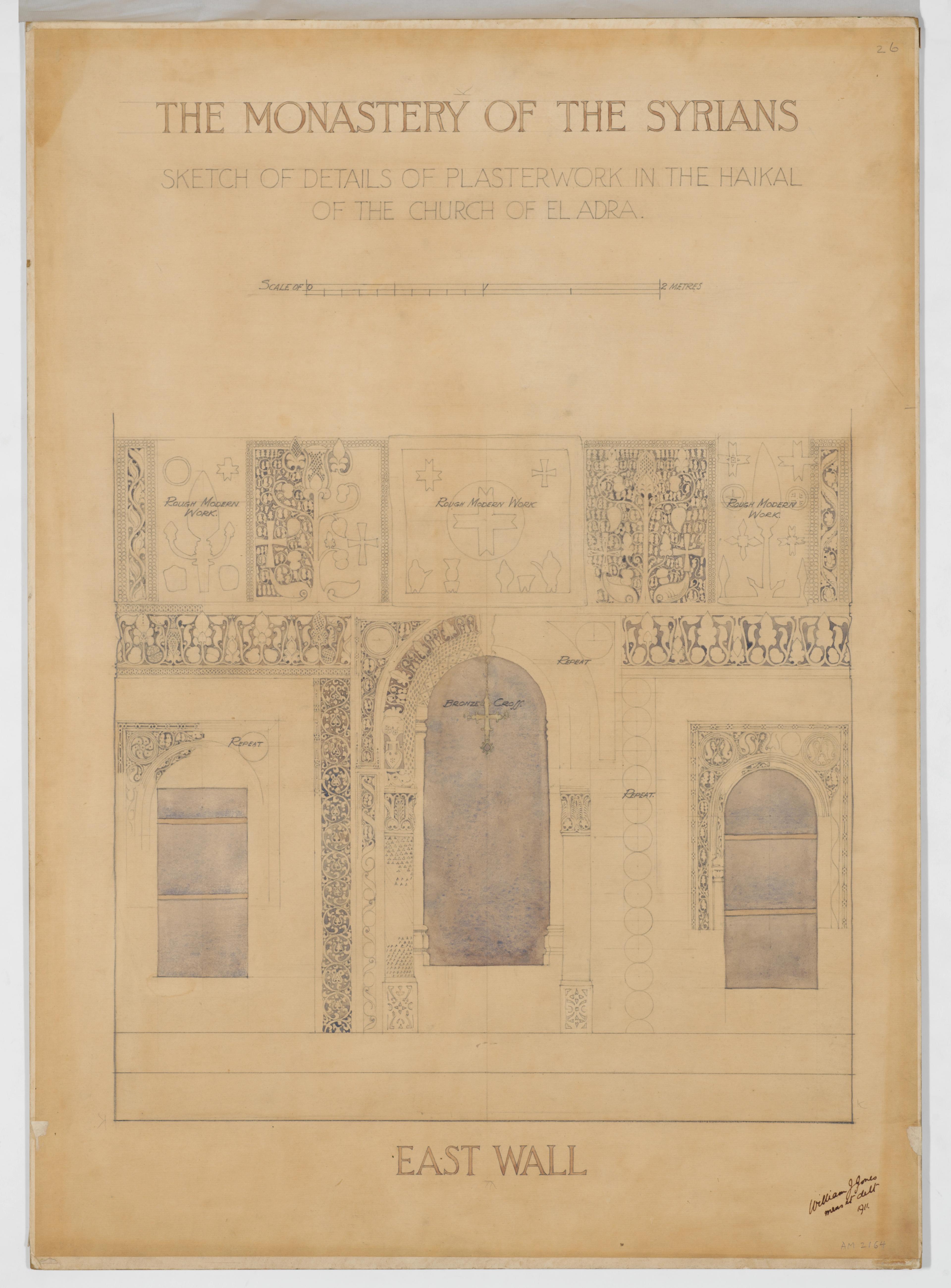
William J. Jones. Plasterwork in the Church of the Virgin, Monastery of the Syrians, Wadi-Natrun (Plasterwork in the Church of al-'Adra, Dayr al-Suryan, Wadi al-Natrun), 1911. Watercolor on paper, 23 1/4 × 16 5/8 in. (59.1 × 42.1 cm). The Metropolitan Museum of Art, New York (AM-2164)
Complementing this research, the Diana A. and Harry A. Stern Fellowship has supported new work on eastern Christianity, a central component of the gallery reinstallation. Dr. Mary Kupelian’s research on Coptic monasticism—particularly in Wadi el-Natrun—draws on a rich archive of photographs, correspondence, and watercolors held at The Met as well as materials from external institutions. Her work not only deepens our understanding of these monastic centers and their connections throughout the Byzantine world, but also reactivates archival holdings that have not been fully integrated into the Museum’s interpretive frameworks.
Reimagining the Byzantine galleries
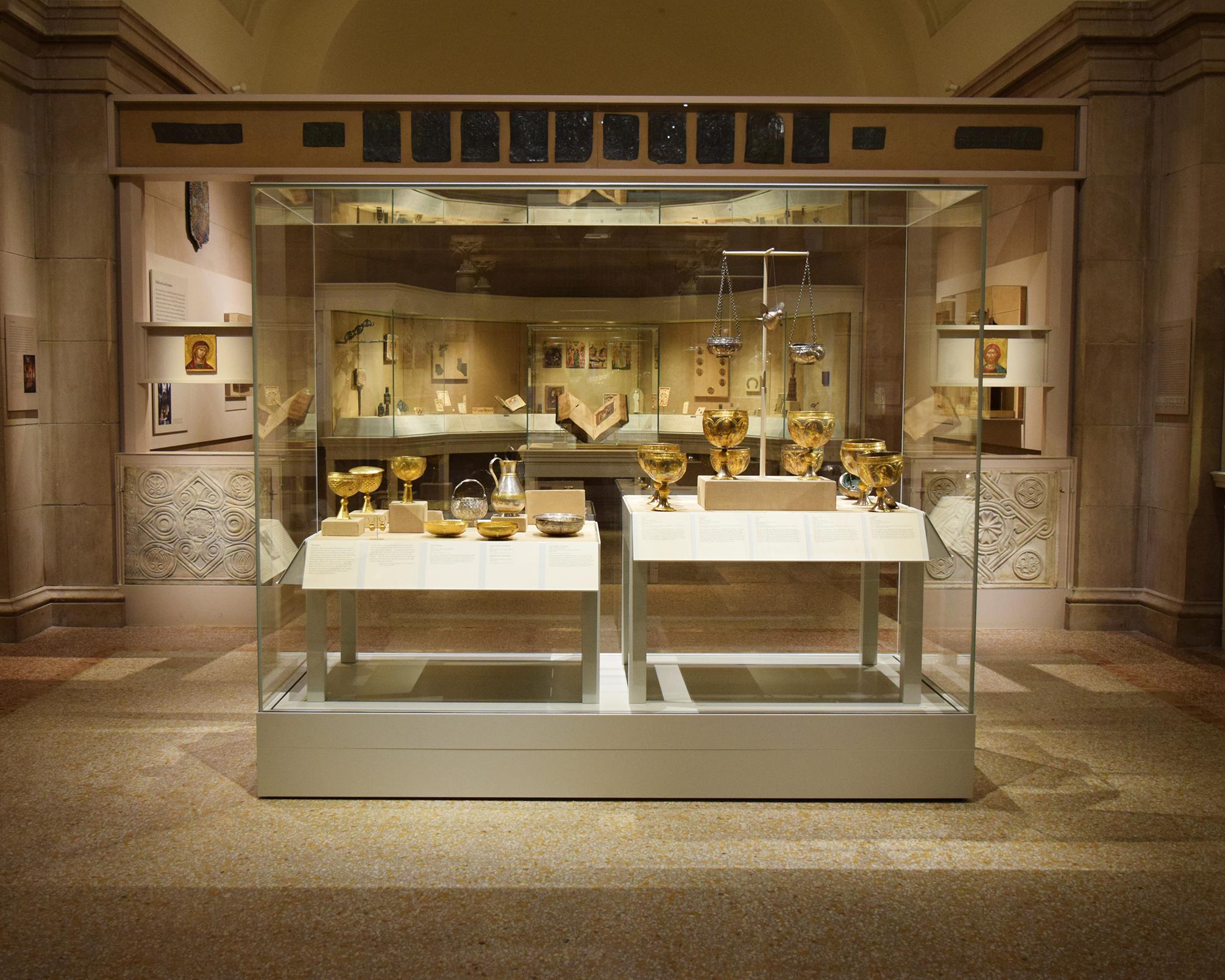
The new display case exhibiting the Attarouthi and Avar Treasures in Gallery 300.
Taken together, these curatorial and scholarly efforts articulate a broader institutional commitment: to position the Byzantine galleries not as a static presentation of a closed historical period, but as a dynamic space of encounter. The gallery reinstallation foregrounds Byzantium as a world defined by movement—of objects, ideas, and people—and by its ongoing resonance within contemporary communities.
As visitors move through the galleries—from the recontextualized treasures of Attarouthi and the Avars to the newly installed east Christian case—they are invited to engage with a Byzantine world that extends beyond traditional boundaries. In this sense, the reinstallation does not simply present new objects or new research. It proposes a different way of seeing—one that recognizes Byzantium as both historically grounded and continuously unfolding.