Miniature chandelier
Specialized silversmiths produced miniature silver furnishings which were offered for sale by so-called “toy men” from “toy shops.” These shops also sold miniature articles made of pewter, brass, ceramics, and glass. Small pieces of furniture closely resembling actual furniture as well as additional objects in ivory, tortoiseshell, amber and other materials replicated a full range of novelties and luxury goods.
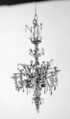
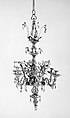
This miniature silver chandelier resembles the form of a typical brass chandelier of the kind found in Dutch churches (see MMA 1975.1.2492). Eight branches in two layers surround a baluster shaft and large globe which would beautifully reflect the moving flickeringlight of the candles. Additionally, the weight of the globe served the important purpose of stabilizing the chandelier. Brass chandeliers are depicted in Emanuel de Witte’s Interior of the Oude Kerk, Delft, ca. 1650 (MMA 2001.403) and Hendricks van Vliet’s contemporary painting of the same church (MMA 1976.23.2)
However, paintings of the period depicting domestic interiors with brass chandeliers most likely do not reflect reality. Dutch contemporary inventories which comprehensively list household possessions rarely include chandeliers. For example, surviving seventeenth-century inventories of elite residences in Leiden record include only five chandeliers during the entire period.
Artwork Details
- Title: Miniature chandelier
- Date: ca. 1720
- Culture: Dutch, Amsterdam
- Medium: Silver
- Dimensions: 4 5/16 × 4 5/16 in. (11 × 11 cm)
- Classification: Metalwork-Silver-Miniature
- Credit Line: The Joseph M. and Aimee Loeb May Collection, 1963
- Object Number: 63.53.159a–d
- Curatorial Department: European Sculpture and Decorative Arts
More Artwork
Research Resources
The Met provides unparalleled resources for research and welcomes an international community of students and scholars. The Met's Open Access API is where creators and researchers can connect to the The Met collection. Open Access data and public domain images are available for unrestricted commercial and noncommercial use without permission or fee.
To request images under copyright and other restrictions, please use this Image Request form.
Feedback
We continue to research and examine historical and cultural context for objects in The Met collection. If you have comments or questions about this object record, please contact us using the form below. The Museum looks forward to receiving your comments.
Content Notice
The Metropolitan Museum of Art presents over 5,000 years of art from around the world, and our online collection reflects ongoing work conducted over the course of our more than 150-year history. You may encounter objects or images that may be inappropriate for some viewers or information that may be outdated.