English
DonateMembershipTickets

Joshua Commanding the Sun to Stand Still Upon Gibeon (Joshua: 10: 12–14)

John Martin British
ca. 1822
Not on view
The British painter and printmaker John Martin made his reputation with sublime scenes of vast spaces overwhelmed by classical architecture and countless figures. He made this drawing in preparation for the painting that launched his future successes: Joshua Commanding the Sun to Stand Still upon Gibeon (National Gallery of Art, Washington DC; exhibited at the Royal Academy in 1816, reproduced in lithograph and two mezzotints in 1827). It shows Joshua, the Old Testament commander of the Israelite armies, standing on the rocky outcropping in the foreground. He commands the sun and moon to stop in their courses so that the Israelites may destroy their fleeing enemies-the Amorites, who had been attacking the city of Gibeon-in the prolonged daylight (Joshua 10:12-13).

Artwork Details

Object Information
  • Title: Joshua Commanding the Sun to Stand Still Upon Gibeon (Joshua: 10: 12–14)
  • Artist: John Martin (British, Haydon Bridge, Northumberland 1789–1854 Douglas, Isle of Man)
  • Date: ca. 1822
  • Medium: Pen and brown ink, brush and brown wash over red chalk, heightened with white; squared in black chalk
  • Dimensions: sheet: 15 7/8 x 24 in. (40.3 x 61 cm)
  • Classification: Drawings
  • Credit Line: Bequest of Harry G. Sperling, 1971
  • Object Number: 1975.131.200
  • Curatorial Department: Drawings and Prints
More Artwork
F. Shaw Brothers Tannery, Maine, John Martin  American, Pen and black and red inks, graphite, watercolor, and white gouache on Bristol board, American
John Martin
1882–83
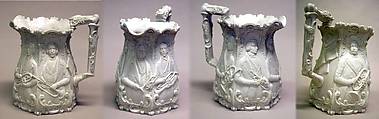
Commemorative jug, White-glaze Parian ware porcelain, British
British
ca. 1845
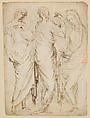
Three Standing Figures (recto); Seated Woman and a Male Hermit in Half-length (verso), Stefano da Verona (Stefano di Giovanni d'Arbosio di Francia)  Italian, Pen and brown ink, over traces of charcoal or black chalk (recto); pen and brown ink, brush with touches of brown wash, over traces of charcoal or black chalk (verso)
Stefano da Verona (Stefano di Giovanni d'Arbosio di Francia)
1435–38
The Paradise Lost of John Milton with Illustrations by John Martin, John Martin  British, Illustrations: mezzotint
Multiple artists/makers
1846
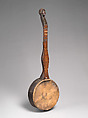
Banjo, Wood, various materials, British
British
mid-19th century

Research Resources

The Met provides unparalleled resources for research and welcomes an international community of students and scholars. The Met's Open Access API is where creators and researchers can connect to the The Met collection. Open Access data and public domain images are available for unrestricted commercial and noncommercial use without permission or fee.

To request images under copyright and other restrictions, please use this Image Request form.

Feedback

We continue to research and examine historical and cultural context for objects in The Met collection. If you have comments or questions about this object record, please contact us using the form below. The Museum looks forward to receiving your comments.

Send feedback

Content Notice

The Metropolitan Museum of Art presents over 5,000 years of art from around the world, and our online collection reflects ongoing work conducted over the course of our more than 150-year history. You may encounter objects or images that may be inappropriate for some viewers or information that may be outdated.