Pavilion by the Lake
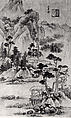
These two works may have been conceived as a pair of hanging scrolls. The compositions were likely adapted from popular Ming-dynasty (1368–1644) painting manuals imported from China, the most famous of which was the Mustard Seed Garden Manual of Painting. The style of the two pieces reflects the influence of "Southern School" literati painting, whose conceptual framework had been formalized by the Chinese artist Dong Qichang (1555–1636). This style of landscape painting became popular in Korea from the end of the seventeenth through the early nineteenth century and was freely adapted by painters of various artistic lineages. Samoje's paintings exhibit the relaxed brushwork and uncomplicated yet pleasing compositions typical of a group of late Joseon landscapes.
Artwork Details
- Title: Pavilion by the Lake
- Artist: Samoje (active late 18th century)
- Period: Joseon dynasty (1392–1910)
- Date: late 18th century
- Culture: Korea
- Medium: Framed painting; ink and color on hemp or ramie
- Dimensions: 17 7/8 x 10 7/8 in. (45.4 x 27.6 cm)
- Classification: Paintings
- Credit Line: Rogers Fund, 1915
- Object Number: 15.96.2
- Curatorial Department: Asian Art
More Artwork
Research Resources
The Met provides unparalleled resources for research and welcomes an international community of students and scholars. The Met's Open Access API is where creators and researchers can connect to the The Met collection. Open Access data and public domain images are available for unrestricted commercial and noncommercial use without permission or fee.
To request images under copyright and other restrictions, please use this Image Request form.
Feedback
We continue to research and examine historical and cultural context for objects in The Met collection. If you have comments or questions about this object record, please contact us using the form below. The Museum looks forward to receiving your comments.
Content Notice
The Metropolitan Museum of Art presents over 5,000 years of art from around the world, and our online collection reflects ongoing work conducted over the course of our more than 150-year history. You may encounter objects or images that may be inappropriate for some viewers or information that may be outdated.