English
DonateMembershipTickets

Bononiensis de architectura libri quinque quibus cuncta fere architectonicae facultatis mysteria docte, perspicue . . .

Author Sebastiano Serlio Italian
1568–69
Not on view
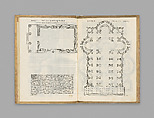
Although Serlio began his career as a painter, he became famous as an architect and architectural theorist. After working in architecture in Rome and Venice, he moved to France and the court at Fontainebleau. Serlio wedded his training in classical architecture to the decorative elements common to the Mannerists working at the time to create his own successful idiom. He intended his architectural treatises to be instructive not only to the intelligensia but also to provide a workbook for contemporary craftsmen. Unlike many of the books of architecture of his day, in which the text was the most important element, his illustrations convey the gist of his message. Written in Latin and relying heavily on illustrations, this work was intended to reach an audience beyond Serlio's native Italy. Indeed, his books were largely responsible for the spread of Renaissance architectural principles throughout Europe. While his starting point was Vitruvius's "Ten Books on Architecture," Serlio brought in contemporary elements that found a wide audience and had a profound effect on contemporary architecture, particularly in northern Europe.


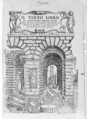
Illustrated: book 4, p. 323, Corinthian facade

Artwork Details

Object Information
  • Title: Bononiensis de architectura libri quinque quibus cuncta fere architectonicae facultatis mysteria docte, perspicue . . .
  • Author: Sebastiano Serlio (Italian, Bologna 1475–1554 Fontainebleau)
  • Date: 1568–69
  • Geography: Venice: Apud Francifcum de Francifcis Senenfem, & Joanneum Chriegher, 1568–1569
  • Medium: Illustrated book
  • Dimensions: 5 pts. in 1 vol.; H: 12 5/8 in. (32 cm)
  • Credit Line: Purchased with income from the Jacob S. Rogers Fund
  • Object Number: 120 Se6
  • Curatorial Department: Thomas J. Watson Library
More Artwork
Il primo libro d'architettura di Sebastiano Serlio Bolognese. Il secondo libro di perspecttia di Sebastiano Serlio, Bolognese., Sebastiano Serlio  Italian, Printed book with woodblock illustrations
Multiple artists/makers
1545
Book of the Gospels, Northern Highlands artist, Parchment (vellum), acacia wood, tempera, ink
Northern Highlands artist
late 14th–early 15th century
Il terzo libro di Sabastiano Serlio Bolognese, Sebastiano Serlio  Italian, Printed book with woodcut illustrations
Author Sebastiano Serlio
Publisher Francesco Marcolini da Forli
Dedicatee François I, King of France
1540
"Akbar With Lion and Calf", Folio from the Shah Jahan Album, Govardhan, Ink, opaque watercolor, and gold on paper
Painting by Govardhan
Calligrapher Mir 'Ali Haravi
verso: ca. 1630; recto: ca. 1530–50
Il terzo libro di Sebastiano Serlio (Bolognese), Sebastiano Serlio  Italian, Printed book with woodcut illustrations on blue paper
Author Sebastiano Serlio
Publisher Francesco Marcolini da Forli
Dedicatee François I, King of France
1540

Research Resources

The Met provides unparalleled resources for research and welcomes an international community of students and scholars. The Met's Open Access API is where creators and researchers can connect to the The Met collection. Open Access data and public domain images are available for unrestricted commercial and noncommercial use without permission or fee.

To request images under copyright and other restrictions, please use this Image Request form.

Feedback

We continue to research and examine historical and cultural context for objects in The Met collection. If you have comments or questions about this object record, please contact us using the form below. The Museum looks forward to receiving your comments.

Send feedback

Content Notice

The Metropolitan Museum of Art presents over 5,000 years of art from around the world, and our online collection reflects ongoing work conducted over the course of our more than 150-year history. You may encounter objects or images that may be inappropriate for some viewers or information that may be outdated.