Robe (boubou)
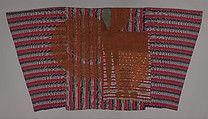
This boubou (corruption of Wolof mbubb) is a distinctive example of the traditional hand-woven and -embroidered, over-the-head garment worn by elites across West Africa. These robes are always worn over other clothing and generally fall to the lower leg. Of particular interest in this example are the refined embroideries that form distinctive figurative motifs. The embroideries are so tightly stitched that they give the impression of appliqué. While we don't know precisely where in West Africa the boubou was collected, the visual reference to applique and the figurative patterns of birds and palm tree suggest that it might have come from present-day Ghana or Benin that are known for their distinctive use of the appliqué technique and figurative motifs.
Artwork Details
- Title: Robe (boubou)
- Date: mid-20th century
- Geography: possibly Senegambia region
- Culture: West Africa
- Medium: Cotton, dye
- Dimensions: H. 54 × W. 70 in. (137.2 × 177.8 cm)
- Classification: Textiles-Costumes
- Credit Line: Gift of Ann and Richard Solomon, 2019
- Object Number: 2019.437.1
- Curatorial Department: The Michael C. Rockefeller Wing
More Artwork
Press the down key to skip to the last item.
Research Resources
The Met provides unparalleled resources for research and welcomes an international community of students and scholars. The Met's Open Access API is where creators and researchers can connect to the The Met collection. Open Access data and public domain images are available for unrestricted commercial and noncommercial use without permission or fee.
To request images under copyright and other restrictions, please use this Image Request form.
Feedback
We continue to research and examine historical and cultural context for objects in The Met collection. If you have comments or questions about this object record, please contact us using the form below. The Museum looks forward to receiving your comments.
Content Notice
The Metropolitan Museum of Art presents over 5,000 years of art from around the world, and our online collection reflects ongoing work conducted over the course of our more than 150-year history. You may encounter objects or images that may be inappropriate for some viewers or information that may be outdated.