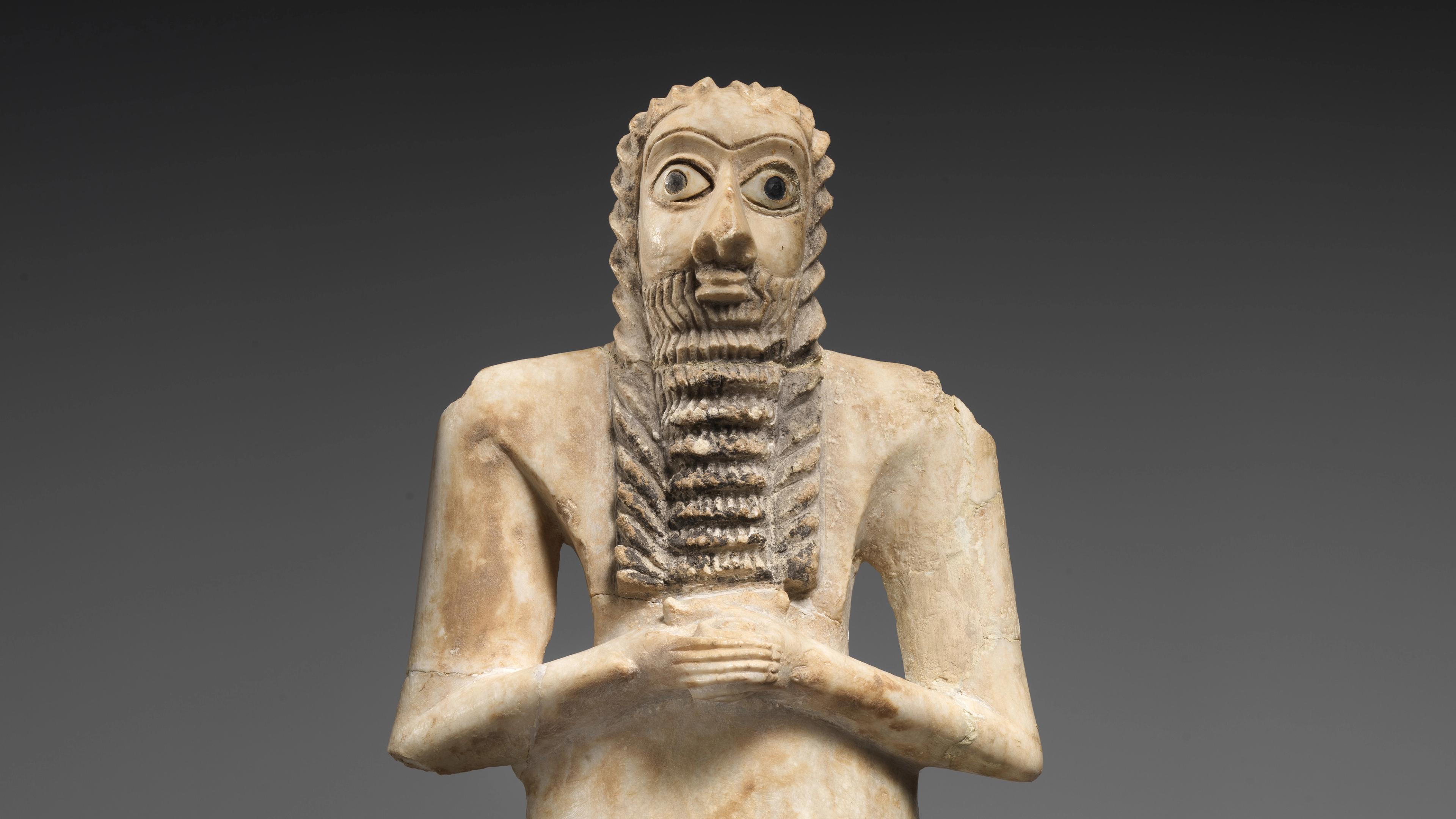
My first semester of graduate school, I took a seminar on ancient Mesopotamian sculpture to meet a distribution requirement. From the background reading my professor had assigned I learned about the intricacies of cuneiform and how early forms of accounting by temple officials provided the origins of writing. I was fascinated by the function of images in ancient Mesopotamia, where they served as surrogate bodies for devotees or divine presences activated through rituals.
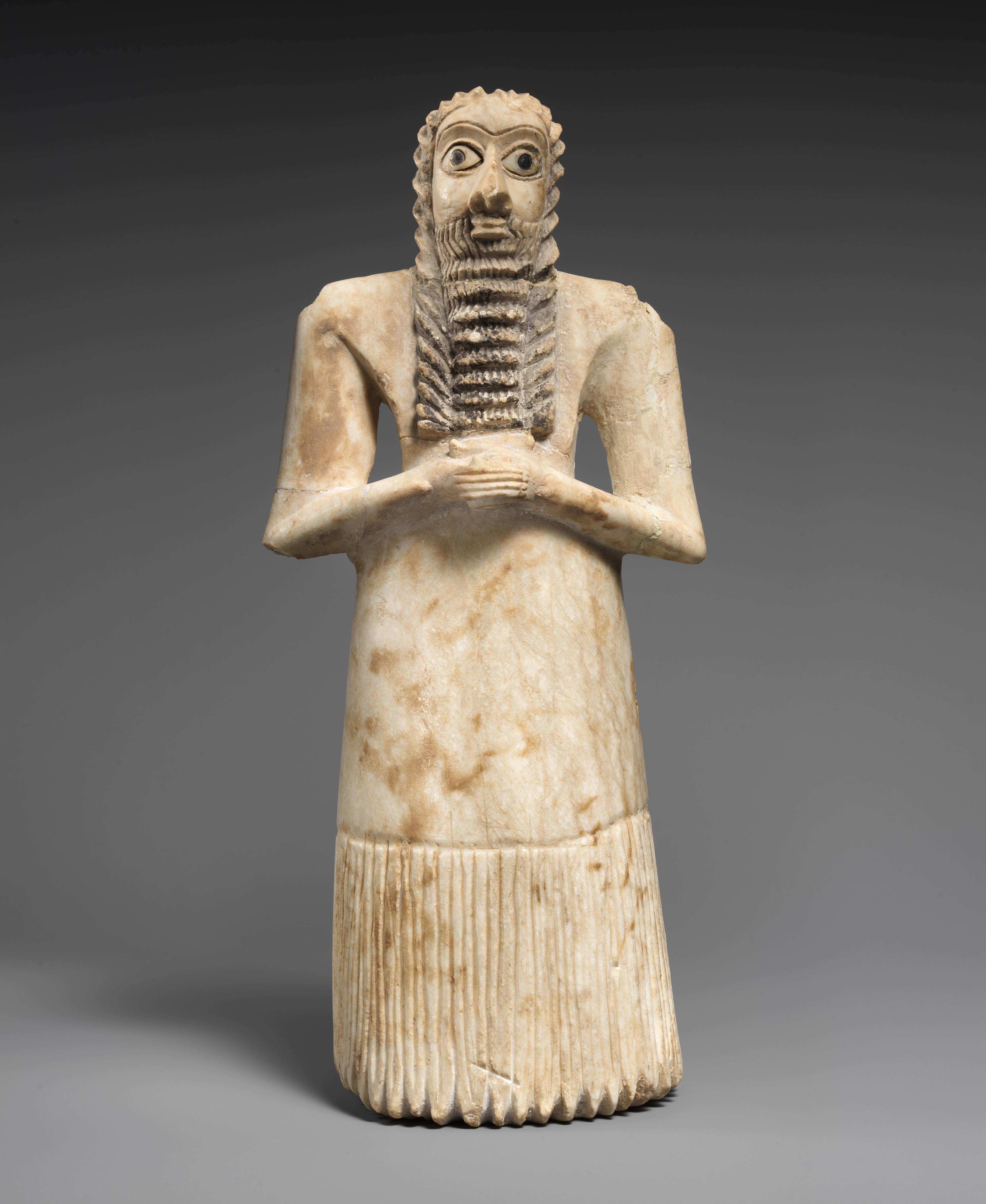
Standing male worshiper, ca. 2900–2600 BCE. Mesopotamia, Eshnunna (modern Tell Asmar). Sumerian. Gypsum alabaster, shell, black limestone, bitumen, 11 5/8 x 5 1/8 x 3 7/8 in. (29.5 x 12.9 x 10 cm). The Metropolitan Museum of Art, New York, Fletcher Fund, 1940 (40.156)
This Sumerian statue of a worshipper was intended to perform a perpetual act of prayer. For nearly five thousand years, this man with his luxuriant beard and delicately fringed robe has clasped his hands in devotion to the god Abu. His features are generic, but he would have stood in for a real individual, a devotee whose name is now lost. While his body is alabaster, his wide-open eyes are white shell with black limestone pupils.
The man’s prominent eyes indicate that his primary task was to look upon the deity. In many cultures around the world, looking provides a key form of devotion. Pilgrims travel great distances so that they can gaze upon holy statues and pictures. Worshippers may see sacred images only on special occasions, or they may be visible only to an exclusive priesthood.
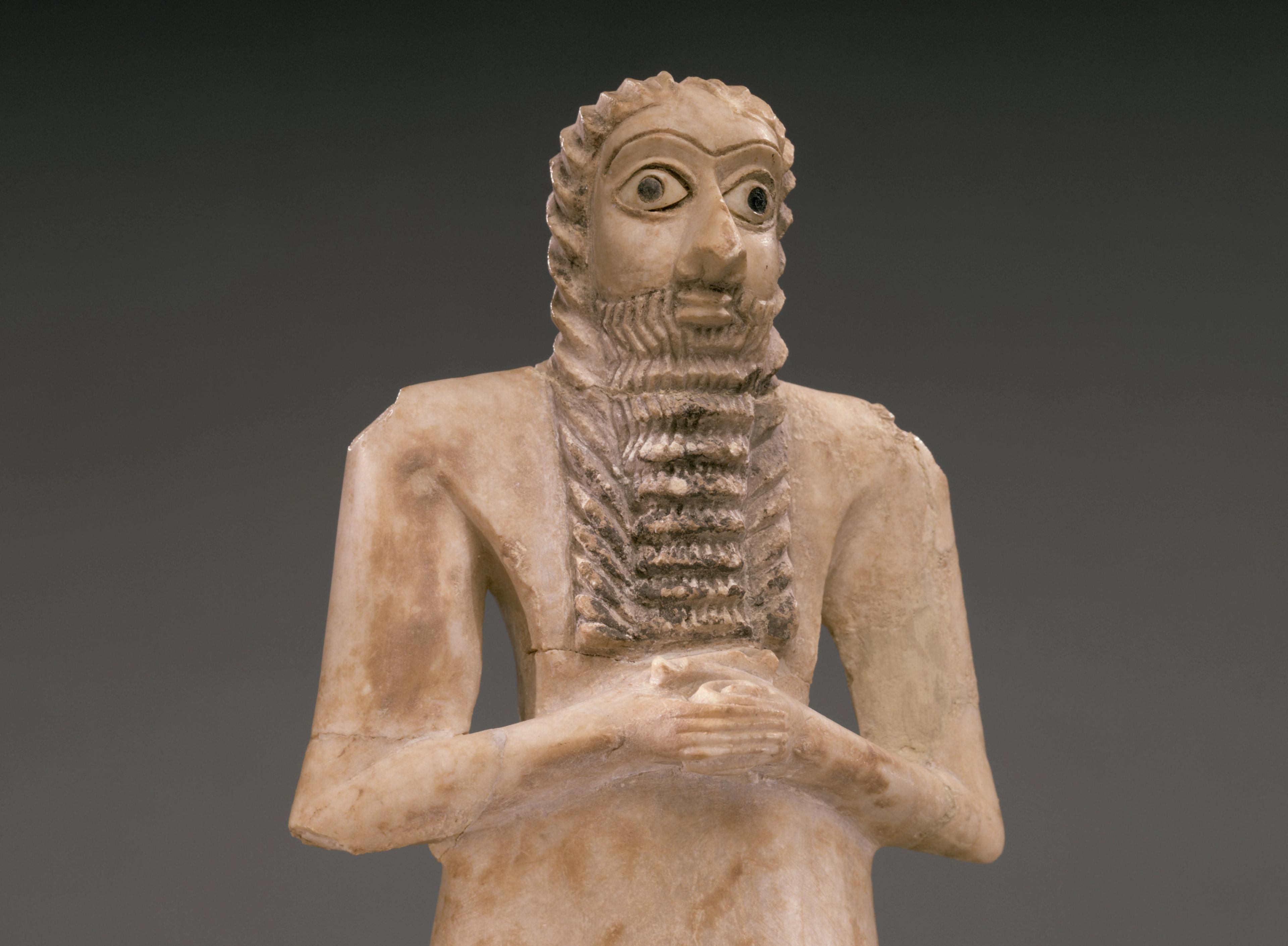
This statue was excavated more than ninety years ago. It was part of a group of twelve such figures buried beneath the floor of a temple in Tell Asmar, in what is now Iraq. We do not know who buried them or why.
During the millennia it was under the ground, no one at all looked at this statue from Tell Asmar. Following its excavation, however, it became an object of intense scrutiny. Because of their great antiquity, the Tell Asmar sculptures provide an early point in a timeline for all of art history. As a teaching assistant in graduate school, I had my students identify them on exams.
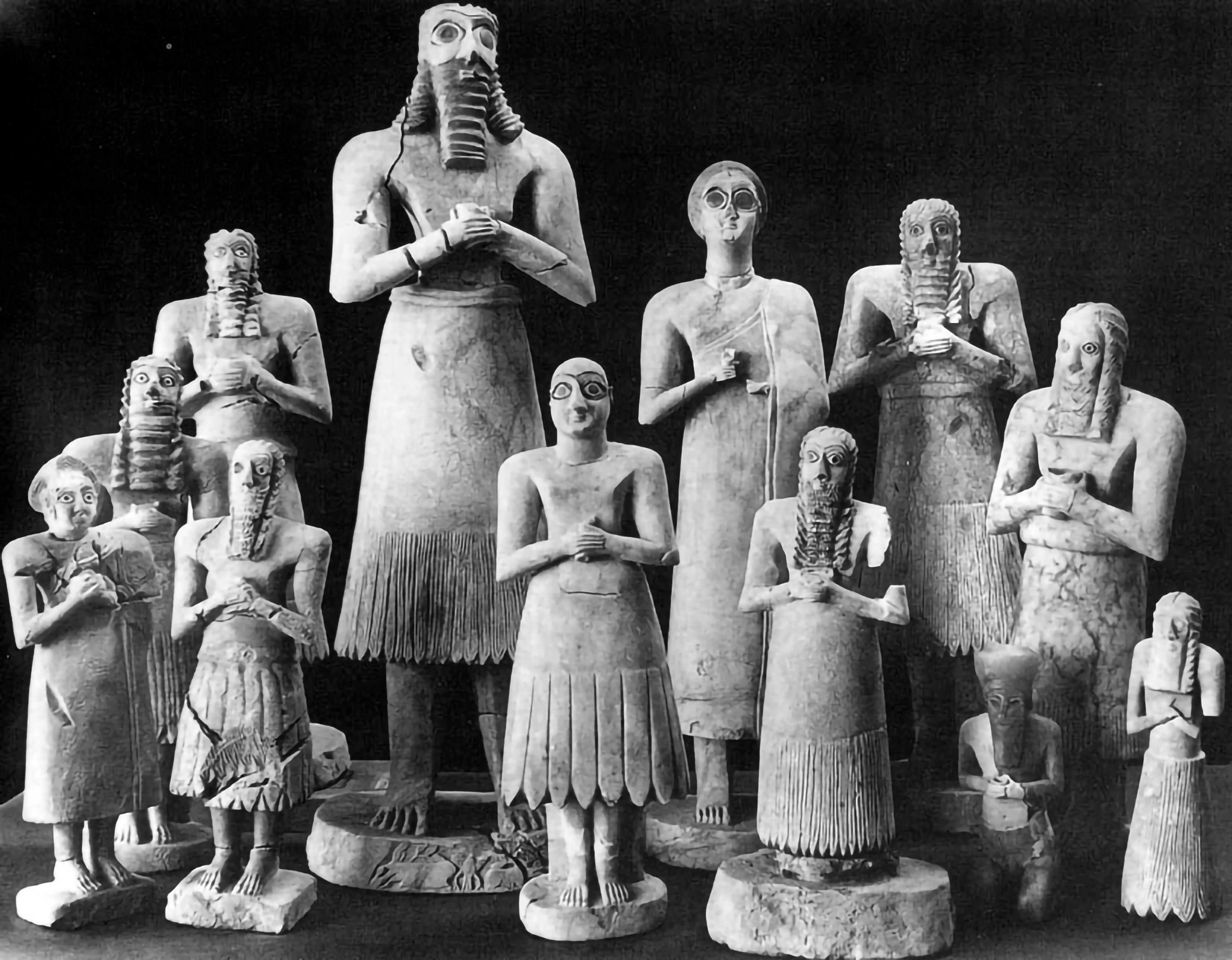
The twelve figures excavated from the Square Temple at Tell Asmar. Courtesy of The Center for Public Art History
Vision and devotion, presence and memory—the art of ancient Mesopotamia that I encountered in that seminar seemed to distill for me the fundamental motivations humans have for making works of art. After the class ended, I enrolled in another with the same professor, an archaeologist who had grown up in Iraq. She told us stories about visual propaganda under dictatorship and her efforts to protect Iraq’s cultural patrimony during the American invasion. She made the work of art historians seem essential.
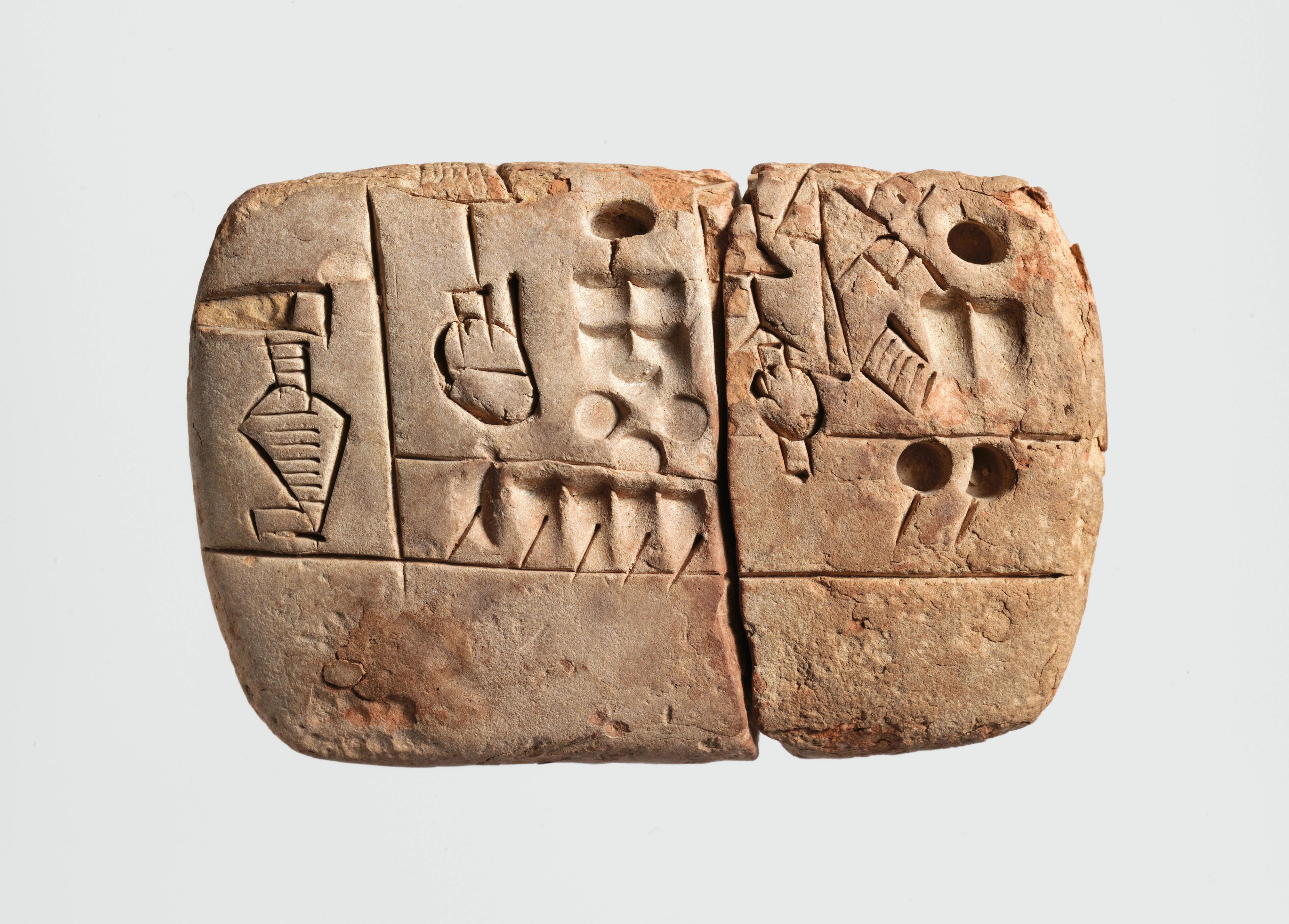
Cuneiform tablet: administrative account with entries concerning malt and barley groats, ca. 3100–2900 BCE. Mesopotamia, probably from Uruk (modern Warka). Sumerian. Clay, 1 3/4 × 2 3/4 × 5/8 in. (4.5 × 6.85 × 1.6 cm). The Metropolitan Museum of Art, New York, Purchase, Raymond and Beverly Sackler Gift, 1988 (1988.433.3)
I did not end up changing my specialization from European paintings to ancient Mesopotamian art. I never learned Sumerian. But when I wrote a dissertation about seventeenth-century portraits, I took very seriously the lesson that images can stand in for people—their status as surrogates has always been more than a metaphor.
As a curator at The Met, I often pass the vitrine containing the Tell Asmar worshipper. Dislocated from the temple he was made for, bereft of his god, he still stands in modest and impeccable reverence. And whenever I look at him, he looks back at me.
This essay is adapted from Points of View: 100 Connections to Art, a book that brings together voices from across The Met to consider how art inspires us to connect to the world and to each other.


