Exhibition Dates: April 13, 2026–July 19, 2026
Exhibition Location: The Met Fifth Avenue, Galleries 691–693
(New York, April 3, 2026)—This spring, The Metropolitan Museum of Art will present Gothic by Design: The Dawn of Architectural Draftsmanship, the first-ever exhibition to examine Gothic architecture drawings in an art historical context. The Gothic era produced some of the most monumental and beautiful structures of the Western world, recognized to this day as icons of the European cityscape, yet rarely discussed as the product of the ingenious and innovative contributions of individual architects. This design legacy has, however, been preserved in a substantial though obscure body of preparatory drawings and prints. Gothic by Design will introduce this remarkable body of work to a general audience and the scholarly community, illuminating the significant impact the practice of drawing had on stylistic developments during the Gothic period. The exhibition will be on view from April 13 through July 19, 2026.
The exhibition is made possible by the Placido Arango Fund and the Gail and Parker Gilbert Fund.
Additional support is provided by The Schiff Foundation, Gilbert and Ildiko Butler, and The Michael and Patricia O'Neill Charitable Fund.
“Until now, few have been given a glimpse into the meticulous design process that imbued Gothic architecture with its most sublime qualities,” said Max Hollein, The Met’s Marina Kellen French Director and Chief Executive Officer. “This exhibition will illuminate the work of visionary designers, showcasing drawings and objects of immense creativity and inviting the public to engage more deeply with a magnificent architectural tradition.”
With over 90 works including drawings, prints, books, manuscripts, goldsmith’s work, and architectural elements drawn from The Met collection and over a dozen lenders, Gothic by Design brings together a large group of graphic works that showcase Gothic architectural design and craftsmanship. Many of the artworks represent exceptional loans that will travel to the United States for the first, and likely only, time for this feature exhibition. Juxtaposing drawings and prints from the 13th to 16th century with key objects from the period, the display will focus on strategies of design, including collaborative practices, modular design, and morphologies of form.
Femke Speelberg, Curator, Department of Drawings and Prints at The Met, said: “Offering audiences the rare opportunity to engage at length with little known yet often monumental masterpieces of the Gothic era, the exhibition will explore themes that resonate across time and culture, including identity and legacy building, artistic development and creative exploration, and ingenuity and wit in design.”
Until now, the remaining body of Gothic architectural drawings has chiefly been studied by a small number of architectural historians who approach the drawings primarily as blueprints for existing buildings. Excluded from surveys of early drawings, they have never been looked at from a wider art historical perspective—in fact, many scholars are unaware of their existence. Similarly, there is at present no study dedicated to drawings and prints for goldsmith’s work and other small-scale objects for the period before the High Renaissance, and it is often assumed that goldsmiths rarely drew, commissioning painters or sculptors to create designs for them instead. There is ample evidence to suggest, however, that goldsmiths did draw and were even commissioned to design beyond their own discipline, including in the realm of monumental architecture.
Gothic by Design will evoke questions relating to selection and exclusion in canonic history books and invite discussion about the place of art within the larger scope of the STEAM disciplines, as the architectural drawings on display embody the interplay of art and science, technology, engineering, and mathematics. To this point, a contemporary contribution to the exhibition from the Federal Institute of Technology (ETH) Zurich will address the potential of Gothic design principles for the future of sustainable construction.
Exhibition Overview
Exactly when architects began making elaborate design drawings on parchment is not known. While the earliest surviving examples date from around 1250, their sophistication indicates that this form of architectural draftsmanship had existed for quite some time. Indeed, some believe that the inherent complexity of Gothic architecture necessitated clearly drawn plans from the onset, suggesting that the practice developed in tandem with the new style from about 1140. The drawings on display in the exhibition’s first gallery introduce the diverse functions that architectural designs served on an active building site, from comprehensive elevation drawings to detailed studies of specific elements. A standout feature of many Gothic architectural designs is their monumental size and, consequently, the level of detail they contain. An impressive number of such oversize drawings survive likely because they were too unwieldy for frequent consultation.
The exhibition next explores how, in the 13th century, the stylistic vocabulary of monumental Gothic architecture began to influence the design of artworks of vastly different scales, from statuary to stained glass and precious objects. Although the inclusion of architectural elements in such designs was not new, they were previously often based on older prototypes. This was the first time that artworks closely resembled the buildings in which they were housed, as architects began to design smaller structures, such as pulpits, baptismal fonts, and even goldsmith’s work. Unlike monumental churches, which took centuries to complete, these projects offered architects the chance to realize their artistic vision within their lifetimes and without need for compromise. At the same time, the ability to draw also allowed practitioners of architecture-adjacent fields, such as goldsmiths and sculptors, to scale up. Some even vied with trained architects on important architectural commissions.
A final gallery explores Gothic design principles and their legacy. Gothic architects based their designs on a wealth of knowledge and well-established practices that include complex geometric projections and material- or site-specific calculations. For generations, this knowledge was passed down from master to apprentice through oral instruction and practical on-site experience. Technical drawings contain crucial information about the design principles that underlie Gothic architecture. The floor plans, vaulting plans, sections, analytical studies, and assembly drawings in this gallery provide insight into the application of geometry, systems of measurement and proportion, and different means of conveying information to the stone masons, carpenters, and metalsmiths who were responsible for construction. Much of this working knowledge carried over to the Renaissance era and beyond. Today, structural engineers have even found that Gothic design principles can contribute to a more sustainable architecture in the future.
Credits and Related Content
Gothic by Design: The Dawn of Architectural Draftsmanship is curated by Femke Speelberg, Curator in the Department of Drawings and Prints at The Metropolitan Museum of Art.
The Met will host a variety of exhibition-related programs including a 3D Gothic design drawing workshop at The Met Cloisters on April 25 along with Drop-in Drawing programs on July 10 and 11. There will also be a series of Met Expert Talks in the exhibition galleries during the run of the show and a Curator Talk on May 28 at 3 pm.
A fully illustrated catalogue will accompany the exhibition and be available for purchase in The Met Store.
The catalogue is made possible by the Diane W. and James E. Burke Fund.
Additional support is provided by Hubert and Mireille Goldschmidt, and Ann M. Spruill and Daniel H. Cantwell.
The exhibition will be featured on The Met website, as well as on social media.
##
April 3, 2026
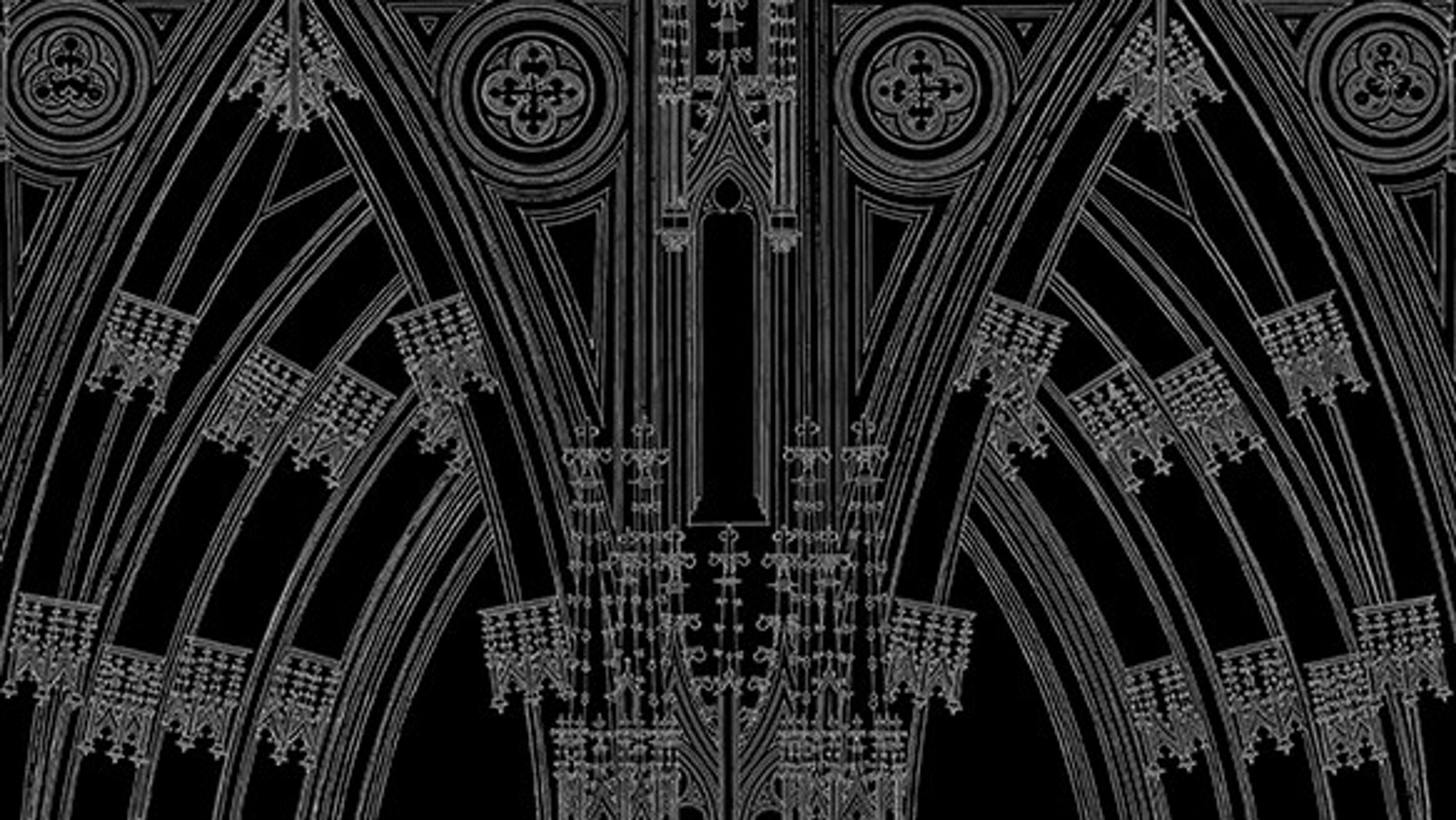
Image caption: Possibly by Wenzel Roriczer (German, born Bohemia, died 1419). Design for the Entrance Portal of Regensburg Cathedral (detail), ca. 1390–1410. Pen and black ink, over blind ruling with stylus, guided by compass and straightedge, on parchment, Sheet: 53 3/16 × 22 3/8 in. (135.1 × 56.9 cm). Kupferstichkabinett, Akademie der Bildenden Künste Wien (HZ-16871r)
Exhibition at The Met to Showcase Rarely Seen Gothic Architecture Drawings for the First Time
The first exhibition of its kind, Gothic by Design: The Dawn of Architectural Draftsmanship will feature over 90 works that highlight the history of Gothic design practice
Contact: Margaret-Anne Logan
Communications@metmuseum.org