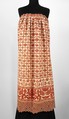
Apron
Depictions of the goddess are common in Russian embroidery, traditionally associated with fertility. Birds are associated with goddess worship for their proximity to divine beings through their home in the sky. A smaller daughter or minor goddess often accompanies the great goddess in embroideries intended to represent reproductive fertility. This language of visual motifs originated in Pagan times and continued to be used in embroidery after the Christianization of Russia. Later depictions of the goddess are very stylized, resembling a plant or tree of life, as in this example.
Artwork Details
- Title: Apron
- Date: 1830–70
- Culture: Russian
- Medium: linen, cotton
- Credit Line: Brooklyn Museum Costume Collection at The Metropolitan Museum of Art, Gift of the Brooklyn Museum, 2009; Gift of Mrs. Edward S. Harkness in memory of her mother, Elizabeth Greenman Stillman, 1931
- Object Number: 2009.300.2717
- Curatorial Department: The Costume Institute
More Artwork

Research Resources
The Met provides unparalleled resources for research and welcomes an international community of students and scholars. The Met's Open Access API is where creators and researchers can connect to the The Met collection. Open Access data and public domain images are available for unrestricted commercial and noncommercial use without permission or fee.
To request images under copyright and other restrictions, please use this Image Request form.
Feedback
We continue to research and examine historical and cultural context for objects in The Met collection. If you have comments or questions about this object record, please contact us using the form below. The Museum looks forward to receiving your comments.
Content Notice
The Metropolitan Museum of Art presents over 5,000 years of art from around the world, and our online collection reflects ongoing work conducted over the course of our more than 150-year history. You may encounter objects or images that may be inappropriate for some viewers or information that may be outdated.