Story of Gombaut and Macée
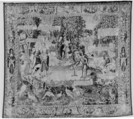
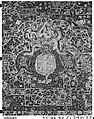
The scenes shown extol the ideal pleasures of Arcadian life. Macée washes her feet in a stream and later raids a bird's nest with Gombaut in a scene taken from the first tapestry. Then they play tiquet, a game similar to croquet, and a man smacks a girl. A bagpipe player performs, the two shepherds dance, and they feast on biscuits, water, and strawberries in scenes taken from the third and fourth tapestries. Finally, Gombaut is betrothed to Macée and marries her in scenes from the fifth and sixth tapestries. Several scenes found in the tapestries are omitted in the embroidery, including the shepherds as children chasing butterflies and the onslaught of wolves that causes Gombaut's unfortunate death and concludes the story. Gombaut's later life is rarely shown in illustrations of the story; the sad approach of death is not in keeping with the idyllic pastoral theme. The harsh realities of peasant life were rarely acknowledged before the nineteenth century. The explanatory French verses, in the late fifteenth-century style, found on the tapestries and also on the woodcut prints are also absent from this tablecloth.
Artwork Details
- Title: Story of Gombaut and Macée
- Date: ca. 1600
- Culture: possibly French
- Medium: Wool and silk on canvas
- Dimensions: L. 108 x W. 64 1/2 inches (274.3 x 163.8 cm)
- Classification: Textiles-Embroidered
- Credit Line: Gift of Irwin Untermyer, 1954
- Object Number: 54.7.1
- Curatorial Department: European Sculpture and Decorative Arts
More Artwork
Related Content

 Free to download
Research Resources
The Met provides unparalleled resources for research and welcomes an international community of students and scholars. The Met's Open Access API is where creators and researchers can connect to the The Met collection. Open Access data and public domain images are available for unrestricted commercial and noncommercial use without permission or fee.
To request images under copyright and other restrictions, please use this Image Request form.
Feedback
We continue to research and examine historical and cultural context for objects in The Met collection. If you have comments or questions about this object record, please contact us using the form below. The Museum looks forward to receiving your comments.
Content Notice
The Metropolitan Museum of Art presents over 5,000 years of art from around the world, and our online collection reflects ongoing work conducted over the course of our more than 150-year history. You may encounter objects or images that may be inappropriate for some viewers or information that may be outdated.