ガニュメデス・グループ
Artwork Details
- 題: ガニュメデス・グループ
- 月日: 紀元前330–前300年頃
- 文化: ギリシャ
- 手法: 金、水晶、エメラルド
- 寸法: 首飾りの長さ 33 cm、耳飾り の長さ6 cm、腕輪の直径 7.9 cm、フィブラの直径 5 cm、指輪の高さ 2.1 cm
- 提供者: ハリス・ブリズベーン・ディック基金、1937年
- 受け入れ番号: 37.11.8–.17
- Curatorial Department: Greek and Roman Art
Audio
1061. Ganymede jewelry
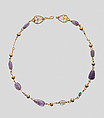
The Macedonians of northern Greece buried their dead with rich grave goods, including meticulously made gold jewelry. This impressive ensemble shows the incredible refinement of Greek gold work in the fourth century B.C. The earrings in this set are of special interest. Each features a solid-cast nude boy in the clutches of a majestic eagle. The boy is the young Trojan prince Ganymede, whom Zeus carried away up to Olympus to be his cup-bearer. The eagle is Zeus’ bird, or Zeus himself, tenderly holding Ganymede in his talons.
The Greek goldsmith treated the earrings as sculpture in miniature and lavished them with a wealth of fine detail. Look at the eagle’s feathers and the delicate wisp of drapery fluttering in the air. The toes of Ganymede’s front foot are flexed; perhaps he is just touching down on Mount Olympus, the home of the gods.
This motif works beautifully for a pair of drop earrings, dangling over the wearer's shoulders. But the goldsmith probably adapted the composition from a piece of large-scale sculpture. The ancient writer Pliny described one such work in these words: “The eagle senses what a prize he is ravishing in Ganymede, and to whom he is carrying him.”
More Artwork
Related Content


Research Resources
The Met provides unparalleled resources for research and welcomes an international community of students and scholars. The Met's Open Access API is where creators and researchers can connect to the The Met collection. Open Access data and public domain images are available for unrestricted commercial and noncommercial use without permission or fee.
To request images under copyright and other restrictions, please use this Image Request form.
Feedback
We continue to research and examine historical and cultural context for objects in The Met collection. If you have comments or questions about this object record, please contact us using the form below. The Museum looks forward to receiving your comments.
Content Notice
The Metropolitan Museum of Art presents over 5,000 years of art from around the world, and our online collection reflects ongoing work conducted over the course of our more than 150-year history. You may encounter objects or images that may be inappropriate for some viewers or information that may be outdated.