English
DonateMembershipTickets

Electro–Physiologie, Figure 64

1854–56, printed 1862
Not on view
In compiling a scientific treatise to aid artists, the physiologist Duchenne de Boulogne used electrical stimulation of the facial muscles to elicit expressions of the principal emotions. Wanting his transcriptions to be exact, he collaborated with Adrien Tournachon (brother of the famous Nadar), a photographer who specialized in portraiture. From the negatives they made together in 1854, Adrien produced a single set of carefully crafted prints that the doctor mounted in a large album (now École des Beaux-Arts, Paris). Later, on his own, Duchenne copied and cropped the images to create illustrations for his book Mécanisme de la physionomie humaine; ou, Analyse électro-physiologique de l’expression des passions applicable à la pratique des arts plastiques (1862). In the volume, Duchenne wrote that the subject of this image seems terrified of the idea of imminent death or torture: “This expression must be that of the damned.”

Artwork Details

Object Information
  • Title: Electro–Physiologie, Figure 64
  • Artist: Adrien Tournachon (French, 1825–1903)
  • Artist: Guillaume-Benjamin-Amand Duchenne de Boulogne (French, 1806–1875)
  • Date: 1854–56, printed 1862
  • Medium: Albumen silver print from glass negative
  • Dimensions: Image: 29.8 x 22.3 cm (11 3/4 x 8 3/4 in.)
    Mount: 40.1 x 28.5 cm (15 13/16 x 11 1/4 in.)
  • Classification: Photographs
  • Credit Line: Purchase, The Buddy Taub Foundation Gift, Dennis A. Roach and Jill Roach, Directors, 2012
  • Object Number: 2012.140
  • Curatorial Department: Photographs
More Artwork
Icono-photographique. Mécanisme de la Physionomie Humaine. Fig. 65, Guillaume-Benjamin-Amand Duchenne de Boulogne  French, Albumen silver print from glass negative
Guillaume-Benjamin-Amand Duchenne de Boulogne
Adrien Tournachon
1854–56, printed 1862
Mécanisme de la physionomie humaine ou Analyse électro-physiologique de l’expression des passions applicable à la pratique des arts plastiques, Guillaume-Benjamin-Amand Duchenne de Boulogne  French, Albumen silver prints from glass negatives
Guillaume-Benjamin-Amand Duchenne de Boulogne
Adrien Tournachon
1854–56, printed 1862
[Self-Portrait], Adrien Tournachon  French, Salted paper print from glass negative
Adrien Tournachon
ca. 1855
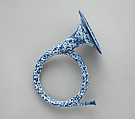
Ceramic Horn, Glazed pottery, French
French
late 18th or early 19th century
[The Great Wave, Sète], Gustave Le Gray  French, Albumen silver print from glass negative
Gustave Le Gray
1857

Research Resources

The Met provides unparalleled resources for research and welcomes an international community of students and scholars. The Met's Open Access API is where creators and researchers can connect to the The Met collection. Open Access data and public domain images are available for unrestricted commercial and noncommercial use without permission or fee.

To request images under copyright and other restrictions, please use this Image Request form.

Feedback

We continue to research and examine historical and cultural context for objects in The Met collection. If you have comments or questions about this object record, please contact us using the form below. The Museum looks forward to receiving your comments.

Send feedback

Content Notice

The Metropolitan Museum of Art presents over 5,000 years of art from around the world, and our online collection reflects ongoing work conducted over the course of our more than 150-year history. You may encounter objects or images that may be inappropriate for some viewers or information that may be outdated.