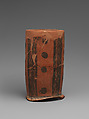
Tiger (?) figurine
The figurine was excavated at Yarim Tepe in northeastern Iran, six miles south of the modern town of Gonbad-e Kavus. Yarim Tepe was a small settlement, inhabited from the Neolithic to the Parthian period, with many interruptions. This figurine likely dates to the Chalcolithic period, since pottery with similar fabric and coloring excavated at the site belongs to this period as well.
Tigers are little known in the ancient world. They are mentioned in Mesopotamian, Hittite and Greek literature only in passing, and no representations of them are known except for this one. This part of Iran was, however, home to the Caspian tiger, which went extinct in the late twentieth century A.D. Thus this figurine may be the earliest known image of a tiger.
Artwork Details
- Title: Tiger (?) figurine
- Period: Late Chalcolithic
- Date: ca. 3100 BCE
- Geography: Iran, Yarim Tepe
- Culture: Iran
- Medium: Ceramic, paint
- Dimensions: 2 x 3.25 in. (5.08 x 8.26 cm)
- Credit Line: Purchase, H. Dunscombe Colt Gift, 1963
- Object Number: 63.102.20
- Curatorial Department: Ancient West Asian Art
More Artwork
Research Resources
The Met provides unparalleled resources for research and welcomes an international community of students and scholars. The Met's Open Access API is where creators and researchers can connect to the The Met collection. Open Access data and public domain images are available for unrestricted commercial and noncommercial use without permission or fee.
To request images under copyright and other restrictions, please use this Image Request form.
Feedback
We continue to research and examine historical and cultural context for objects in The Met collection. If you have comments or questions about this object record, please contact us using the form below. The Museum looks forward to receiving your comments.
Content Notice
The Metropolitan Museum of Art presents over 5,000 years of art from around the world, and our online collection reflects ongoing work conducted over the course of our more than 150-year history. You may encounter objects or images that may be inappropriate for some viewers or information that may be outdated.