English
DonateMembershipTickets

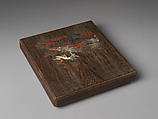
Writing box (Suzuribako) with Ginkgo Leaves

Murose Kazumi Japanese
2015
Not on view
While writing boxes are designed for the practical function of housing implements such as inkstones (suzuri), brushes, and ink cakes, many are also consummate examples of lacquer art lavishly decorated with gold maki-e and mother-of-pearl inlay. This exceptional box was created by Murose Kazumi, who was designated a Living National Treasure of maki-e art in 2008. In Japanese decorative arts, the ginkgo’s distinctive fan-shaped leaf has long symbolized longevity and endurance. An additional meaning associated with the Japanese characters for gingko (literally “grandfather grandson tree”) is that the fruit of the tree planted by a grandfather will be enjoyed by the grandsons.

Artwork Details

Object Information
  • 室瀬和美作 公孫樹蒔絵螺鈿硯箱
  • Title: Writing box (Suzuribako) with Ginkgo Leaves
  • Artist: Murose Kazumi (Japanese, born 1950)
  • Period: Heisei period (1989–2019)
  • Date: 2015
  • Culture: Japan
  • Medium: Lacquered wood with gold and silver togidashimaki-e, hiramaki-e and mother-of-pearl inlay
  • Dimensions: H. 1 3/16 in. (4.6 cm); W. 10 3/16 in. (25.8 cm); D. 9 5/8 in. (24.5 cm)
  • Classification: Lacquer
  • Credit Line: William R. Appleby Fund, 2016
  • Object Number: 2016.573a, b
  • Rights and Reproduction: © Murose Kazumi
  • Curatorial Department: Asian Art
More Artwork
Shō, Bamboo wood, metal, Japanese
Japanese
19th century
Writing Box (Suzuribako) with Praying Mantis, Ogawa Haritsu (Ritsuō)  Japanese, Cedar wood, lacquer, gold and silver maki-e, mother-of-pearl, ceramic, bone, Japan
Attributed to Ogawa Haritsu (Ritsuō)
first half 18th century
Koto (箏), Various woods, ivory, metal, nylon, tortoiseshell, abalone, lacquerwork, Japanese
Japanese
20th century
Writing Box with Birdcage, Black lacquer and gyōbu nashiji ground with gold and silver takamaki-e and hiramaki-e, and mother-of-pearl inlay, Japan
Japan
19th century
Blades and Mountings for a Pair of Swords (Daishō), Sukemitsu of Bizen  Japanese, Steel, wood, lacquer, copper-silver alloy (shibuichi), gold, copper, rayskin, silk, Japanese
Swordsmith Long sword (katana) blade inscribed by Sukemitsu of Bizen
Swordsmith Short sword (wakizashi) blade attributed to Yasumitsu
Fittings maker Set of sword mountings by Iwamoto Konkan
sword (katana) blade, dated 1440; short sword (wakizashi) blade, 15th century; mountings, late 18th century

Research Resources

The Met provides unparalleled resources for research and welcomes an international community of students and scholars. The Met's Open Access API is where creators and researchers can connect to the The Met collection. Open Access data and public domain images are available for unrestricted commercial and noncommercial use without permission or fee.

To request images under copyright and other restrictions, please use this Image Request form.

Feedback

We continue to research and examine historical and cultural context for objects in The Met collection. If you have comments or questions about this object record, please contact us using the form below. The Museum looks forward to receiving your comments.

Send feedback

Content Notice

The Metropolitan Museum of Art presents over 5,000 years of art from around the world, and our online collection reflects ongoing work conducted over the course of our more than 150-year history. You may encounter objects or images that may be inappropriate for some viewers or information that may be outdated.