音声ガイド
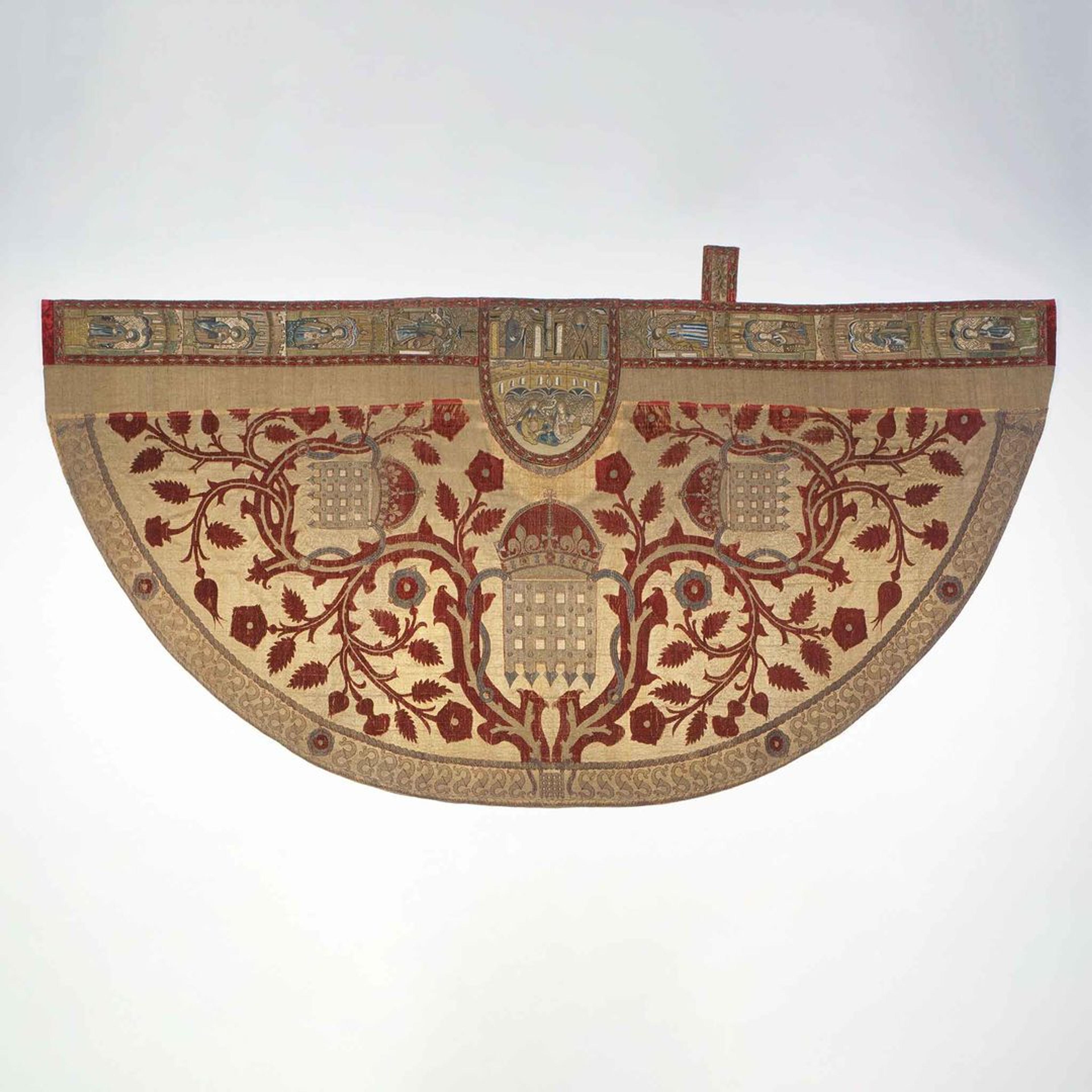
590. Henry VII Cope, 1499–1505
NARRATOR:
In his will of 1509, Henry VII described a set of church robes that he ordered for the priests of Westminster Abbey.
MALE VOICE:
We bequeath and give to the abbot, prior and convent of our monastery of Westminster, the whole suite of vestments and copes of cloth of gold tissue, wrought with our badges of red roses and portcullises, the which we caused to be made, bought and provided at Florence, in Italy.
NARRATOR:
This cope, or priest’s cloak, belonged to this hugely expensive set. Curator Elizabeth Cleland.
ELIZABETH CLELAND:
This is an incredible object, and I think it’s really thrilling to imagine it being worn by the priest moving around the church with the incense and the candle lighting. But in a way, what’s so interesting about it is not the physical sumptuousness, but the design.
NARRATOR:
Like much of Tudor art, the design draws on nature to create Henry’s distinctive royal imagery.
ELIZABETH CLELAND:
So we’ve got this very bold scrolling vine, hanging from which we have three of the Beaufort portcullises: this was the device of Henry VII’s very powerful mother, Margaret Beaufort. But now they’re crowned, Henry being king. The vine is a vine of red roses. And the red roses speak to Henry’s family roots, the Lancastrian red rose. And in addition, we have multiple instances of the Tudor rose. And the Tudor rose was the device that Henry VII invented in a great example of branding, when he brought together the red Lancastrian rose and the white Yorkist rose to make this red-and-white Tudor rose showing the unification between these two families who had been fighting for so many years beforehand.
It really is this very, very bold representation of Henry VII’s family devices. It would leave no one in any doubt as to who is in power!
###