Three-cornered stone
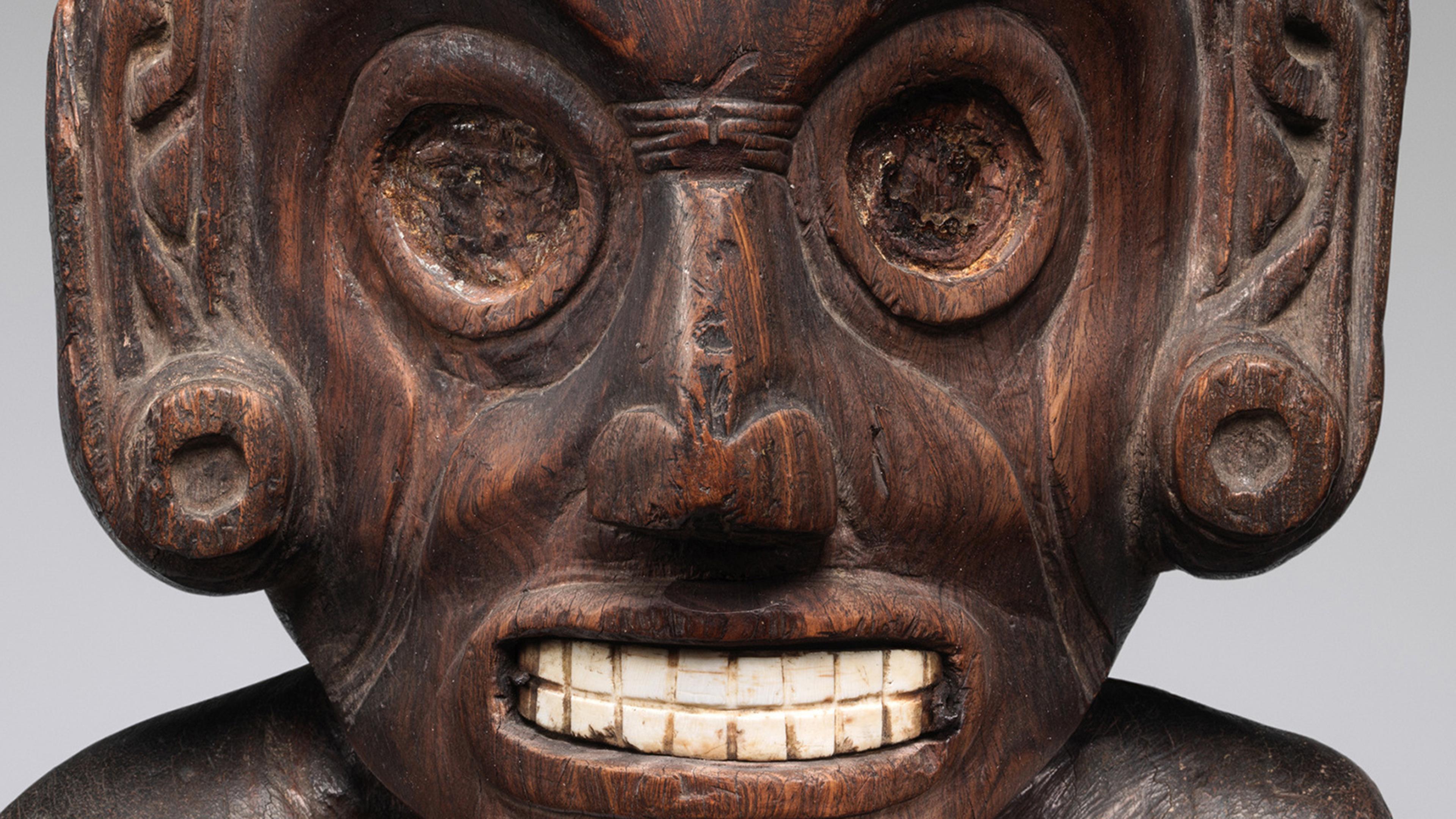
Creative sculptural expression, both extractive and additive, for the Taíno peoples was intertwined with sacred concepts such as zemí, ceremony, and rulership. Zemí figures were used as stands, reliquaries, or personal adornment. Zemí (or cemí) is a term used by Taíno peoples, the diverse societies that inhabited the Antilles archipelago before European contact, that linguistically relates to a quality akin to sweetness. Zemí refers not to an object or image but to an immaterial, spiritual, and vital force pertaining to deities and ancestors. There are several known zemí identities recorded by the Spanish, some of which have been linked to archaeological images.
Artwork Details
- Title: Three-cornered stone
- Artist: Taíno artist(s)
- Date: 900–1600 CE
- Geography: Dominican Republic, Caribbean, San Juan de la Maguana, reportedly
- Culture: Taíno
- Medium: Limestone
- Dimensions: H. 6 3/4 x W. 3 3/4 x D. 7 1/4 in. (17.1 x 9.5 x 18.4 cm)
- Classification: Stone-Sculpture
- Credit Line: Purchase, Oscar de la Renta Gift, 1997
- Object Number: 1997.35.2
- Curatorial Department: The Michael C. Rockefeller Wing
More Artwork
Related Content
 Free to download
Research Resources
The Met provides unparalleled resources for research and welcomes an international community of students and scholars. The Met's Open Access API is where creators and researchers can connect to the The Met collection. Open Access data and public domain images are available for unrestricted commercial and noncommercial use without permission or fee.
To request images under copyright and other restrictions, please use this Image Request form.
Feedback
We continue to research and examine historical and cultural context for objects in The Met collection. If you have comments or questions about this object record, please contact us using the form below. The Museum looks forward to receiving your comments.
Content Notice
The Metropolitan Museum of Art presents over 5,000 years of art from around the world, and our online collection reflects ongoing work conducted over the course of our more than 150-year history. You may encounter objects or images that may be inappropriate for some viewers or information that may be outdated.