Elderly Man Flanked by Egyptian Gods
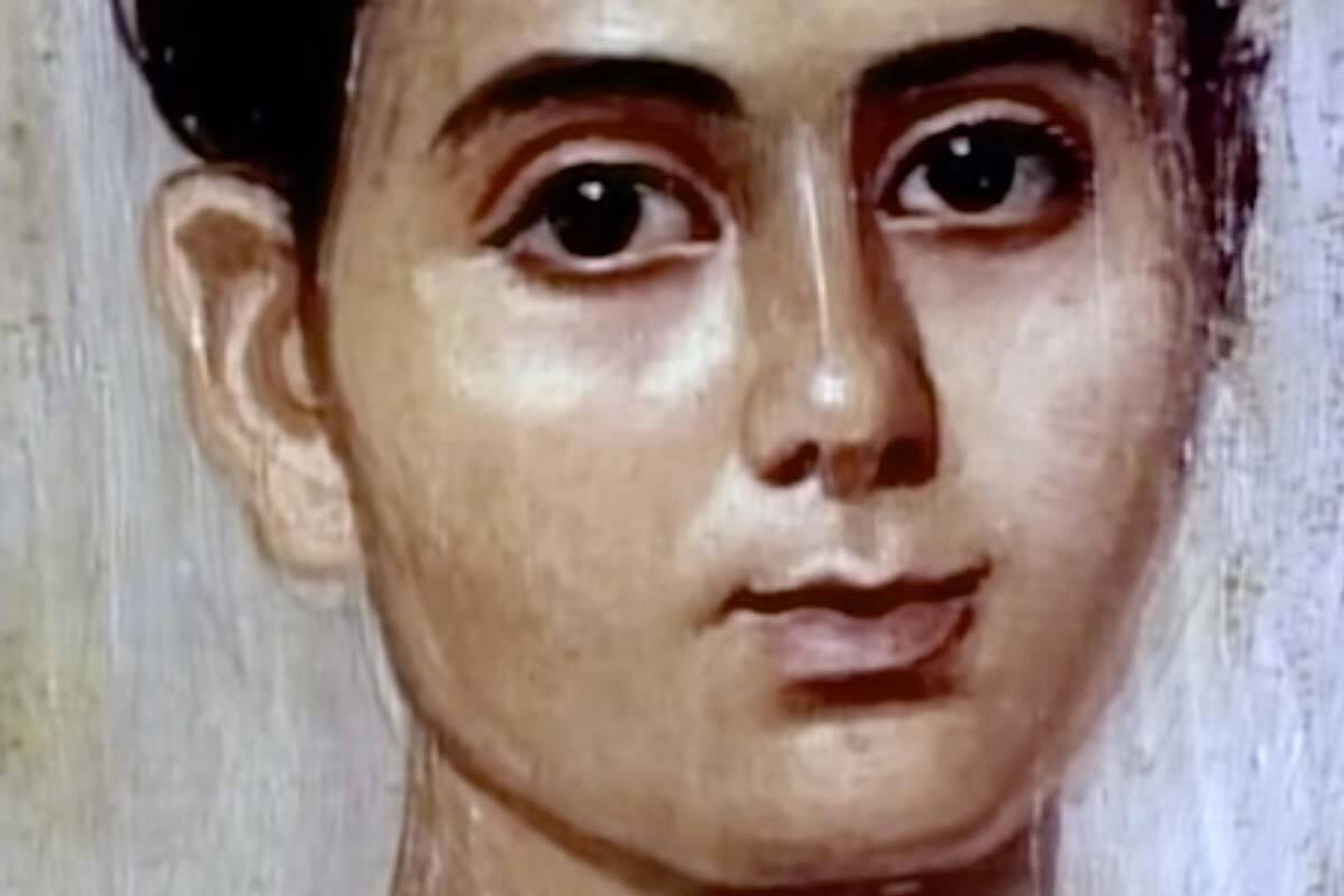
Tempera portraits are matte and lack the relief effect created by encaustic paints. The tempera technique has long roots in Egyptian tradition. Because the medium does not cover well, wood panels were usually covered first with white gesso to enhance the colors. Because colors dry quickly and do not blend as encaustic does, tones were achieved by overpainting thin layers of color. Judging from its thickness and the five holes, this panel was tied onto a mummy or coffin rather than inserted within the wrappings.
Artwork Details
- Title: Elderly Man Flanked by Egyptian Gods
- Period: Roman Period
- Date: ca. 250 CE
- Geography: From Egypt
- Medium: Tempera on sycomore wood
- Dimensions: H. 38 cm. (14 15/16 in.); W. 22.4 cm (8 13/16 in.)
- Credit Line: Rogers Fund, 1944
- Object Number: 44.2.2
- Curatorial Department: Egyptian Art
More Artwork
Related Content
Research Resources
The Met provides unparalleled resources for research and welcomes an international community of students and scholars. The Met's Open Access API is where creators and researchers can connect to the The Met collection. Open Access data and public domain images are available for unrestricted commercial and noncommercial use without permission or fee.
To request images under copyright and other restrictions, please use this Image Request form.
Feedback
We continue to research and examine historical and cultural context for objects in The Met collection. If you have comments or questions about this object record, please contact us using the form below. The Museum looks forward to receiving your comments.
Content Notice
The Metropolitan Museum of Art presents over 5,000 years of art from around the world, and our online collection reflects ongoing work conducted over the course of our more than 150-year history. You may encounter objects or images that may be inappropriate for some viewers or information that may be outdated.