오디오 가이드
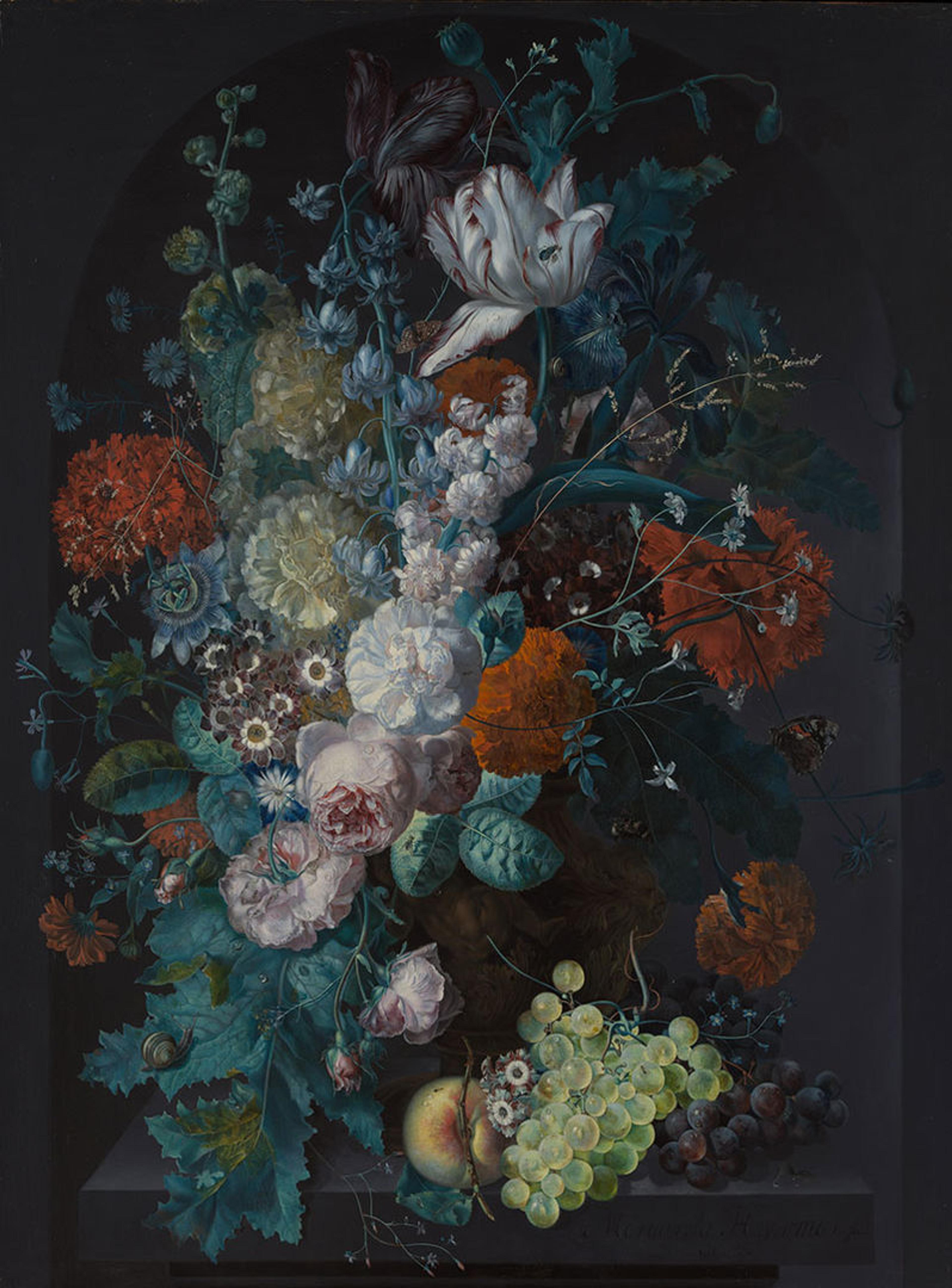
5255. Margareta Haverman, A Vase of Flowers
REMCO VAN VLIET: Hi, my name is Remco van Vliet. I am the florist here at The Metropolitan Museum of Art, and I’m the only living Dutch Master here at the Museum [laughs].
NARRATOR: This is one of only two known works by Margareta Haverman.
REMCO VAN VLIET: This is one of the most beautiful flower paintings ever created by a Dutch artist, period.
NARRATOR: This bouquet could never have existed in real life. Roses, tulips, hollyhocks, irises, marigolds, and poppies are not in bloom at the same time. Yet, here they all are, facing out as if ready for their close-up.
REMCO VAN VLIET: It looks almost a little bit too perfectly arranged. Some flowers, their heads are very heavy, and the stem cannot really support it. But they’re not drooping. This is as far as it goes in terms of the Dutch feeling of opulence or showing off.
NARRATOR: To invent the most compelling arrangement, Haverman also manipulated the pigments.
GERRIT ALBERTSON: My name is Gerrit Albertson. I’m the Annette de la Renta Fellow in Paintings Conservation at The Met.
NARRATOR: In the seventeenth century, a stable, vibrant green pigment did not exist. Instead, artists mixed blue and yellow. You can see evidence of this in the large poppy leaf in the bottom left corner.
GERRIT ALBERTSON: One of the yellows that Haverman used was an organic pigment. They produce a yellow translucent color, but the problem is that they tend to fade very quickly when they’re exposed to light, and the same is true with this painting.
NARRATOR: And so, as the yellow fades, the green turns to blue—that’s why you see so much blue in Dutch seventeenth-century flower paintings. Other pigments here surprised conservators, specifically Prussian blue and Naples yellow. Both were new to Dutch painters and thus an indication of Haverman’s innovations.
GERRIT ALBERTSON: The Naples yellow is used only in little touches on the peach in the foreground. So it almost seems like she was experimenting, trying it out for the first time. But she was a bit of an innovator, an early adopter, with these new materials. It really shows that she wasn’t following her teacher, she wasn’t just copying his work. She was really doing her best to create a composition on her own terms.