오디오 가이드
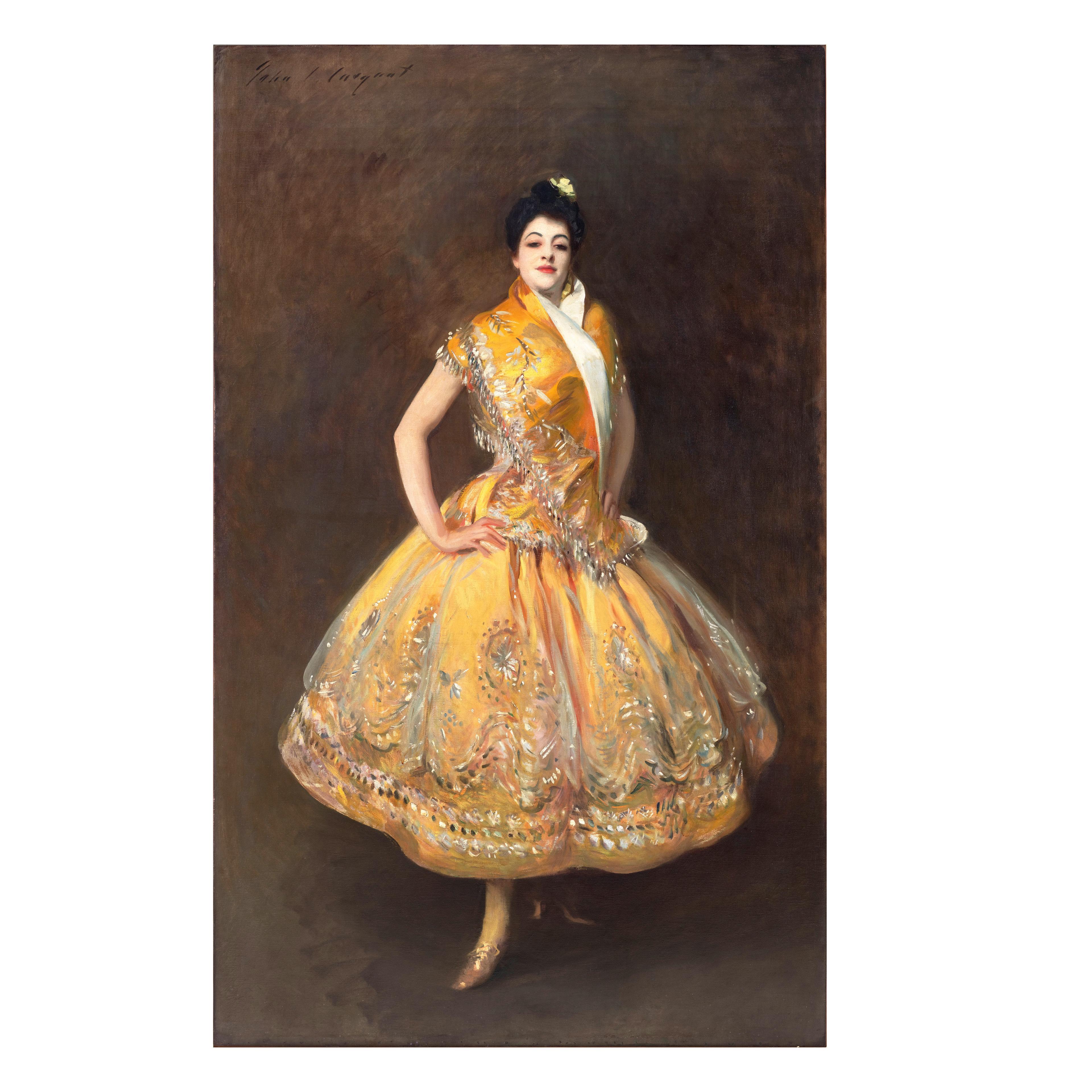
690. La Carmencita (Carmen Dauset Moreno), ca. 1890
NARRATOR: Sargent painted flamenco dancer Carmen Dauset Moreno in 1890—after he left Paris. Still, this work reflects many of the lessons of his Paris years. Art historian Caroline Corbeau-Parsons:
CAROLINE CORBEAU-PARSONS: It’s interesting that he revisits two important strands from his Parisian years: his interest in Spanish painting, which you find throughout his production in Paris, but also his interest in the femme fatale, which he had previously developed in the portrait of Madame X. And with Carmencita, he makes a synthesis of both.
NARRATOR: But unlike Madame X, this painting was well-received in Paris.
CORBEAU-PARSONS: The way in which he renders the light on the sequins and on the silk of her dress, the way in which he could render the textures under the spotlight, was something that was highly praised by the reviewers at the time. And it’s no surprise that the French state decided to buy this painting for Sargent to enter the National Collections.
NARRATOR: The purchase marked Sargent’s ultimate acceptance into the French art world. Still, he had some regrets.
CORBEAU-PARSONS: Sargent later on said he was a little bit disappointed to be represented by that painting. He probably felt that the treatment of the dress, which is so dazzling and fabulous, was actually, in fact, too impressionistic for his taste. And, you know that he famously said that the best thing he ever painted was actually Madame X. And in some ways, maybe he would have preferred to have been represented in France with Madame X rather than Carmencita.
NARRATOR: In fact, Sargent approached The Met to be the home of Madame X to firmly establish his reputation in the United States. Today, of course, both works stand as pillars of Sargent’s enduring artistic legacy.
We invite you to visit the American Wing here at The Met to see works from the next decades of Sargent’s career and other American masters.
Thanks again for joining us today.