Conservation allows The Met to learn more about the collection and safeguard it for future generations. Conservators have embarked on a multiyear study and treatment of two large sculptural groups from the chapel of the castle of Biron in Dordogne, France. The first comprehensive treatment since the sculptures came to the Museum in 1907, this project involves thorough documentation, examination, and technical analysis of two limestone sculptures in a temporary conservation studio in Gallery 305, and the oak frame of one work in nearby Gallery 306.
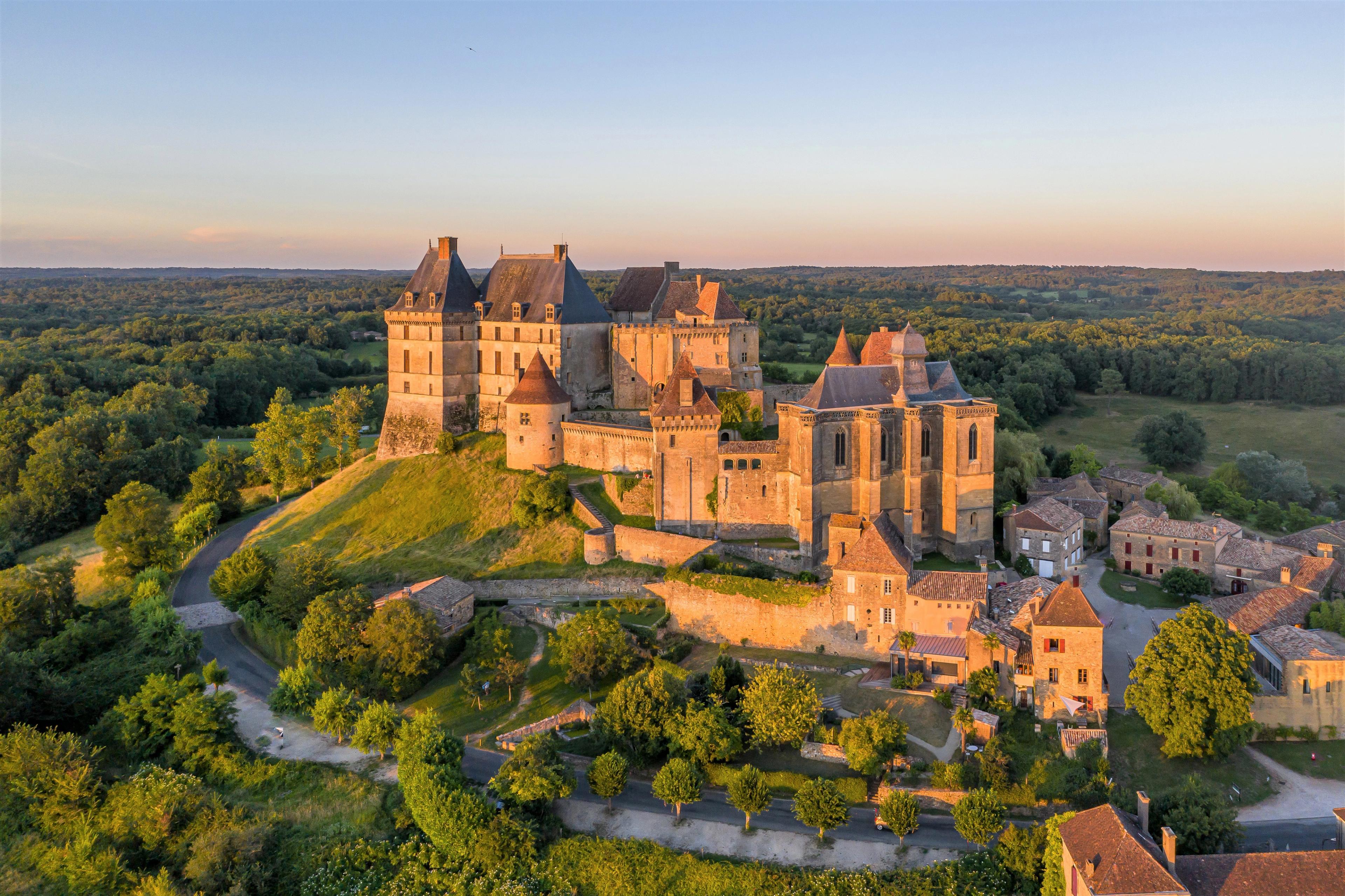
The castle of Biron in Dordogne, France. Photo by Déclic & Décolle, courtesy of Semitour Périgord SA
The Biron sculptures have survived for five hundred years, but not without damage. Portions of the works were mutilated during the French Revolution, and they were later marked with graffiti and darkened with grime. High humidity levels in the chapel in France affected the integrity of the stone, wood, and painted surfaces. Given the fragile condition of these early sixteenth-century ensembles, treatment will involve stabilization of fragile stone and wood, consolidation of flaking painted surfaces, cleaning, and reintegration of damaged areas.
Few large sculptural ensembles survive intact from the Middle Ages. The two Biron scenes are exceptional not only for their completeness, but also for their expressive details and emotional depth. They were commissioned in the early 1500s by two brothers for the castle chapel, where they were ultimately buried. They appear as the kneeling figures on either side of the Pietà: Armand, bishop of Sarlat, cradles Christ’s head tenderly in his hands, while his older brother Pons de Gontaut kneels at Christ’s feet.
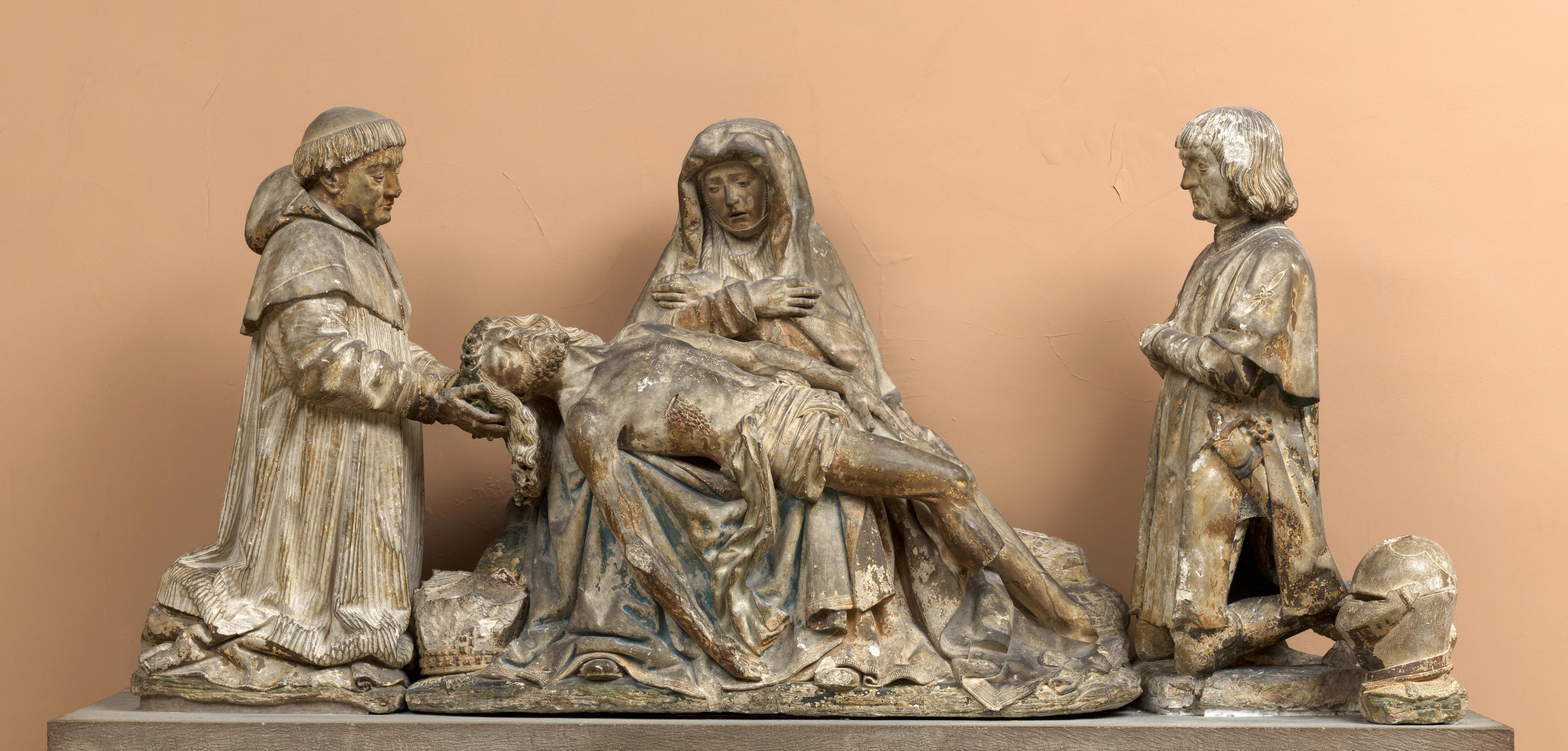
The Pietà before conservation treatment, with darkened stone areas and remnants of paint. Pietà with Donors, ca. 1515. Biron, Dordogne, France. Limestone, remnants of original and later polychromy, 43 3/8 x 92 1/2 x 22 in. (110.2 x 235 x 55.9 cm). The Metropolitan Museum of Art, New York, Gift of J. Pierpont Morgan, 1916 (16.31.1a–d)
Pietà scenes, or representations of the Virgin Mary holding the dead Christ across her lap, appeared across Europe in the fourteenth through sixteenth centuries. Rather than illustrating a specific moment from the Gospels, such artworks invite viewers to imagine the Virgin’s sorrow in the hours after the Crucifixion.
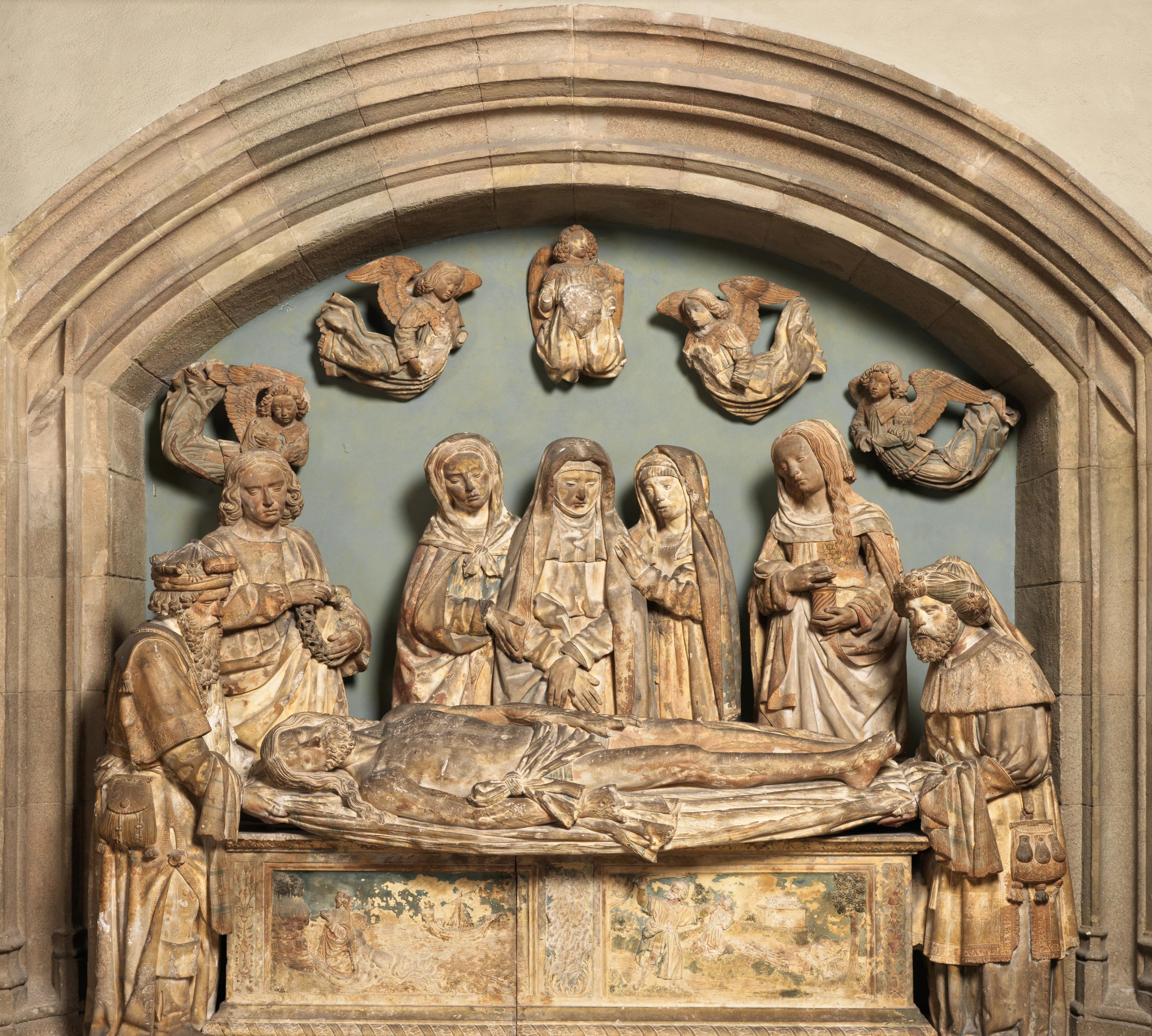
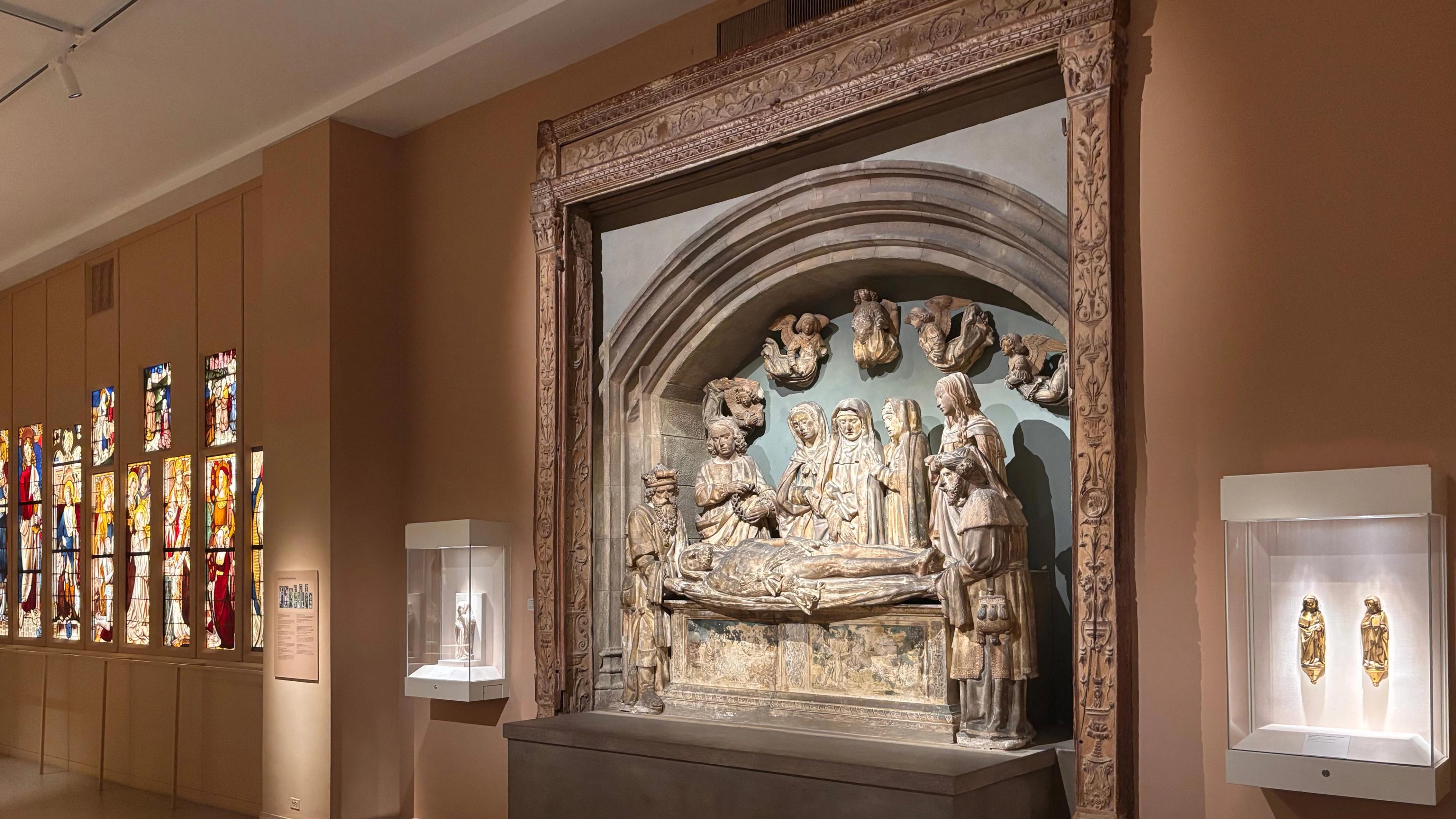
Entombment of Christ, ca. 1515. Made in Biron, Dordogne, France. Limestone, remnants of original and later polychromy, 90 in. × 9 ft. 8 1/2 in. × 39 in. (228.6 × 295.9 × 99.1 cm). The Metropolitan Museum of Art, New York, Gift of J. Pierpont Morgan, 1916 (16.31.2a)
The Entombment scene also evokes the intense sorrow associated with the death of Christ but includes a larger group of mourners. Joseph of Arimathea and Nicodemus appear at Christ’s head and feet, echoing the positions of Armand and Pons in the Pietà. The Virgin Mary appears in the center of the entire composition, wearing a heavy cloak much like in the Pietà, and is flanked by two Holy Women (possibly Mary Salome and Mary of Clopas) as well as John the Evangelist holding the Crown of Thorns at left and Mary Magdalene with an ointment jar at right. Five angels fly above the scene.
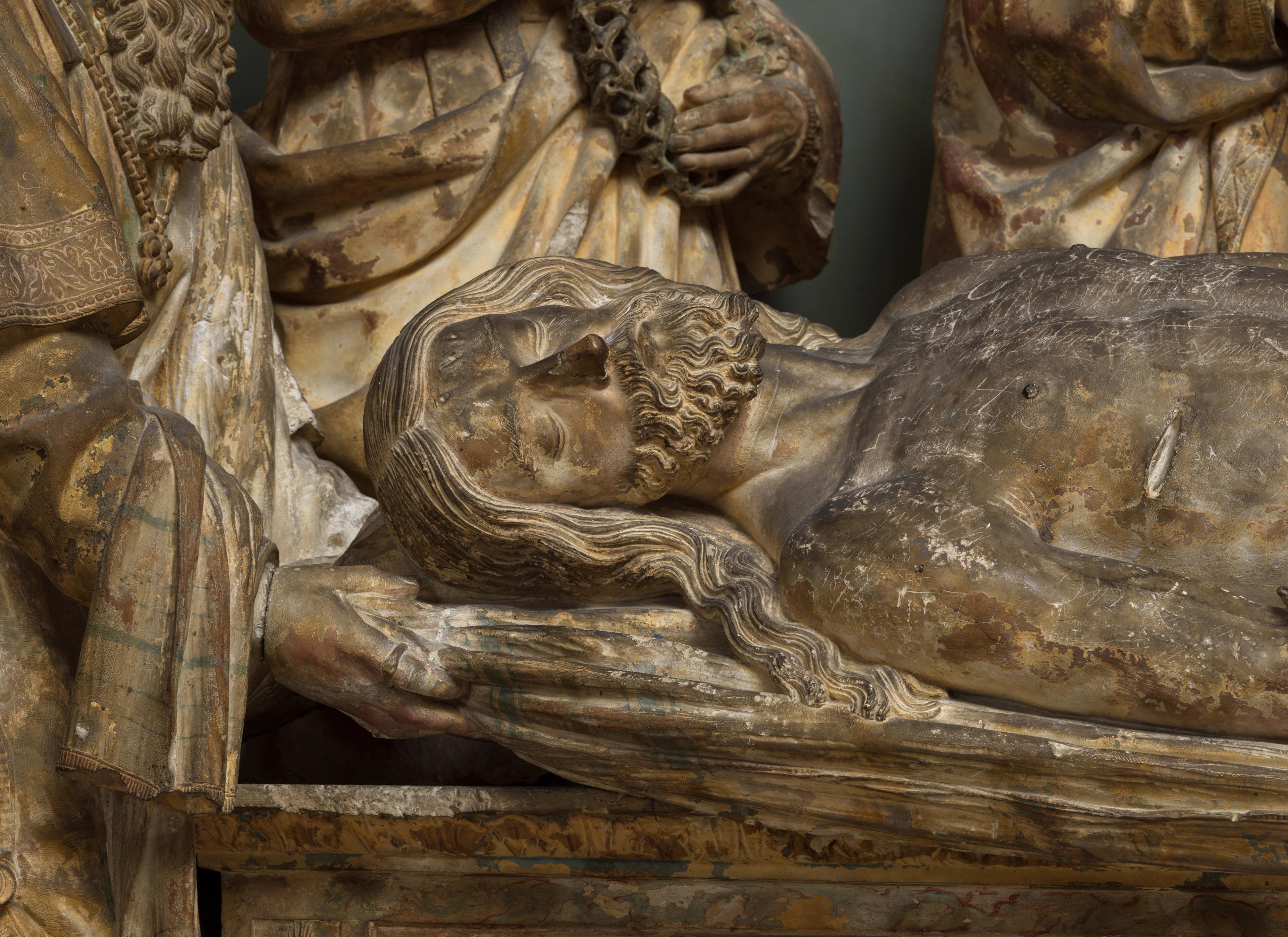
Darkened stone areas and remnants of paint on the Entombment of Christ before conservation treatment.
The wooden frame surrounding the Entombment scene can be dated somewhat later than the stone sculptures, but it was probably also made during the sixteenth century. It once supported enormous wooden shutters consisting of four panels that could be folded open to display the Entombment during Masses or closed to protect the sculptures inside.
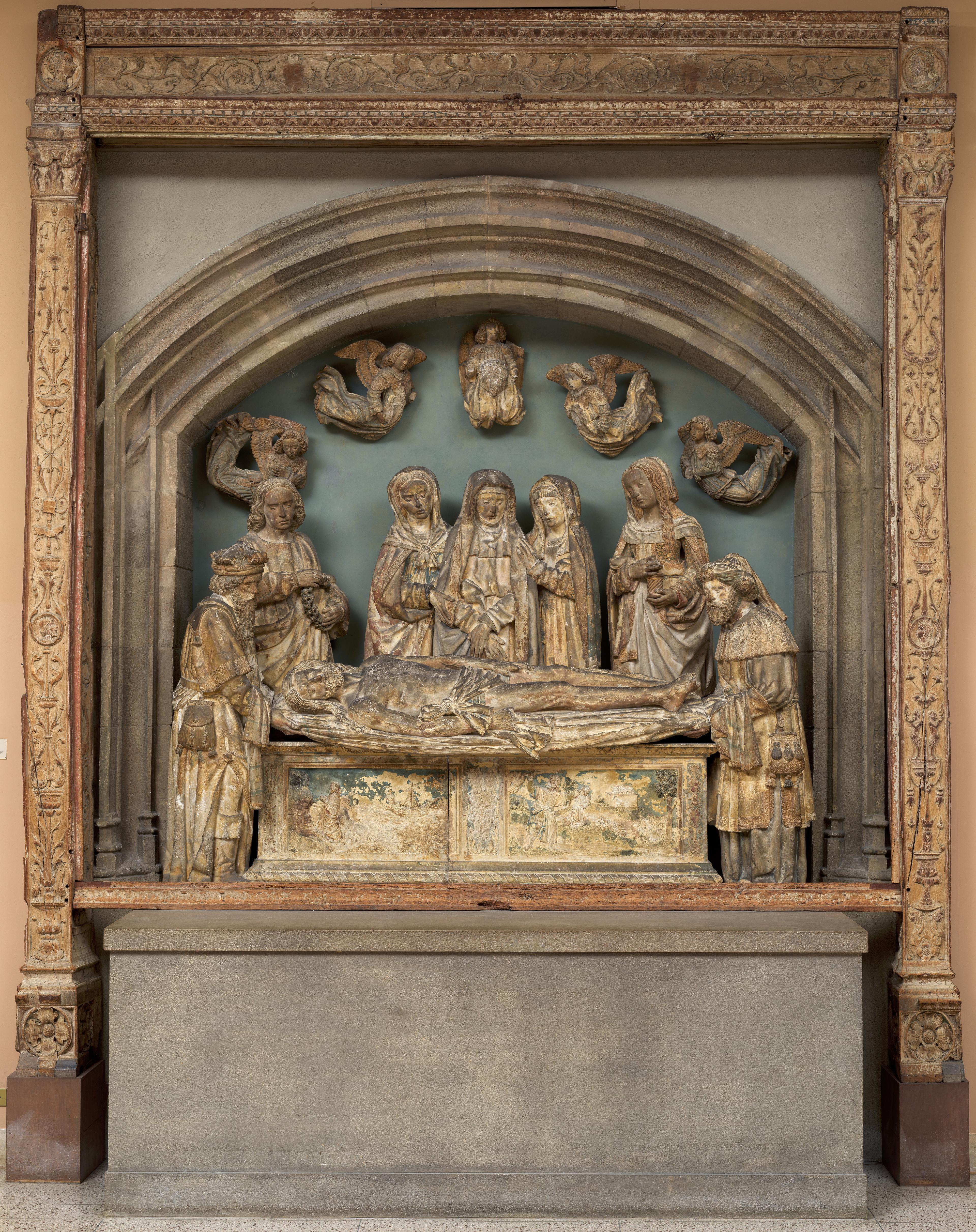
Entombment of Christ displayed in its frame, before conservation treatment. Wooden Frame from an Entombment Group, mid-16th century. Made in Biron, Dordogne, France. Oak, remnants of original and later polychromy, 14 ft. 9 in. × 12 ft. 1 in. × 11 3/4 in. (449.6 × 368.3 × 29.8 cm). The Metropolitan Museum of Art, New York, Gift of J. Pierpont Morgan, 1916 (16.31.2b)
These monumental sculptures remained in the chapel of the castle of Biron until 1907, when the Marquis of Gontaut-Biron sold the ensemble to J. P. Morgan. Morgan immediately placed them on loan to The Met and the group was eventually donated by his heirs in 1916. Between 2021 and 2024, The Met partnered with French colleagues to produce accurate copies of the sculptures. These copies are now on view in the original chapel in Biron, while the originals will remain in New York.
This project is made possible by Lilly Endowment Inc.