Conservation allows The Met to learn more about the collection and safeguard it for future generations. Conservators have embarked on a multiyear study and treatment of two large sculptural groups from the chapel of the castle of Biron in Dordogne, France. The first comprehensive treatment since the sculptures came to the Museum in 1907, this project involves thorough documentation, examination, and technical analysis of two limestone sculptures in a temporary conservation studio in Gallery 305, and the oak frame of one work in nearby Gallery 306.
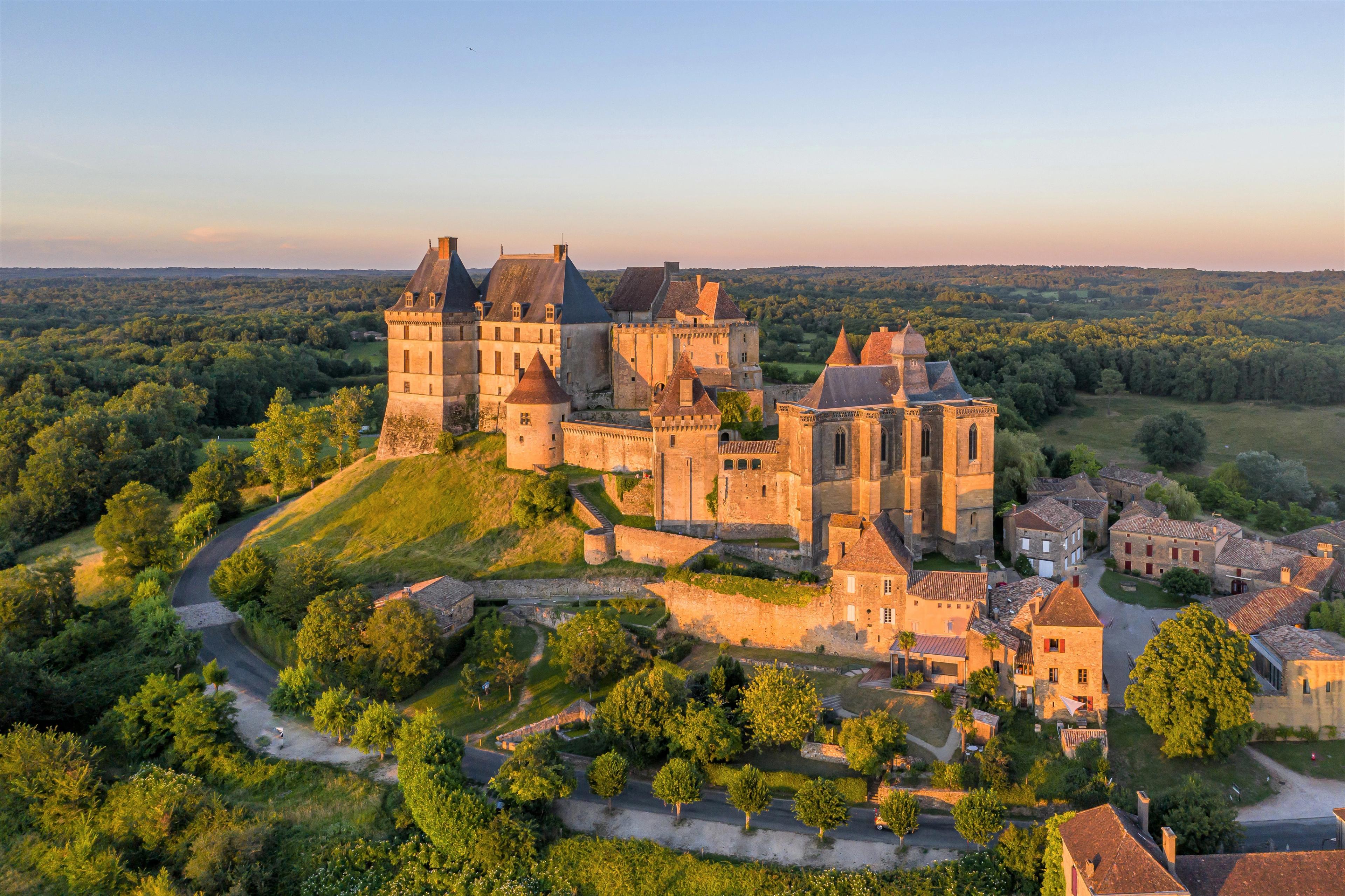
The castle of Biron in Dordogne, France. Photo by Déclic & Décolle, courtesy of Semitour Périgord SA
The Biron sculptures have survived for five hundred years, but not without damage. Portions of the works were mutilated during the French Revolution, and they were later marked with graffiti and darkened with grime. High humidity levels in the chapel in France affected the integrity of the stone, wood, and painted surfaces. Given the fragile condition of these early sixteenth-century ensembles, treatment will involve stabilization of fragile stone and wood, consolidation of flaking painted surfaces, cleaning, and reintegration of damaged areas.
Few large sculptural ensembles survive intact from the Middle Ages. The two Biron scenes are exceptional not only for their completeness, but also for their expressive details and emotional depth. They were commissioned in the early 1500s by two brothers for the castle chapel, where they were ultimately buried. They appear as the kneeling figures on either side of the Pietà: Armand, bishop of Sarlat, cradles Christ’s head tenderly in his hands, while his older brother Pons de Gontaut kneels at Christ’s feet.
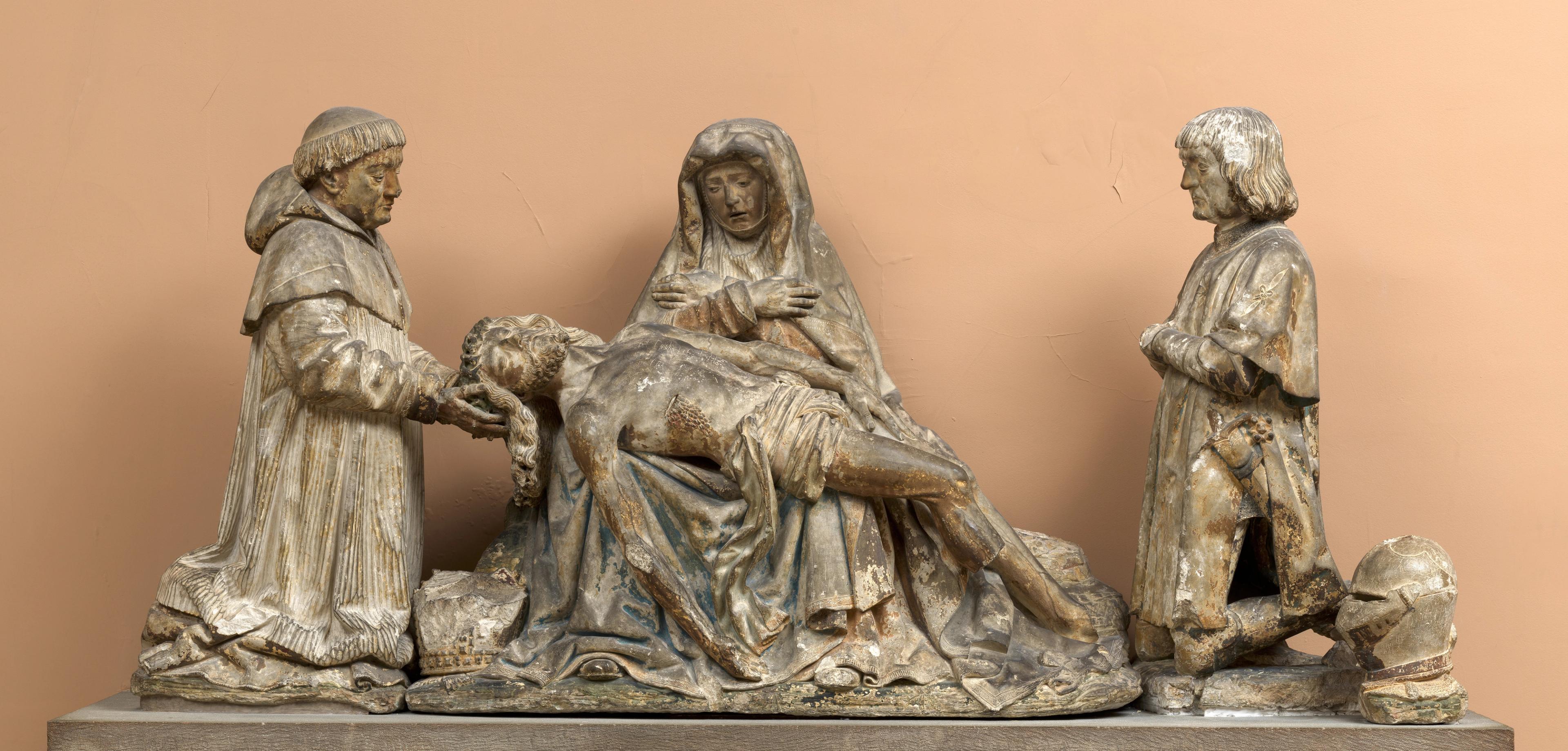
The Pietà before conservation treatment, with darkened stone areas and remnants of paint. Pietà with Donors, ca. 1515. Biron, Dordogne, France. Limestone, remnants of original and later polychromy, 43 3/8 x 92 1/2 x 22 in. (110.2 x 235 x 55.9 cm). The Metropolitan Museum of Art, New York, Gift of J. Pierpont Morgan, 1916 (16.31.1a–d)
Pietà scenes, or representations of the Virgin Mary holding the dead Christ across her lap, appeared across Europe in the fourteenth through sixteenth centuries. Rather than illustrating a specific moment from the Gospels, such artworks invite viewers to imagine the Virgin’s sorrow in the hours after the Crucifixion.
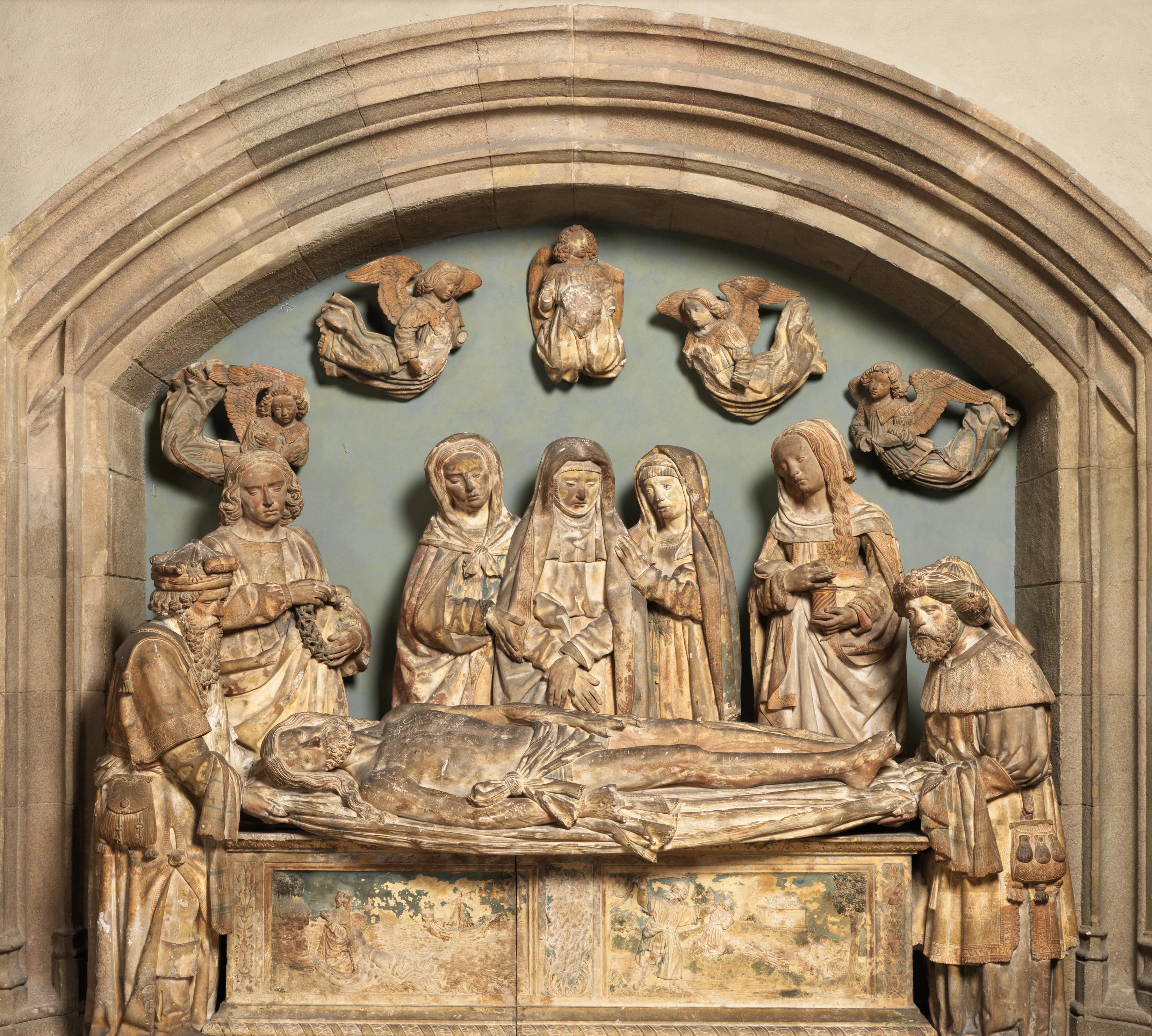
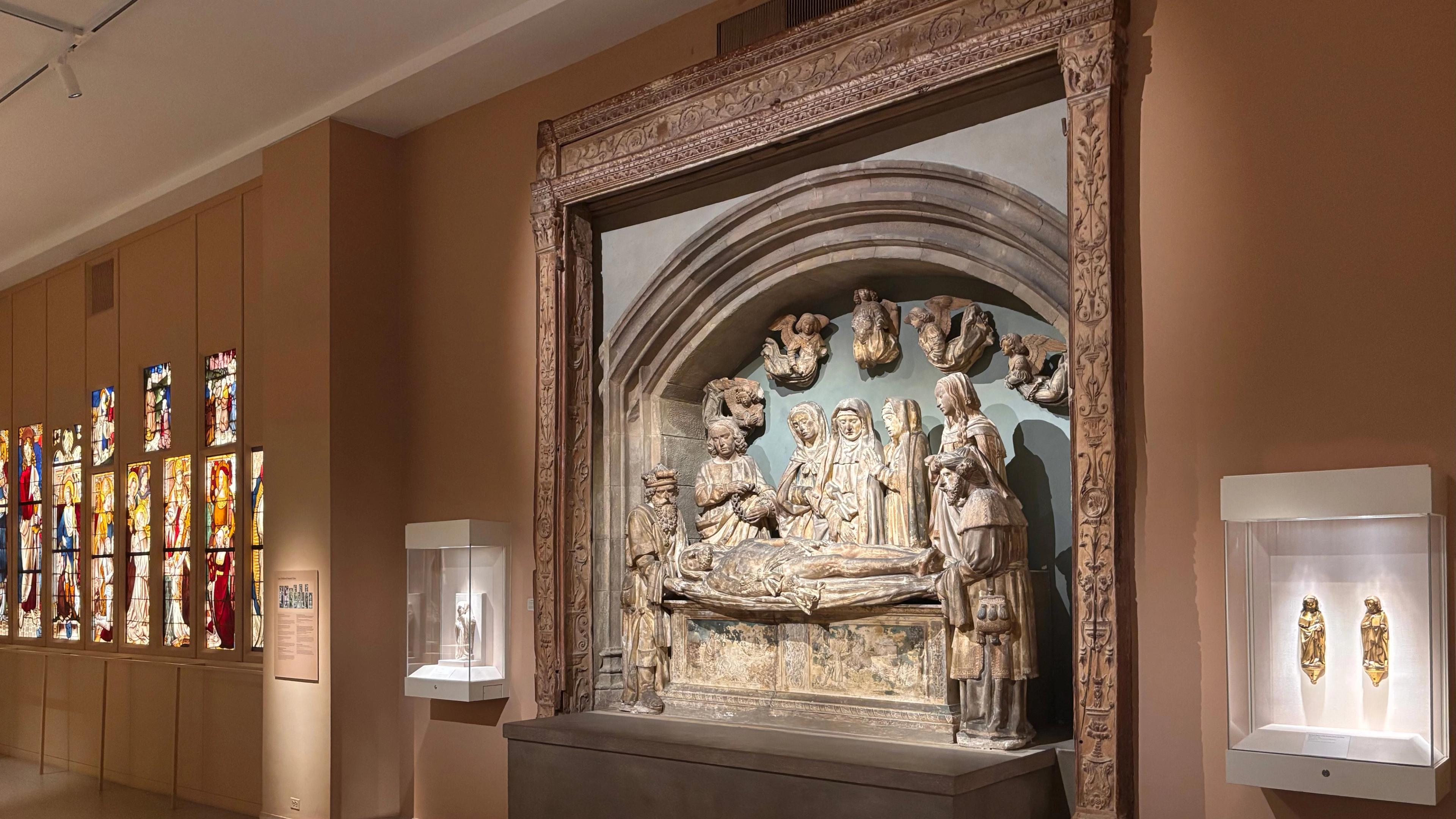
Entombment of Christ, ca. 1515. Made in Biron, Dordogne, France. Limestone, remnants of original and later polychromy, 90 in. × 9 ft. 8 1/2 in. × 39 in. (228.6 × 295.9 × 99.1 cm). The Metropolitan Museum of Art, New York, Gift of J. Pierpont Morgan, 1916 (16.31.2a)
The Entombment scene also evokes the intense sorrow associated with the death of Christ but includes a larger group of mourners. Joseph of Arimathea and Nicodemus appear at Christ’s head and feet, echoing the positions of Armand and Pons in the Pietà. The Virgin Mary appears in the center of the entire composition, wearing a heavy cloak much like in the Pietà, and is flanked by two Holy Women (possibly Mary Salome and Mary of Clopas) as well as John the Evangelist holding the Crown of Thorns at left and Mary Magdalene with an ointment jar at right. Five angels fly above the scene.
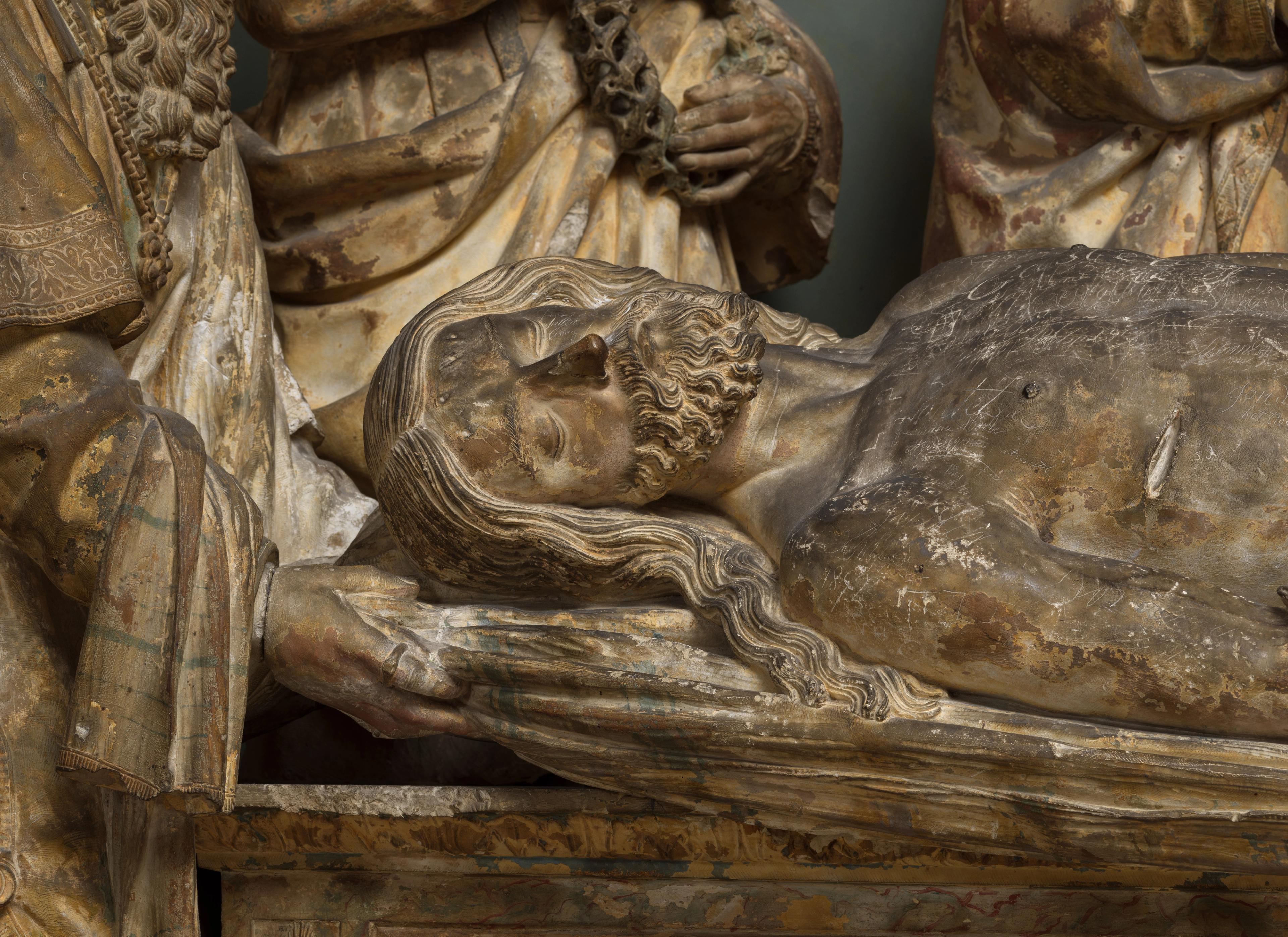
Darkened stone areas and remnants of paint on the Entombment of Christ before conservation treatment.
The wooden frame surrounding the Entombment scene can be dated somewhat later than the stone sculptures, but it was probably also made during the sixteenth century. It once supported enormous wooden shutters consisting of four panels that could be folded open to display the Entombment during Masses or closed to protect the sculptures inside.
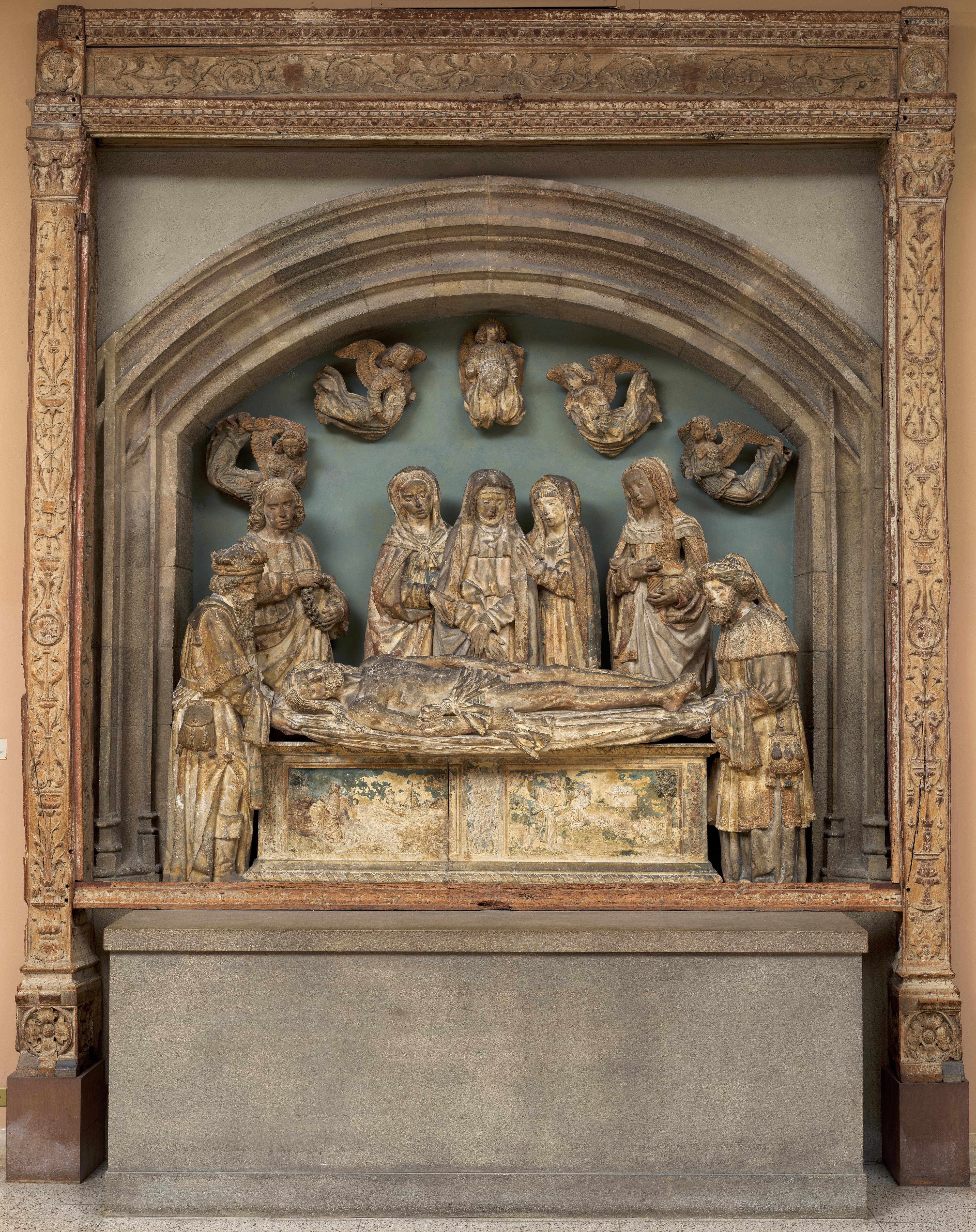
Entombment of Christ displayed in its frame, before conservation treatment. Wooden Frame from an Entombment Group, mid-16th century. Made in Biron, Dordogne, France. Oak, remnants of original and later polychromy, 14 ft. 9 in. × 12 ft. 1 in. × 11 3/4 in. (449.6 × 368.3 × 29.8 cm). The Metropolitan Museum of Art, New York, Gift of J. Pierpont Morgan, 1916 (16.31.2b)
These monumental sculptures remained in the chapel of the castle of Biron until 1907, when the Marquis of Gontaut-Biron sold the ensemble to J. P. Morgan. Morgan immediately placed them on loan to The Met and the group was eventually donated by his heirs in 1916. Between 2021 and 2024, The Met partnered with French colleagues to produce accurate copies of the sculptures. These copies are now on view in the original chapel in Biron, while the originals will remain in New York.
Meet the team
An intervention of this scale requires the collaboration of a team of specialists, each bringing different skills. For this project, some objects conservators are concentrating on polychrome stone surfaces, focusing on cleaning, stabilizing, and understanding the stone substrate and paint layers. Others are working on the polychrome oak frame, addressing joinery, stability, and surface treatments. Additional conservators are bringing expertise with handling, movement, and treatment of large objects. Conservation scientists are identifying the materials and deterioration pathways that inform treatment decisions. Collaboration is essential to building a fuller understanding of each object, and working as a team allows for careful and thorough treatment.
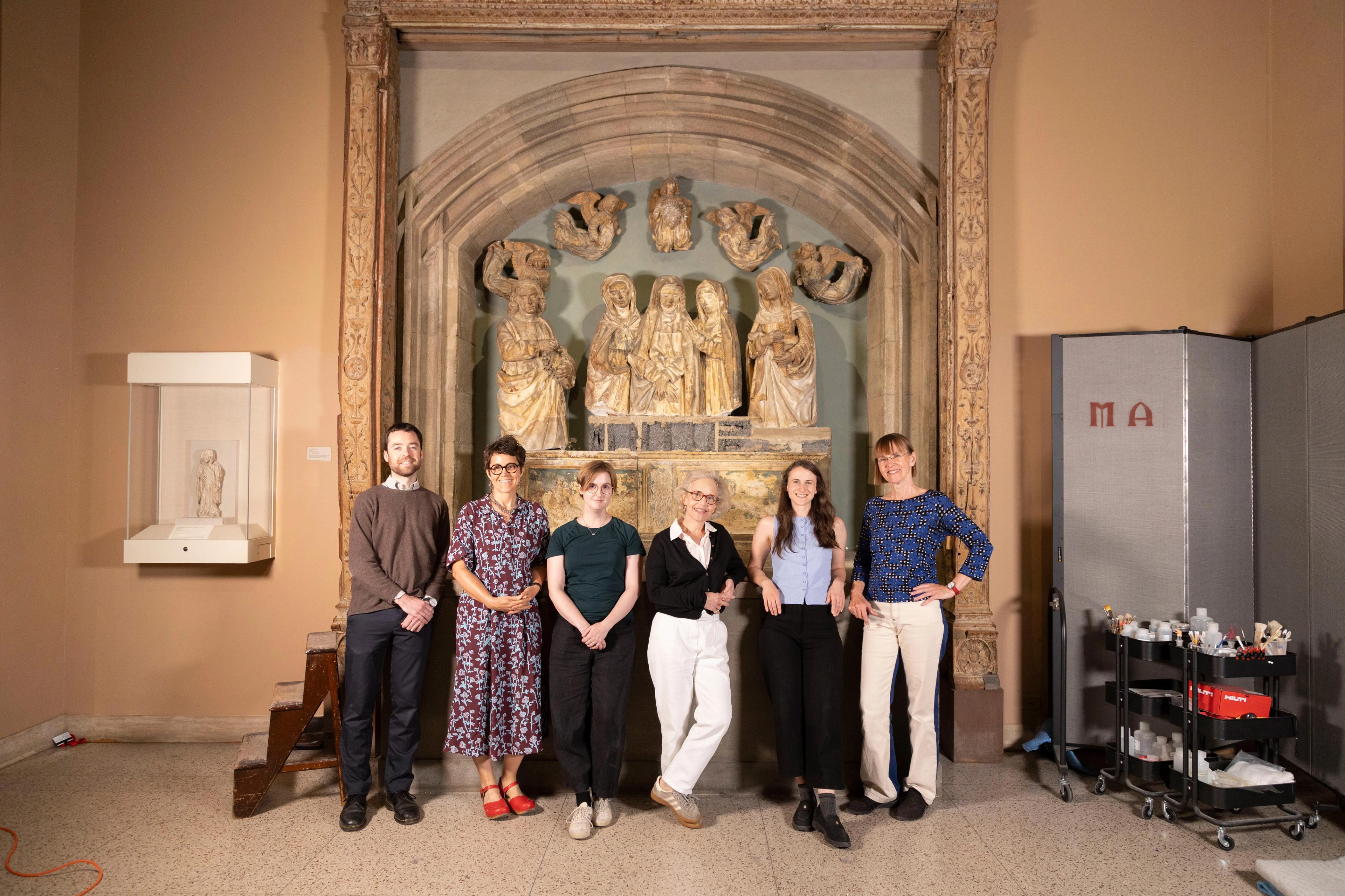
From left: Olav Bjornerud, Carolyn Riccardelli, Ellen Purdy, Lucretia Kargère, Chantal Stein, and Mecka Baumeister
Olav Bjornerud
Olav is responsible for painted and gilded wooden objects, and is working with Mecka to study and treat the once-colorful oak frame. Olav is interested in how wear and use continue to shape wooden objects long after they have been made.
Carolyn Riccardelli
Carolyn specializes in the structural treatment of large-scale objects, and is assisting with the deinstallation of the Biron sculptures and will work to refine their mounts for future installation. She enjoys the challenge of designing minimally invasive supports to keep monumental works stable while preserving their visual presence.
Ellen Purdy
Ellen was a post-doc Fellow in Scientific Research, and during her year-long fellowship focused on the materials of the sculptures and frame, analyzing the pigments along with their degradation and alteration. Ellen’s investigation informs the ongoing conservation treatment.
Lucretia Kargère
Lucretia is overseeing the Biron sculpture project as principal conservator for Medieval sculptures. She loves the challenge of connecting the intricacies of carving, paint, and deterioration processes to broader historical contexts.
Chantal Stein
Chantal is carrying out, together with Lucretia, the treatment of these sculptural ensembles, drawing on her experience conserving stone and polychrome surfaces across curatorial collections. She is fascinated by how traces of use, repair, and alteration can illuminate an object’s history.
Mecka Baumeister
Mecka is responsible for the conservation of European furniture, wooden decorative objects, and architectural woodwork. Together with Olav, she is working on the conservation of the polychrome oak frame of the Biron Entombment. She likes to discover objects’ original manufacturing techniques and materials, and to understand their function and how they have changed over time.
This project is made possible by Lilly Endowment Inc.