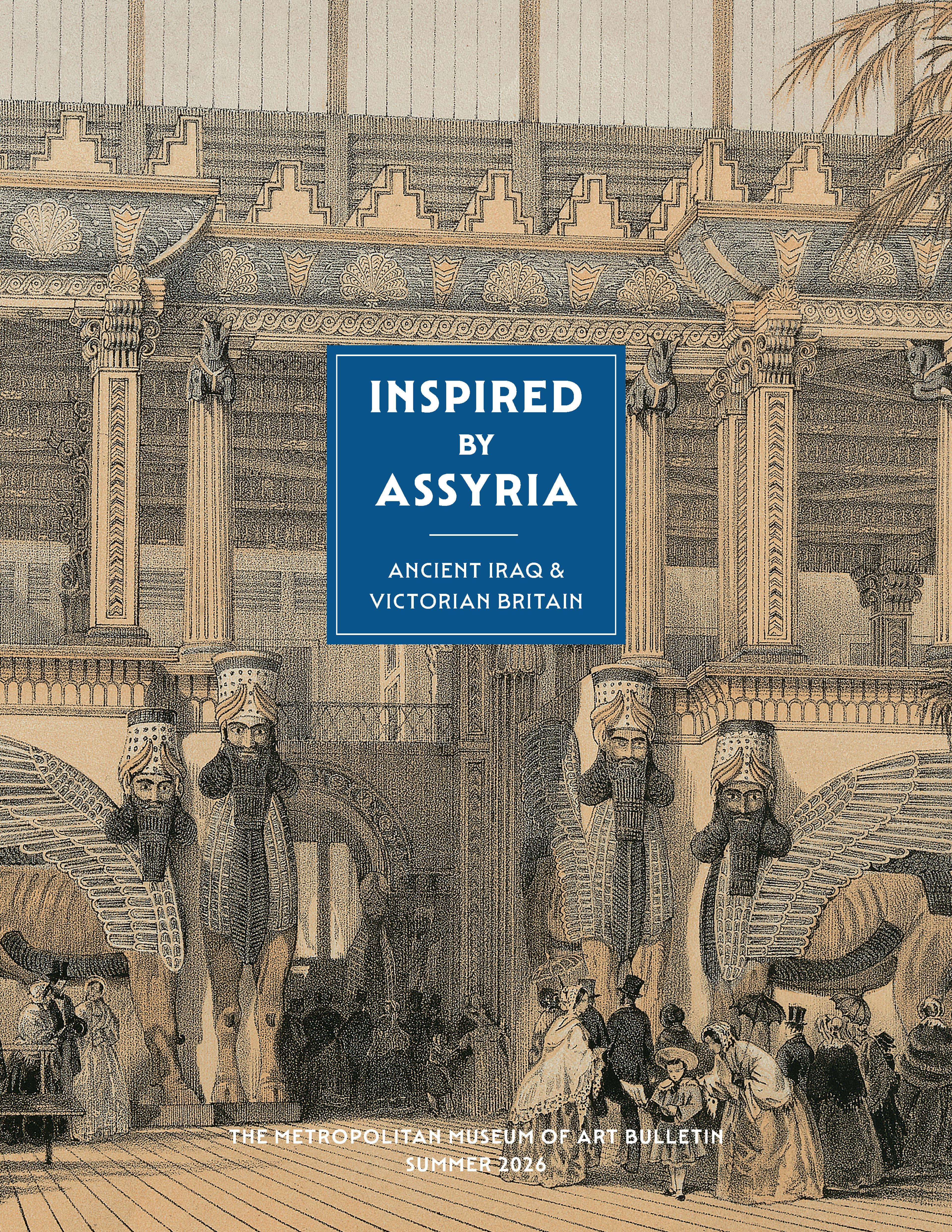
Inspired by Assyria: Ancient Iraq & Victorian Britain
When the grand palaces of ancient Assyria were excavated in the nineteenth century, a creative meeting between two vastly different empires began. This Bulletin explores the art of the Neo-Assyrian Empire—centered in northern Iraq between the ninth and seventh centuries BCE—alongside the British Assyrian Revival style that followed millennia later. As European audiences developed a fascination with the discoveries made at the archaeological sites in Nineveh and Nimrud, British artists produced drawings as well as jewelry, ceramics, bronzes, and other decorative arts to fuel this cultural phenomenon. Interpreting and repurposing ancient imagery, including that of the human-headed winged bull and lion now in The Met collection, designers reimagined the past to align with their own interests and cultural backgrounds. In dynamic essays, Michael Seymour investigates the entwined histories between ancient Mesopotamia and the Victorian era, while Constance McPhee analyzes British depictions of common European subject matter influenced by the aesthetics of the excavations. A lively interplay between artistic imagination, archeological information, and cultural exchange, Inspired by Assyria illuminates how ancient art continues to shape our narratives and legacies.
Met Art in Publication
You May Also Like
Citation
Seymour, Michael, and Constance McPhee. “Inspired by Assyria Ancient Iraq & Victorian Britain.” The Metropolitan Museum of Art Bulletin 84, no. 1 (2026).