Estamos a trabalhar para traduzir esta página o mais rapidamente possível. Obrigado pela vossa compreensão.
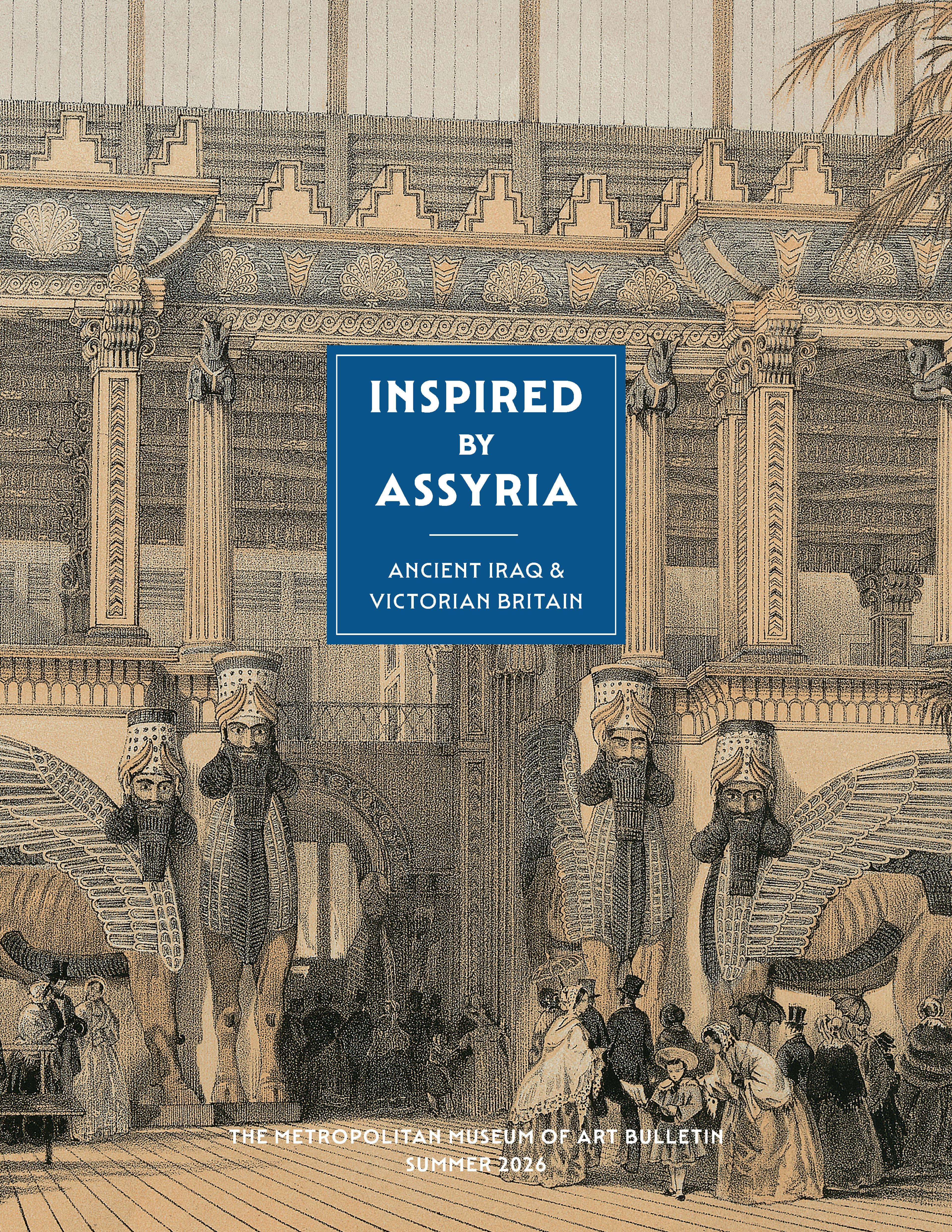
a detailed illustration of a grand interior with ornate columns, decorative carvings, monumental winged guardian sculptures, and small groups of visitors gathered beneath a high, elaborately decorated hall
THE METROPOLITAN MUSEUM OF ART BULLETIN | VOLUME 84 | NUMBER 1

Inspired by Assyria: Ancient Iraq & Victorian Britain

Seymour, Michael, and Constance McPhee
2026
48 pages
59 illustrations
8.5 x 11 in
View More Publication Info

When the grand palaces of ancient Assyria were excavated in the nineteenth century, a creative meeting between two vastly different empires began. This Bulletin explores the art of the Neo-Assyrian Empire—centered in northern Iraq between the ninth and seventh centuries BCE—alongside the British Assyrian Revival style that followed millennia later. As European audiences developed a fascination with the discoveries made at the archaeological sites in Nineveh and Nimrud, British artists produced drawings as well as jewelry, ceramics, bronzes, and other decorative arts to fuel this cultural phenomenon. Interpreting and repurposing ancient imagery, including that of the human-headed winged bull and lion now in The Met collection, designers reimagined the past to align with their own interests and cultural backgrounds. In dynamic essays, Michael Seymour investigates the entwined histories between ancient Mesopotamia and the Victorian era, while Constance McPhee analyzes British depictions of common European subject matter influenced by the aesthetics of the excavations. A lively interplay between artistic imagination, archeological information, and cultural exchange, Inspired by Assyria illuminates how ancient art continues to shape our narratives and legacies.

A Second Series of the Monuments of Nineveh, Paper, board, cloth, British
British
1853
The Monuments of Nineveh, Paper, board, cloth, British
British
1849
Nineveh and Its Remains: With an Account of a Visit to the Chaldæan Christians of Kurdistan, and the Yezidis, or Devil Worshippers; and an Inquiry into the Manners and Arts of the Ancient Assyrians, Paper, board, cloth, British
British
1849
Urn with Assyrian scenes, Slate, bronze, French
French
1851
Jug with Assyrian-inspired decoration, Porcelain, British
British
1851–1860
Jug with Assyrian-inspired decoration, Porcelain, British
British
1851–1860
Jug with Assyrian-inspired decoration, Porcelain, British
British
1851–1860
Jug with Assyrian-inspired decoration, Stoneware, pewter, British
British
1851–1860
Jug with Assyrian-inspired decoration, Stoneware, British
British
1851–1860
Jug with Assyrian-inspired decoration, Stoneware, British
British
1851–1860
Human-headed winged lion and bull, Unglazed porcelain (Parian ware), British
British
1893
"Nimrod" flower vase, Unglazed porcelain (Parian ware), British
British
1882
Lion, Unglazed porcelain (Parian ware), British
British
1882
Human-headed winged bull (lamassu), Gypsum alabaster, Assyrian
Assyrian
ca. 883–859 BCE
Human-headed winged lion (lamassu), Gypsum alabaster, Assyrian
Assyrian
ca. 883–859 BCE
Human-headed winged bulls, Bronze, British
British
1850–1900
Human-headed winged bull and lion, Gilt bronze, British
British
1850–1900
Clock with human-headed winged lion, Bronze, black marble, French
French
third quarter 19th century
Dish: The Walls and Hanging Gardens of Babylon, Porcelain, British
British
1898
Hinged bracelet with Assyrian human-headed winged bull medallion, Gold, British
British
1868–ca. 1880
Showing 20 of 36
View Citations

Seymour, Michael, and Constance McPhee. “Inspired by Assyria Ancient Iraq & Victorian Britain.” The Metropolitan Museum of Art Bulletin 84, no. 1 (2026).