A Second Series of the Monuments of Nineveh
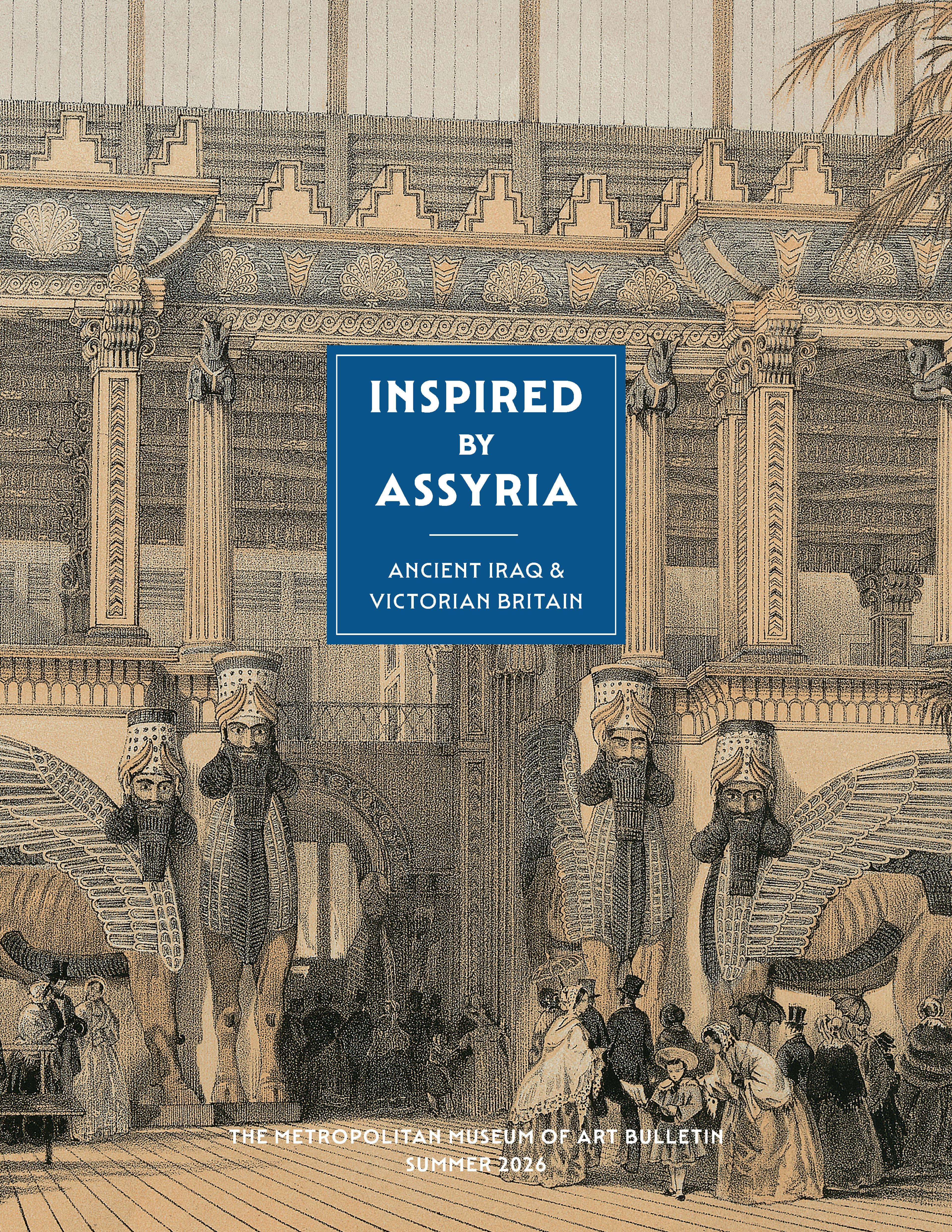
What Layard found was of interest not only to scholars but to a wide European public because of the biblical connections of ancient Assyria. The popular Illustrated London News covered the excavations in detail, and when Layard’s own first book, Nineveh and Its Remains (2023.712a, b), was published in 1849, it became one of the best-selling books of its time. In addition to the two-volume original, several abridged and cheaper editions were produced, increasing its readership still further. At the same time, Layard shipped many of the sculptures themselves to England, the majority to the British Museum, where they were the subject of further public fascination. In 1854, a colorful reconstructed ‘Nineveh Court’ was part of the Sydenham Crystal Palace, visited by millions of people until it was destroyed in a fire in 1866. Layard himself was heavily involved in the design.
This volume and its predecessor, The Monuments of Nineveh (1849) (2023.719), were far more lavish publications than Nineveh and its Remains, produced for a small number of subscribers. The large-format volumes consisted mainly of fine lithographs, some hand-colored, based on Layard and other artists’ drawings of the palace sculptures. Where the first volume was focused more on Layard’s earlier discoveries at Nimrud (ancient Kalhu), the second contains more sculptures from Nineveh, where Layard and other excavators found many palace reliefs depicting the military campaigns of Sennacherib and Ashurbanipal.
Artwork Details
- Title: A Second Series of the Monuments of Nineveh
- Period: Victorian
- Date: 1853
- Culture: British
- Medium: Paper, board, cloth
- Dimensions: H. 23 × W. 16 1/8 × D. 1 5/8 in. (58.4 × 41 × 4.1 cm)
- Credit Line: Henrietta and Christopher McCall Collection, Purchase, Henrie Jo Barth Bequest, and Museum Acquisitions and Josephine Lois Berger-Nadler Endowment Funds, 2023
- Object Number: 2023.720
- Curatorial Department: Ancient West Asian Art
More Artwork
Related Content
 Free to download
Research Resources
The Met provides unparalleled resources for research and welcomes an international community of students and scholars. The Met's Open Access API is where creators and researchers can connect to the The Met collection. Open Access data and public domain images are available for unrestricted commercial and noncommercial use without permission or fee.
To request images under copyright and other restrictions, please use this Image Request form.
Feedback
We continue to research and examine historical and cultural context for objects in The Met collection. If you have comments or questions about this object record, please contact us using the form below. The Museum looks forward to receiving your comments.
Content Notice
The Metropolitan Museum of Art presents over 5,000 years of art from around the world, and our online collection reflects ongoing work conducted over the course of our more than 150-year history. You may encounter objects or images that may be inappropriate for some viewers or information that may be outdated.