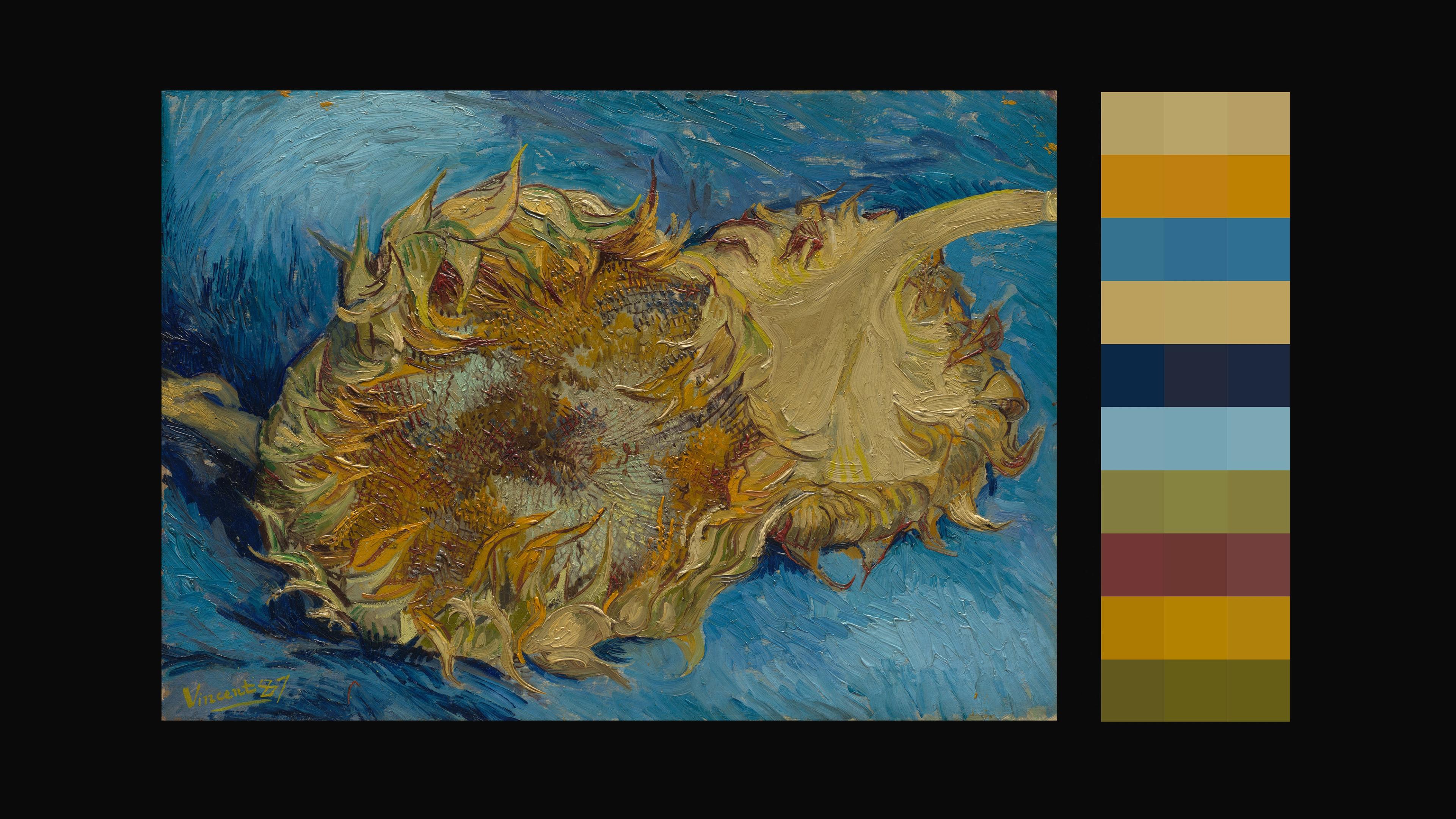
In the late summer of 1887 when Vincent van Gogh painted a series of four still lifes of sunflowers in Paris, he explored the boundaries of color theory to create harmony and contrast. One of those stunning paintings, representing his early studies of the subject, hangs in Gallery 825 at The Met. The orange and its adjacent colors, yellow and green, create a visual flow, while the inclusion of the opposite color blue adds energy and contrast. Viewing this painting in person, its palette and brushwork convey nuance and a powerful sense of immediacy. When this work was created almost 140 years ago, photography was still a relatively new medium; today, it serves as a vital way for online viewers to access and experience the work. Reflecting on how this specific painting has been photographed and distributed offers valuable insight into the developments in photographic representation and the ongoing challenges related to documenting and sharing images of artworks.
Van Gogh’s Sunflowers and details. The nuance and complexity of paintings constantly challenge measurement methods. Vincent van Gogh (Dutch, 1853–1890). Sunflowers, 1887. Oil on canvas, 17 x 24 in. (43.2 x 61 cm). The Metropolitan Museum of Art, New York, Rogers Fund, 1949 (49.41)
While viewing Sunflowers (1887) in the gallery will always be the most gratifying experience, accurate photographic reproduction of color is critically important for comparative study, art education, conservation, and publications. Unfortunately, a quick internet or even AI search reveals hundreds of color variations that stray far from the original artwork. Some will argue that the web is not color-managed and that every display is different. While there is some truth to this, the real culprit is the organic aggregation of images from unknown sources. Many online images have been picked up from previous publications, print reproductions, and gallery photographs in addition to generational loss due to scans of legacy transparencies. This problem extends to online searches for any painting and is not limited to the works of Van Gogh.
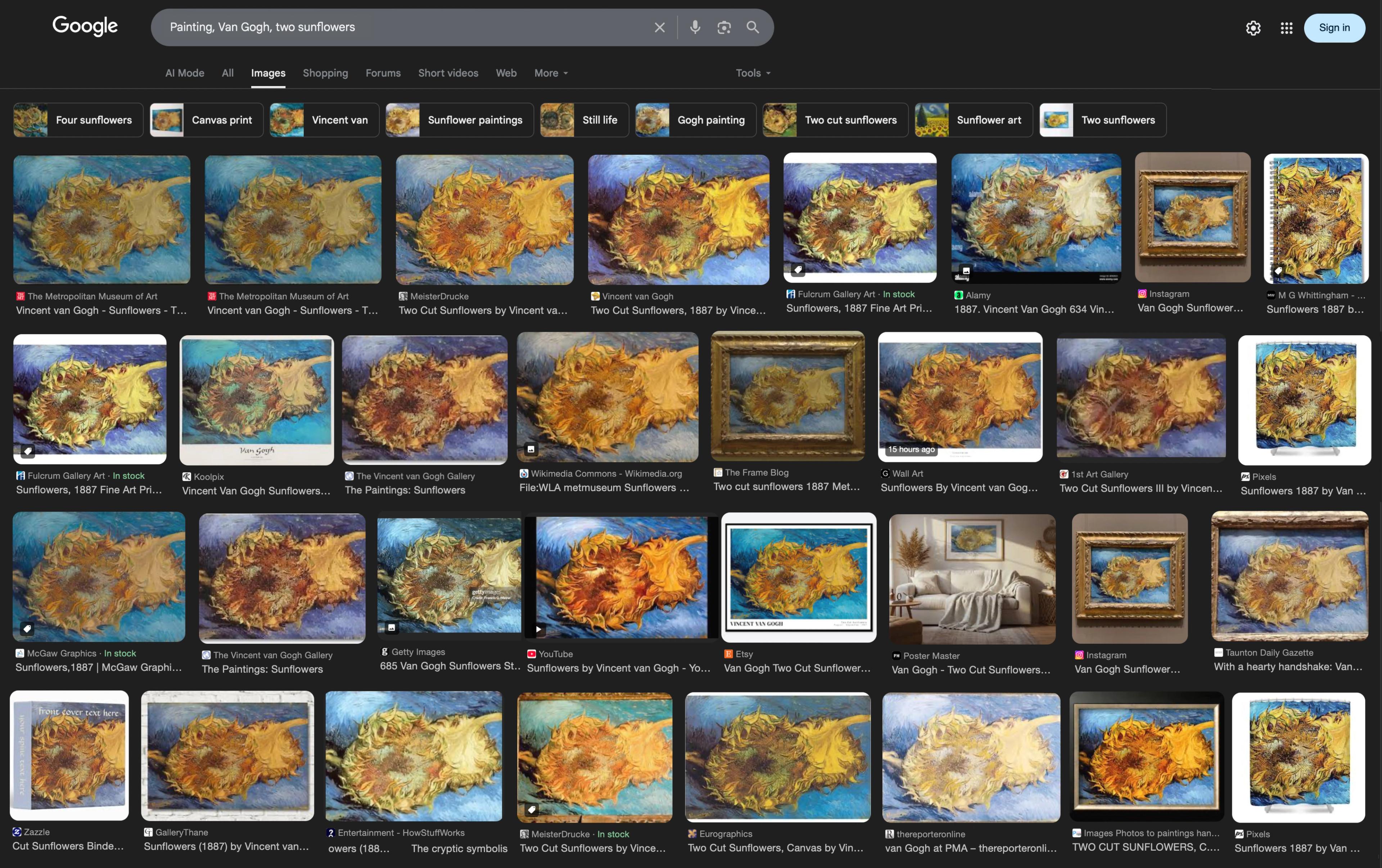
Google search results for Van Gogh’s Sunflowers (November 12, 2025)
History of photography and subjective editing
The Met Imaging Department (formerly the Photograph Studio) has been documenting the Museum’s collection since 1906. Since the origins of color photography, recording the complexity and nuance of paintings has presented a constant challenge and continues to push the limits of photographic technology. We first photographed Van Gogh’s Sunflowers in black and white in 1949 and again, in 1983, on color-transparency film (which was subsequently scanned in 2006). The palette of deep blues and yellows in this painting were particularly challenging to reproduce on film, often resulting in exaggerated saturated colors and a distinct shift from blue to purple in reproductions. It was first photographed digitally in 2007, and this past year, a new photograph and 3D image were created.
Top: Black and white photography from 1949. Bottom: Color transparency from 1983 (scanned in 2006)
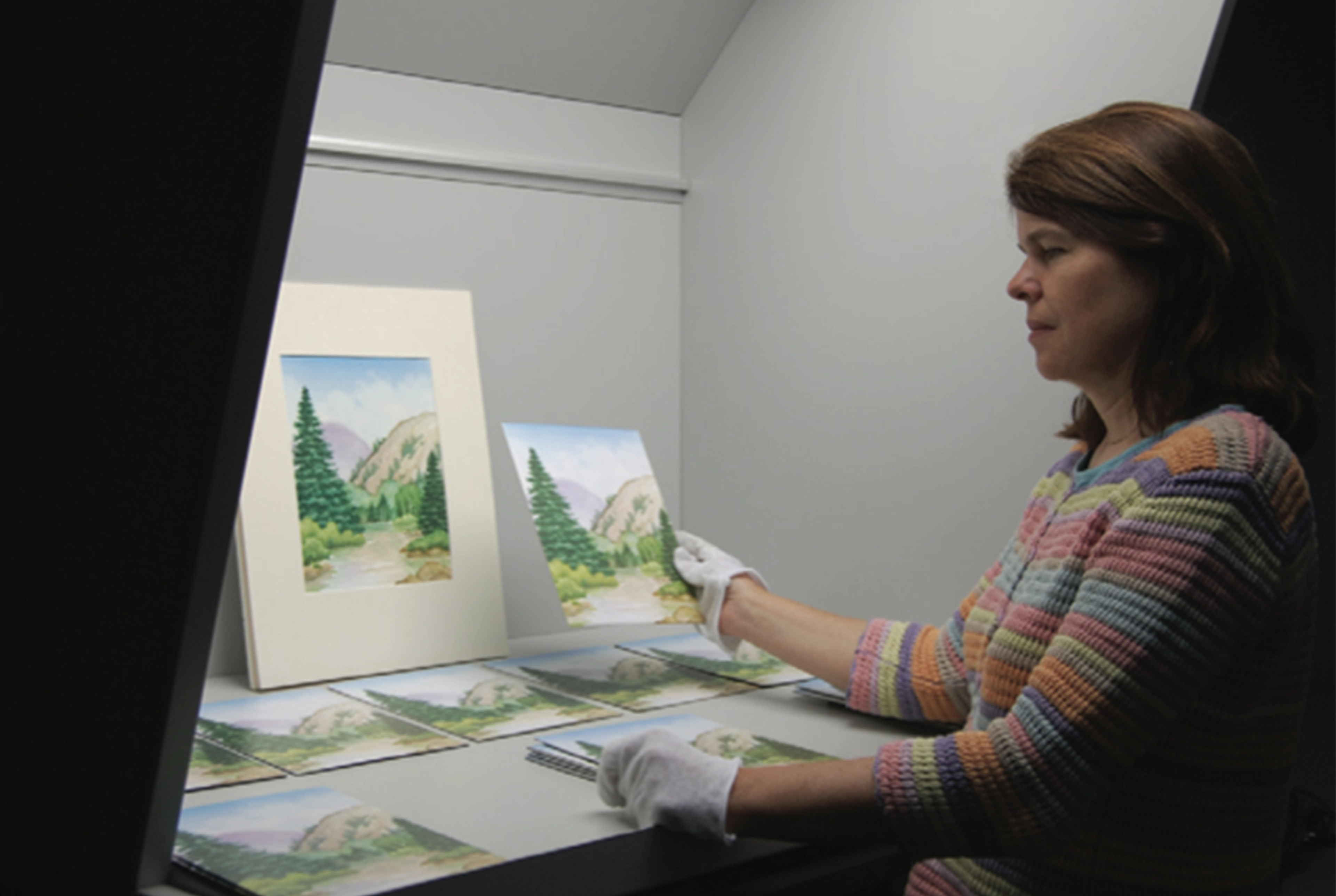
Before the advent of digital imaging, photographers relied on the color science of film manufacturers and subjective quality checks such as inspecting press proofs and prints under controlled lighting conditions. With film, it was difficult to achieve a color-accurate reproduction. Changes in film stock and processing variables presented challenges, and when used for print publications, additional color shifts occurred due to scanning and conversion from RGB to CMYK color separations.
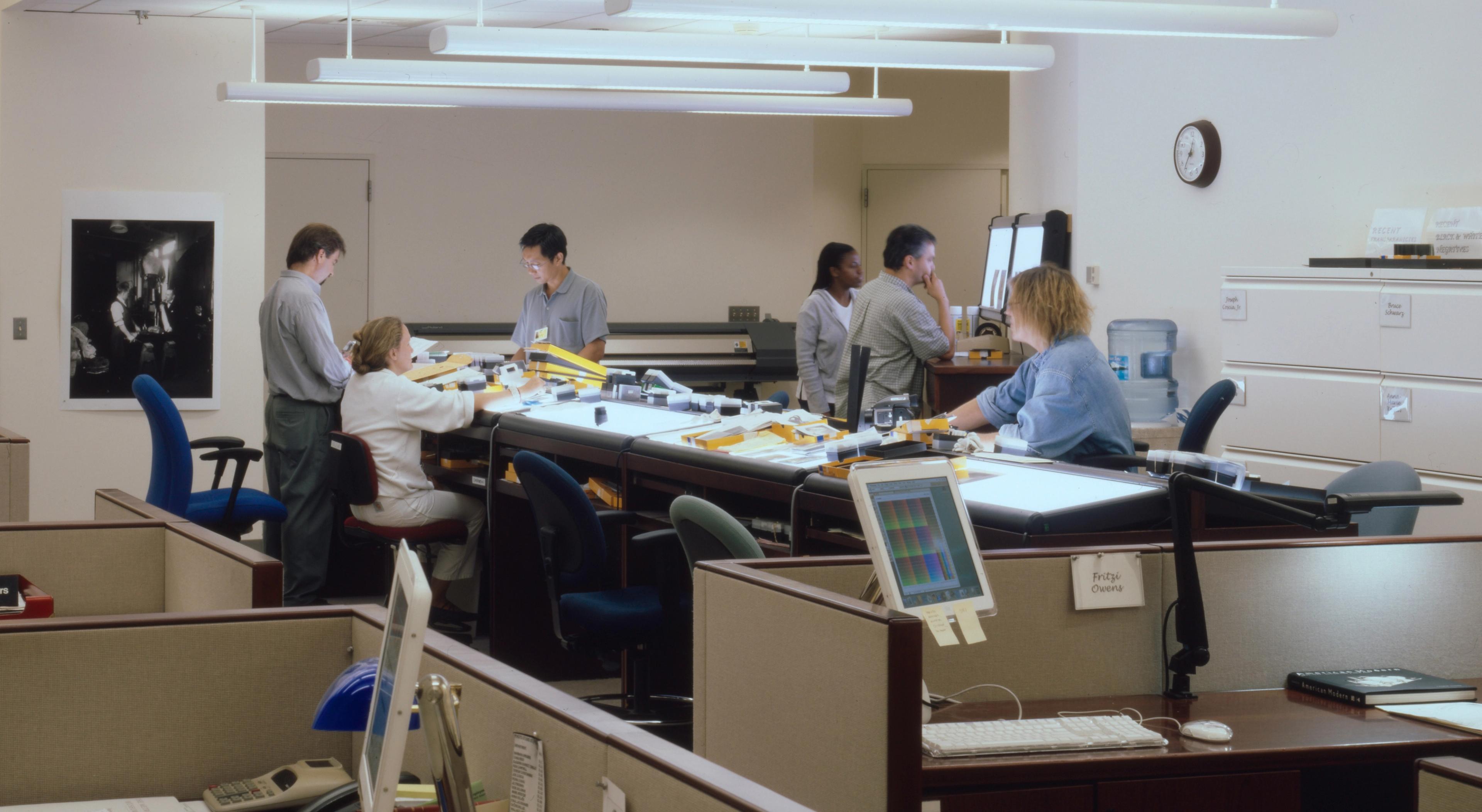
Photographers in The Met Imaging Department reviewing daily transparencies on daylight controlled light boxes in 2001.
With the advent of digital photography in the mid-1990s, the responsibility for color management fell to individual photographers. Early digital photography was distinctly output-referred, meaning practitioners would subjectively edit to visually match an image via an output device such as a computer display or an inkjet printer. The problems, however, were manifold: Which print? Which display? What lighting conditions? To resolve these questions, the industry adopted color-management techniques developed by the International Color Consortium (ICC). ICC color management is based upon measuring the characteristics of devices (cameras, displays, and output devices) to help maintain accurate color reproduction across software tools and devices.
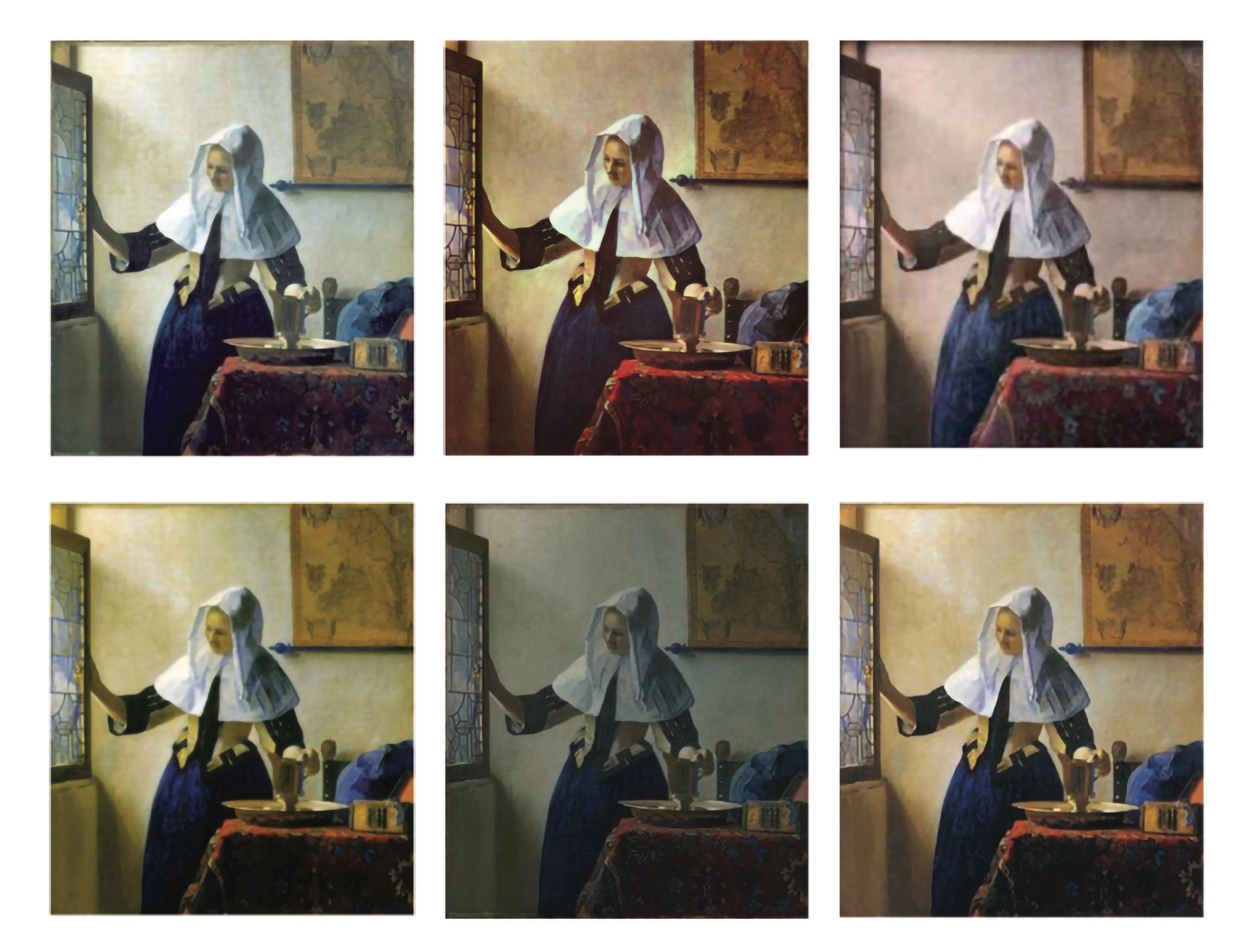
Illustration of a variety of different reproductions found in the same database. Courtesy RIT artwork reproduction cycles study
ICC color management helped improve print reproduction, but the methods did not address the fundamental downsides of output-referred techniques, namely that they still depended on subjective editing for specific output devices. A formal study of artwork reproduction interchange cycles in 2005 by Roy Berns, Franziska Frey, and Susan Farnand at the Rochester Institute of Technology (RIT) put a spotlight on the challenges during this phase of technology in transition. In this study, museums were invited to photograph the same set of original artworks. The resulting images and reproductions were formally analyzed and observer-ranked against the originals. The findings clearly documented the color inconsistencies associated with subjective, output-referred imaging practices, encouraging The Met and the global cultural-heritage imaging community to improve best practice using objective methodologies.
Hard copy experiment process. Courtesy RIT artwork reproduction cycles study
Development of objective standards
As it turns out, Van Gogh’s artworks played a key role in the early development of international standards for color reproduction. In 2007, The Met shared a new digital photograph of Van Gogh’s Sunflowers for a series of collaborative tests with museums around the world. It was captured using objective, scene-referred digital reproduction techniques.
Unlike output-referred imaging, where images are edited and optimized for a particular output device, scene-referred imaging aims to accurately record the scene in front of the camera using standardized color charts and objective, measurement-based validation methodologies. In the case of artwork reproduction, the goal of scene-referred imaging is to faithfully record the actual colors of the original artwork leveraging objective measurements and technical analysis. By recording and archiving the actual color and lightness values of the original, the image can be archived and repurposed for decades across any number of output devices.
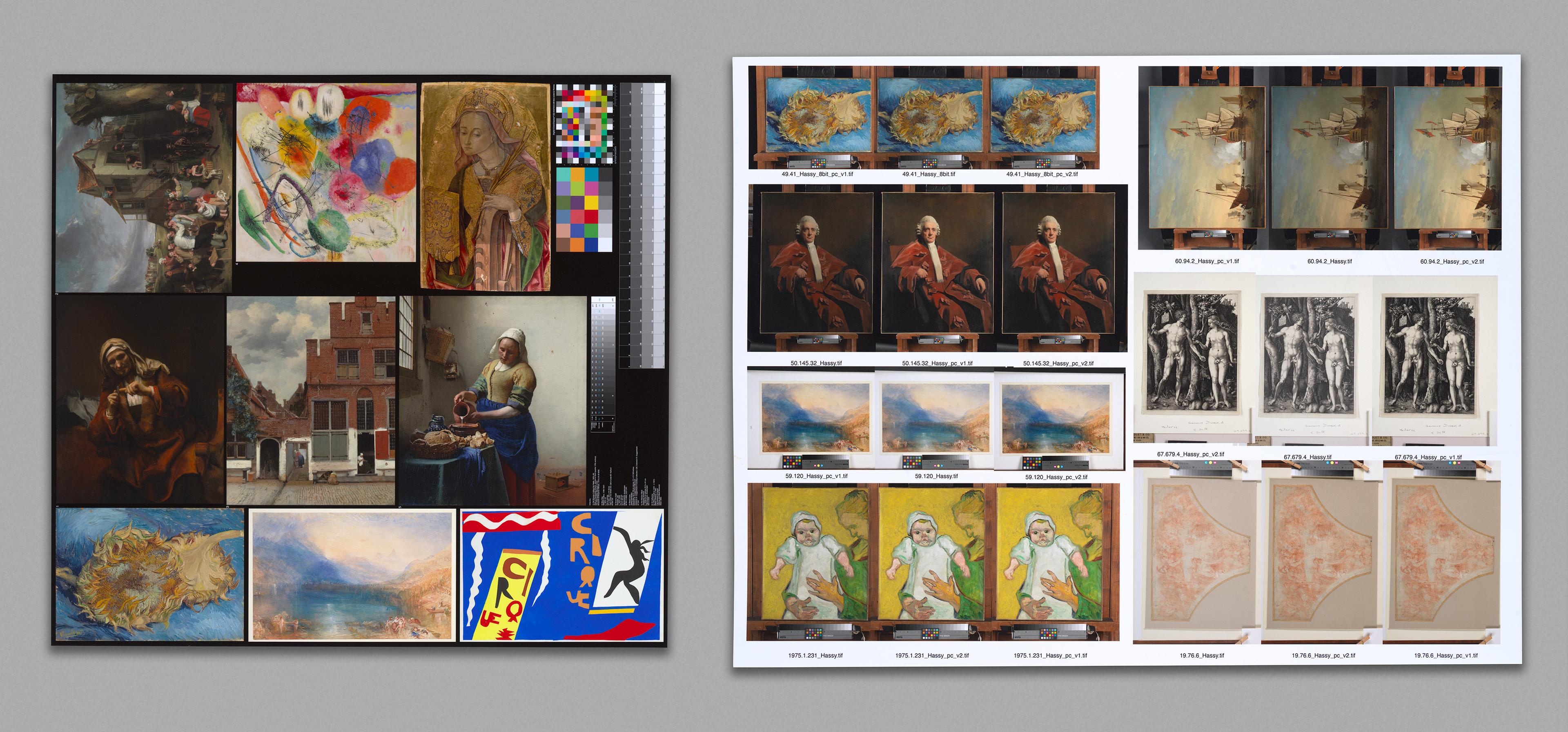
Early collaborative testing of scene-referred objective capture techniques. Additional rounds of tests included contributions from the Van Gogh Museum, Museum of Modern Art (New York), and Palace Museum in addition to artworks from The Metropolitan Museum of Art, Rijksmuseum, Guggenheim Museum, Victoria and Albert Museum, and Yale Center for British Art. This work aligned with the findings of the final RIT art interchange benchmark report by Franziska Frey and Susan Farnand in 2011.
The Met Imaging Department played a key leadership role in the testing and formal research that resulted in the development of the International Standards Organization (ISO) 19264-1 standard, which was published in 2017 and forms the basis of today’s best practice in artwork reproduction. Referenced by both the US FADGI (Federal Agencies Digitization Guidelines Initiative) and the European Metamorfoze imaging protocols, the method encompasses multiple aspects of imaging accuracy. For color specifically, it involves measuring color differences between known reference chart colors and the captured image colors. These quantified color differences are based upon International Commission on Illumination (CIE) Delta E 2000 calculations developed through decades of perceptual observer studies and used across industries. At the most basic level, one Delta E aims to represent a just-noticeable color difference. Average observers are typically able to readily distinguish Delta E color differences greater than 3.
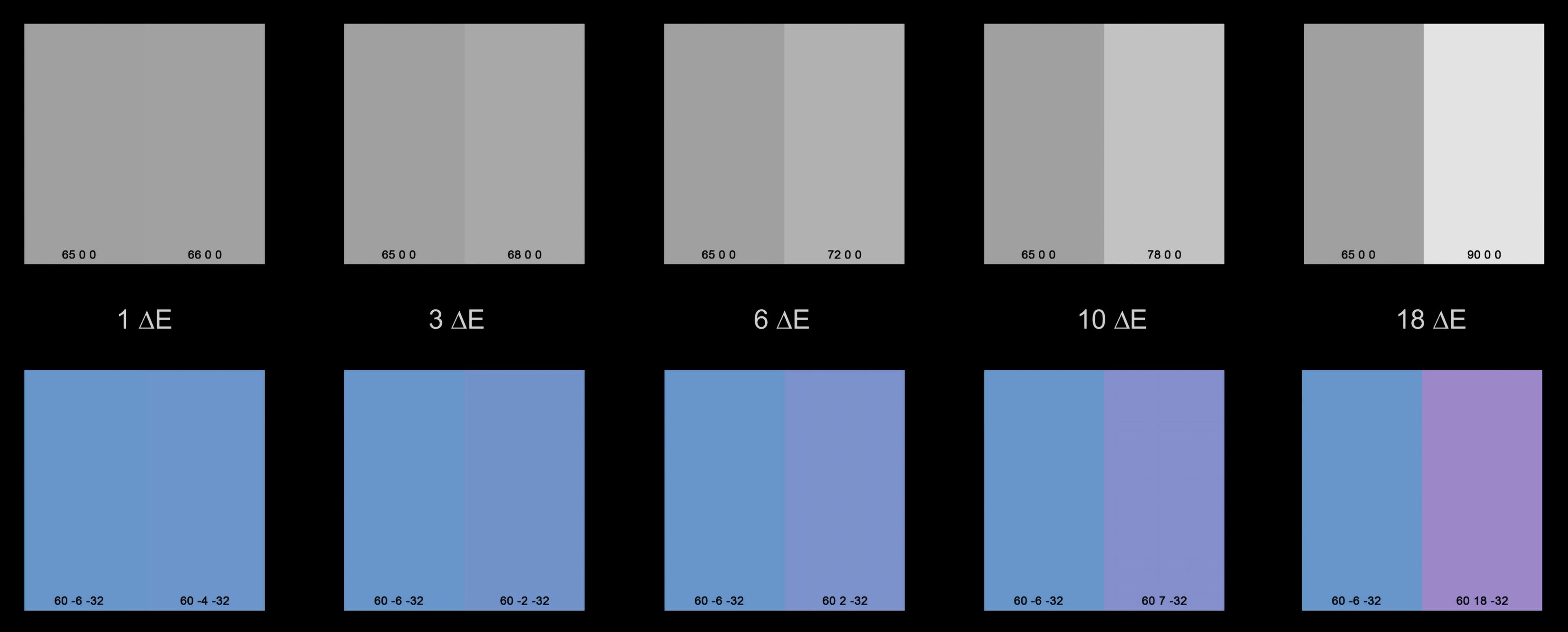
This graphic helps illustrate the perceptual impression of Delta E color difference values.
When analyzing the color accuracy of a digital camera, physical known reference charts are photographed and analyzed. The resulting color differences are expressed via a CIE Delta E 2000 color-difference analysis report. While digitization guidelines vary in terms of acceptable tolerances, an average Delta E of 2 across the 140 chart patches is typical for artwork reproduction. Unlike the subjective guesswork of analog photography, standards have established a common method and a consistent global benchmark for measuring imaging performance. Our work also helped establish a new linear grayscale chart to verify scene exposure and lightness, critical for accurate color reproduction.
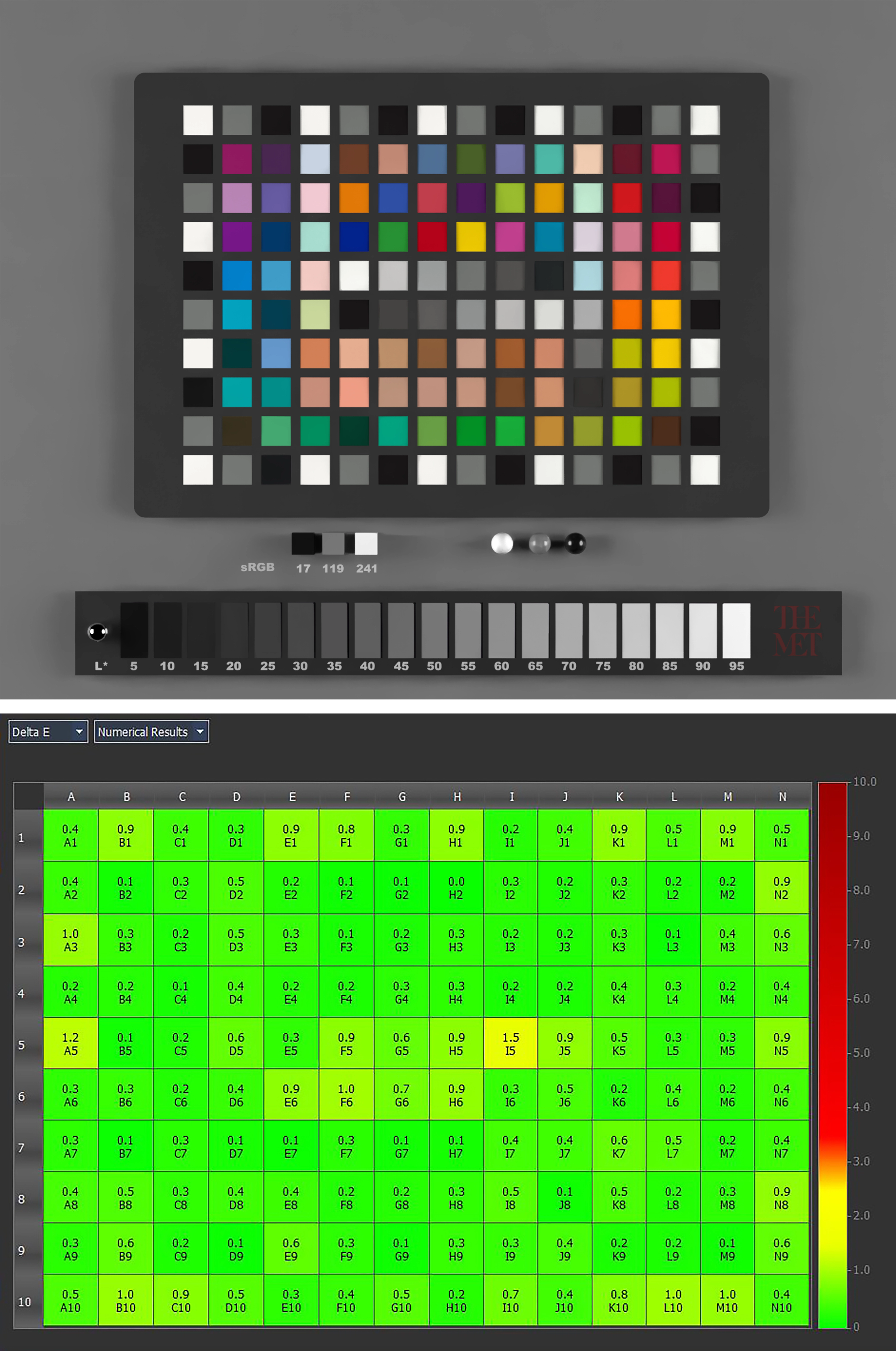
ISO 19264 scene-referred imaging techniques are based upon objective analysis of camera color calibration and lightness.
Transition from 2D to 3D
It has been almost a decade since ISO 19264 was published, and we are building on this experience to continue shaping best practice as imaging technologies evolve. In 2016, our imaging team started exploring 3D (spatial) imaging, which combines images with depth information.
The technical aspiration of capturing depth using photography is not new, however, and dates to the 1840s. By 1900, it is estimated that there were over a million stereophotographs, dual photographs intended to create a 3D illusion when viewed through a specialized viewing device, in circulation. In the 1970s, highlights from The Met collection were available on consumer View Master 3D viewers. Today, the development of spatial computing and even more sophisticated viewing devices have spurred a resurgence in immersive 3D imaging.
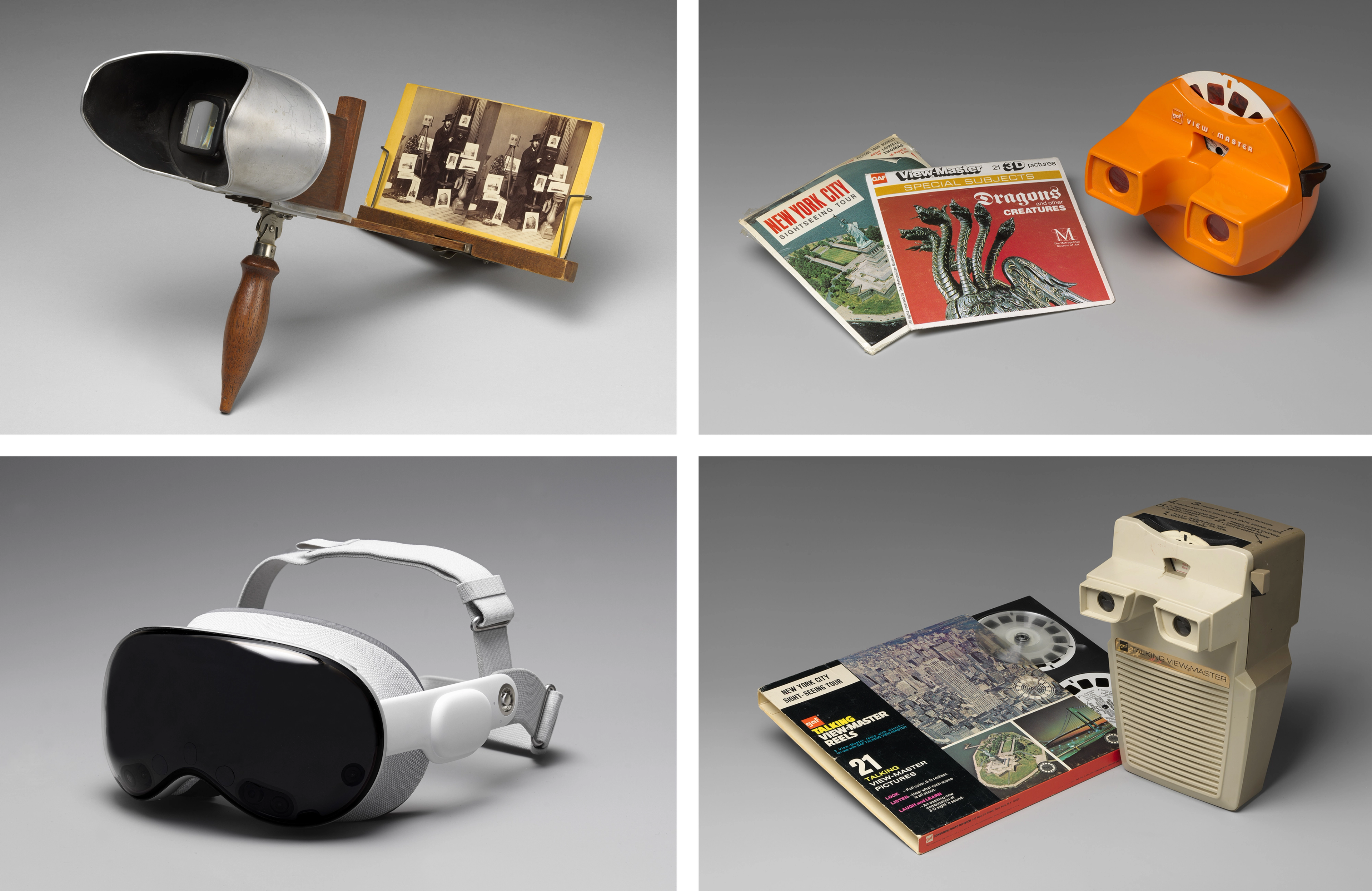
Clockwise from top left: An early stereoscope and stereophotograph, Met Museum Stereo View Master Reels, Talking View Master, and Apple Vision Pro.
Much like the challenges we faced in the film-to-digital transition of the nineties, from an imaging-standards perspective, creating and sharing 3D images adds new layers of complexity due to proprietary methods, platforms, and file formats. Learning from experience, we have been proactive in developing standards for 3D cultural-heritage imaging, directly engaging with organizations such as Alliance for Open USD (AOUSD), ISO, and Khronos Group to discuss methodologies, and participating in industry open-source efforts such as w3c, OpenColor IO, and Material X. Together with industry experts, researchers, peer institutions, and users across all 3D disciplines, we have made significant progress leveraging existing standards to shape best practice.
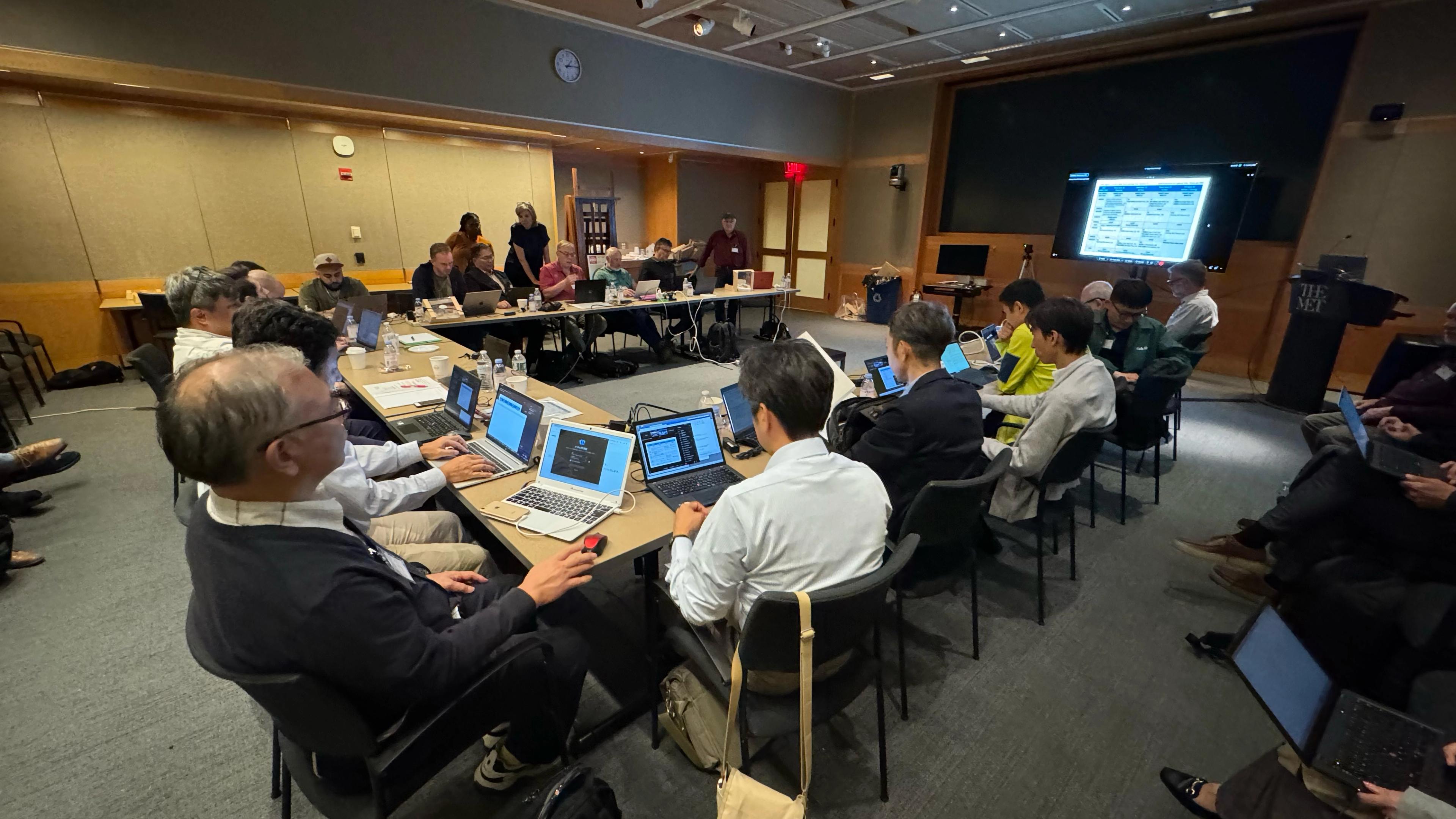
The ISO TC 42 WG 18-20 Still Imaging working group convened at The Met June 2024. Representatives from every major camera and mobile phone manufacturer attended this meeting as we work to shape best practice.
Knowing the vital role Van Gogh’s Sunflowers played in shaping standards in the past, in 2025, we set out to create new 2D and 3D images of the painting. The primary goal of this session was to create a 2D “reference asset” to help assess the current state of 3D imaging as our community contribution to 3D-standards development. Along with ISO 19264 color and lightness validation, we also used spot spectral measurements of the painting surface to objectively compare original painting colors to the digital files.
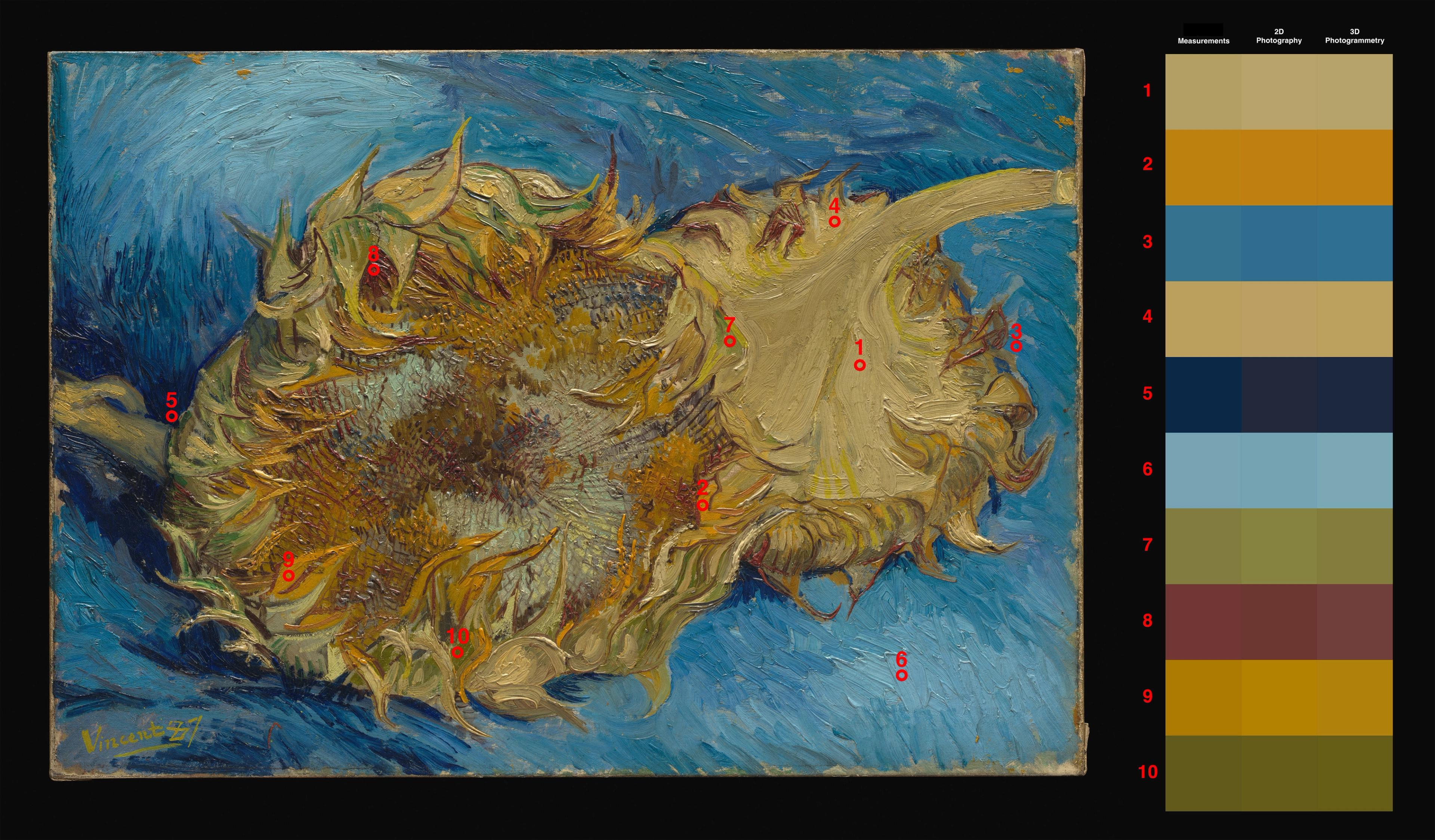
Color measurement samples of the original artwork compared with the 2D and 3D image colors. The average Delta E 2000 across the samples is 2.
Across the ten measured sample colors from the actual painting, the 2D image is an average of two Delta E Values. Formal standards for 3D color management are a work in progress, and we are sharing this initial work to encourage deeper investigation.
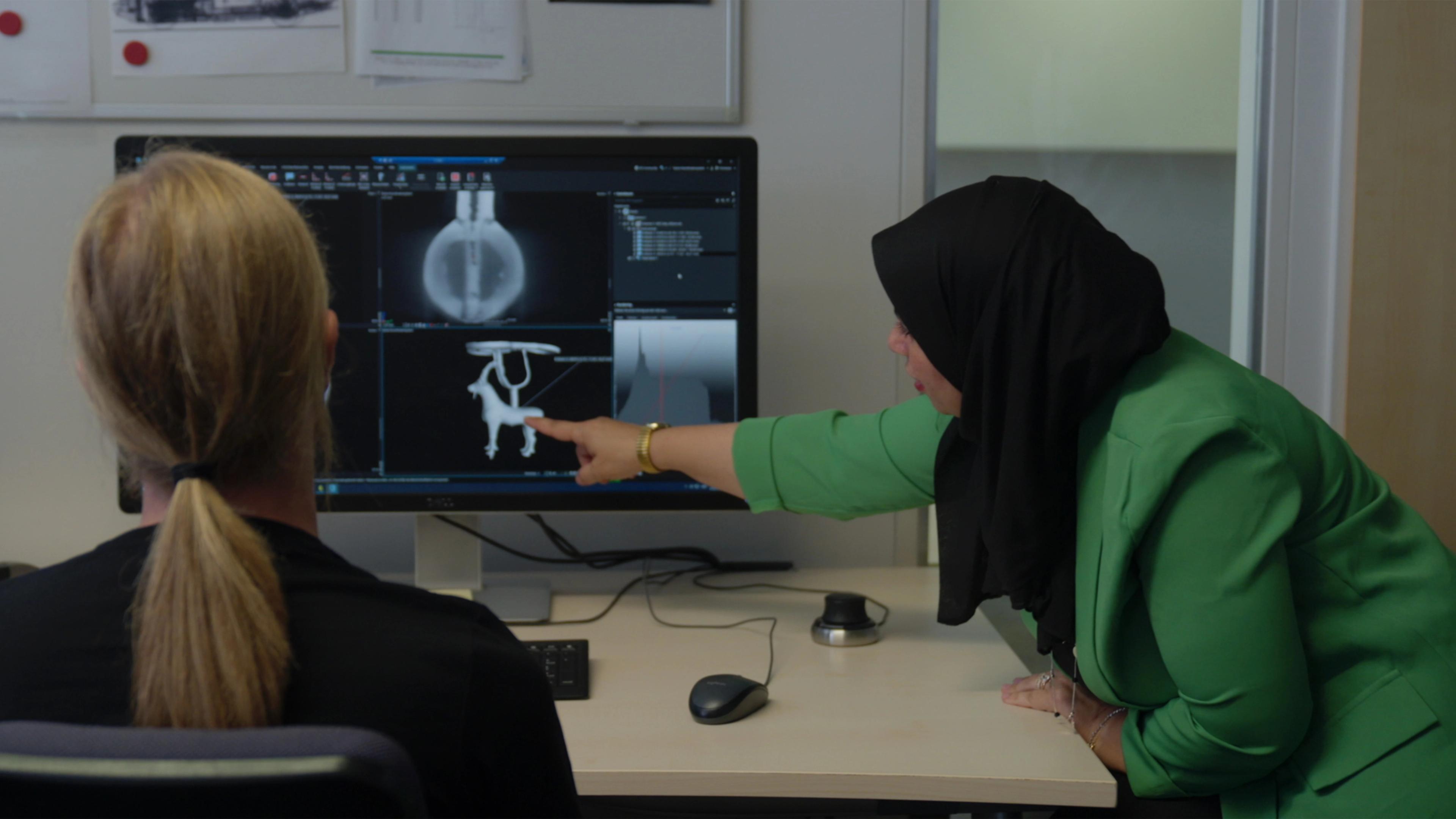
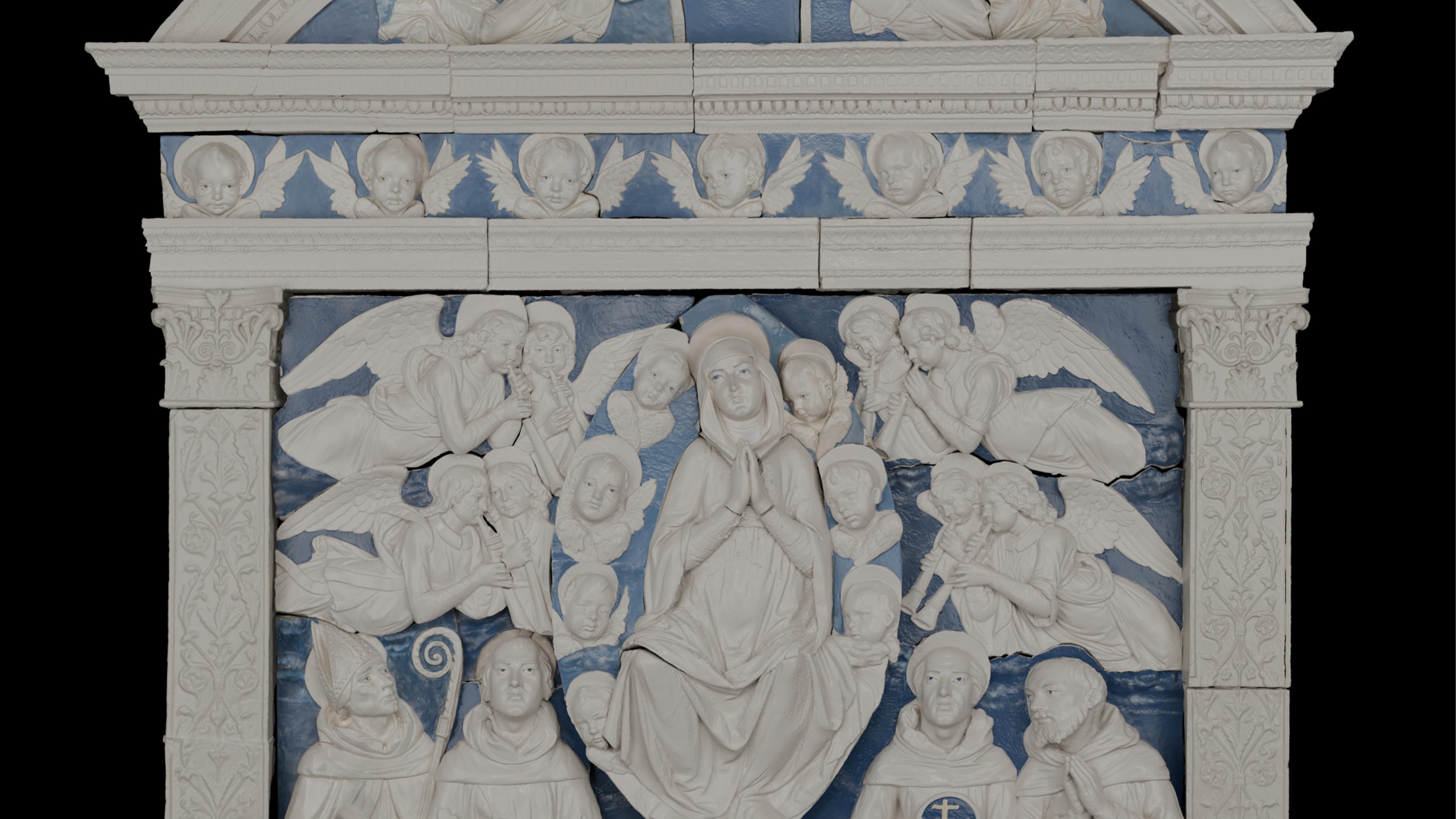
To that end, we invited technical expert members of AOUSD to observe this unique capture session. We employed the same color management techniques to reproduce another Van Gogh artwork, Wheat Field with Cypresses (1889), as part of a recent collaboration with NHK (Japan Broadcasting Corporation). The results of this collaboration, along with over one hundred high-resolution 3D models of works in The Met collection created by our Imaging team, were recently published on the Museum’s website. In addition, we regularly correspond with imaging teams from peer institutions, and other museums have created 3D models of Van Gogh artworks using similar methods.
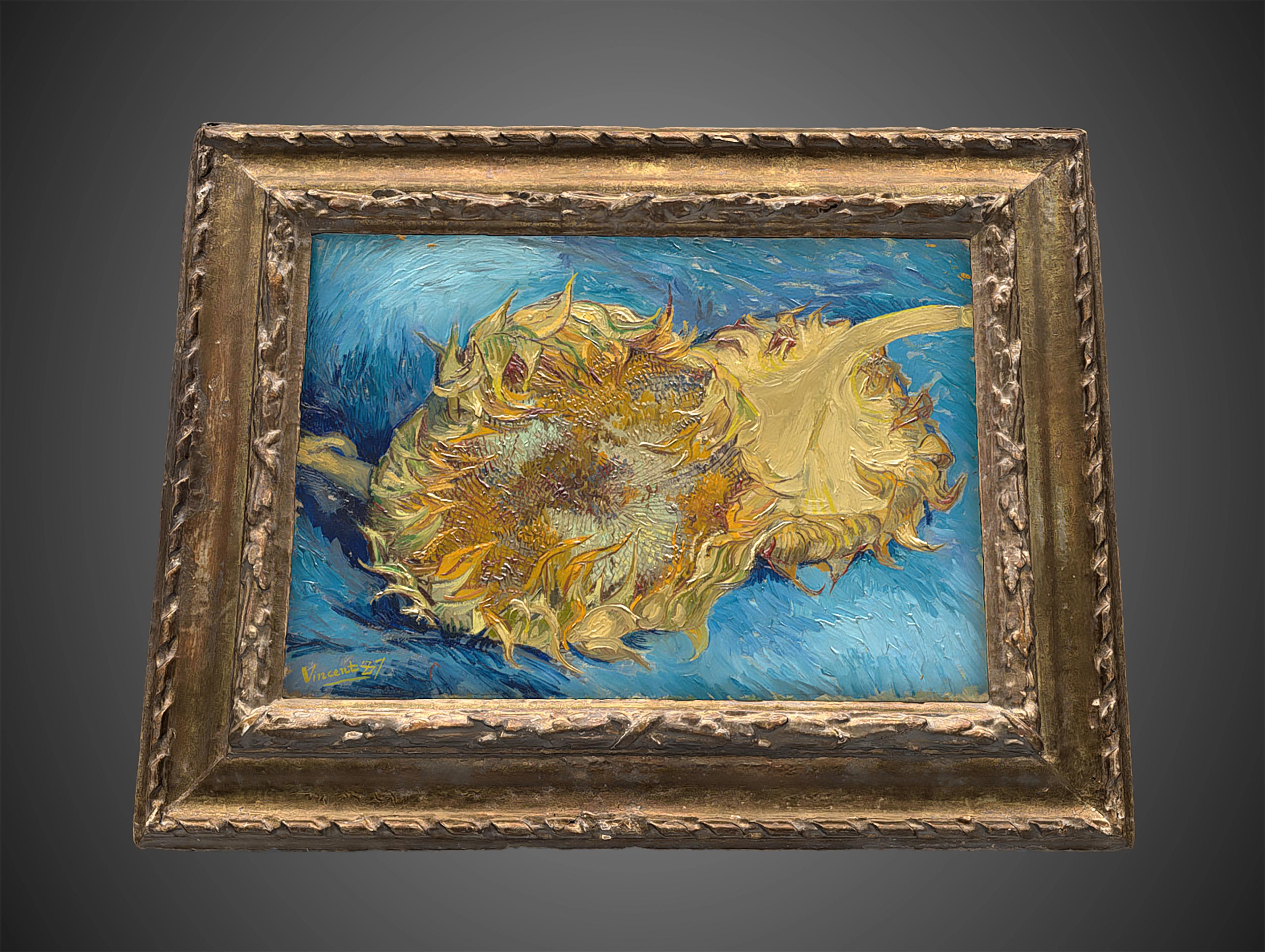
A 3D model rendition of Sunflowers together with a 3D model of its frame. The 3D model is illuminated using an HDRI environment map, often referred to as a dome light. Models like these can now be viewed on Met collection pages.
One significant finding in our efforts to bridge 2D and 3D standards is the importance of lighting for 3D models. While a photograph efficiently records the scene lighting used to convey the depth and realism of an object, this is not the case for 3D images. A 3D image is rendered dynamically as you change your viewpoint, and the intended lighting does not typically travel with the file, which can lead to inconsistent renditions. Additionally, there are instances when it is necessary for a 3D model to adopt lighting from a specific environment, such as viewing an object via augmented reality in your living room, but the overarching goal is to ensure that 3D collection images offer the same fidelity as our traditional photography. Thanks to the rapid adoption of OpenUSD and recent developments in proposed web standards such as a new HTML 3D Model Element definition, we are exploring methods to convert our traditional studio lighting to HDRI environment maps that can travel with 3D images. While this approach will not convey every nuance of our lighting due to current technical limitations, it is a vast improvement and a critical step in improving online renditions of artworks.
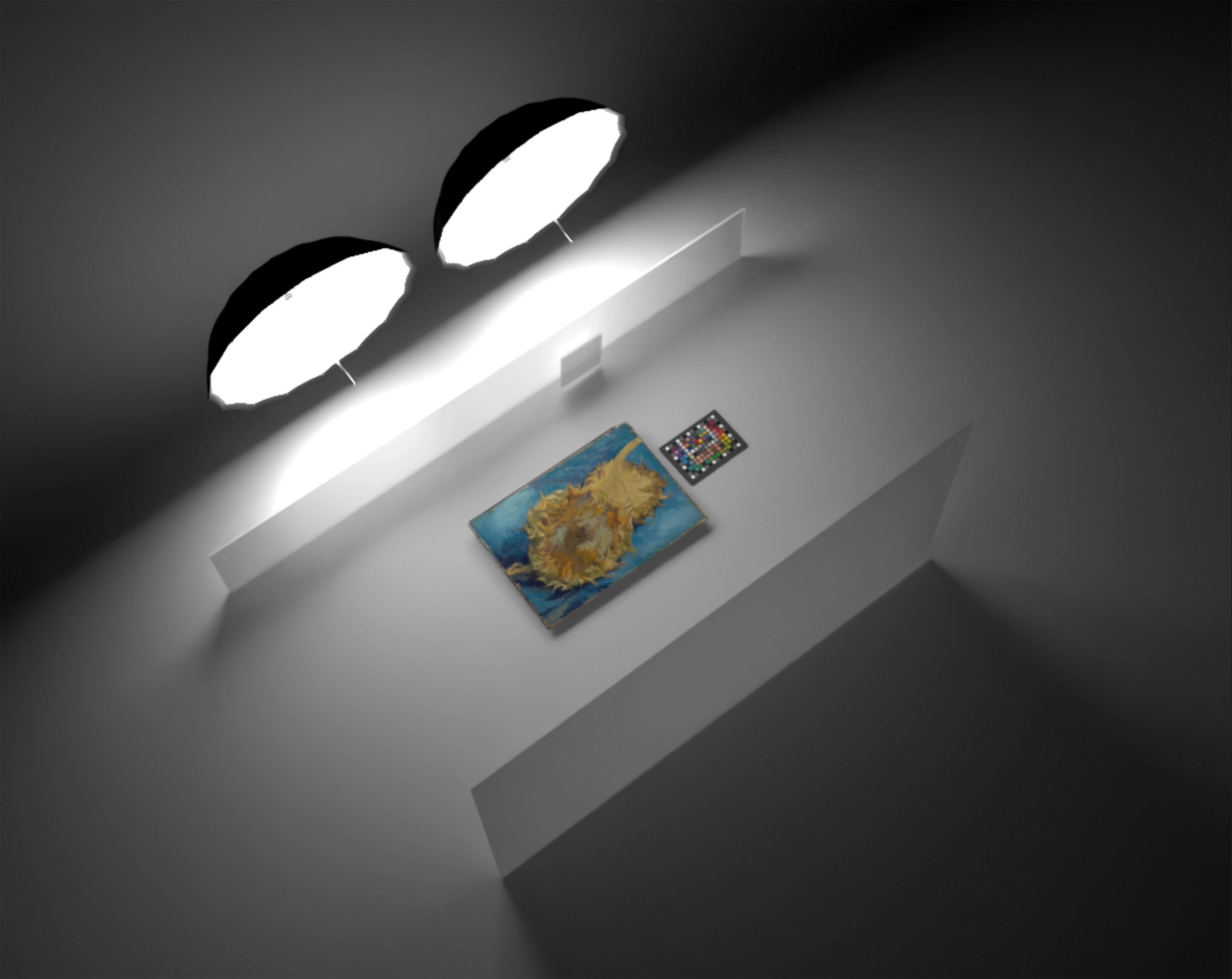
A 3D virtualization of a painting lighting set is translated to a radiance HDRI environment map to help improve online 3D image renditions.
Objective standards are critical for the digitization, archiving, and interchange of the world’s cultural heritage, but the creativity and nuance of Van Gogh’s brushstrokes and unique blends of pigment continually push technology to its limits. While a camera can be configured to successfully reproduce a uniform color chart, the subtle interplay of light on the surface of an original artwork stretches the capacity of measurement devices, introducing additional variables. We may have employed both color chart–based validation and spectral measurements to create our newest 2D and 3D photography of Van Gogh’s Sunflowers, but the complexities of this and other collection objects present unknowns that continue to drive research forward. Recent efforts to standardize HDR (High Dynamic Range) imaging and spectral color characterization, for example, will have a profound impact in the years to come.
Ongoing work on color management and shaping standards for reproducing paintings, like those of Van Gogh, highlights the exciting intersection of technology and art. In addition to providing an important foundation for technical education, this work leads to improvements in cameras, cell phones, and software tools in use worldwide.
These standards and objective imaging techniques also intersect with ongoing work across the Museum’s Conservation and Scientific Research Departments. Our intention in this most recent effort is to share these images broadly in order to encourage and foster a global dialogue.
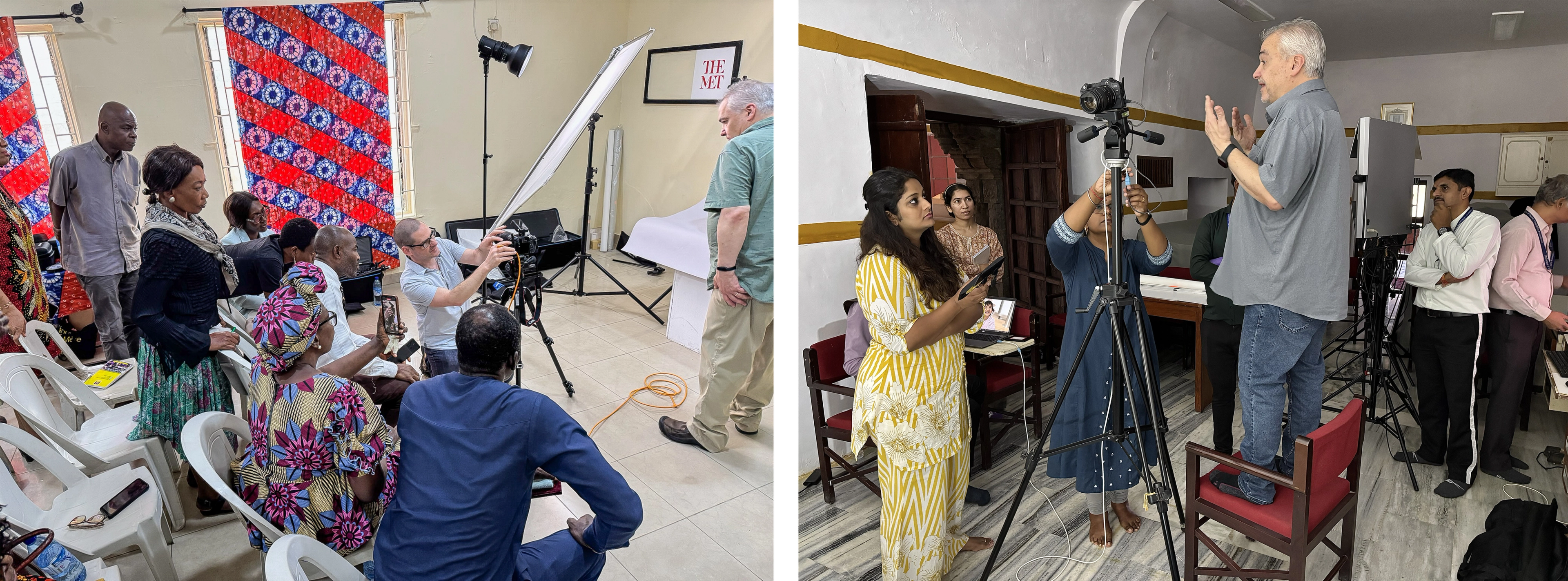
Development of imaging standards makes technology more accessible and helps grow the global community of photographic documentation professionals. Met Photographer Juan Trujillo and Imaging Technology Manager Chris Heins present a photographic documentation workshop in Lagos, Nigeria (left) and Undaipur, India (right).
How can you help?
We have made the 2D and 3D images of Van Gogh’s Sunflowers available on our collection pages, and we encourage you to download and share them. If you spot an old, inaccurate rendition online, reach out to the source and let them know that newer images are available. Cultural-heritage institutions around the world have adopted standardized capture methods over the past decade, so if you are searching for a photograph of an artwork online, it is best to go directly to the cultural institution that houses the original artwork. When you download an image, always check the creation date. The more recent the capture, the more likely it was photographed using the latest methods. It will take time for the 3D standards to mature, but widespread improvement begins with letting the industry know that open standards are critical to preserving and sharing the world’s cultural heritage.
Want to keep exploring? More than 100 Met artworks now have 3D images available on collection pages.