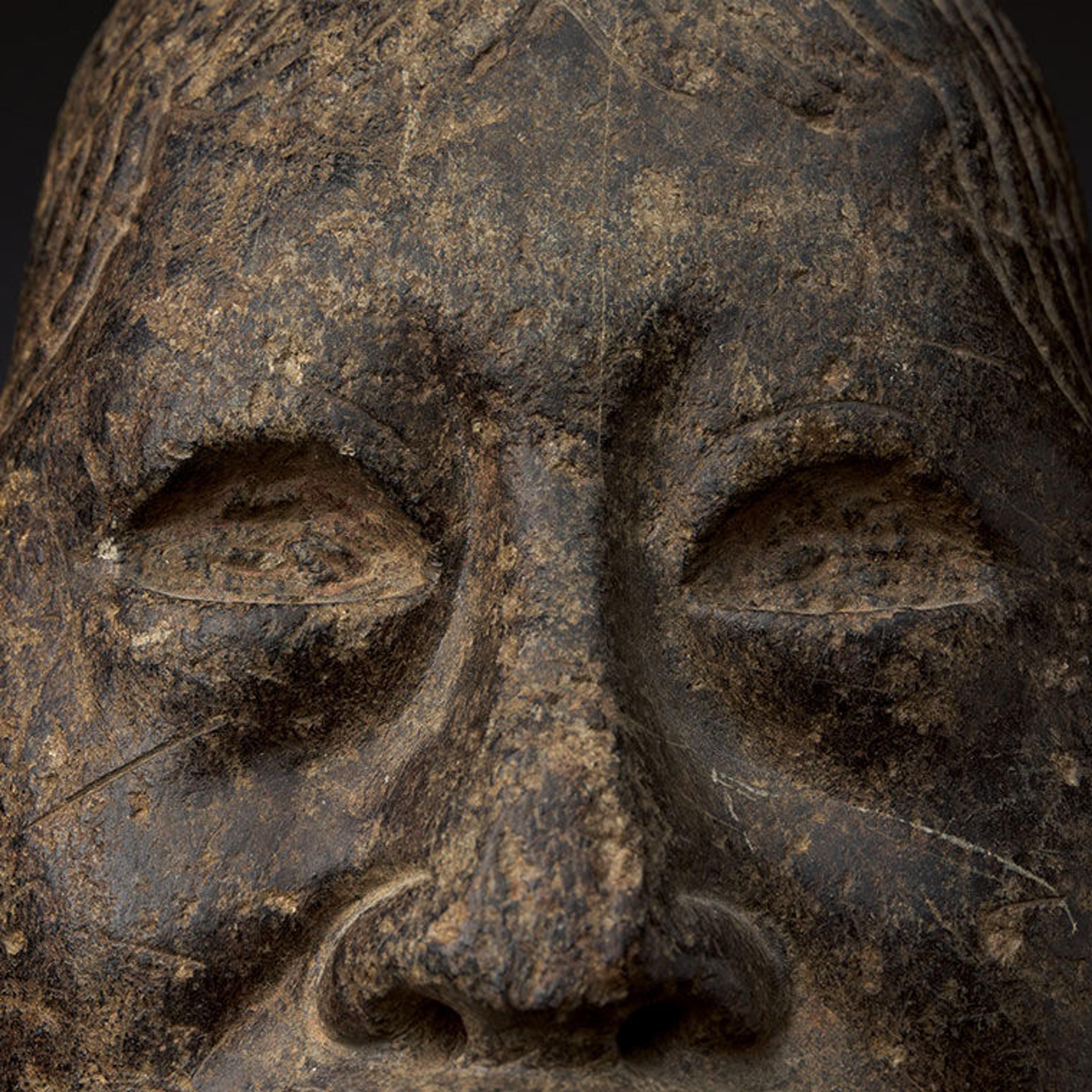
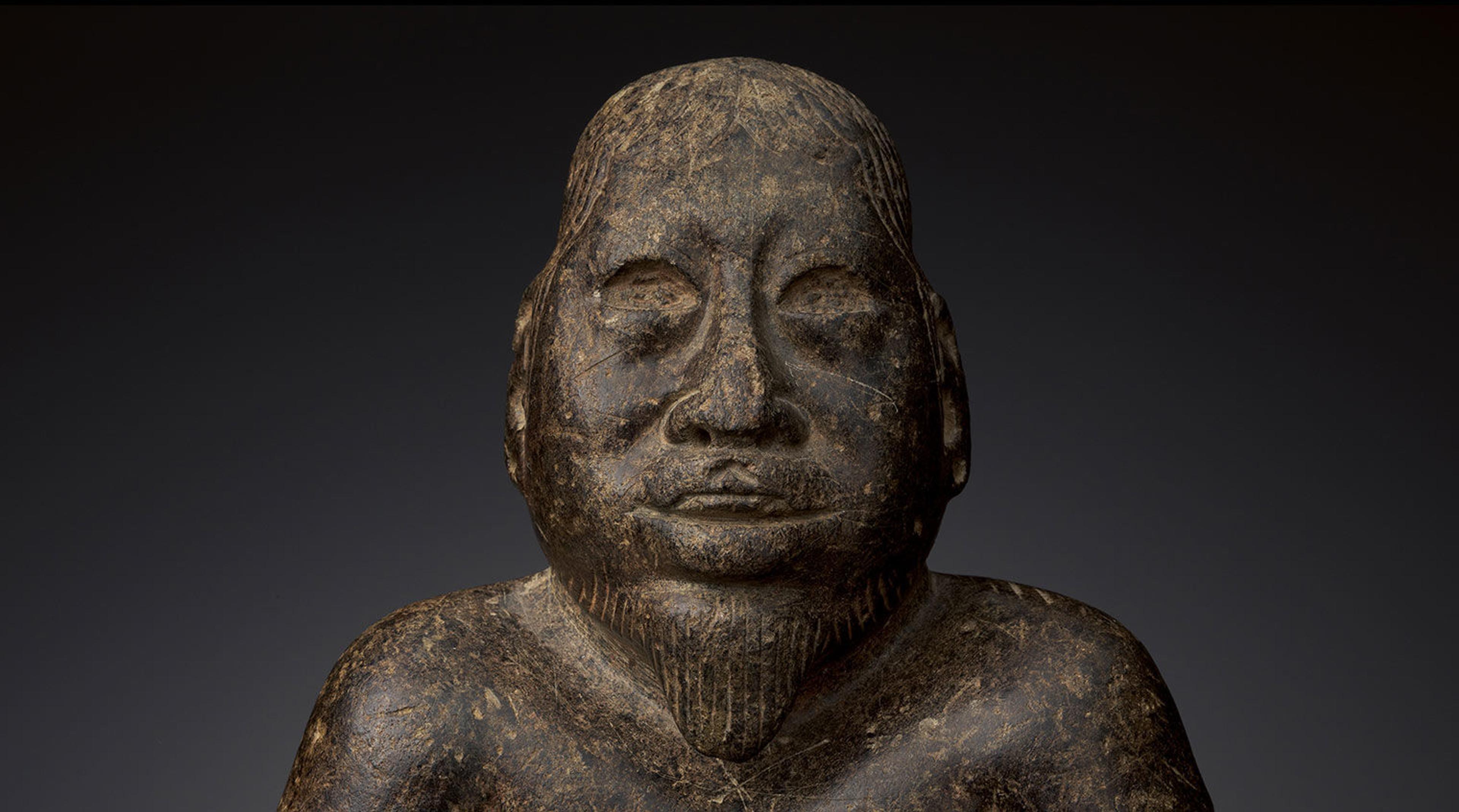
Kneeling bearded figure (detail), 900–400 B.C. Mexico, Puebla. Olmec. Serpentine, H. 11 9/16 x W. 7 1/16 x D. 6 5/16 in. (29.3 x 18 x 16 cm). The Metropolitan Museum of Art, New York, Gift of the Hope Collection, 2017 (2017.443)
MetCollects is a dream project to work on for an editor and photographer like me. In putting together each new episode, I get to discuss a work of art in great detail with the curator who was instrumental in its acquisition. He or she brings an infectious level of enthusiasm to the conversation, anchored by a depth of knowledge surrounding the work of art new to The Met collection. Although considerable research has been performed before the acquisition, many questions always remain.
Joanne Pillsbury, Andrall E. Pearson Curator of Ancient American Art in the Department of the Arts of Africa, Oceania, and the Americas, introduces the Olmec figure featured in the latest episode and brings this captivating object to life in her essay. She describes it has having "latent power with muscled arms and strong legs seemingly ready to spring into action."
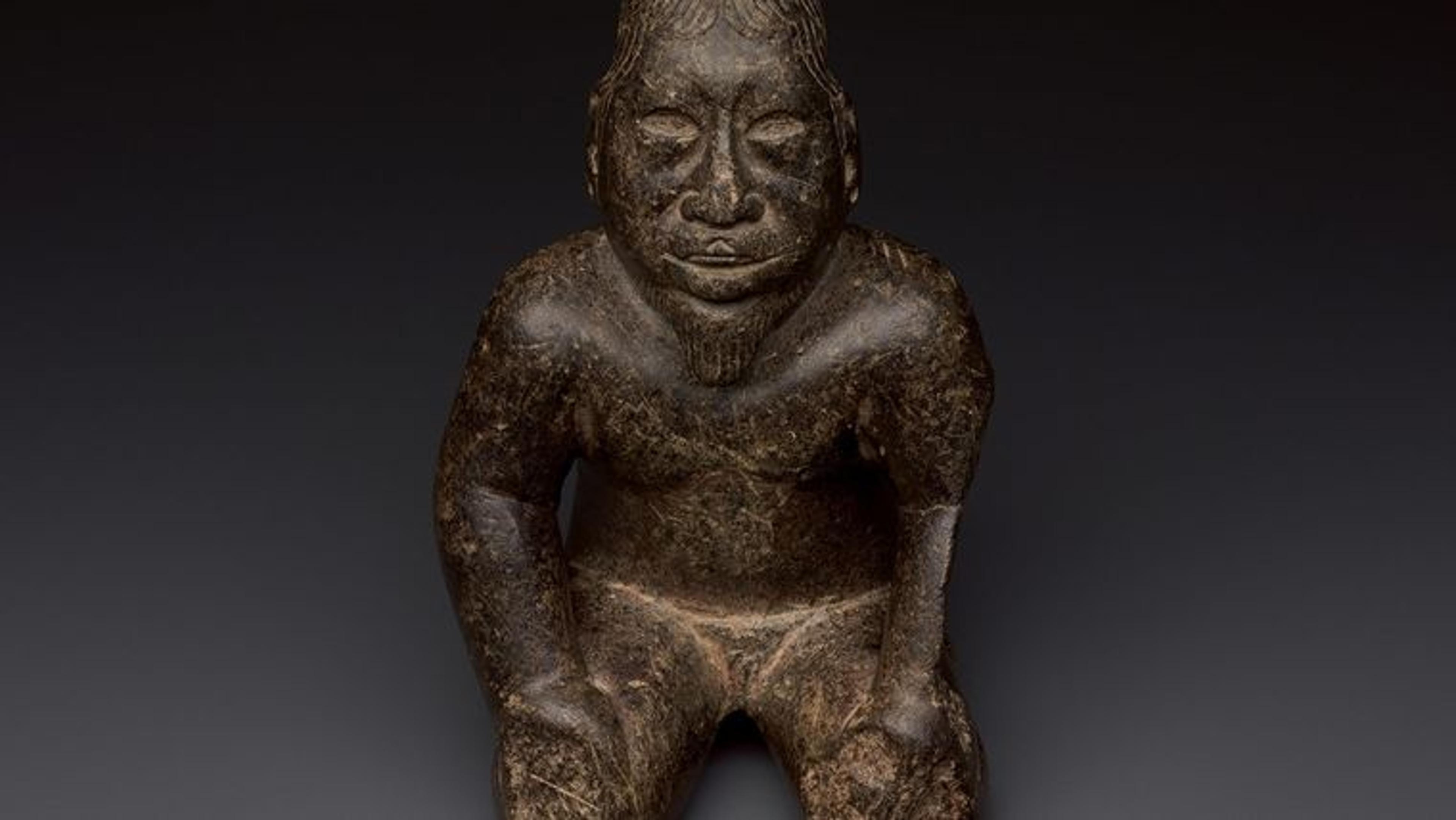
The photographer assigned to the episode inevitably channels the curator's excitement and brings this with them as they begin their multi-day photographic examination of the object in their studio. In this episode, photographer Peter Zeray translated Joanne's scholarship into visual form, capturing the energy of this figure.
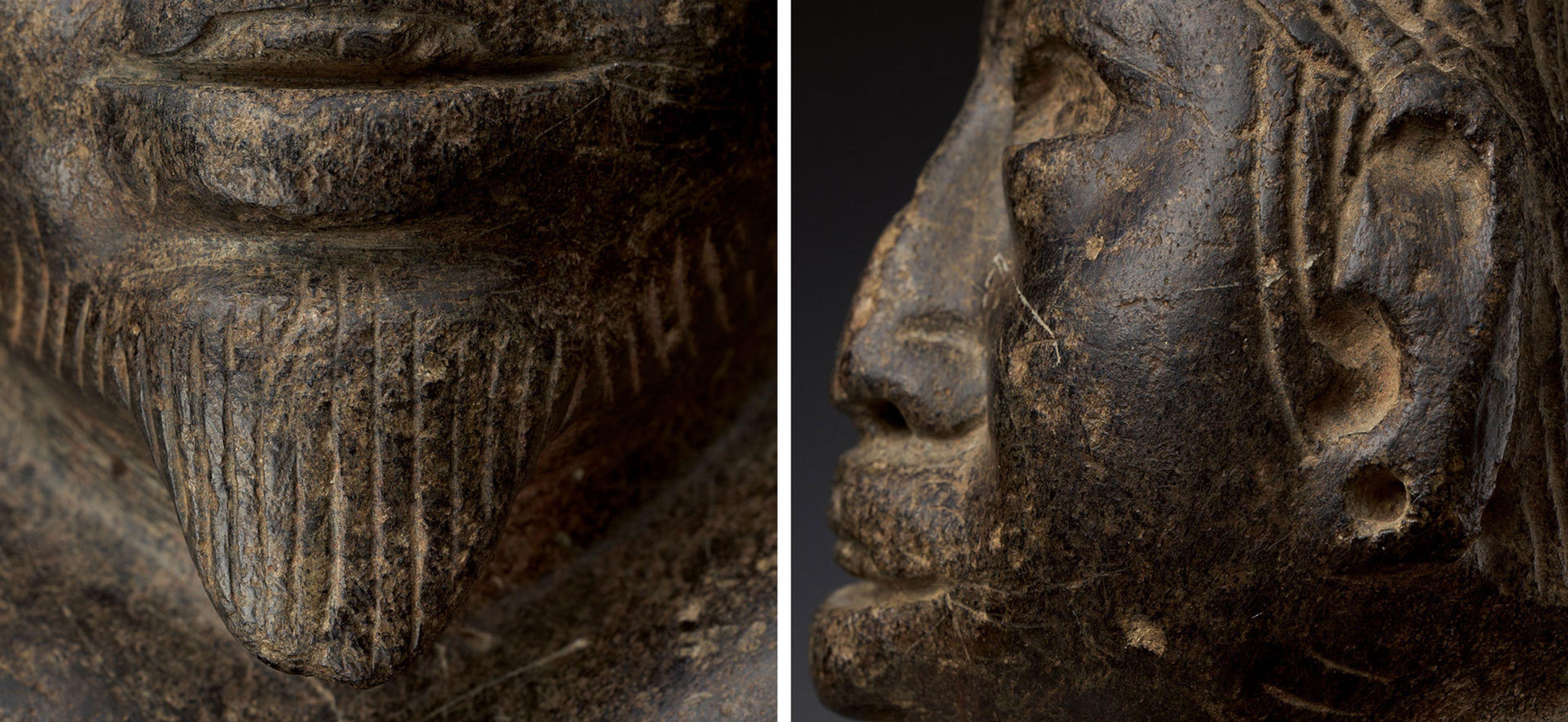
Details of the sculpture depicting the carvings of the beard and the cuts and carving that would have probably been inlaid with shells and stones
The curator often hopes the photographer will reveal hidden marks, writing, or clues to the meaning behind the work of art. In this case, the photographs render the beautiful textures and colors of the stone as well as the delicate carvings depicting the hair and beard. They also bring to light segments of the sculpture, such as the eyes and ears, that would have probably once held shell inlays or other forms of ornamentation. The photographs, however, did not reveal any written clues, and as Pillsbury notes in her essay, there are questions left unanswered:
In the absence of any associated hieroglyphic texts, the precise meaning of the figure is unclear. Smaller-scale kneeling figures appear to represent figures in the process of transformation into powerful feline deities, but the present example betrays no signs of either animal or supernatural traits. Is he readying himself for such a transformation? Or is he, like his colossal counterparts, a serene embodiment of formal and conceptual power?
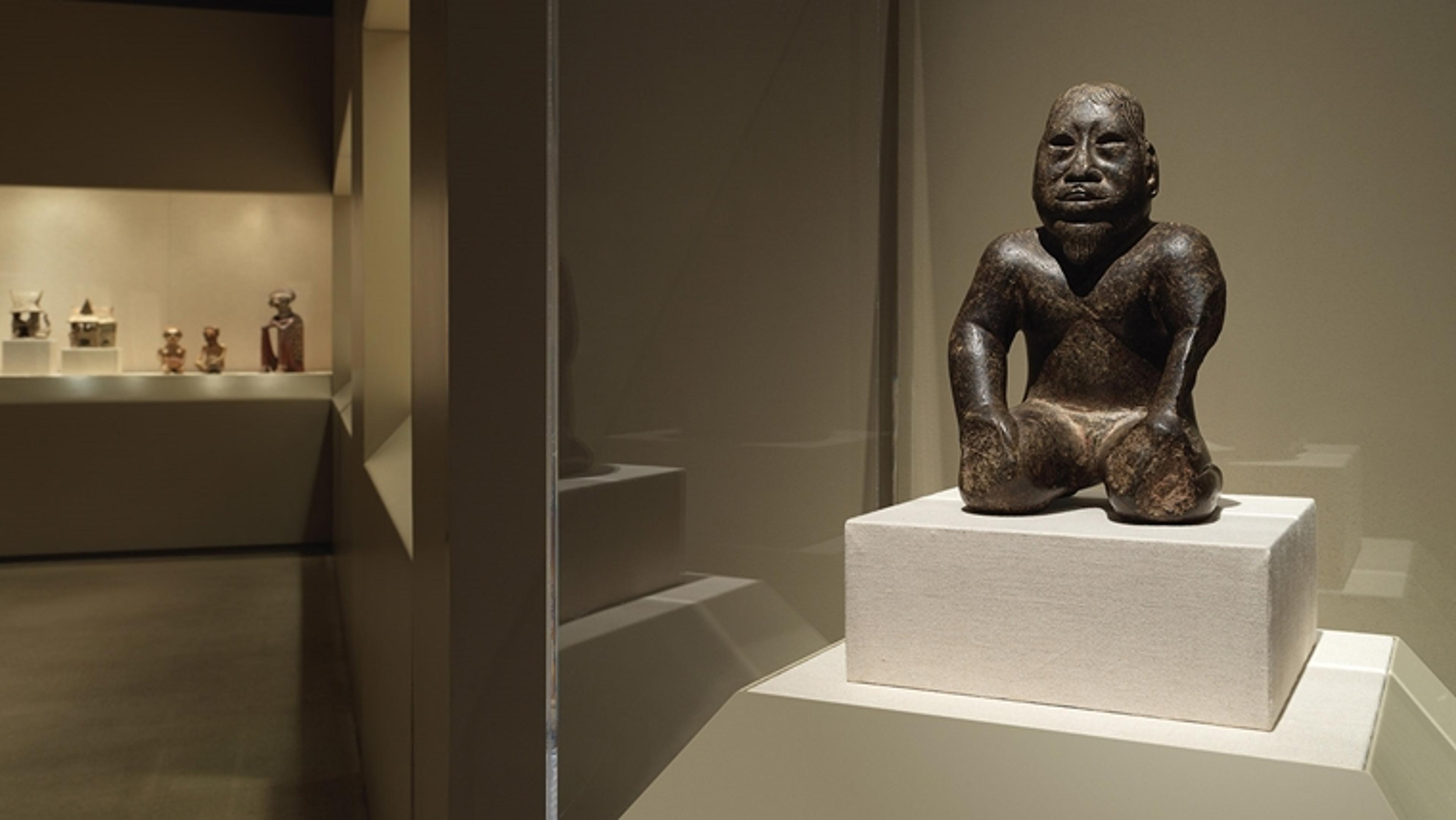
Gallery view of the kneeling bearded figure in gallery 358 at The Met Fifth Avenue
It's funny to think about this figure sitting unassumingly in the corner of gallery 358 at The Met Fifth Avenue. I can no longer walk past him without looking at him side-eye, waiting for him to spring out from his case and pounce.
MetCollects is made possible through the continued generous support of Bloomberg Philanthropies.


