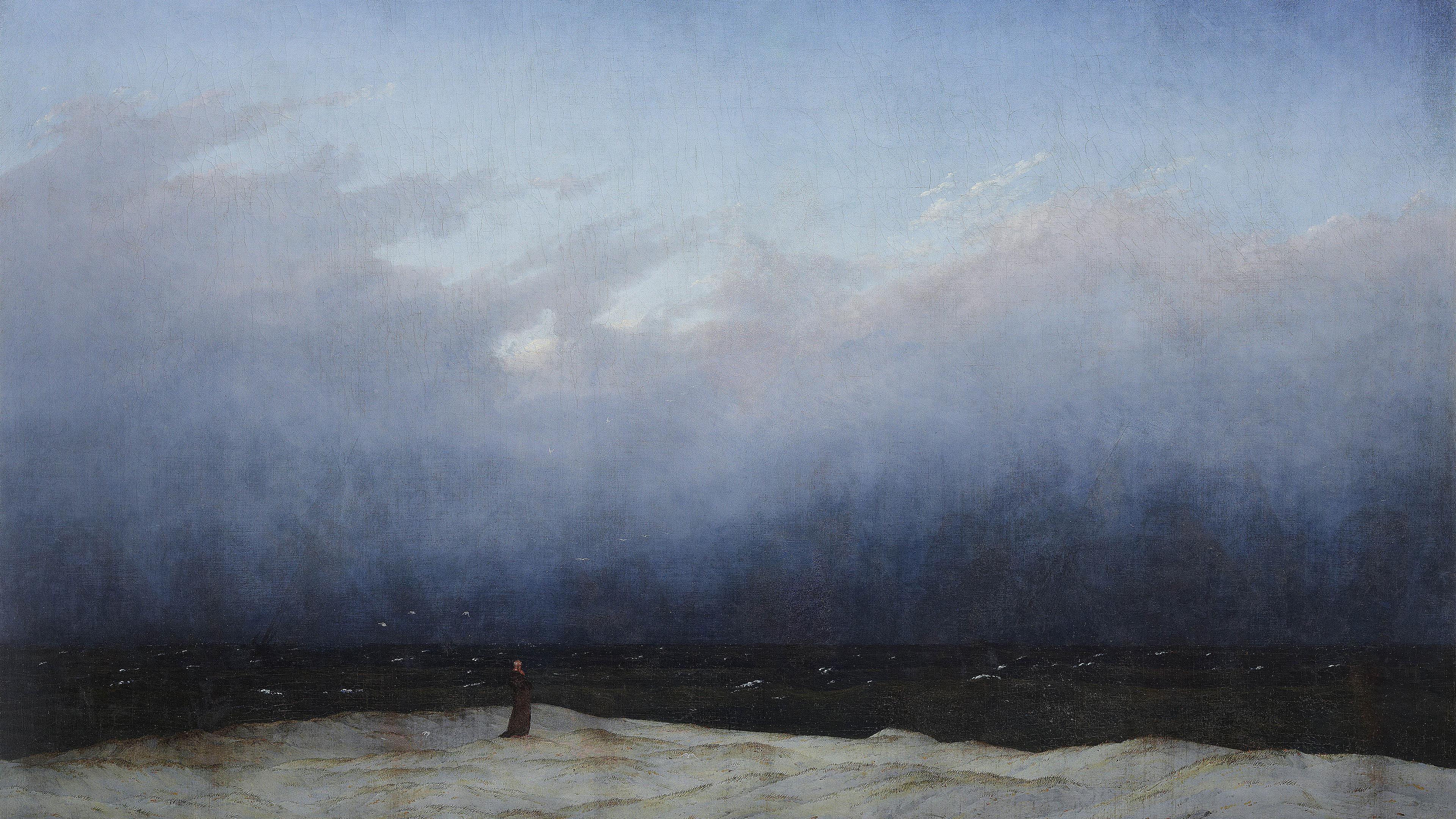
“Much of my life has ebbed away before this shivering expanse to the sound of waves in storm and calm, and the claws of the surf.” — Samuel Beckett
The poem’s title and italicized lines are from Samuel Beckett’s novel Molloy (1951). I am not the first to connect Beckett with Caspar David Friedrich. It is documented that, in 1937, Beckett visited Dresden, with its superb collection of Friedrichs. Beckett wrote in his diary, apropos of the version of Two Men Contemplating the Moon (ca. 1819–1820) in that city, “pleasant predilection for two tiny languid men in his landscapes.” Years later, Beckett told a journalist the composition was the inspiration for his play Waiting for Godot (1953).
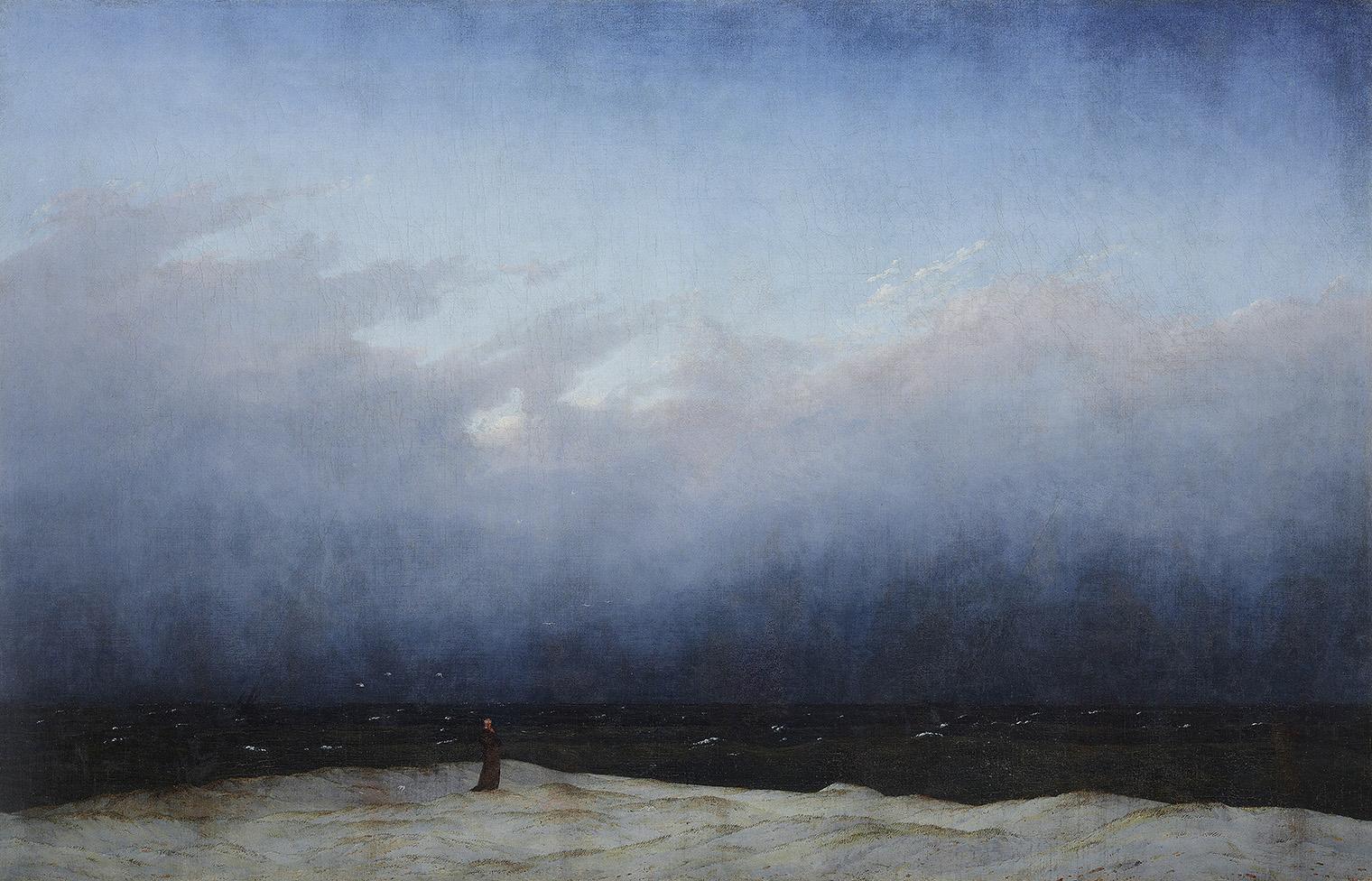
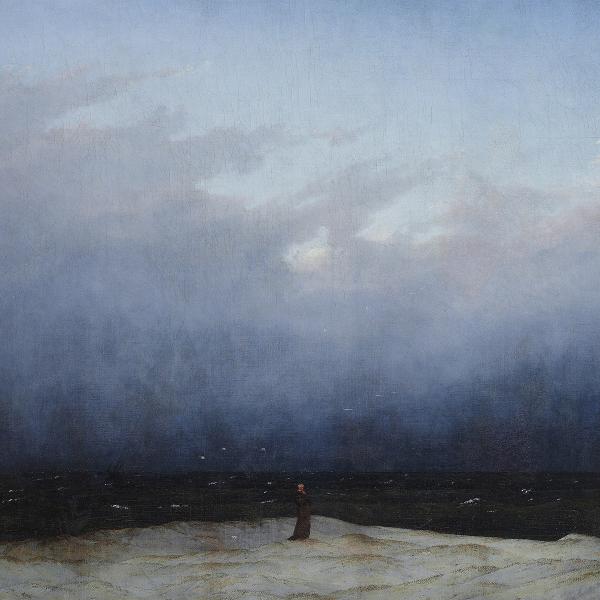
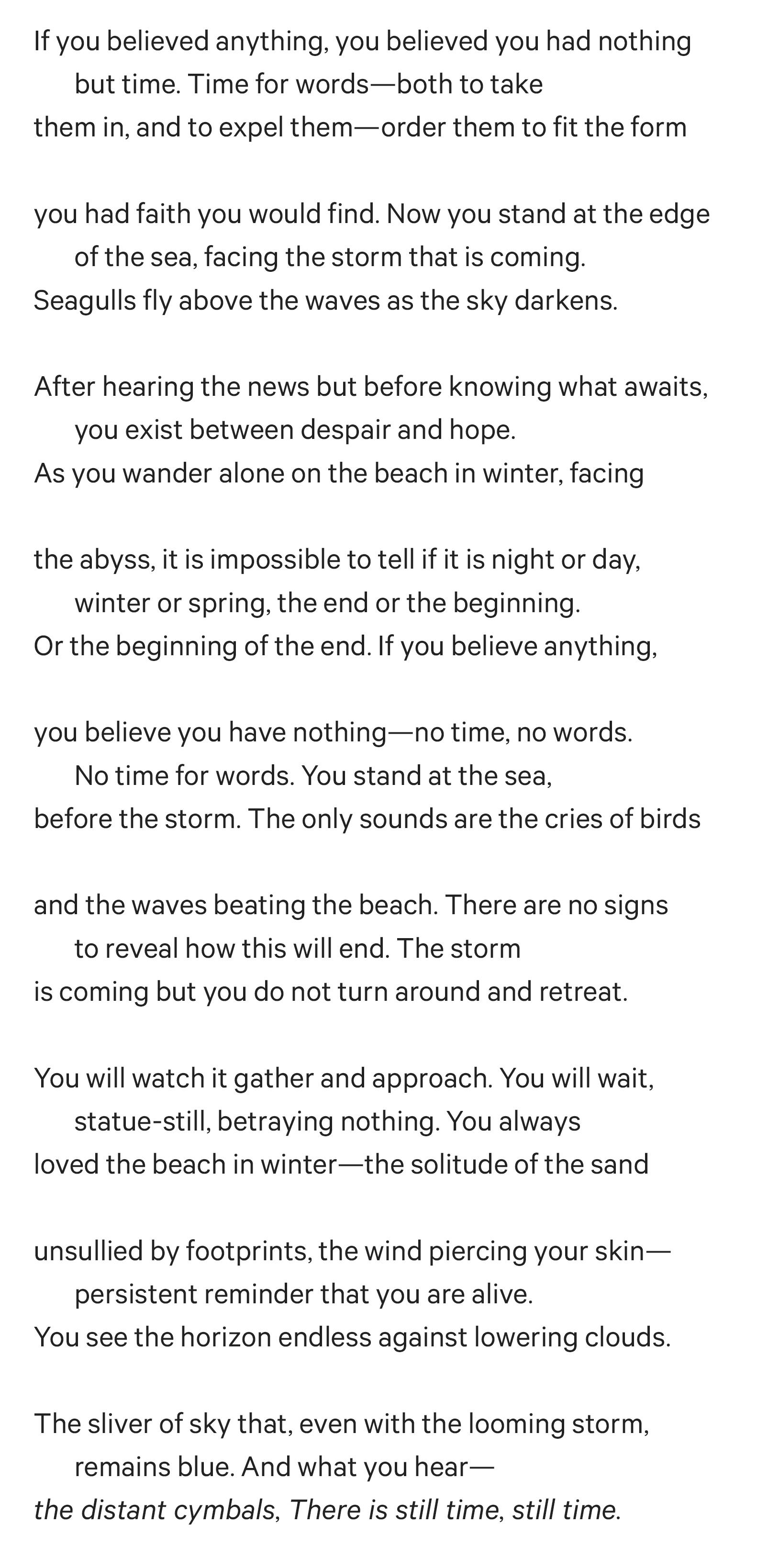
Caspar David Friedrich (1774–1840). Monk by the Sea, 1808–10. Oil on canvas, 43 3/8 x 67 1/2 (110 x 171.5). Nationalgalerie, Staatliche Museen zu Berlin
"Now Beacon, Now Sea" by Jennifer Franklin
Now Beacon, Now Sea
If you believed anything, you believed you had nothing
but time. Time for words—both to take
them in, and to expel them—order them to fit the form
you had faith you would find. Now you stand at the edge
of the sea, facing the storm that is coming.
Seagulls fly above the waves as the sky darkens.
After hearing the news but before knowing what awaits,
you exist between despair and hope.
As you wander alone on the beach in winter, facing
the abyss, it is impossible to tell if it is night or day,
winter or spring, the end or the beginning.
Or the beginning of the end. If you believe anything,
you believe you have nothing—no time, no words.
No time for words. You stand at the sea,
before the storm. The only sounds are the cries of birds
and the waves beating the beach. There are no signs
to reveal how this will end. The storm
is coming but you do not turn around and retreat.
You will watch it gather and approach. You will wait,
statue-still, betraying nothing. You always
loved the beach in winter—the solitude of the sand
unsullied by footprints, the wind piercing your skin—
persistent reminder that you are alive.
You see the horizon endless against lowering clouds.
The sliver of sky that, even with the looming storm,
remains blue. And what you hear—
the distant cymbals, There is still time, still time.
This poem is published in conjunction with the exhibition Caspar David Friedrich: The Soul of Nature, on view through February 8, 2025.


