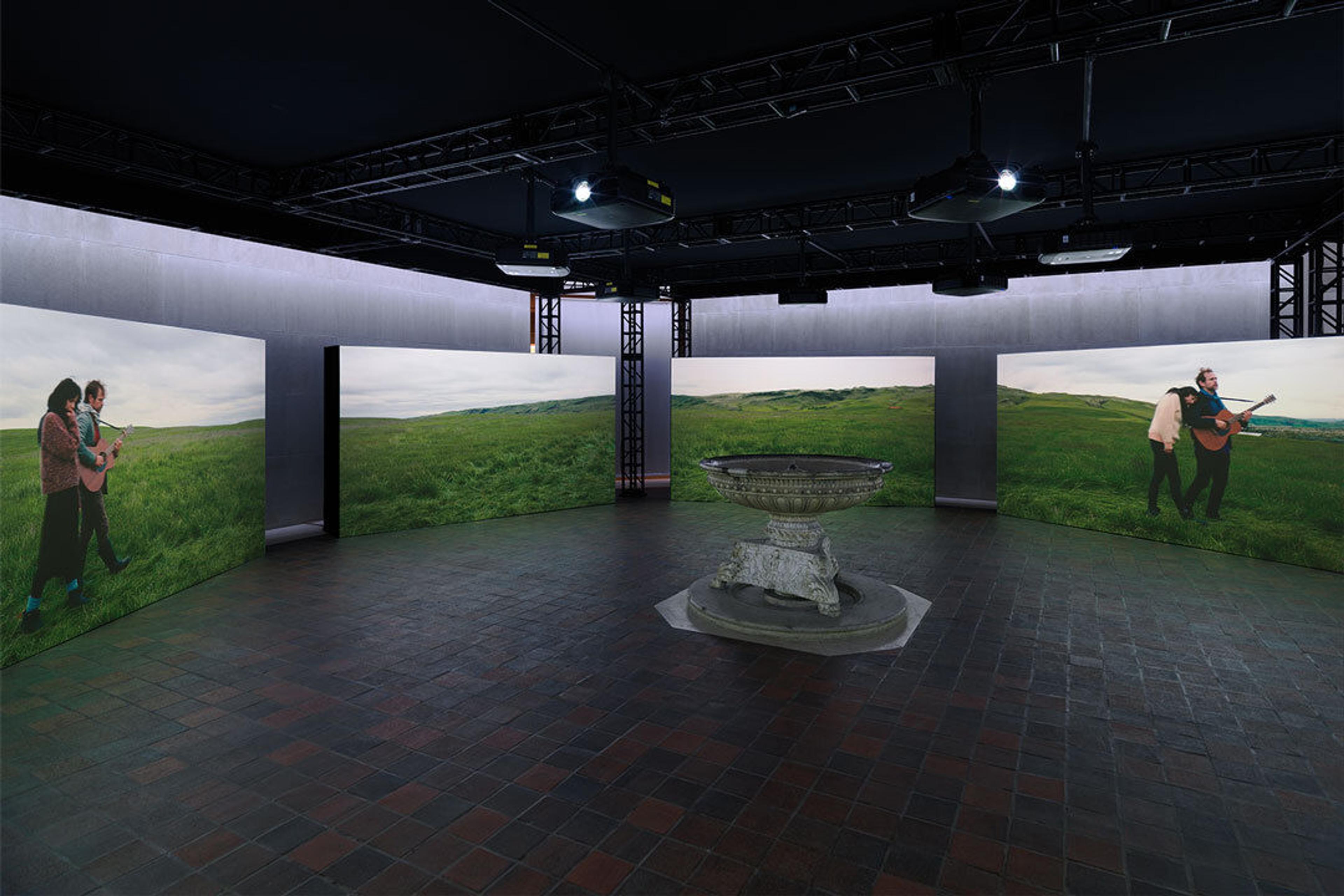
One summer solstice, I wrote the song with the four musicians, Gyða and Kristín Anna Valtýsdóttir and Aaron and Bryce Dessner. We wrote it in Ingibjörg Sigurjónsdóttir's and my living room, mostly from book titles that were there on the shelf. We don't have Scandinavian traditions of summer solstice in Iceland, but the next midsummer the musicians performed at our wedding, and on the third year we shot the video. So it's become a tradition for us to do something monumental at this time of year.
I keep thinking of Shakespeare's A Midsummer Night's Dream and these magical nights of love. We're having a lovely time in nature; the horror of the world seems elsewhere. But midsummer is also a reminder of death, or darkness. That's the psyche of the Arctic regions. It's getting brighter and brighter, but the light is already starting to fade into blessed darkness.
It's funny, you remember these summer nights as warm, but they're actually cold. We shot around Eldhraun, one of the biggest lava fields on earth. When we were shooting, the repetition of the song was quite ceremonial. The cold strained the musicians, but they kept going for 77 minutes. They stopped when they heard the birds singing. Birds singing means the midnight moment has passed.
As an Icelander at The Met—we are not a culture of objects. There are hardly any old artworks in Iceland. For Icelanders, a concept often makes more sense than an object. Objects of nature are a reservoir of stories. I can't look at a stone and think of it as a stone. I start to think, what is the story of this stone? Who sat on it? There's an environmental upbringing of storytelling that goes into the artworks. When we did the video, the story became an anecdote in the area—people talked about how these artists came here, put these cameras in a circle, and so on. The story of this happening charged the landscape, as it were.
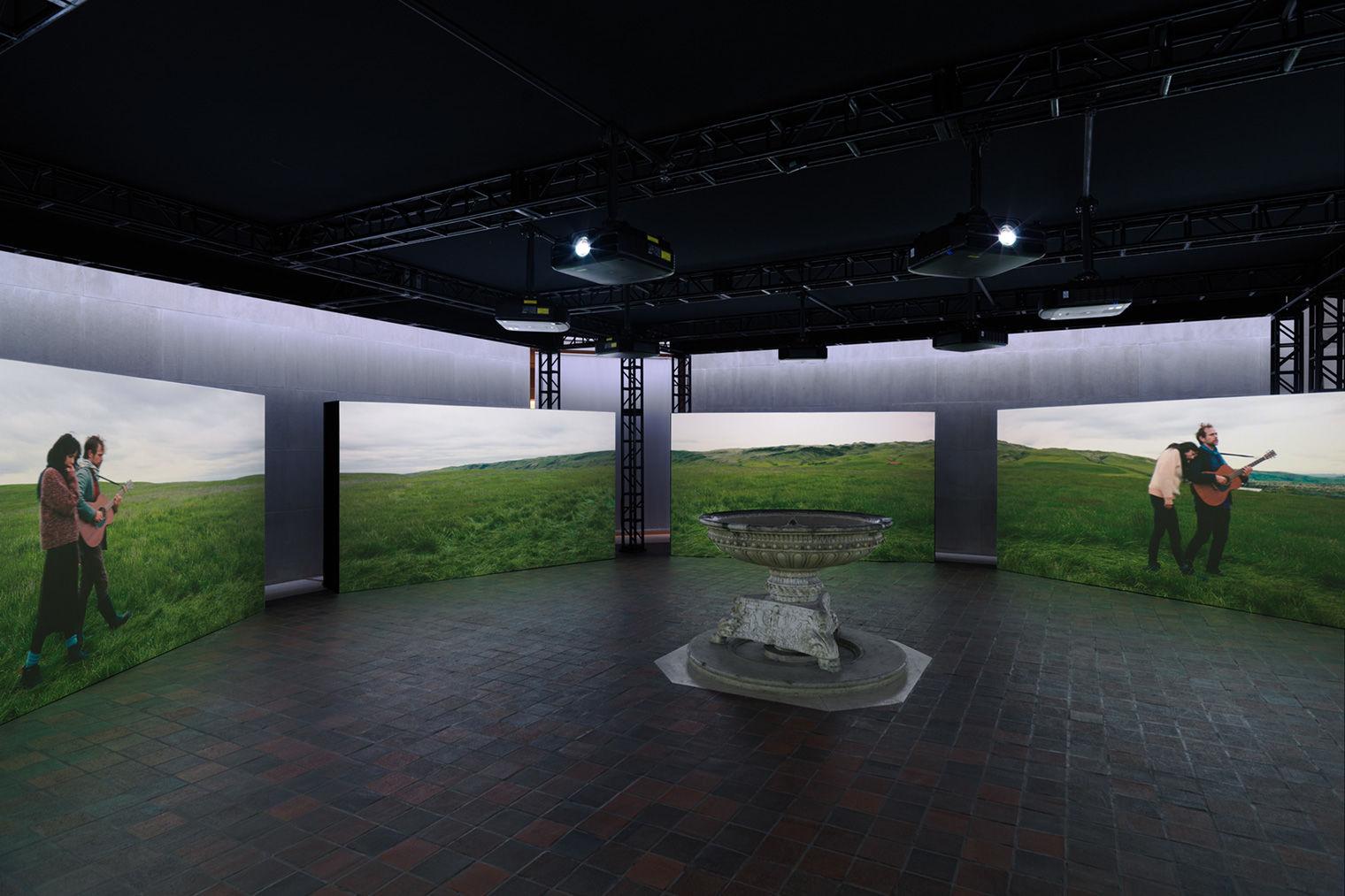
Installation view of Death Is Elsewhere at The Met
The Met turned out to be a great space for it, for this circle, surrounded by paintings, the glory of the dead. I was partly inspired by cycloramas, these circular paintings, or stage sets, usually depicting war. Death Is Elsewhere is the opposite of war ("By the stream, my love"). But the surrounding lava field is an old natural war zone, the site of a volcanic eruption in 1783.
It is also inspired by a theater production my father, Kjartan Ragnarsson, did in 1989, when I was thirteen. The set, by Grétar Reynisson, was a circle on the stage, surrounded by water, and the actors would just roam around inside of it. I remember one audience member wrote a letter of complaint to Iceland's main newspaper, appalled by the stupidity of this circle, the actors just whirling. My dad was angry, but I was fascinated by this old-school guy who thought an actor stuck in a circle was a useless waste of time. He pointed out the meaningless of it all. I kept going in that direction.
I've never wanted to make a narrative film. I make films that have no stories, but there's the idea of a story around it. They're these open, poetic things that you can relate to in an ironic or sentimental way. The audience can create their own narrative around my works. There's no wrong way to understand the piece.
— As told to Will Fenstermaker and Sumi Hansen


