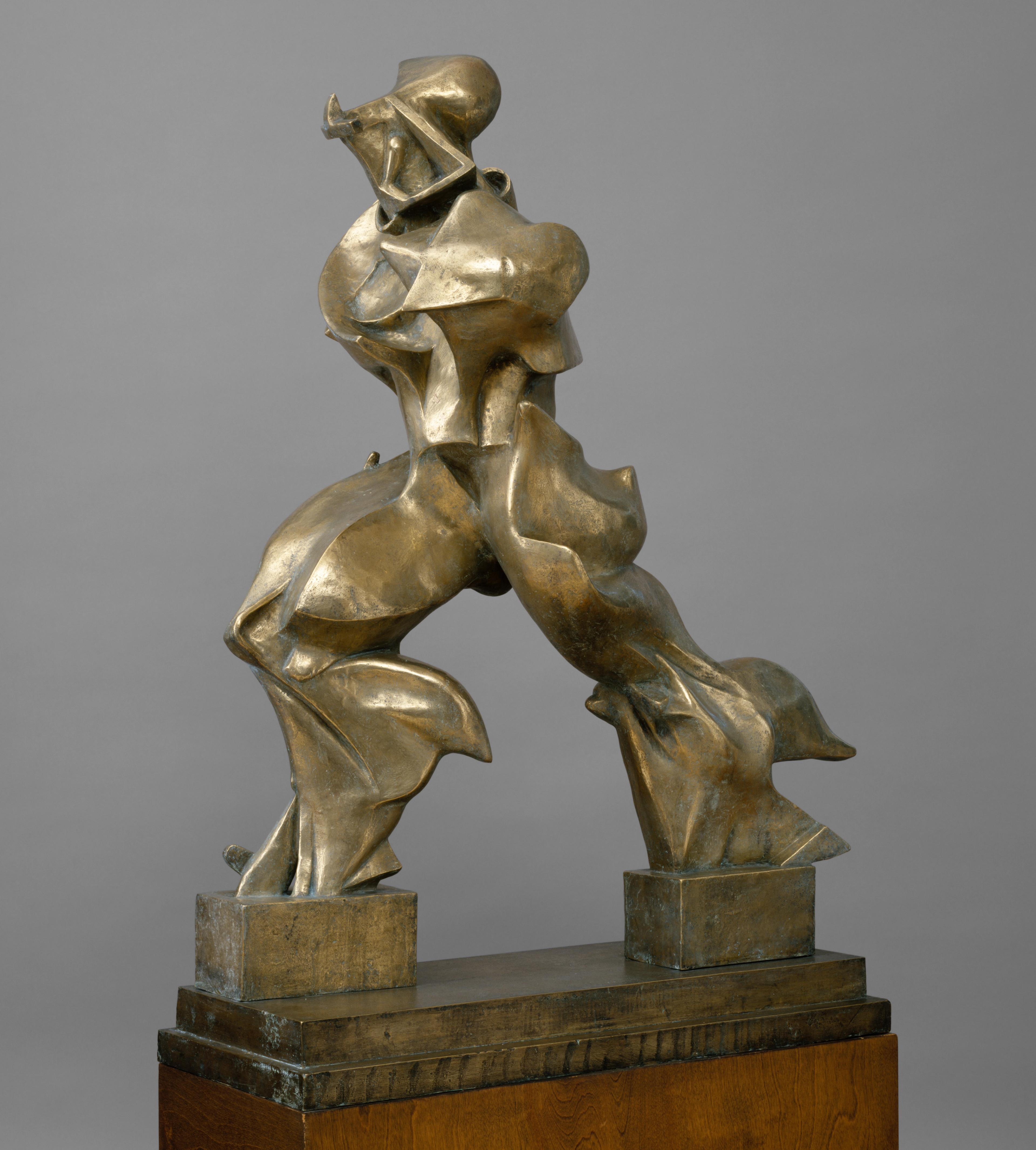
Umberto Boccioni (Italian, Reggio 1882–1916 Sorte). Unique Forms of Continuity in Space, 1913, cast 1950. Bronze, 47 3/4 × 35 × 15 3/4 in., 200 lb. (121.3 × 88.9 × 40 cm, 90.7 kg). The Metropolitan Museum of Art, New York, Bequest of Lydia Winston Malbin, 1989 (1990.38.3)
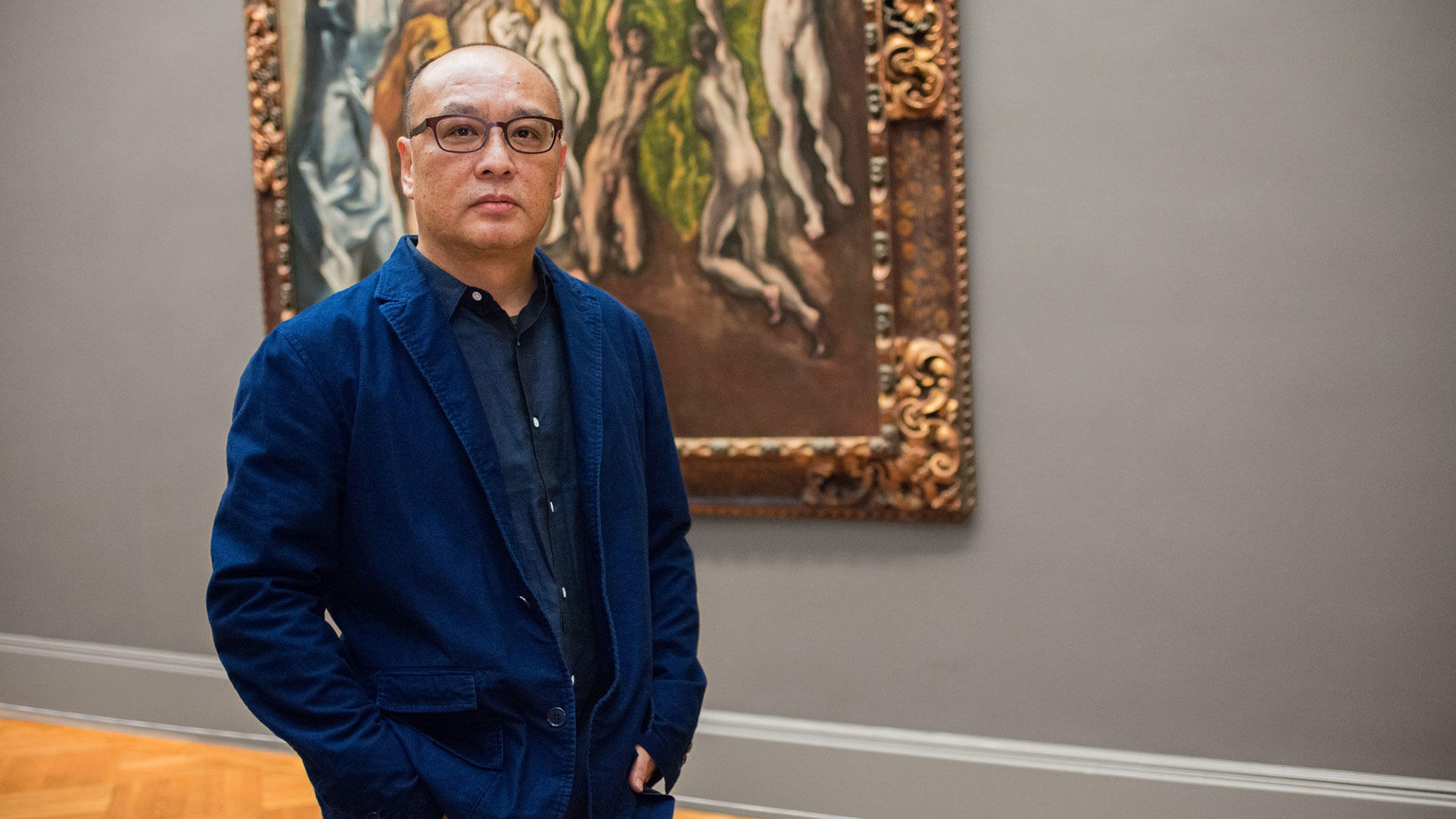
My name is Rashid Rana. I'm a visual artist.
Unique Forms of Continuity in Space, by Umberto Boccioni, is still so relevant and it's been over a hundred years. And I think it's the quality this work has in transcending its time. It's about this whole dynamism of speed and everything that the Futurists were talking about. Some of the Futurists got involved with the whole fascist movement, though Boccioni died much before that. I think one can always read up about a piece, it's historical context, and the backdrop against which a work is produced, but a good work of art has always more to offer than what an artist intends to do.
I think this work is a great example of how the form leads the way. This work breaks away from tradition as a homogenizing force: a painter who is making paintings with a Cubist influence and then decides to make a three-dimensional piece, which is taking the same agenda forward in the third dimension. For me, Cubism in a way appears to be a subject matter rather than a visual device. The piece is about time: even if you're looking at it from one viewpoint, the views multiply further.
The form is being deconstructed here into different planes beyond the limits of the corporeal body, the muscles and its different facets flowing into space. Not having the arms is also a smart choice: it's not complete. If he had introduced arms to this figure it would have made it unnecessarily complicated and the piece would have become too descriptive, which, you know, is not the idea. You know, formal qualities are what is becoming timeless: what a work of art or an object offers in itself. This may sound historically cruel to totally not look at the whole fascist, you know, sort of agenda there, but maybe for a few moments one can, you know, give the form itself and the work itself a chance to offer what it may have to offer—which the artist may not be intending, but by some virtue it is present there.
This interest of mine in time and location and its disintegration is a kind of a liberation: to make the viewers realize about borderlines that exist in our minds. You know, this is a work from the past and this is a work that can be about future. A good work of art keeps on becoming new at any different time and era.