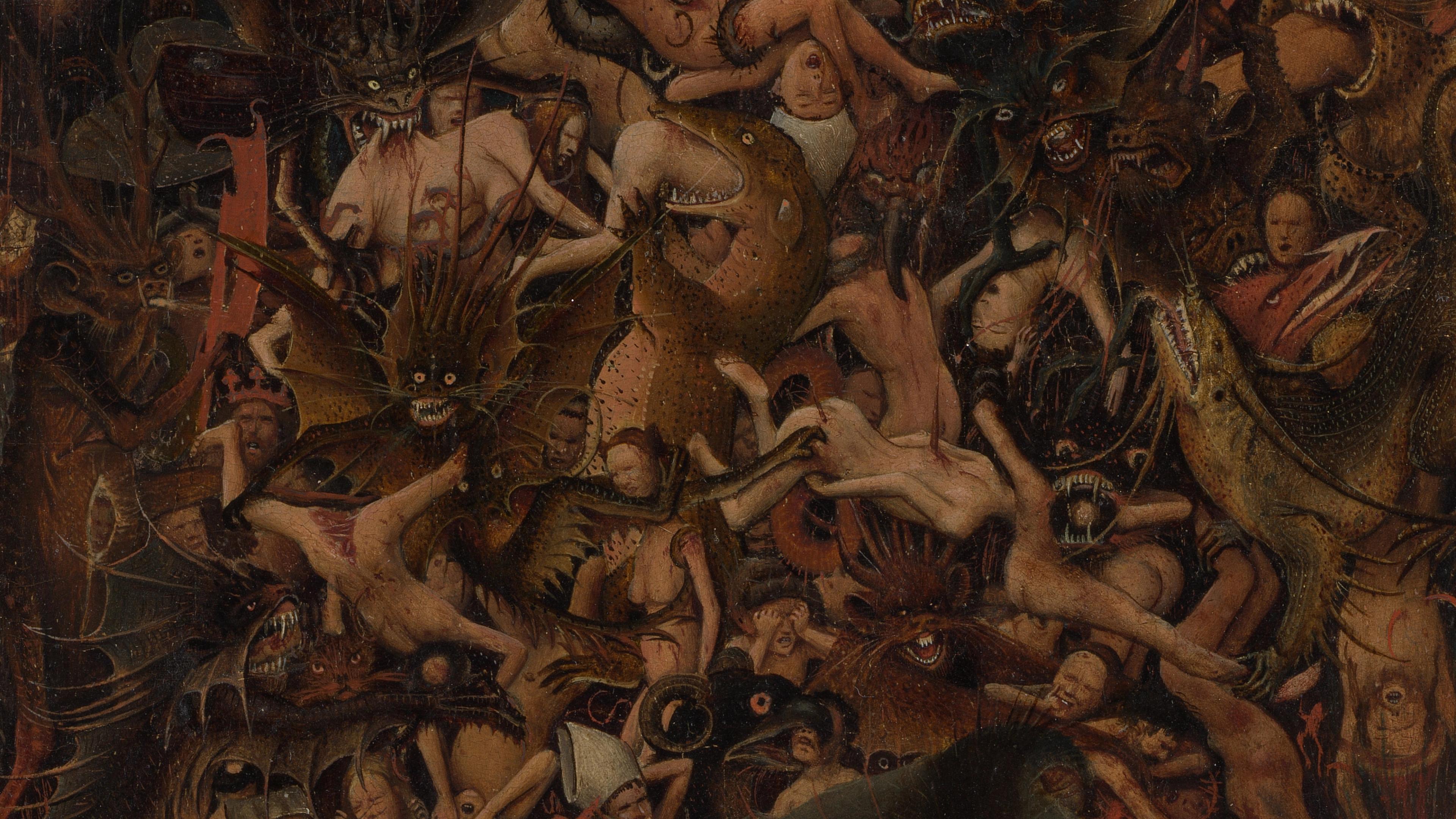
Jan van Eyck (Netherlandish, ca. 1390–1441). The Last Judgment (detail), ca. 1436–38. Oil on canvas, transferred from wood, 22 1/4 x 7 2/3 in. (56.5 x 19.7 cm). The Metropolitan Museum of Art, New York, Fletcher Fund, 1933 (33.92ab)
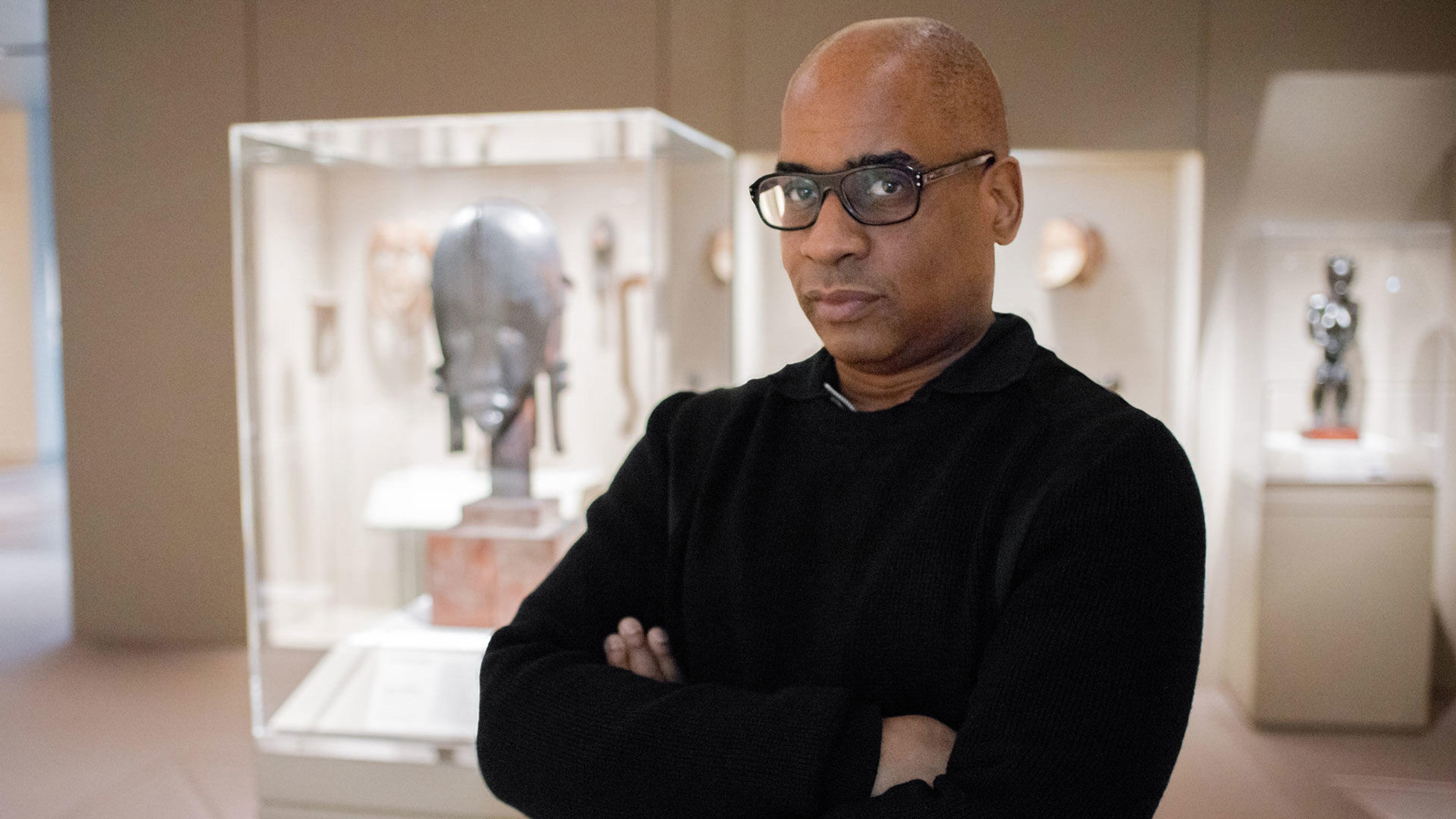
I'm Walton Ford. I'm a painter.
Even though I've been painting my whole life, I'm just in awe of this Last Judgment painting. This is one of the great monster paintings in all of art history. Heaven, it's no contest, looks like a board meeting where they're all up there watching the Last Judgment, and the audience is just sitting there, the interesting stuff is happening onstage. And the stage, in this case, is the end of the world.
To create these demons Van Eyck had to go out and look at things. That horror is there in nature. This creature—it's got a sort of monkey's head, it's got frog legs, it's got wings from a beetle, and he's got these sort of spots on his back like a toad might have. What Van Eyck would have had to do was to, say, beachcomb, like you walk along the beach and you're picking up bits of lobster and crustacean and the little horny bits of like, you know, spider crabs. Then he's going to the fish market and looking at, like, really nasty, weird fish. He's making monsters. And this is, what, like eight-by-ten or something? It's like a sheet of loose-leaf paper, but it's just packed.
You do get the feeling like because it's Hell he gets to break all kinds of rules. Here's the time for lots of invention, lots of transgressive nudity and gore. And the souls are getting vacuumed into the earth, sucked under the waves, and being shit out by this skeletal bat figure that divides the underworld from the rest of us. And the idea that you start out being crapped into this horror, totally tortured and eaten and bored into by these hideous beasts, until so much blood pours out that you drown in the blood below and then, I guess, the process starts all over again for eternity—it's like a slasher film. It becomes so vivid. He may have seen someone ripped in half because it's pretty frickin' convincing the way that he portrays it.
In our culture, at least, we're so separate from the horror of everyday death that we need to understand it. Like, when people slow down on the highway to look at the car accident, they're not being sort of shallow; they're actually trying to gather information about something that we need information about. You can tell that Van Eyck comes out of that world, and it really teaches you something about the spirit and the flesh and the sort of transient nature of life.