Lion Ornament
The leadership of the Asante Empire, with its multiple states and elaborate hierarchy, were patrons of a complex of regalia, symbols, and proverbs that reflected upon the royal status, grandeur, and personal qualities of the sovereign. Historically, only royals and members of their entourage could possess precious metals like locally mined gold (sika) and imported silver. Akan gold production likely began in the second half of the fifteenth century, yielding approximately fourteen million ounces of metal by 1900. Gold circulated in powdered form (sika futuro) as the currency of the Asante Empire and many of its neighbors until 1901; when not accumulated as a form of personal wealth, gold dust was melted down and cast into fashionable ornaments. Regalia—including woven textiles and elaborate gold ornaments—have been omnipresent aspects of Akan courtly life since at least the fifteenth century. Members of the royal goldsmiths' guild exclusively produced gold ornaments, including staffs and rings. According to oral tradition, these highly skilled artists claimed ancestry from Fusu Kwabi, who supposedly descended from heaven in the 1400s to teach men how to work gold. Gold was not only a means of wealth and a way of displaying status, but also a spiritual substance. The shining metal was believed to be the earthly embodiment of the sun, and thus the force of life itself (kra).
Among the most potent royal symbols was the leopard, a creature endemic to the forested Akan region. The leopard dominated both Akan visual and oral arts related to royals until the late nineteenth century, when it was replaced by the lion. While the Akan had been exposed to images of lions in European heraldry and other media since the late fifteenth century, images of lions did not become part of the visual vocabulary of Akan royal regalia until the 1820s. The frequent use of the lion as a logo for foreign trading companies provided Akan artists with various models, and after 1902, when the area now known as Ghana became a British colony, the lion on British heraldry and goods became ubiquitous. Art historian Doran Ross has linked the particular pose of this ornament to a heraldic lion known as the “statant guardant:” the former part of the phrase refers to the four paws placed on the ground, while the latter part refers to the turned head. It was at this point that the lion supplanted the leopard as the preferred feline symbol of the Akan ruler, a dominant spot that it retains to this day. Like its spotted counterpart, the lion in Akan art represented the positive qualities of a chief, including strength, courage, and wisdom. Tooth-baring lions such as this example have been associated with a proverb that implores one to listen to chiefly warnings: “If the lion has no intention to attack, it will not show its teeth.” (Ross 1981, 166)
It has been suggested that this golden lion and its counterpart (1979.296.228) may have adorned a pair of royal sandals, a sword-bearer’s hat, or served as finials for a prestige chair. The series of loops at the base could have been used to fasten it to any of the aforementioned objects. A similar object with a lion motif and flat base with loops, identified as a sword ornament, in the collection of the treasury of the Nsutahene in Nsuta, Ghana, indicates yet another possible use. (Ross 1981, fig. 2). Lions in the “statant guardant” pose adorn two other royal Akan objects in the Met’s collection: a pair of leather sandals (1999.47.104a, b), and a stool (1976.315). Once a symbol of European colonial authority in the colony of the Gold Coast (present-day Ghana), the heraldic lion has been transformed into the emblem par excellence of the Akan ruler. It also figures prominently in Ghana’s current national coat of arms, designed by Ghanaian artist Amon Kotei in 1957.
Kristen Windmuller-Luna, 2016
Sylvan C. Coleman and Pam Coleman Memorial Fund Fellow in the Department of the Arts of Africa, Oceania, and the Americas
Published references
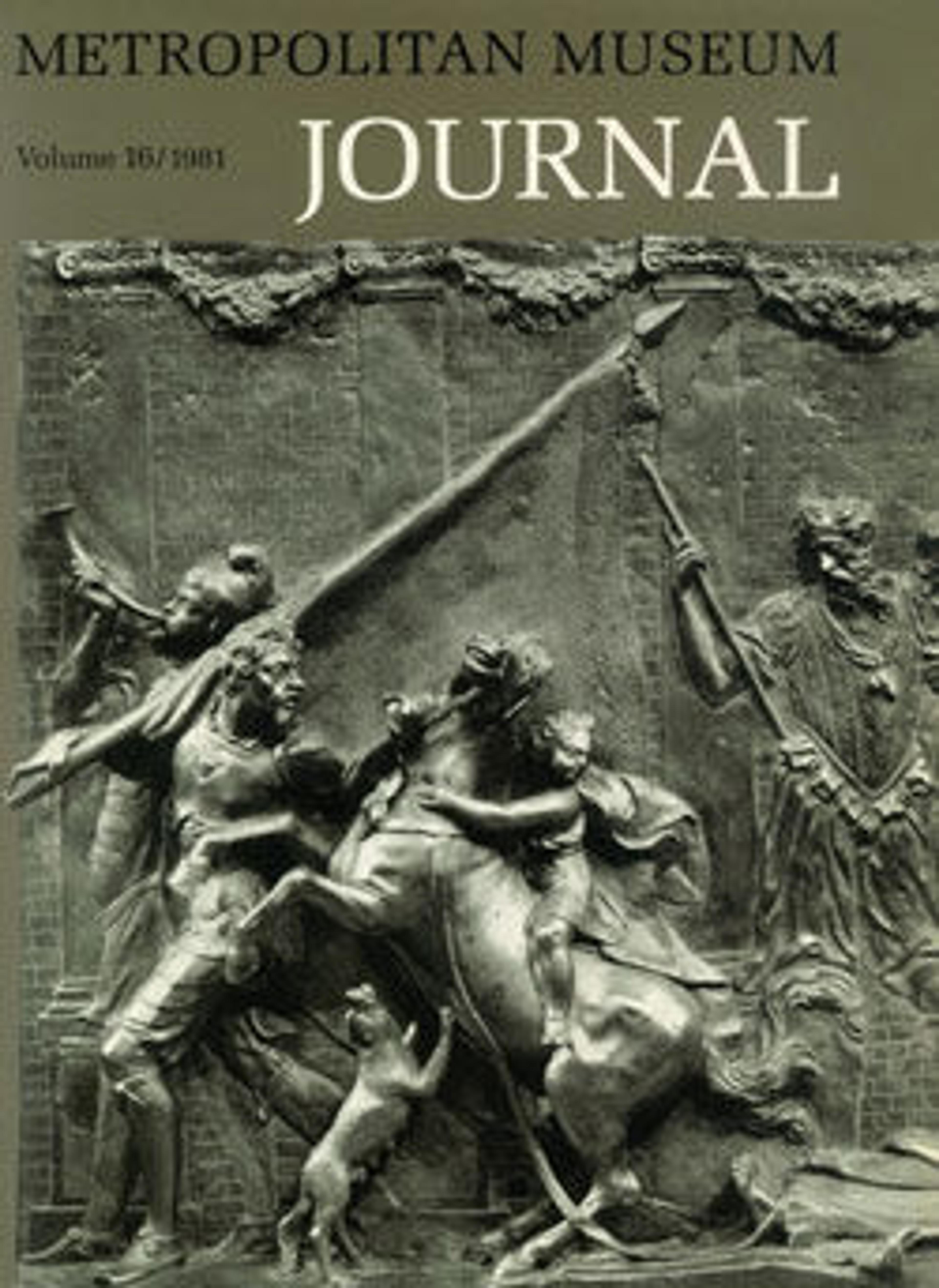
Ross, Doran H. "The Heraldic Lion in Akan Art: A Study of Motif Assimilation in Southern Ghana." Metropolitan Museum Journal 16 (1981): 165-80.
Further reading
Cole, Herbert M., and Doran H. Ross. The Arts of Ghana. Los Angeles: Museum of Cultural History, 1977.
Garrard, Timothy F. "The Akan of Ghana." In African Gold: Jewellry and Ornaments from Ghana, Cote D'Ivoire, Mali and Senegal in the Collection of the Gold of Africa, Barbier-Mueller Museum in Cape Town. New York/Munich: Prestel, 2011.
Ross, Doran H., Georg Eisner, and Leslie Jones. Royal Arts of the Akan: West African Gold in Museum Liaunig. Neuhaus/Suha: HL Museumverwaltung, 2009.
Wilks, Ivor. Forests of Gold: Essays on the Akan and the Kingdom of Asante. Athens: Ohio University Press, 1993.
Artwork Details
- Title: Lion Ornament
- Artist: Asante-Akan artist
- Date: 19th century
- Geography: Ghana, Kumasi
- Culture: Akan peoples, Asante group
- Medium: Gold
- Dimensions: H. 1 1/2 x W. 2 1/8 x D. 2 1/4 in. (3.8 x 5.4 x 5.7cm)
- Classification: Metal-Ornaments
- Credit Line: The Michael C. Rockefeller Memorial Collection, Bequest of Nelson A. Rockefeller, 1979
- Object Number: 1979.206.227
- Curatorial Department: The Michael C. Rockefeller Wing
More Artwork
Related Content
 Free to download
Research Resources
The Met provides unparalleled resources for research and welcomes an international community of students and scholars. The Met's Open Access API is where creators and researchers can connect to the The Met collection. Open Access data and public domain images are available for unrestricted commercial and noncommercial use without permission or fee.
To request images under copyright and other restrictions, please use this Image Request form.
Feedback
We continue to research and examine historical and cultural context for objects in The Met collection. If you have comments or questions about this object record, please contact us using the form below. The Museum looks forward to receiving your comments.
Content Notice
The Metropolitan Museum of Art presents over 5,000 years of art from around the world, and our online collection reflects ongoing work conducted over the course of our more than 150-year history. You may encounter objects or images that may be inappropriate for some viewers or information that may be outdated.