“The Fortuny gown which Albertine was wearing that evening seemed to me the tempting phantom of that invisible Venice.”
—Marcel Proust, In Search of Lost Time
The “Delphos” gown, invented by Adèle Henriette Nigrin and Mariano Fortuny in 1909, is a shimmering column of pleated Japanese silk tussah, inspired by the Hellenistic gowns depicted in statues such as the Charioteer of Delphi.
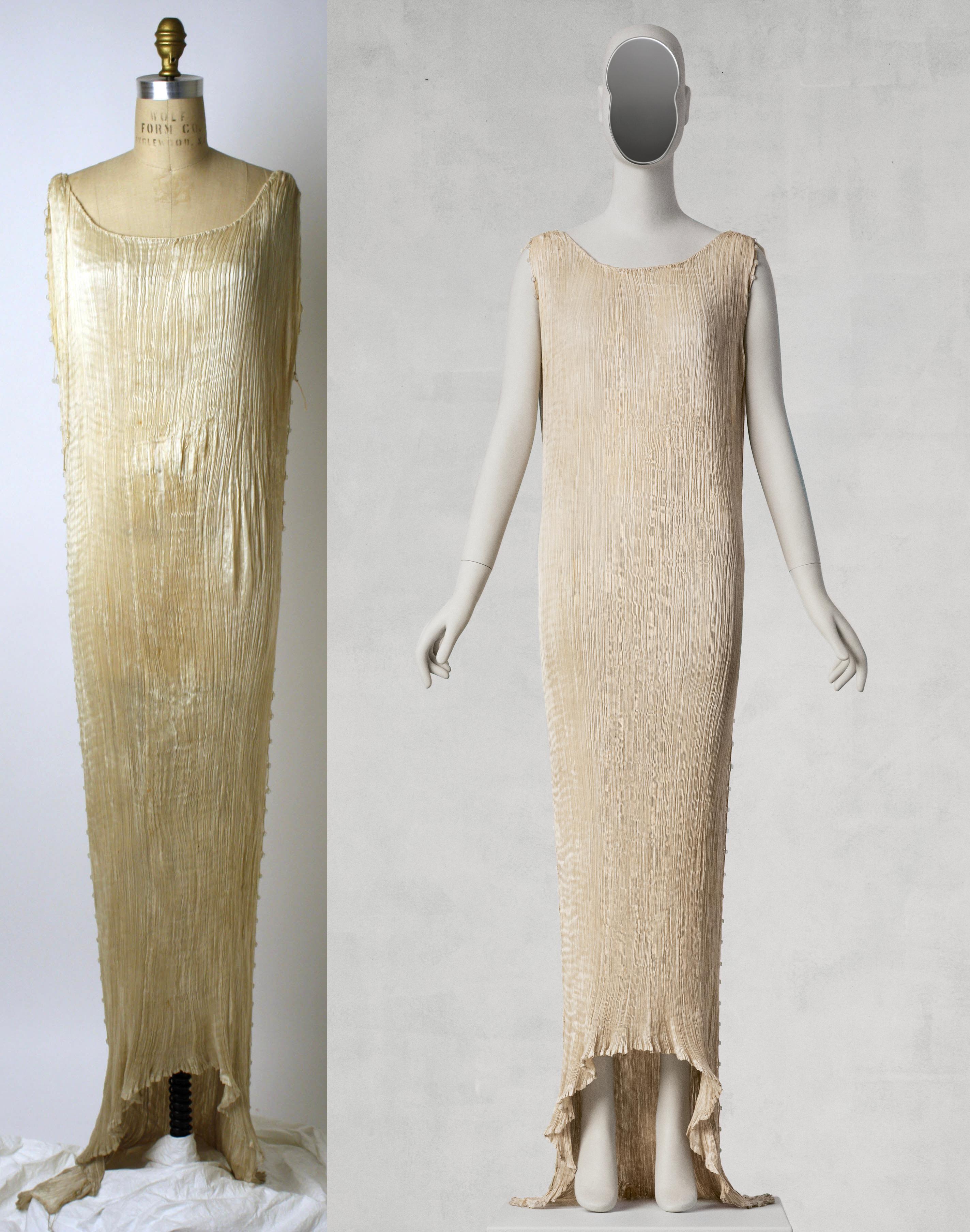
The “Delphos” gown, before (left) and after (right) treatment. Designed by Adèle Henriette Elisabeth Nigrin Fortuny (French, 1877–1965) and Mariano Fortuny y Madrazo (Spanish, 1871–1949) for Fortuny (Italian, founded 1906). “Delphos” gown, 1920s. Silk, glass. The Metropolitan Museum of Art, New York, Gift of Frances J. Kiernan, 2005 (2005.328)
Adèle Nigrin and Mariano Fortuny created a signature pleating technique used in the “Delphos” gowns, the method for which remains shrouded in mystery to this day. Working out of Venice, Italy, the couple founded a company that manufactured stage lighting and set designs, among other inventions, but became famous for their dresses and textile innovations.
The “Delphos” was designed as a tea gown to be worn at home in informal settings. The dress’s sinuous form emphasizes movement and the uncorseted body beneath, a startlingly modern silhouette at the time. The fluid, clinging nature of the dress is due to its unique form of pleating.
Pleats are formed by heat, moisture, pressure, and time. The pleats found in most modern clothes are usually knife, box, or accordion pleats, which lie flat and are consistent in size and direction.
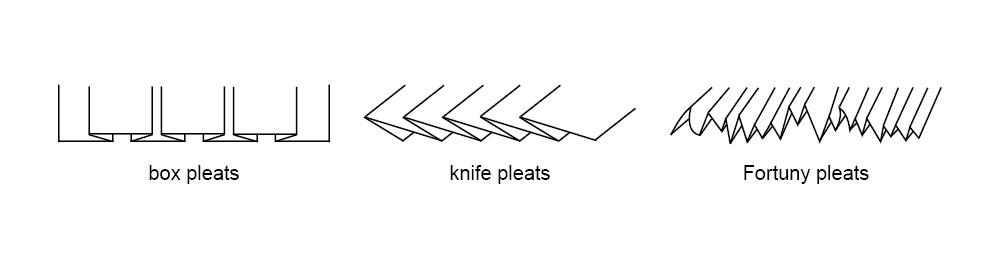
Diagram of different styles of pleats. Box and knife pleats are commonly found in today’s clothing.
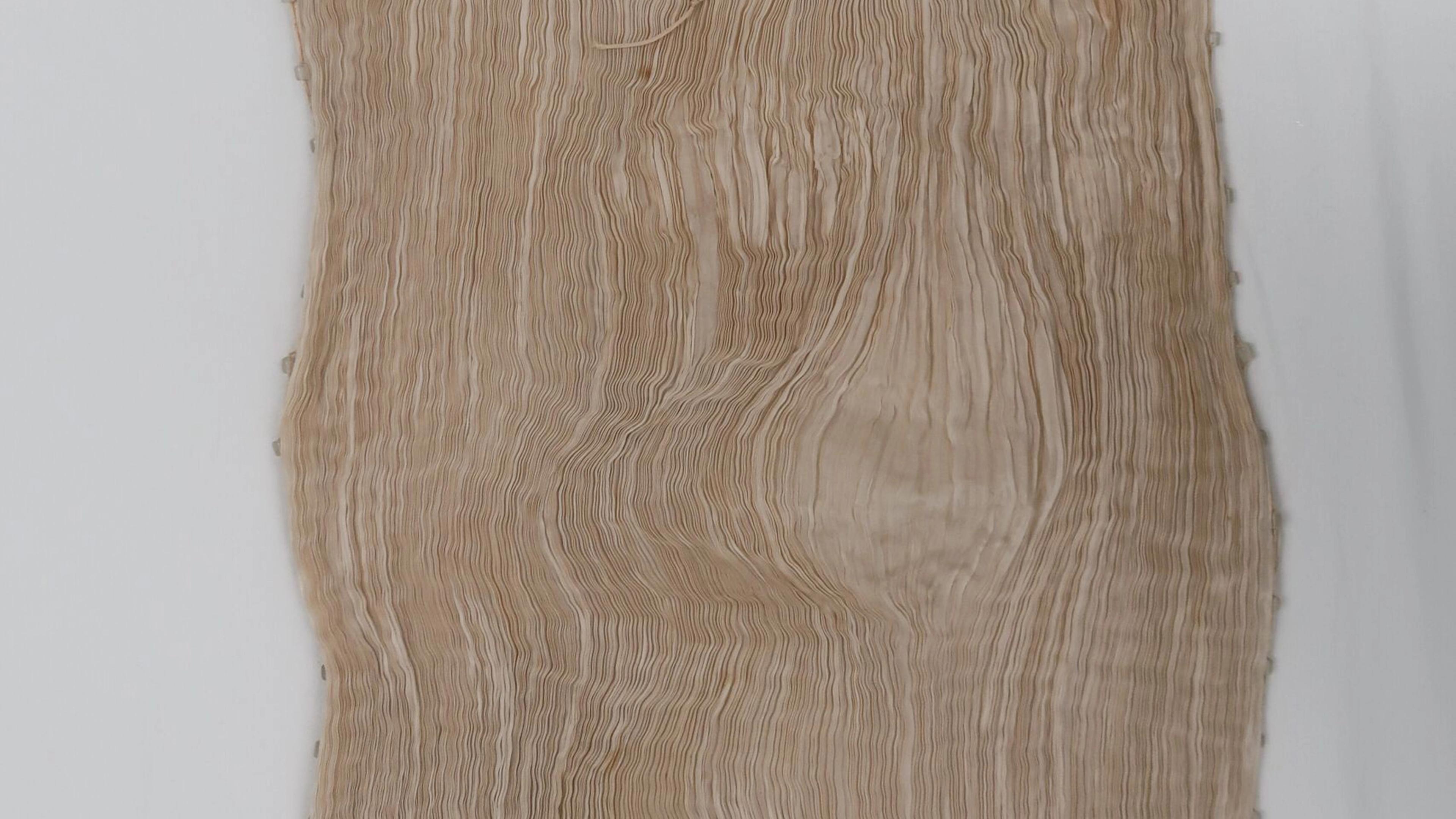
However, the pleats in Fortuny dresses are dimensional and irregular, with no two pleats the same, even within the same dress. The pleats are exceptionally small, sometimes just one-eighth of an inch, and stand out rather than lying flat, allowing them to stretch over the body. In addition, Fortuny pleats have a gentle horizontal wave across the pleating, creating an organic effect as if the dress were a cascade of hair or flowing water.
Mariano Fortuny filed a patent in 1909 to trademark the pleating technique, noting on the patent that Adèle Nigrin was the inventor of the method. The patent detailed the method of setting the horizontal undulation into the already pleated fabric, but did not disclose the technique for forming the vertical pleats.
This 1920s “Delphos” dress was selected for exhibition in The Costume Institute’s spring 2026 show, Costume Art. However, the dress had a large area of loose, flattened pleating at the proper left hip, which marred its original appearance. The distortion could have been caused by exposure to water or perspiration, which would cause the pleats to release. Faint lines are still visible showing where each original pleat was formed. In the early twentieth century, customers could return their dresses to the Fortuny company in Venice to have them re-pleated for further wear, but that service is no longer offered.
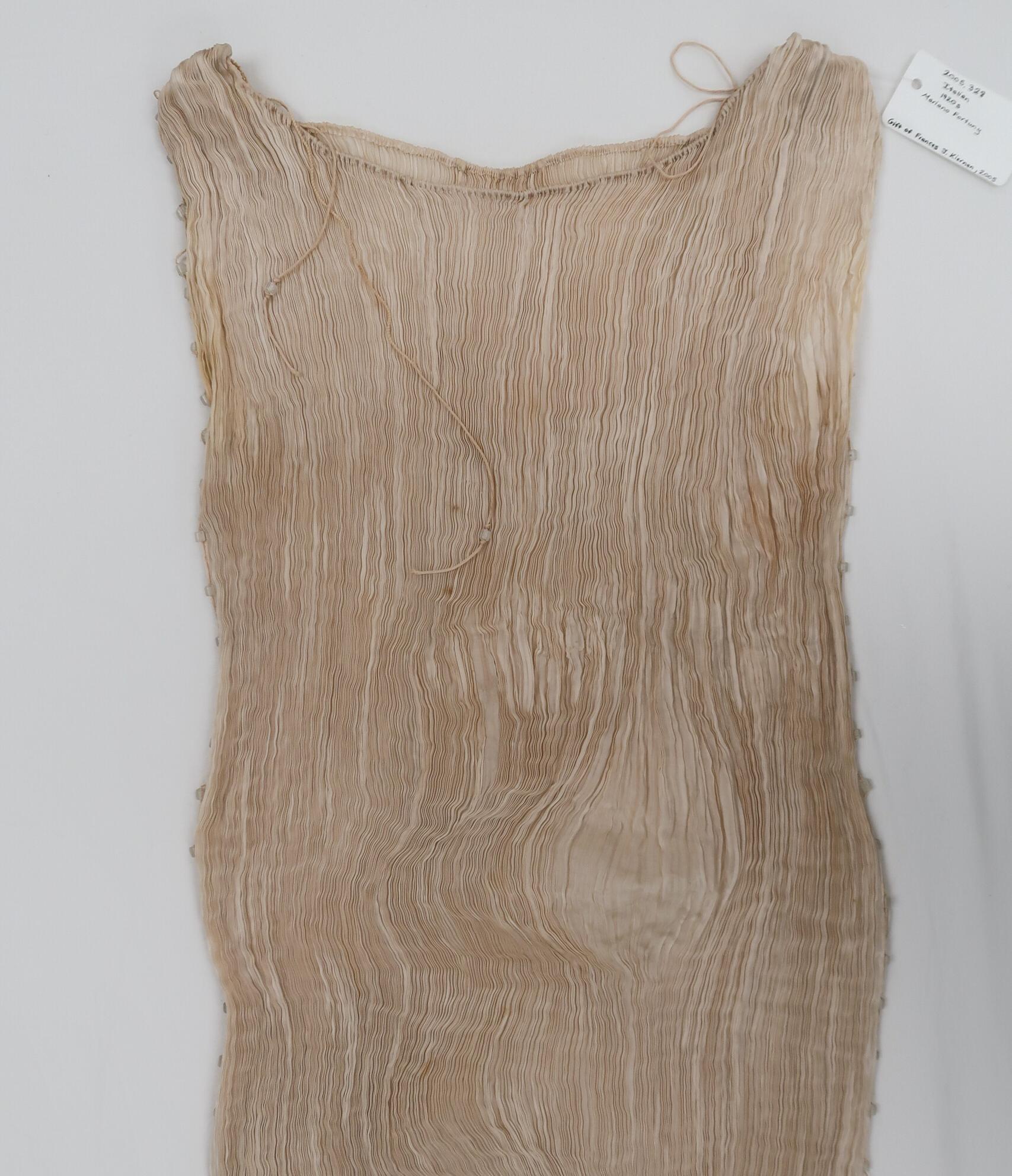
Damaged area of the “Delphos” gown before treatment.
The goal of the treatment was to find a way to re-shape the fabric into its original vertical pleats. To experiment with potential treatment options without risking damage to the delicate, century-old dress, trial samples were used to test different methods.
Pieces of silk habotai similar in weight and drape to the fabric of the “Delphos” gown were cut and running stitches were sewn along each piece in parallel rows. The habotai was then gathered along the stitches and pressed firmly with a hot iron and heavy steam, creating organic, dimensional pleats similar to those in the “Delphos.”
Once three of these samples were made, water was spritzed onto them and an iron was used to un-pleat each sample, mimicking the damage on the front of the dress.
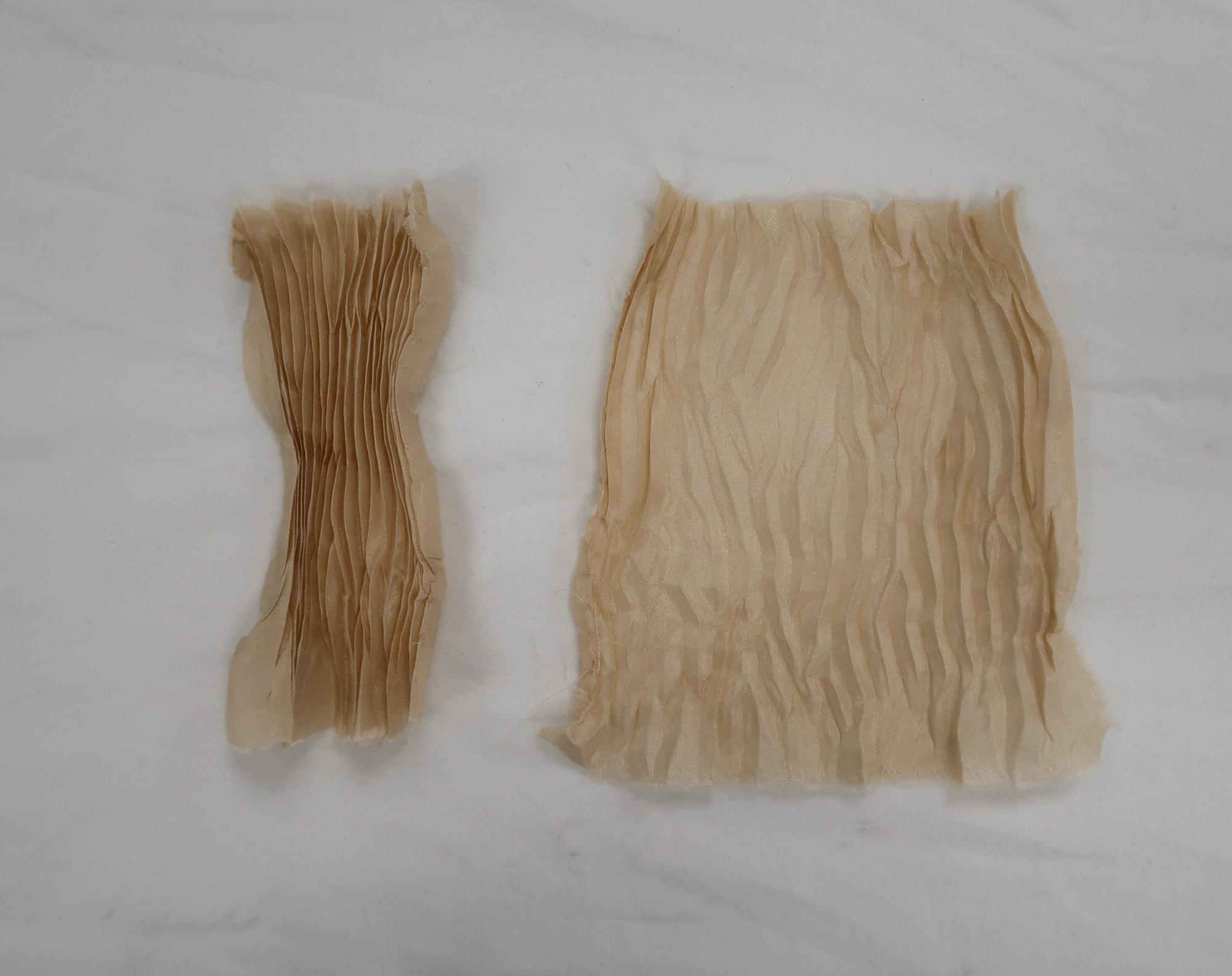
Pleating sample, left, and a pleating sample after being wetted and ironed to mimic the damage on the “Delphos” gown.
Very fine silk thread and a beading needle were used on the unpleated samples to try a stitching technique to reshape the original pleats. Once the thread was in place, the damaged samples were humidified with a Preservation Pencil, a tool that allows a conservator to apply a fine water mist at set temperatures to localized areas. The samples were left to dry for several hours after humidification. Different mist temperatures and lengths of drying time were tested to determine what procedure would be effective yet as gentle as possible.
Once the samples had been left overnight, the silk thread was removed, revealing that the pleats had been successfully reshaped.
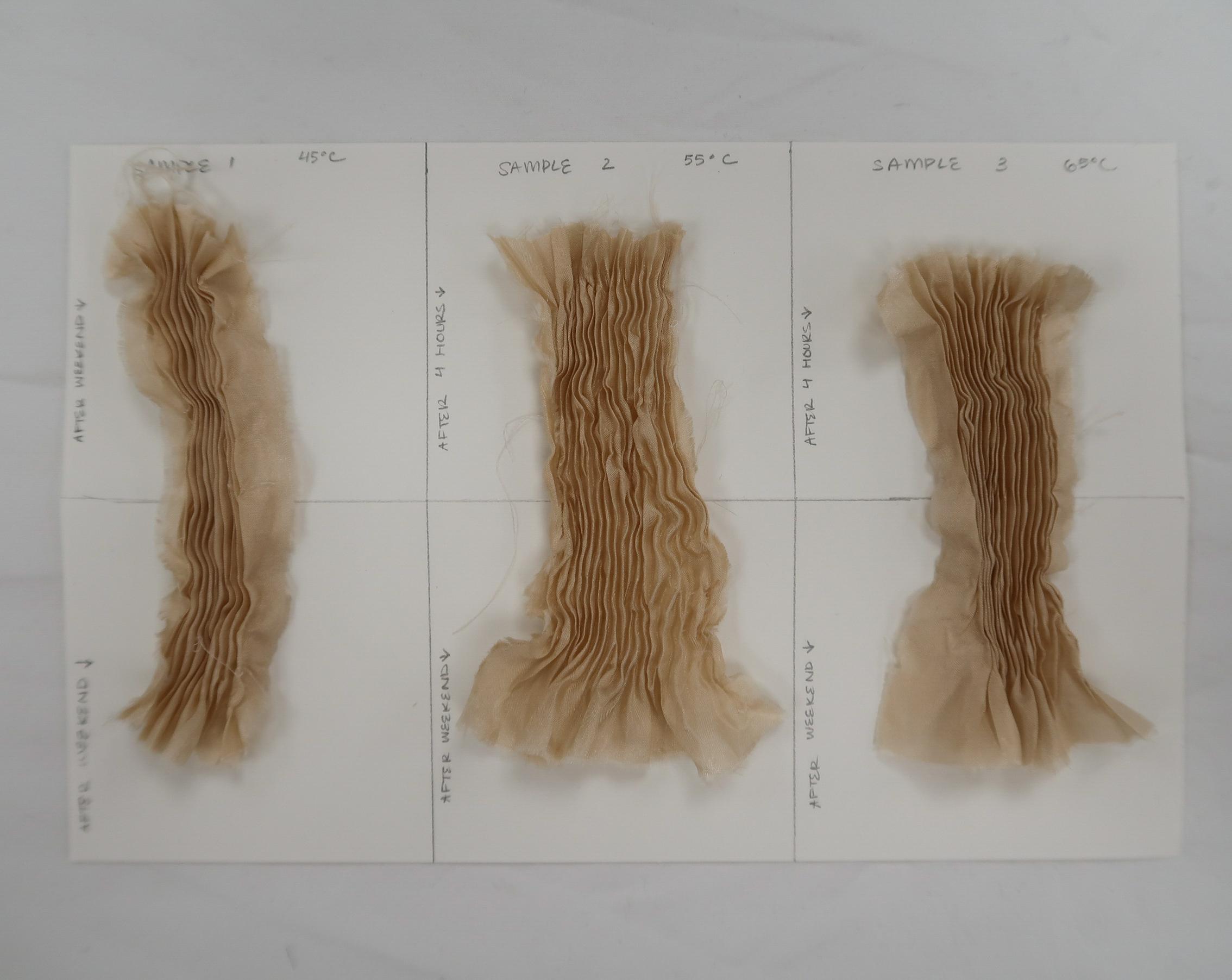
Samples being stitched, humidified, and having the thread removed to reshape the pleats.
Having completed this testing, treatment could commence on the actual dress. Blotter paper was used to shield areas of the dress with intact original pleats to prevent unintentional unpleating. The dress was left to sit overnight to allow the humidified area to fully dry.
The next morning, the stitching was removed, and the pleats had regained their intended shape. The dress could now be displayed without a distracting area of damage, allowing visitors to see the “Delphos” gown as it had originally been designed.
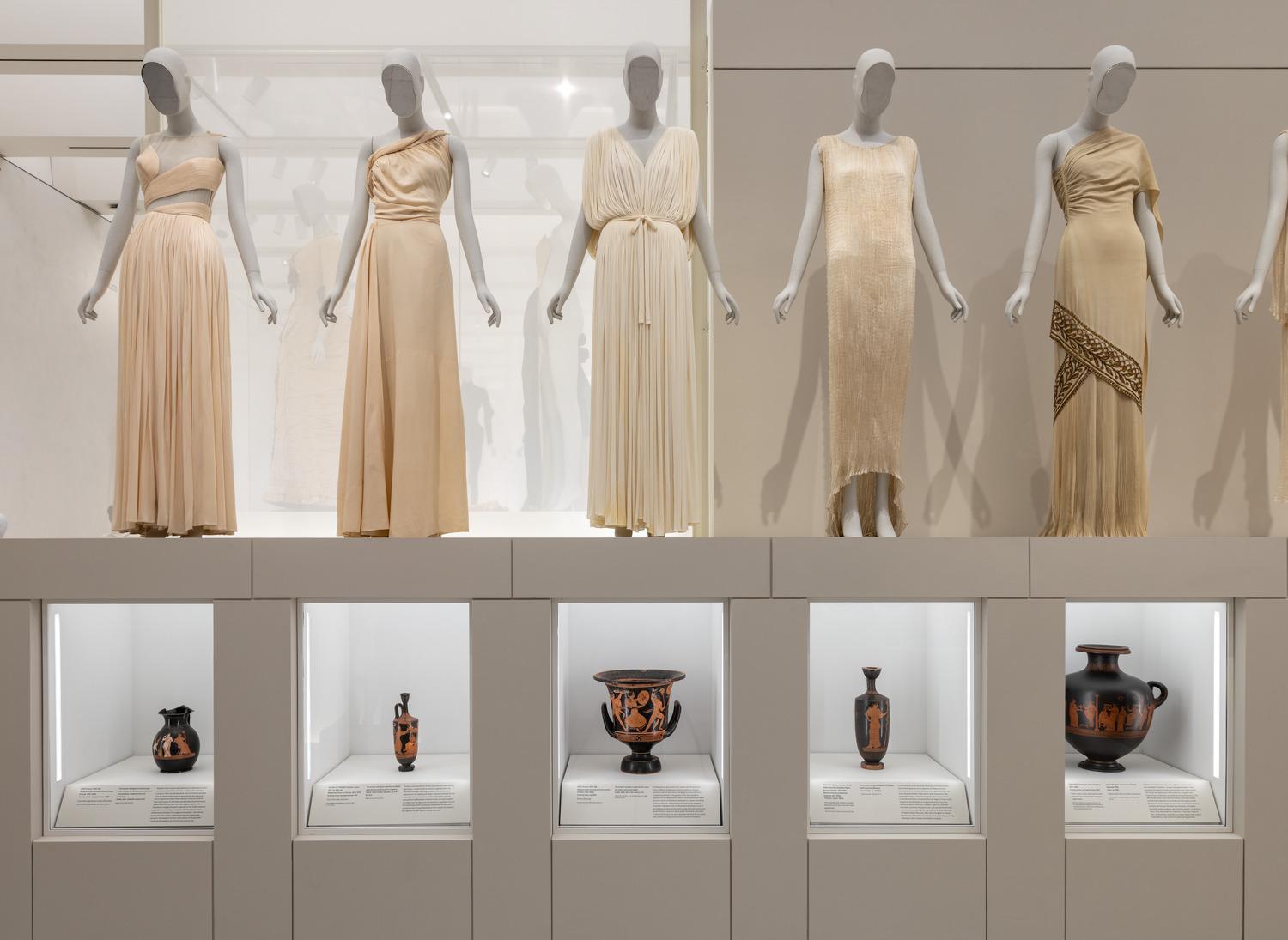
The “Delphos” gown, second from right, on display in Costume Art.
See this “Delphos” gown on view in Costume Art through January 10, 2027.