Search / All Results

75 results for Villon}}

Image for Cubism
Essay

Cubism

October 1, 2004

By Sabine Rewald

The Cubist painters rejected the inherited concept that art should copy nature, or that they should adopt the traditional techniques of perspective, modeling, and foreshortening.
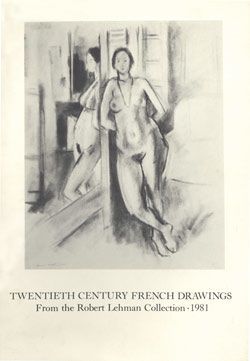
Image for Twentieth-Century French Drawings from the Robert Lehman Collection
This is the eighth exhibition in the series meant to show the complete holdings of old and more recent master drawings in the Robert Lehman Collection. The sixty-three drawings and watercolors included here represent almost every major master of twentieth-century French art as well as some lesser-known artists of the period. A large group of watercolors by Paul Signac and some of his early drawings comprise an interesting and important section of the exhibition. Jacques Villon's draftsmanship is also well documented by a sizable assembly of his early illustrations as well as later drawings. Other painters, like Henri Matisse, Pierre Bonnard, Suzanne Valadon, Albert Marquet, and Maurice de Vlaminck, are also represented by outstanding drawings, many of which have never been exhibited before. An interesting facet of this exhibition is that the Robert Lehman Collection contains important paintings by most of these artists; many of the paintings are on permanent exhibition in the paintings galleries of the Collection.
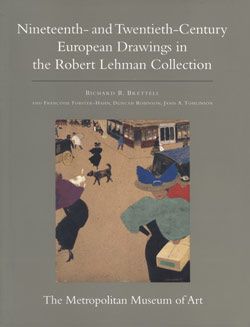
Image for The Robert Lehman Collection. Vol. 9, Nineteenth- and Twentieth-Century European Drawings
Robert Lehman was a member of the first generation of American collectors to embrace what we call modern art. This volume catalogues 207 nineteenth- and twentieth-century European drawings that are now part of the Robert Lehman Collection at the Metropolitan Museum. More than three-quarters of these drawings are French, but there are also sheets from Italy, Spain, Germany, the Netherlands, and Great Britain. Most are from the nineteenth century, but Robert Lehman also acquired, in some cases from the artists themselves, a number of drawings made during his own lifetime. The catalogue begins with drawings by David and Goya, the two most important artists in Europe at the turn of the nineteenth century, and it concludes with a group of watercolors made in the 1940s by the painter Marcel Vertès. Among the French drawings are outstanding sheets by Delacroix, Ingres, Chassériau, Corot, Daumier, Matisse, Vlaminck, and Villon. Drawings by Renoir, Morisot, Sisley, Pissarro, and Degas represent the Impressionists, and Robert Lehman also assembled one of the finest private collections of Neo-Impressionist drawings, including canonical works by Seurat, Signac, Cross, and Pissarro. More than 200 comparative illustrations supplement the catalogue entries, and the volume includes a bibliography and indexes.
Image for Fernand Léger (1881–1955)
Essay

Fernand Léger (1881–1955)

May 1, 2018

By Rachel Boate

Born on February 4, 1881, in Normandy, France, Léger grew up in a family of cattle farmers who discouraged his interest in an artistic career.
Image for The Metropolitan Museum of Art. Vol. 8, Modern Europe
In 1874 a group of artists whose work had been rejected the previous year by the official French Salon organized their own exhibition in the studio of the photographer Nadar. The group included Pissarro, Renoir, Cézanne, and Monet, whose painting, Impression: Sunrise, led a prominent and hostile critic to deride the whole group as "impressionists," a name that stuck. Scorned by the French art establishment and for main years by the public as well, these artists continued to paint works that are now universally loved and acknowledged as perhaps the first true expressions of the modern spirit. The Impressionists did indeed depart dramatically from traditional, academic painting techniques and from the romantic or rhetorical subject matter then in vogue. Instead of subjects taken from remote times and places, they chose to paint the artifacts and everyday activities of modern life. In their work, nature ceased to be depicted as ideal and eternal; rather, they showed the instantaneous impression of land, sky, or water in a particular climate and at a particular time of day. Painstaking modeling and traditional perspective were abandoned in favor of short, staccato brushstrokes of color intended to represent the way particles of light reach the retina. This radical break from centuries-old traditions eventually led to new and different modes of painting both within the Impressionists' circle and in the works of succeeding generations throughout Europe and the United States. Modern Europe presents a selection from the collections of The Metropolitan Museum of Art of the best examples of Impressionism and its heritage, from the classically influenced but radically new works of Manet and Degas to the high Impressionism of Monet and Pissarro; from the work of Cézanne, who attempted to return to painting the weight and solidity abandoned by his colleagues, to the emotive distortions of Van Gogh's portraits and landscapes; from the exoticism of Gauguin, Redon, and Rousseau to the Expressionist visions of Soutine, Munch, Grosz, and Beckmann. Cubism—in which conventional representation began to disappear—is seen in masterpieces by Picasso, Braque, and Villon, and the emerging abstraction of the early twentieth century in works by Kandinsky and Kupka. In addition to reproducing the work of these influential artists. Modern Europe shows the continuing dialogue between the fine and applied arts, presenting an unusually broad picture of the artists and craftsmen of the nineteenth and twentieth centuries in some one hundred and forty works of art in every genre and medium.
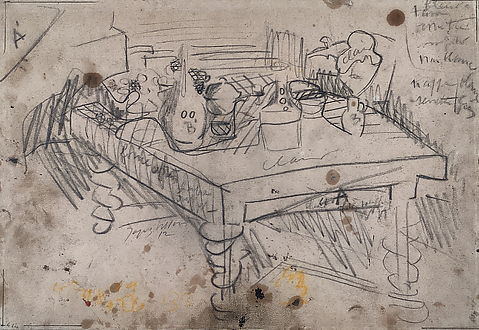
Image for La table servie

Jacques Villon (French, Damville 1875–1963 Puteaux)

Date: 1912
Accession Number: 1975.1.753

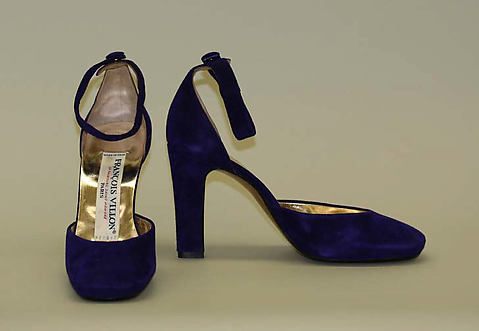
Image for Shoes
Art

Shoes

François Villon

Date: 1972
Accession Number: 1973.304a, b

Image for Shoes
Art

Shoes

François Villon

Date: 1978
Accession Number: 1979.56a, b

Image for Félix Barré

Jacques Villon (French, Damville 1875–1963 Puteaux)

Date: 1914
Accession Number: 1993.85.1

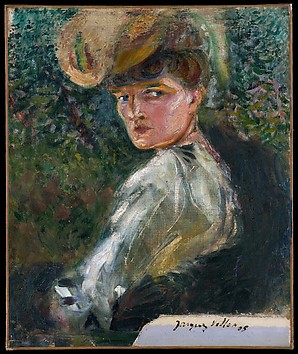
Image for Gaby
Art

Gaby

Jacques Villon (French, Damville 1875–1963 Puteaux)

Date: 1905
Accession Number: 1980.582

Image for Shoes
Art

Shoes

François Villon

Date: ca. 1984
Accession Number: 2002.199.15a, b

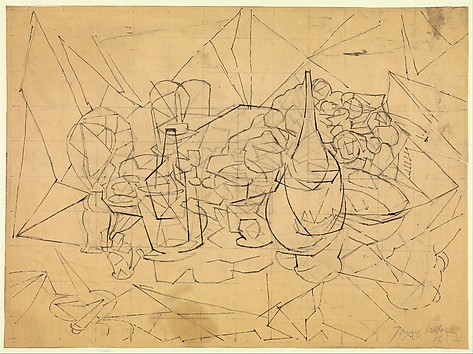
Image for Study for "The Dining Table"

Jacques Villon (French, Damville 1875–1963 Puteaux)

Date: 1912
Accession Number: 1983.169.2

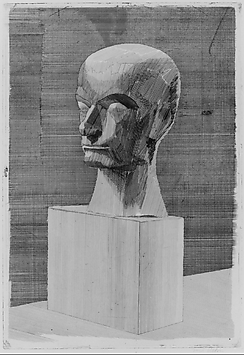
Image for Baudelaire au Socle

Jacques Villon (French, Damville 1875–1963 Puteaux)

Date: 1920
Accession Number: 1997.49

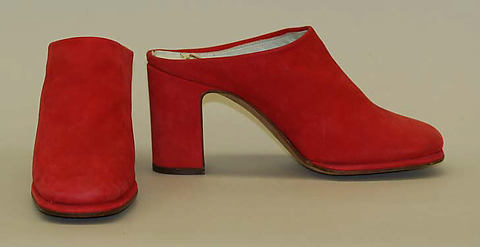
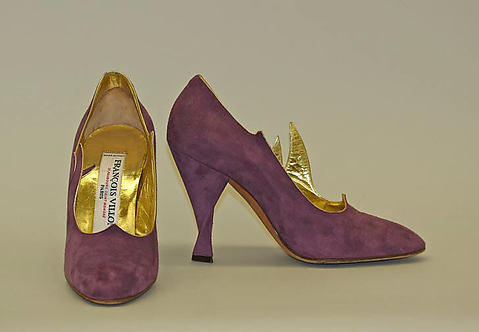
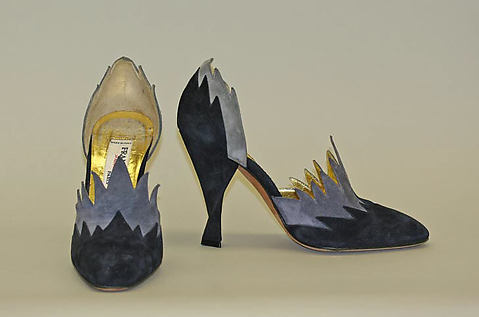
Image for Pumps
Art

Pumps

François Villon

Date: ca. 1984
Accession Number: 2002.199.16a, b

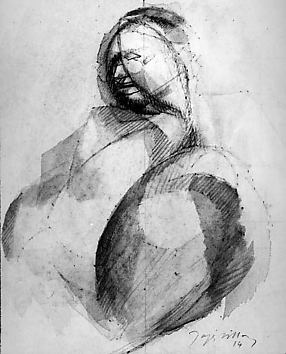
Image for The Three Kings

Jacques Villon (French, Damville 1875–1963 Puteaux)

Date: 1947
Accession Number: 1980.566.2