English
DonateMembershipTickets

Search for Art

Search Tips
1-42 of 1,875 results for serpent
Sort by:
Show only
Images
Date
For BCE dates, enter a negative number. E.g. For 2000 BCE, enter -2000.
–
Artist / culture
Object type / material
Match
 
Show results matching
selected filters.
Geographic location
Match
 
Show results matching
selected filters.
Department
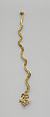
Serpent (tunjo), Gold, Muisca
Muisca
10th–16th century
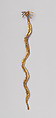
Serpent (Tunjo), Gold, Muisca
Muisca
10th–16th century
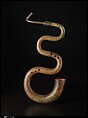
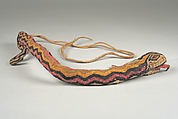
Serpent, C. Baudouin  French, Wood, leather, paint, brass, French
C. Baudouin
ca. 1820
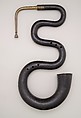
Serpent, Unknown , France, Wood, leather cover, French
Unknown
ca. 1810
Serpent (tunjo), Gold, Muisca
Muisca
10th–16th century
Serpent (tunjo), Gold, Muisca
Muisca
10th–16th century
Coiled serpent, Mexica artist(s), Stone, Mexica (Aztec)
Mexica artist(s)
1325–1521 CE
Serpent, Metal, leather, French
French
ca. 1810
Serpent in C, Wood, leather, ivory, brass, sheet iron, British
British
early 19th century
Serpent in C, W. Schmidt  German, Wood, leather, brass, German
W. Schmidt
ca. 1805
Plaque in the Form of a Serpent, Bronze, China
China
5th–3rd century BCE
Serpent ornament, Cotton, camelid hair, Inca (?)
Inca (?)
1450–1532 CE
Cane, cow-headed serpent, Glass
100 BCE–100 CE
Coiled Serpent, Stone, pigment, Mexica (Aztec)
Mexica (Aztec)
15th–16th century
Rattle with a Coiled Serpent, Bronze, Indonesia (Java)
Indonesia (Java)
ca. 13th–14th century
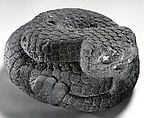
Coiled Serpent, Stone, pigment, Mexica (Aztec)
Mexica (Aztec)
15th–early 16th century
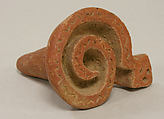
Serpent Stamp, Ceramic, Atlantic Watershed
Atlantic Watershed
1st–7th century
Feathered serpent ornament, Mexica or Mixtec (Ñuu Savi) artists, Gold, Mexica (Aztec)
Mexica or Mixtec (Ñuu Savi) artists
1325–1521 CE
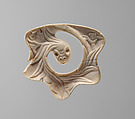
Feathered serpent pendant, Mexica artist(s), Shell, Mexica (Aztec)
Mexica artist(s)
1325–1521 CE
Nana and Serpent, Niki de Saint-Phalle  American, Painted marble
Niki de Saint-Phalle
ca. 1992
Man Struggling with a Serpent, Bronze, on yellow marble base, Italian, Padua
Italian, Padua
early 16th century
Upright Serpent in D, Brass, paint, Italian
Italian
ca. 1810–20
Serpent labret with articulated tongue, Mexica artist(s), Gold, Mexica
Mexica artist(s)
1325–1521 CE
Lid (?) with a serpent, Silver, Bactria-Margiana Archaeological Complex
Bactria-Margiana Archaeological Complex
ca. late 3rd–early 2nd millennium BCE
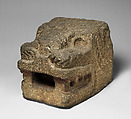
Feathered serpent head, Teotihuacan artist(s), Stone, pigment, Teotihuacan
Teotihuacan artist(s)
100-500 CE
Feathered serpent ornament, Mexica or Mixtec (Ñuu Savi) artists, Gold, Mexica (Aztec)
Mexica or Mixtec (Ñuu Savi) artists
1325–1521
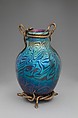
Vase with serpent mounts, Tiffany Furnaces  American, Blown Favrile glass; silver gilt mounts, American, Russian
Manufacturer Tiffany Furnaces
Manufacturer House of Carl Fabergé
Workmaster: Johan Viktor Aarne
Glass: 1897–99, Mounts: 1899–1904

Serpent, John Yang  American, Gelatin silver print
John Yang
1984
Winged serpent with the cartouches of Ramesses III, Faience
ca. 1197–1166 BCE
The Serpent of Airan, Pierre Hubert Subleyras  French, Etching
Pierre Hubert Subleyras
18th century
Vishnu Resting on the Serpent Shesha (Vishnu Anantashayin), Stone, Cambodia
Cambodia
ca. 921–45
Stirrup Spout Bottle: Serpent, Ceramic, Cupisnique
Cupisnique
12th–5th century BCE
Eagle with Serpent, Antoine-Louis Barye  French, Bronze (sand cast), French
Antoine-Louis Barye
modeled between 1824 and 1826, cast before 1875
Nagaraja (Serpent King), Stone, India (Madhya Pradesh)
India (Madhya Pradesh)
ca. second quarter of the 5th century
Standing Nagaraja (Serpent King), Red sandstone, India (Uttar Pradesh or Madhya Pradesh)
India (Uttar Pradesh or Madhya Pradesh)
ca. mid- 5th century
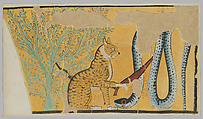
Wall painting of a cat killing a serpent, Charles K. Wilkinson, Tempera on paper
Charles K. Wilkinson
1920–1921; original ca. 1300–1224 BCE
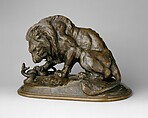
Lion and Serpent no. 1, Antoine-Louis Barye  French, Bronze (sand cast), French
Antoine-Louis Barye
Editor Émile Martin
modeled in 1838, possibly cast ca.1850
Serpent or "Uraeus", Copper alloy, gilding, glass, European
European
late 19th–early 20th century (Roman style)
Vishnu and the divine serpent (Shesh Narayana), Chromolithograph on paper, India, Karla-Lonavala, Maharashtra
India, Karla-Lonavala, Maharashtra
ca. 1900–15
Le Serpent (The Serpent), plate 9 from "Lux Claustri ou La Lumière du Cloitre" (The Light of the Cloisters), Jacques Callot  French, Etching and letterpress; second state of two (Lieure)
Jacques Callot
Publisher François Langlois
1621–35
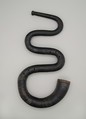
Serpent, Wood, leather, possibly Italian
possibly Italian
17th century (?)
Vishnu Narayana on the divine serpent Shesha (Shri Sheshanarayana), Chromolithographic print on paper, India, Mumbai, Maharashtra
India, Mumbai, Maharashtra
1886

Content Notice

The Metropolitan Museum of Art presents over 5,000 years of art from around the world, and our online collection reflects ongoing work conducted over the course of our more than 150-year history. You may encounter objects or images that may be inappropriate for some viewers or information that may be outdated.