English
DonateMembershipTickets

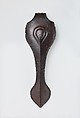
Casket

ca. 1760–65
On view at The Met Fifth Avenue in Gallery 510
Based on a European prototype but constructed from indigenous timber and densely decorated with ivory inlays displaying European ornament, this casket is an excellent example of an Anglo-Indian export piece. Writing boxes, rifles and gun boxes with European marquetry decoration are likely to have been used by Europeans. This particular casket is decorated with the crest of the Hastings family, presumably of Warren Hastings (1732–1818). Hastings had a brilliant and finally tragic career in service of the British East India Company. Leaving England in 1750, he became the British resident in Murshidabad seven years later, returning to England in 1765. Hastings went back to India in 1769 and was appointed Governor General of Bengal in 1773. Hastings ultimately left India in 1785 to face a long trial for impeachment charges.

Artwork Details

Object Information
  • Title: Casket
  • Date: ca. 1760–65
  • Culture: Indian, Vizagapatam
  • Medium: Ebony and engraved ivory, tortoiseshell; mirror glass; silver hardware; brass feet; iron lock
  • Dimensions: Overall (confirmed): 5 1/4 × 20 5/8 × 14 in. (13.3 × 52.4 × 35.6 cm)
  • Classification: Natural Substances-Ivory
  • Credit Line: Purchase, The James Parker Charitable Foundation Gift, 2016
  • Object Number: 2016.115
  • Curatorial Department: European Sculpture and Decorative Arts
More Artwork
Warren Hastings, Josiah Wedgwood and Sons  British, Jasperware, British, Etruria, Staffordshire
Factory Josiah Wedgwood and Sons
Factory owner Period of Josiah Wedgwood
late 18th century
Shaffron (Horse's Head Defense), Steel, copper alloy (brass), Indian, Deccan, Golconda
Indian, Deccan, Golconda
dated A.H. 1026/1617–18 CE
Collector's Cabinet, Iacopo Fiamengo  Italian, Ebony, African blackwood, ebonized wood; ivory (engraved and carved) and bone; case: coniferous wood; drawers: beech, coniferous wood, walnut; knobs, lock, hinges: gilt iron with modern bronze paint <br/><br/>Primary woods and materials: ebony, African blackwood, ebonized wood (veneer applied to the back); ivory (engraved and carved); bone (stringing)<br/>Drawer knobs, lock, hinges:  gilt iron with modern bronze paint <br/>Secondary woods: <br/>Case: coniferous wood <br/>Drawers: beech, coniferous wood, walnut; stained poplar and coniferous wood used for modern casings of locks, Italian, Naples
On loan to The Met
Multiple artists/makers
ca. 1595–1600
Teapot, Stoneware, British (American market)
British (American market)
ca. 1765
Dagger, Steel, nephrite, silver, gold, Indian, Deccan, possibly Hyderabad
Indian, Deccan, possibly Hyderabad
17th–18th century

Research Resources

The Met provides unparalleled resources for research and welcomes an international community of students and scholars. The Met's Open Access API is where creators and researchers can connect to the The Met collection. Open Access data and public domain images are available for unrestricted commercial and noncommercial use without permission or fee.

To request images under copyright and other restrictions, please use this Image Request form.

Feedback

We continue to research and examine historical and cultural context for objects in The Met collection. If you have comments or questions about this object record, please contact us using the form below. The Museum looks forward to receiving your comments.

Send feedback

Content Notice

The Metropolitan Museum of Art presents over 5,000 years of art from around the world, and our online collection reflects ongoing work conducted over the course of our more than 150-year history. You may encounter objects or images that may be inappropriate for some viewers or information that may be outdated.