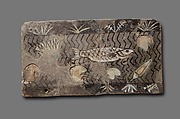
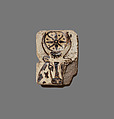
Tile with water flowers in a canal
The tiles bear the names of Seti I, Ramesses II and later Ramesside kings, who renovated the palace and changed its decoration through the reigns. New tiles were made, and the old tiles may be have been dismantled and buried together. Based on the tiles, we can still reconstruct quite a number of the features of the palace that are now completely lost, including throne podiums, steps, windows of appearance, and faience sculptures.
Pastoral and domestic scenes, including this pool liberally stocked with fish and waterfowl and ringed with papyrus and other marsh plants, are assumed to come from the private apartments of the Egyptian palace.
Artwork Details
- Title: Tile with water flowers in a canal
- Period: New Kingdom, Ramesside
- Dynasty: Dynasty 19
- Reign: reign of Ramesses II
- Date: ca. 1290–1224 BCE
- Geography: From Egypt, Eastern Delta, Qantir (Piramesse), Palace of Ramesses II, Private apartments
- Medium: Faience
- Dimensions: L. 22 cm (8 11/16 in), w. 20 cm (7 7/8 in), Depth 2 cm (13/16 in)
- Credit Line: Purchase, Rogers Fund, Edward S. Harkness Gift and by exchange, 1922, 1929, 1935
- Object Number: 35.1.373
- Curatorial Department: Egyptian Art
More Artwork
Research Resources
The Met provides unparalleled resources for research and welcomes an international community of students and scholars. The Met's Open Access API is where creators and researchers can connect to the The Met collection. Open Access data and public domain images are available for unrestricted commercial and noncommercial use without permission or fee.
To request images under copyright and other restrictions, please use this Image Request form.
Feedback
We continue to research and examine historical and cultural context for objects in The Met collection. If you have comments or questions about this object record, please contact us using the form below. The Museum looks forward to receiving your comments.
Content Notice
The Metropolitan Museum of Art presents over 5,000 years of art from around the world, and our online collection reflects ongoing work conducted over the course of our more than 150-year history. You may encounter objects or images that may be inappropriate for some viewers or information that may be outdated.