语音指南
604. Raphael and the Madonna of Tenderness
What is the Madonna of Tenderness?
CARMEN BAMBACH: One of the things that makes Raphael famous, especially in Florence, was as a painter of the Madonna and Child.
ISABELLA ROSSELLINI (NARRATOR): When Raphael first arrived in Florence, he was an outsider. Major public commissions were going to leading artists like Michelangelo and Leonardo. All Raphael was able to get were commissions from the aristocracy to produce Madonna and child images. And he began specializing in a type known as the Madonna of Tenderness.
BAMBACH: It is very specifically geared to this intrinsic connection between the mother and the Christ child. And specifically the cheeks of the Madonna and the cheeks of the Christ child are touching, or more or less touching.
ROSSELLINI: This imagery comes from a long tradition, and you’ll see some early examples in this gallery. But Curator Carmen Bambach argues that during Raphael’s time, the popularity of the Madonna of Tenderness also reflected a specific set of social realities.
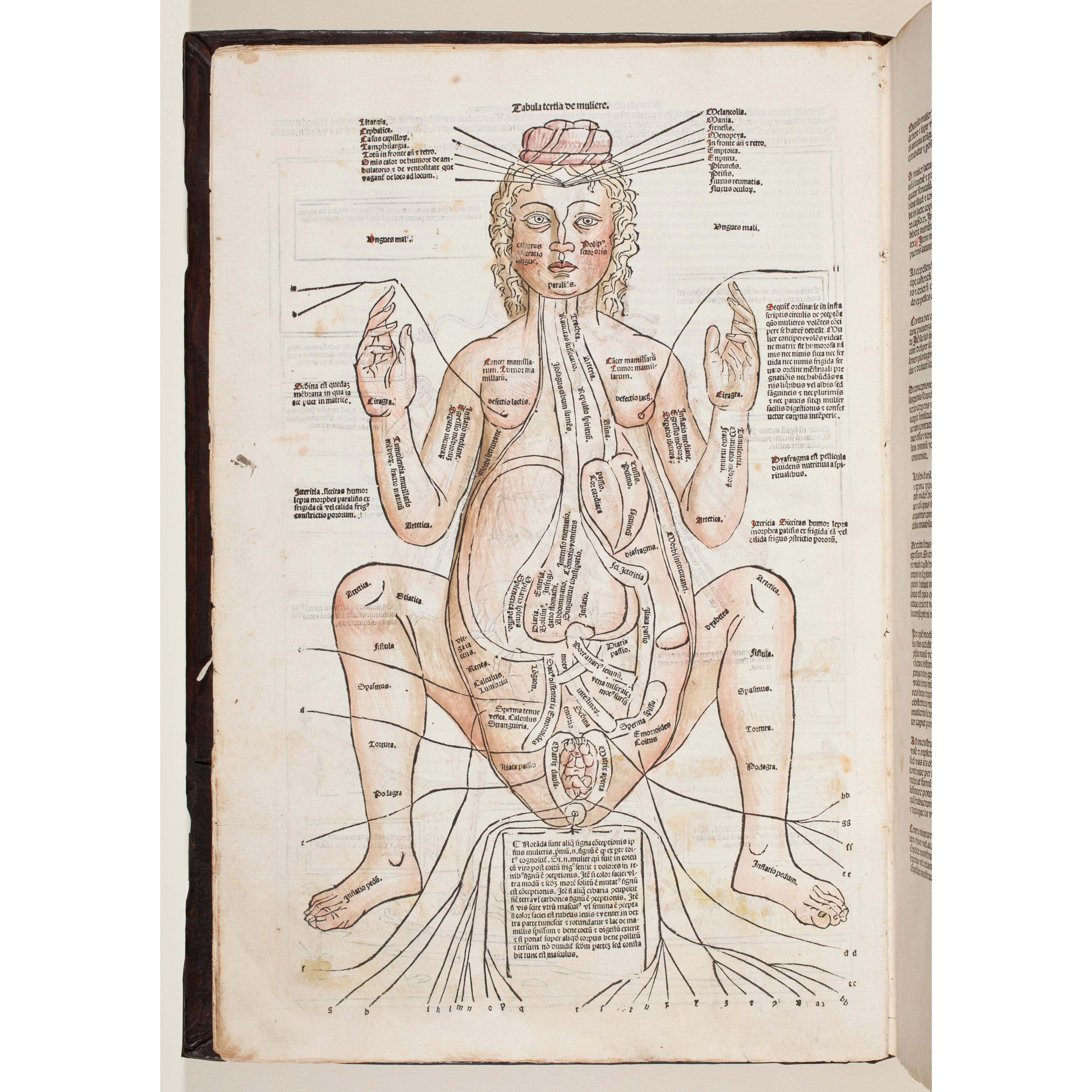
Look for the case containing a bound notebook with documents and an anatomical treatise. On the left…
BAMBACH: … is a volume of documents that shows us the entries for the funeral of Raphael’s mother, Magia Ciarla, who dies very young very much from childbirth complications.
ROSSELLINI: The same volume tells us that Raphael’s brother and sister died in infancy, too. And this wasn’t unusual, because in Renaissance Italy, maternal and infant mortality was extremely high. The anatomical treatise you see points to just how little was understood about women’s bodies and childbirth. So, people displayed images of the Madonna of Tenderness in their homes… and hoped she might offer protection. Given how fragile the lives of mothers and babies could be…
BAMBACH: … there is also this need to have imagery that celebrates maternal love.
ROSSELLINI: In the next gallery, you’ll see how Raphael does that so successfully: by reinventing the Madonna of Tenderness.