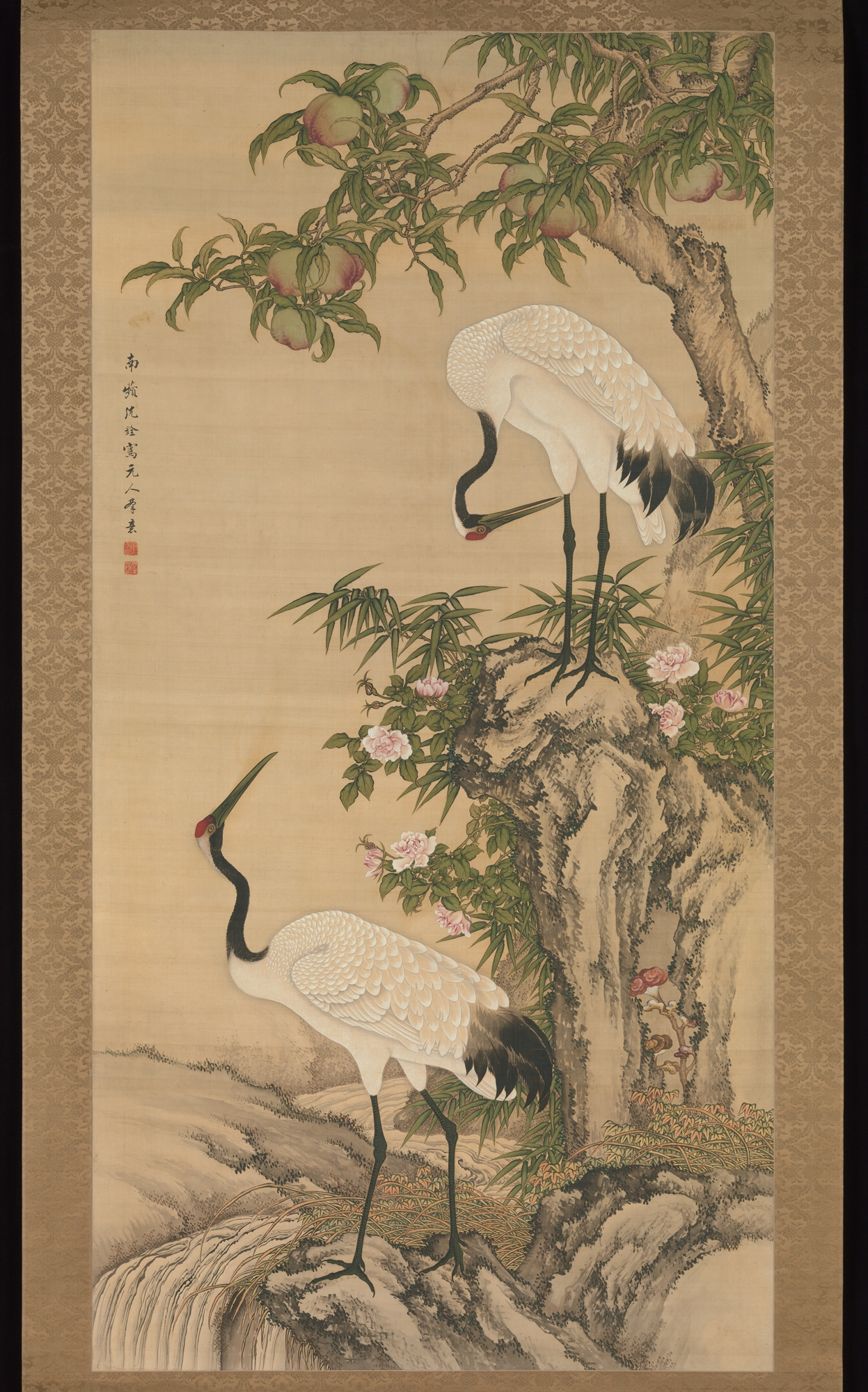
Cranes, peach tree, and China rose
After Shen Quan Chinese
Not on view
In 1731 the court painter Shen Quan traveled to Nagasaki at the request of the Japanese government. During his nearly two years in Japan, Shen and his students produced a large number of paintings in this style—typified by bold ink brushwork for rocks and trees paired with meticulous application of color for birds and flowers—which served as an enduring inspiration to Japanese artists. This example combines cranes, peaches, and lingzhi fungus, all symbols of longevity or immortality, along with bamboo and China rose (yueji).
This image cannot be enlarged, viewed at full screen, or downloaded.

This artwork is meant to be viewed from right to left. Scroll left to view more.