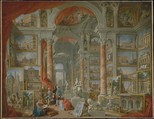
Modern Rome is a pendant to Ancient Rome (on view nearby) and catalogs some of the city’s most famous monuments from the two centuries prior to the execution of these paintings. Guidebooks and writings on art typically contrasted modern and ancient works to better draw out their strengths and weaknesses. Akin to luxurious postcards, they condense an itinerary of must-see sights. They were commissioned by the comte de Stainville, later duc de Choiseul, ambassador to Rome from 1753 to 1757; he is shown seated in an armchair. Among the works illustrated are Michelangelo’s Moses and statues by Gian Lorenzo Bernini. For more about this painting, including the identification of additional monuments, visit its collection record at The Met website.
This image cannot be enlarged, viewed at full screen, or downloaded.
Open Access
As part of the Met's Open Access policy, you can freely copy, modify and distribute this image, even for commercial purposes.
API
Public domain data for this object can also be accessed using the Met's Open Access API.
This artwork is meant to be viewed from right to left. Scroll left to view more.
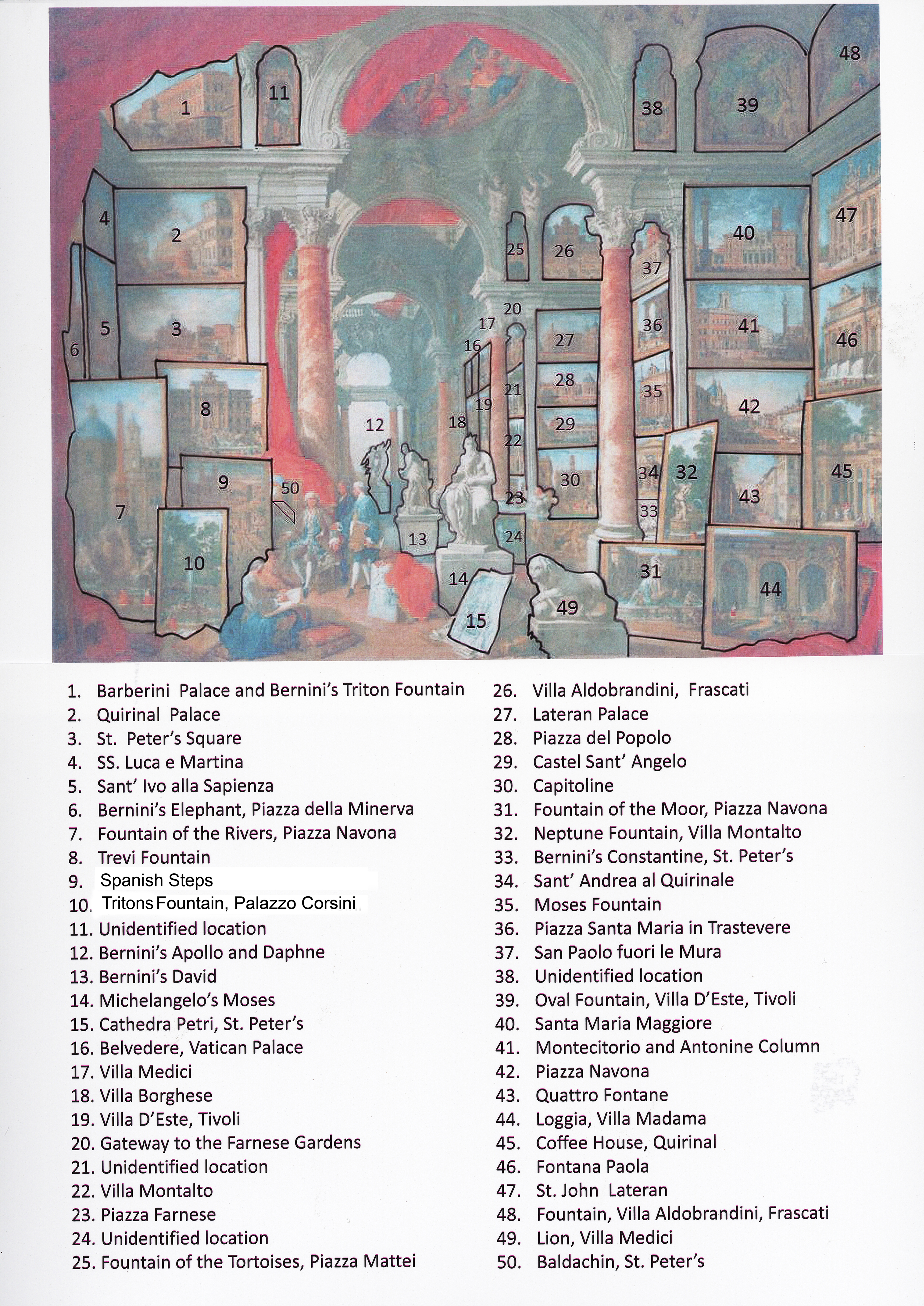
Fig. 1. Diagram identifying works depicted
This image cannot be enlarged, viewed at full screen, or downloaded.
Fig. 2. Painting in frame: overall
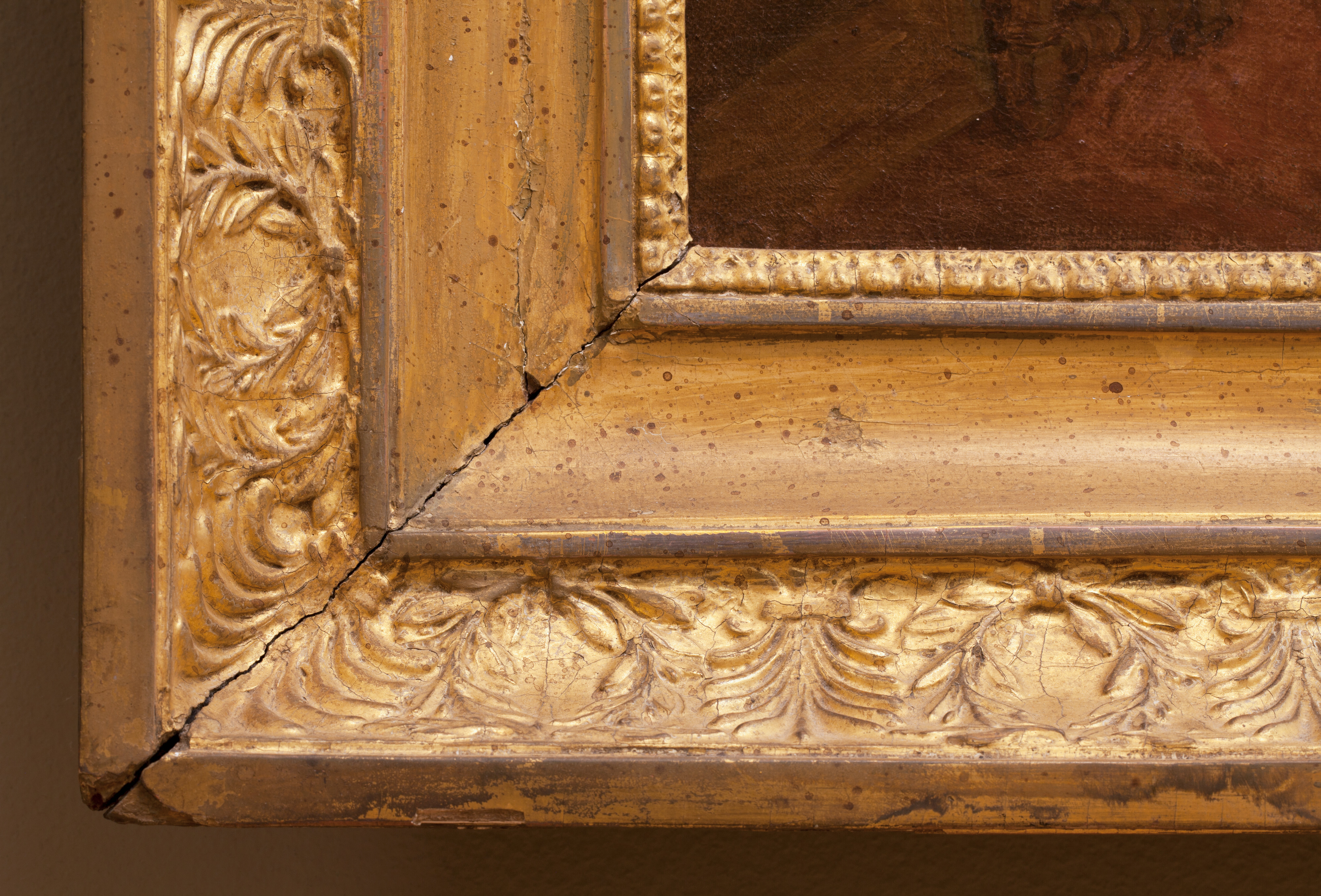
Fig. 3. Painting in frame: corner
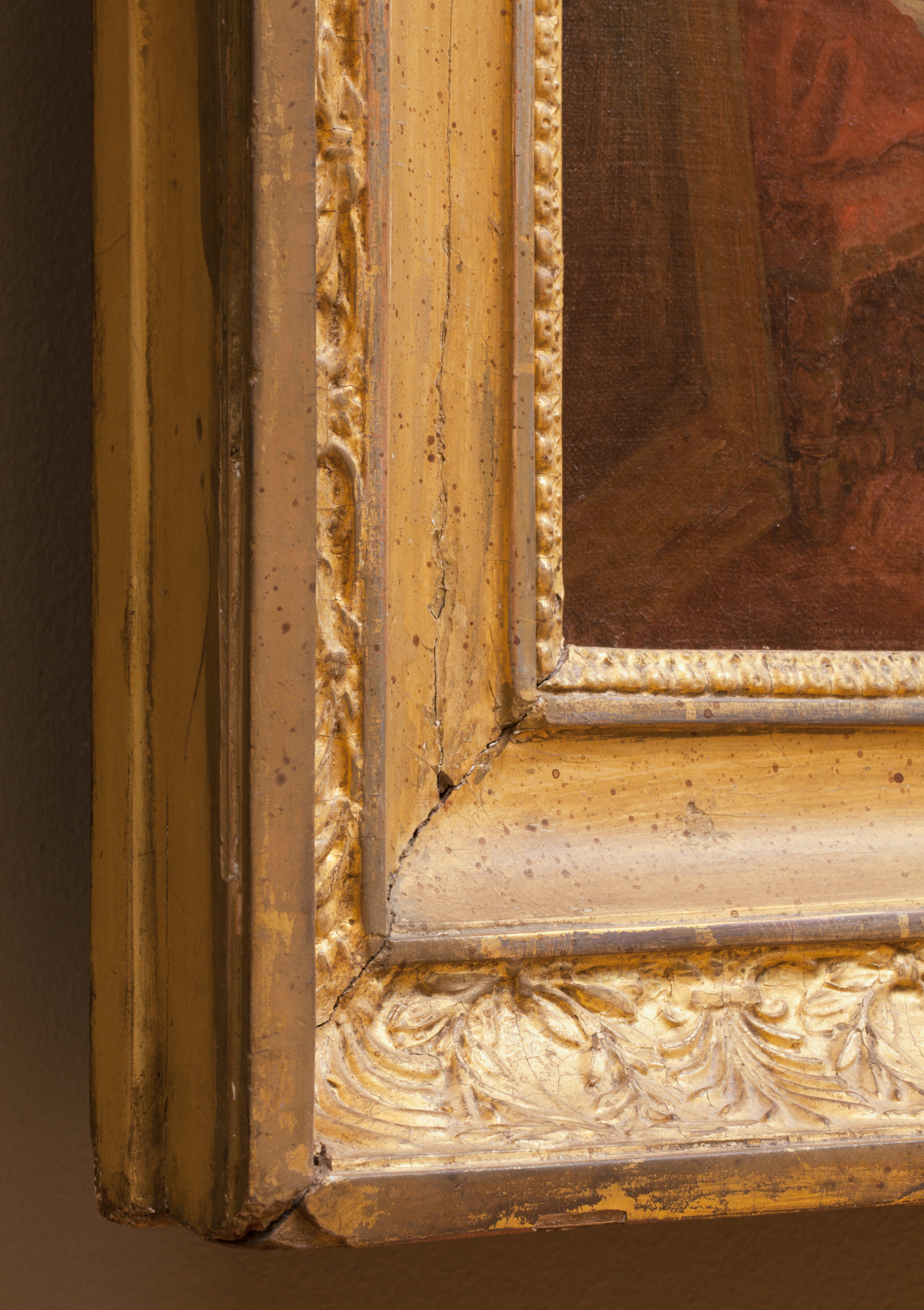
Fig. 4. Painting in frame: angled corner
This image cannot be enlarged, viewed at full screen, or downloaded.
Fig. 5. Profile drawing of frame. W 5 1/2 in. 14 cm (T. Newbery)
Artwork Details
Use your arrow keys to navigate the tabs below, and your tab key to choose an item
Title:Modern Rome
Artist:Giovanni Paolo Panini (Italian, Piacenza 1691–1765 Rome)
Date:1757
Medium:Oil on canvas
Dimensions:67 3/4 x 91 3/4 in. (172.1 x 233 cm)
Classification:Paintings
Credit Line:Gwynne Andrews Fund, 1952
Object Number:52.63.2
In 1749, Giovanni Paolo Panini painted a large canvas depicting Cardinal Silvio Valenti Gonzaga surrounded by his collection of pictures (Wadsworth Atheneum, Hartford). Each painting in the cardinal’s collection was placed within an imaginary architectural setting of a grand gallery space. This work provided the model for two large paintings commissioned by Étienne-François de Choiseul-Stainville, comte de Stainville and later duc de Choiseul, who was the French Ambassador for King Louis XV to Rome between the end of 1754 and 1757. Painted in 1756, they represented Ancient Rome (Staatsgalerie, Stuttgart) and Modern Rome (Museum of Fine Arts, Boston), and were accompanied by two other canvases, Saint Peter’s Square (collection of the Duke of Sutherland) and The Interior of Saint Peter’s (Athenaeum, Boston). A year later, in 1757, Panini made another two versions of Ancient Rome (52.63.1) and Modern Rome (52.63.2) for the Duc de Choiseul. These were part of a set with another Saint Peter’s Square (Gemӓledgalerie, Berlin) and The Interior of Saint Peter’s (National Gallery of Art, Washington). Subsequently, in 1758–59, Panini painted two more larger canvases of Ancient Rome and Modern Rome (Musée du Louvre, Paris) for Monsignor Claude- François Rogier de Beaufort-Montboisier de Canillac, chargé d’affaires of the French Embassy in Rome. The Met's versions of Ancient Rome and Modern Rome may have belonged originally to the French painter Hubert Robert, who was close to the duc de Choiseul and a pupil of Panini. He may have even assisted Panini with the paintings, even though such collaboration is difficult to recognize in the final works.
Matching its companion of Ancient Rome, in this painting Panini portrays the most famous monuments and works of art of Renaissance and Baroque Rome, on trompe l’oeil pictures, set in a monumental gallery. The work includes sculptures by Michelangelo and Bernini. The identity of the man sitting in the center of the canvas has been questioned. He has been identified with the artist himself, but is more likely to be the patron, the duc de Choiseul. The young man approaching him from the right, holding a large portfolio, could possibly be Hubert Robert.
For identification of the monuments represented, see fig. 1 above.
Xavier F. Salomon 2011
Inscription: Signed and dated (lower center, on base of statue of Moses): I.P. PANINI.1757
?Hubert Robert (until d. 1808; sale, Paillet, Paris, April 5, 1809, no. 9, as "Rome antique" and "Rome moderne," each 64 x 74 pouces [68 x 77 in.], purchased by Paillet before auction for Fr 2,801); ?[Alexandre Paillet, Paris, 1809–14; posthumous sale, Paris, June 2, 1814, no. 47, as "Rome antique" and "Rome moderne", each 64 x 72 pouces, for Fr 1,000]; ?Casimir Périer, Paris; Arnold Baruchson, Liverpool (in 1857); A. Murray (until 1877; sale, Christie's, March 17, 1877, no. 115, "Ancient Rome," £152.5.0 to Lesser; no. 116, "Renaissance Rome," £189.0.0 to Waters); [Sedelmeyer, Paris, in 1896]; Camille Groult, Paris (until d. 1908); Groult collection (1908–52; sale, Galerie Charpentier, Paris, March 21, 1952, nos. 87 ["Rome Antique," 52.63.1] and 88 ["Rome au Temps de la Renaissance," 52.63.2], to Cailleux for The Met)
Manchester. Art Treasures Palace. "Art Treasures of the United Kingdom," May 5–October 17, 1857, no. 833 (as "Modern Rome," by G. P. Pannini, lent by Alexander [sic for Arnold] Baruchson, Esq.).
Musée des Beaux-Arts de Montréal. "The Triumph of the Baroque," December 9, 1999–April 9, 2000, no. 1.
Washington. National Gallery of Art. "The Triumph of the Baroque," May 21–August 30, 2000, no. 1.
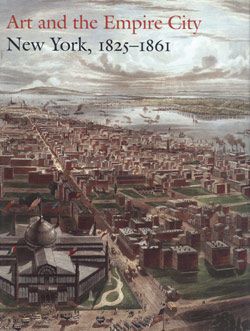
New York. The Metropolitan Museum of Art. "Art and the Empire City: New York, 1825–1861," September 19, 2000–January 7, 2001.
Rome. Palazzo Venezia. "Il Settecento a Roma," November 10, 2005–February 26, 2006, no. 149.
Reggia di Venaria Reale. "Sfida al Barocco: 1680–1750 Roma, Torino, Parigi," May 30–September 20, 2020, no. 133.
Arnold Baruchson. Letter to the Secretary of the Manchester Exhibition. January 22, 1857, states that he is willing to lend his paintings by Panini, "Ancient Rome" and "Modern Rome" [the present work and its pendant], to the Manchester Art Treasures Exhibition of 1857 and notes that these works were executed in 1757 for the duc de Choisseul [sic for Choiseul].
Illustrated Catalogue of the Third Series of 100 Paintings by Old Masters . . . Paris, 1896, p. 92, no. 74, ill., states that this picture and its pendant were painted for the duc de Choiseul and "sold after his death in Paris in 1786; afterwards in the Collections of Casimir Perier, Alex. [sic for Arnold] Baruchson, and A. Murray".
W. G. Constable. Letter to Elizabeth Gardner. April 15, 1952, notes that a group of four pictures, including an "Ancient Rome" and a "Modern Rome" were commissioned from Panini by the duc de Choiseul and purchased in the nineteenth century by the Boston Atheneum; provides subsequent provenance for these pictures.
"The First Imaginary Museum." Art News 52 (March 1953), identify the monuments in these pictures and note that "neither patron nor artist romanticized the ruins; everything was pedantically copied from life".
Josephine L. Allen and Elizabeth E. Gardner. A Concise Catalogue of the European Paintings in The Metropolitan Museum of Art. New York, 1954, p. 76.
Emilio Lavagnino. Il Settecento a Roma. Exh. cat., location unknown. Rome, 1959, p. 168, catalogues an autograph variant of Panini's "Modern Rome," dated 1757 and lent to this exhibition by the Boston Athenaeum [it is now in the Museum of Fine Arts, Boston]; states that it was commissioned in 1756 by the duc de Choiseul and that its pendant, "Ancient Rome," is in the collection of the Earl of Ellesmere [now Staatsgalerie, Stuttgart]; mentions our pictures as replicas of this pair with slight variations, and certainly also commissioned by Choiseul; observes that another set of replicas with more extensive variations is in the Louvre, Paris.
Carlo Pietrangeli. "Ricordo romano di un ambasciatore di Francia." Capitolium 36 (May 1961), p. 15.
Ferdinando Arisi. Gian Paolo Panini. Piacenza, 1961, pp. 83 n. 55, 103, 212, 216, no. 250, 270, states that Panini produced three versions of "Ancient Rome" and "Modern Rome"; calls the MMA pictures repetitions with variations of the works in Stuttgart and Boston commissioned from Panini in 1756 by the duc de Choiseul, and part of a series with a "View of St. Peter's Square in Rome" (Ellesmere collection) and the "Interior of St. Peter's" (Museum of Fine Arts, Boston); argues that the seated figure in the MMA "Modern Rome" is Panini, while the standing figure immediately behind the chair is the duc de Choiseul; suggests that the MMA canvases came from the collection of Hubert Robert who perhaps took part in their execution
.
Estella Brunetti. "Il Panini e la monografia di F. Arisi." Arte antica e moderna 25 (January–March 1964), p. 176, establishes that Monsignor de Canillac is the protagonist of the pendants in the Louvre.
Federico Zeri and Elizabeth E. Gardner. Unpublished manuscript. [ca. 1970–80], as commissioned with its pendant by the duc de Choiseul; note that the MMA examples are repetitions with variations of the exampes in Stuttgart and Boston commissioned from Panini in 1756 by the duc de Choiseul; observe that in the Boston example of "Modern Rome" the duc de Choiseul is seated in an armchair, while in the MMA work Panini has taken his place; mention later versions of these paintings dated 1758 and 1759, now in the Louvre, Paris; note that the gallery in the MMA "Modern Rome" is decorated by a fresco in Baroque style of the Four Seasons; identify the monuments and state that they are "more or less the same" as in the Boston picture.
Burton B. Fredericksen and Federico Zeri. Census of Pre-Nineteenth-Century Italian Paintings in North American Public Collections. Cambridge, Mass., 1972.
Linda Boyer Gillies. "An Eighteenth–Century Roman View: Panini's Scalinata della Trinità dei Monti." Metropolitan Museum of Art Bulletin 30 (February/March 1972), pp. 183–84, ill., identifies them as the second set of pendants made by Panini, calling the Boston picture and its pendant in Stuttgart primary, and the pair in the Louvre the latest; notes that a drawing of the "Spanish Steps" in the MMA [Rogers Fund, 1971. 63.1] was copied in all three extant compositions of "Modern Rome".
Barbara Scott. "The duc de Choiseul: A Minister in the Grand Manner." Apollo (January 1973), pp. 43–44, ill., as painted for the duc de Choiseul
.
Exhibition of Old Master Paintings. Exh. brochure, Leger Galleries. London, 1977, unpaginated, calls them "variants of the original . . . later versions [of the Stuttgart/Boston pair] with rearrangements of the principal figures, and probably collaborations with Hubert Robert," who was working in Panini's studio at that time.
Ferdinando Arisi. Gian Paolo Panini e i fasti della Roma del '700. Rome, 1986, pp. 173–74 n. 98, 179–181, 464–65, 467, no. 475, ill. (overall and details).
Ferdinando Arisi. Gian Paolo Panini. Soncino, 1991, p. 29, considers it practically impossible to specify the degree to which Hubert Robert worked on these scenes.
Michael Kiene. Pannini. Exh. cat., Musée du Louvre. Paris, 1992, p. 145.
Ferdinando Arisi inGiovanni Paolo Panini, 1691–1765. Ed. Ferdinando Arisi. Exh. cat., Palazzo Gotico. Milan, 1993, p. 118.
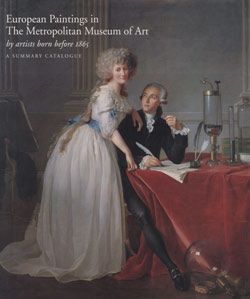
Katharine Baetjer. European Paintings in The Metropolitan Museum of Art by Artists Born Before 1865: A Summary Catalogue. New York, 1995, p. 136, ill.
Eliot W. Rowlands. The Collections of the Nelson-Atkins Museum of Art: Italian Paintings, 1300–1800. Kansas City, Mo., 1996, p. 409, notes that while the exact function of these works "remains a mystery," they may have served as advertisements for views the artist could produce upon request.
JoLynn Edwards. Alexandre-Joseph Paillet: Expert et marchand de tableaux à la fin du XVIIIe siècle. Paris, 1996, pp. 192–93, 325, 330, ill. p. 195.
Paul Mitchell and Lynn Roberts. Frameworks: Form, Function & Ornament in European Portrait Frames. London, 1996, p. 448 n. 6.
David R. Marshall inThe Triumph of the Baroque: Architecture in Europe, 1600–1750. Ed. Henry A. Millon. Exh. cat., National Gallery of Art. Milan, 1999, pp. 426–27, ill. and frontispiece (color) [Italian ed., 1999], states that two sets of four paintings were commissioned from Panini by the duc de Choiseul; judging from the provenance, believes the MMA pair formed a set with the "Exterior of St. Peter's" in Berlin and the "Interior of St. Peter's" in Washington, and that this was the set owned by Hubert Robert; questions Arisi's assumption [see Ref. 1961] that the seated figure is a self-portrait of the artist, finding it unlikely that Choiseul would have accepted an image of the artist seated and deferred to by other gentlemen courtiers; believes, instead, that this seated figure is Choiseul himself; suggests that the man holding the sheaf of drawings might be the young Hubert Robert, who accompanied Choiseul to Rome; notes that only some of the images represented in the paintings existed as independent compositions by the artist.
Edgar Peters Bowron inArt in Rome in the Eighteenth Century. Ed. Edgar Peters Bowron and Joseph J. Rishel. Exh. cat., Philadelphia Museum of Art. Philadelphia, 2000, p. 427.
Laura Laureati et al. inIl Settecento a Roma. Ed. Anna Lo Bianco and Angela Negro. Exh. cat., Palazzo Venezia, Rome. Cinisello Balsamo (Milan), 2005, pp. 78, 86, 250, 252–54, no. 149, ill. (color, overall and detail).
Elizabeth A. Pergam. "From Manchester to Manhattan: The Transatlantic Art Trade After 1857." Bulletin of the John Rylands Library 87, no. 2 (2005), pp. 82, 86, 91, includes the pair among Baroque paintings bought by the MMA, stating that although the two pictures "might be considered examples of neoclassical Capriccio aimed at the eighteenth-century English Grand Tourist . . . , their scale and 'horror vacui' place them firmly within late baroque sensibility".
Edgar Peters Bowron inAntiquity Revived: Neoclassical Art in the Eighteenth Century. Ed. Guillaume Faroult et al. Exh. cat., Musée du Louvre. Paris, 2011, p. 69.
Old Master Paintings: Part I. Christie's, New York
. January 30, 2013, pp. 109–10, figs. 4–5 (color, overall and detail), under no. 42.
Kathryn Calley Galitz. The Metropolitan Museum of Art: Masterpiece Paintings. New York, 2016, p. 421, no. 288, ill. pp. 305, 421 (color).
Joseph Baillio inHubert Robert. Exh. cat., National Gallery of Art. Washington, 2016, pp. 6–7, 11 n. 15.
Guillaume Faroult inHubert Robert. Exh. cat., National Gallery of Art. Washington, 2016, p. 254, fig. 1 (color), under no. 97.
Virginia Brilliant. Italian, Spanish, and French Paintings in the Ringling Museum of Art. New York, 2017, p. 230, under no. I.138A, B.
Old Masters. Christie's, New York
. October 30, 2018, unpaginated, under no. 64.
Giuseppe Dardanello inSfida al Barocco: 1680–1750 Roma, Torino, Parigi. Ed. Michela Di Macco et al. Exh. cat., Reggia di Venaria, Venaria Reale. Genoa, 2020, pp. 393–97, no. 133, ill. pp. 392, 395 (color, overall and detail).
Joseph Connors. "Bernini and His World: Sculpture and Sculptors in Early Modern Rome." Burlington Magazine 164 (November 2022), p. 1162.
Giovanni Paolo Panini (Italian, Piacenza 1691–1765 Rome)
1743–1744
Resources for Research
The Met's Libraries and Research Centers provide unparalleled resources for research and welcome an international community of students and scholars.
The Met Collection API is where all makers, creators, researchers, and dreamers can connect to the most up-to-date data and public domain images for The Met collection. Open Access data and public domain images are available for unrestricted commercial and noncommercial use without permission or fee.
Feedback
We continue to research and examine historical and cultural context for objects in The Met collection. If you have comments or questions about this object record, please complete and submit this form. The Museum looks forward to receiving your comments.