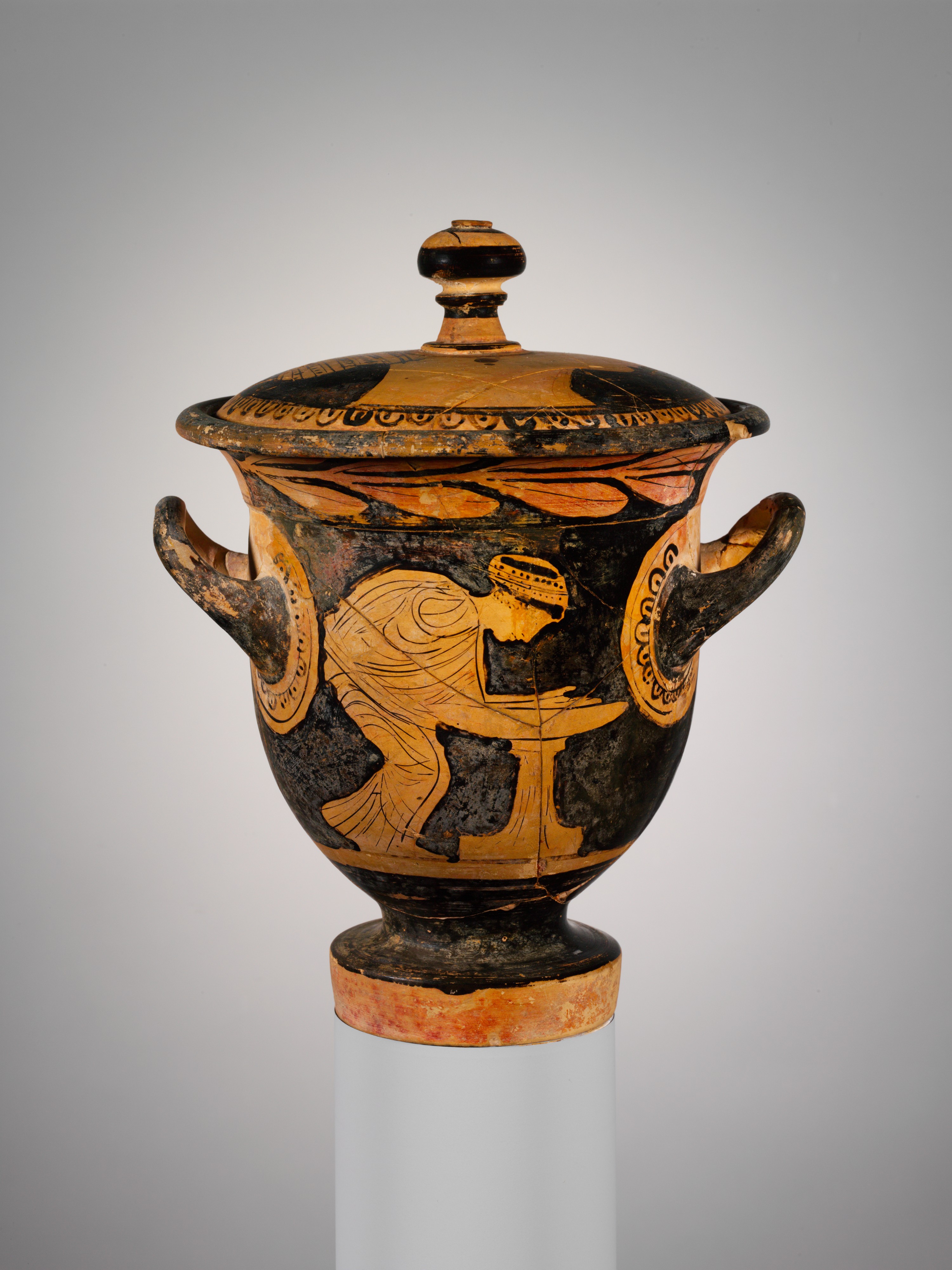
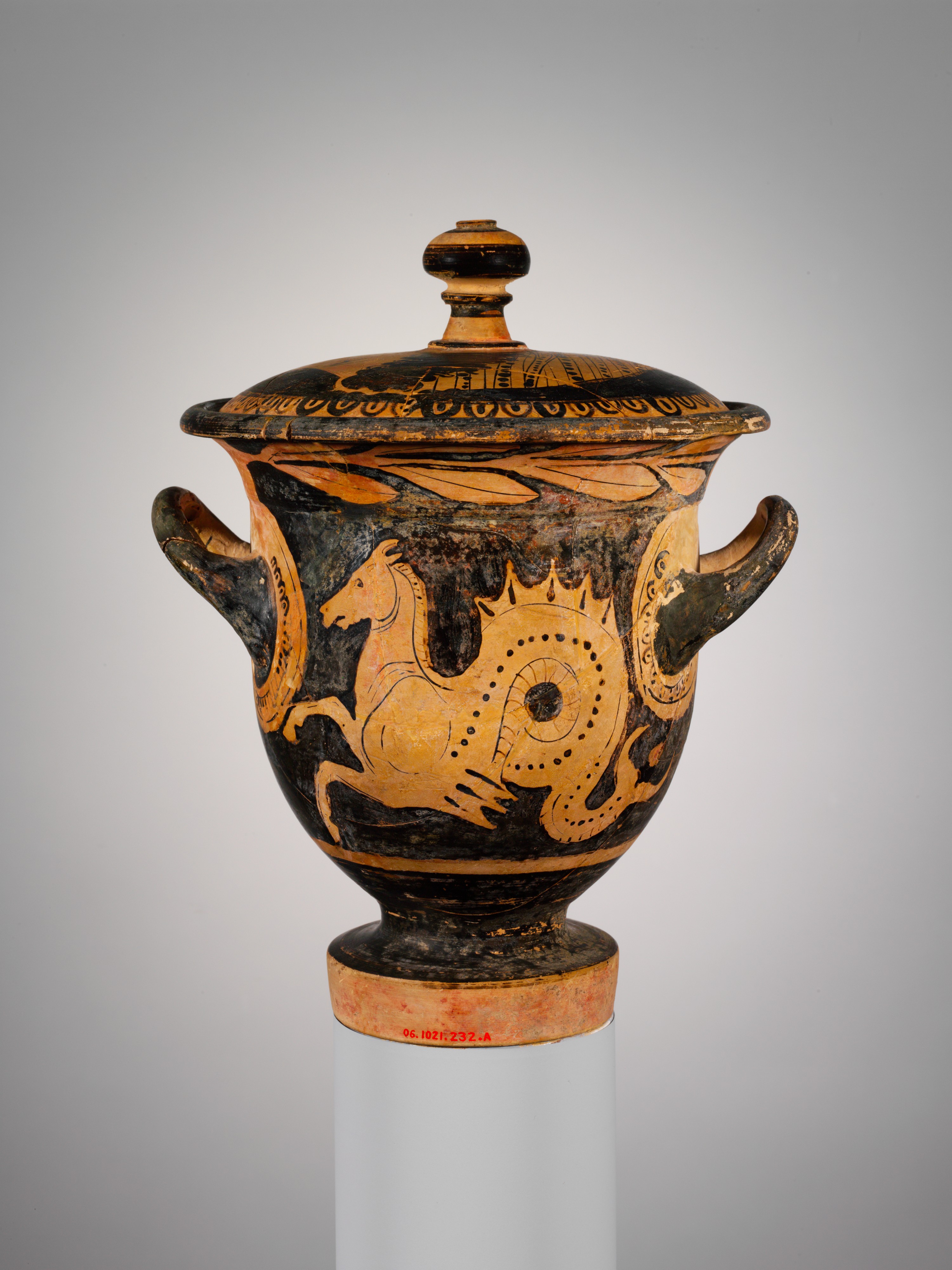
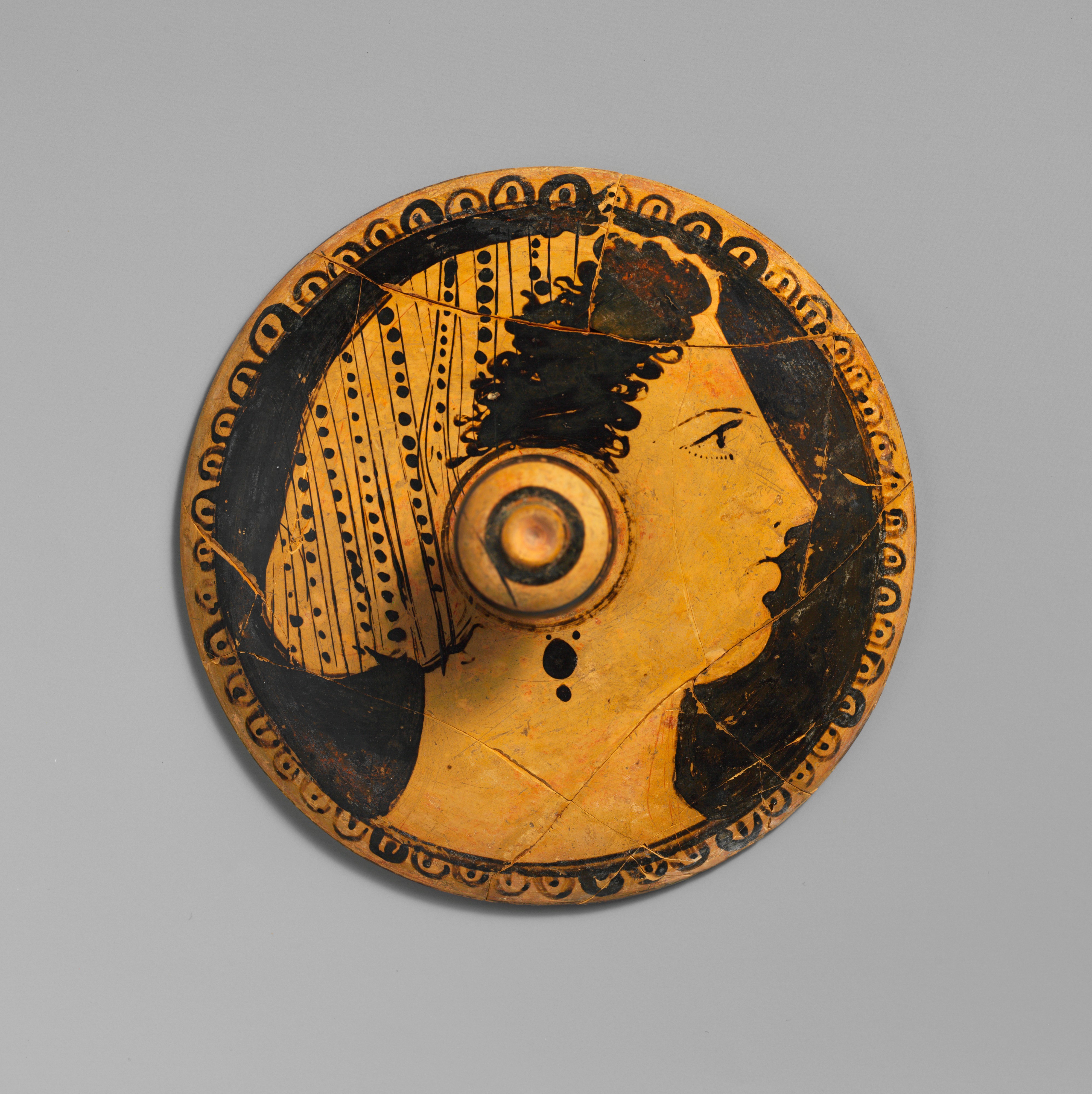
Terracotta bell-krater (mixing bowl) with lid

Attributed to the Group of the Würzburg Scylla 

Period:
Classical
Date:
late 5th century B.C.
Culture:
Greek, Boeotian
Medium:
Terracotta; red-figure
Dimensions:
H. 7 in. (17.8 cm.) H. with cover. 9 in. (22.9 cm.) D. 6 1/2 in. (16.5 cm.)
Classification:
Vases
Credit Line:
Rogers Fund, 1906
Accession Number:
06.1021.232a, b
  • Description

    The hippocamp, a fantastic monster with a horse's body and a fish's tail, was fairly uncommon in Classical Greek art. He plays no part in any extant mythological tale but in art is sometimes ridden by the wise sea god Nereus or sea nymphs. Characteristically, the body of the creature on this vase is without scales and has an erect, crescent tail and spiky fins.

  • References

    Collection Canessa, p. 76, no. 262 (illus.).
    Shepard, Katharine, The Fishtailed Monster in Greek and Etruscan Art, (1940), p. 40.
    Beazley, J.D., "Groups of Campanian Red-figure," Journal of Hellenic Studies, 63 (1943), p. 68, (There attributed to the group of the Wurzburg Scylla).
    Collection de M.E., Sale Catalogue, Hotel Drouot, 2 juin, 1904, p. 28, no. 176, pl. 9.
    Ure, A.D. American Journal of Archaeology, 57, (1953), pp. 245 ff., pl. 66, figs. 1-3.
    Richter, Handbook of the Greek Collection (1953), p. 115, note 80.

  • See also
    Who
    What
    Where
    When
    In the Museum
    Heilbrunn Timeline of Art History
130007869:1

Close