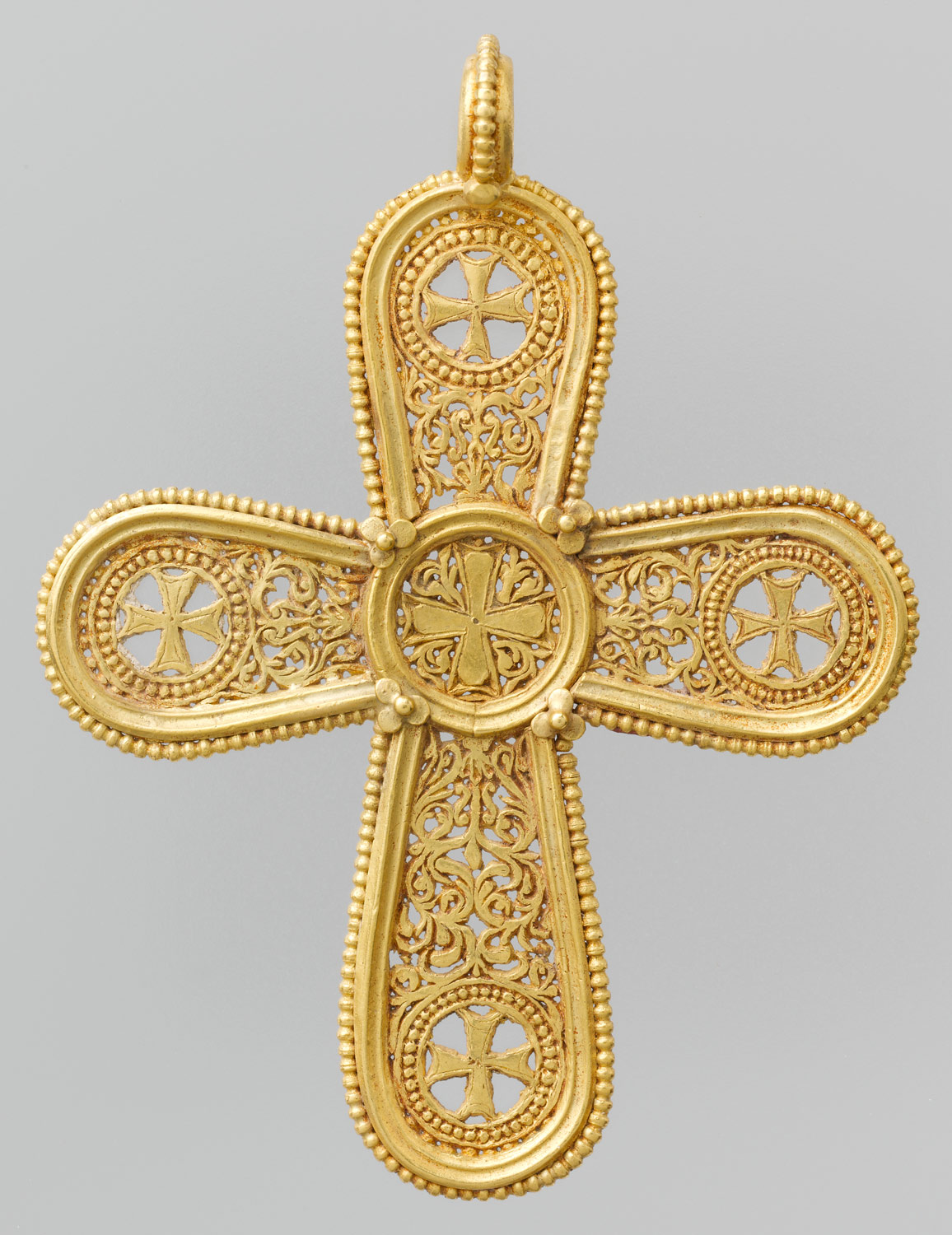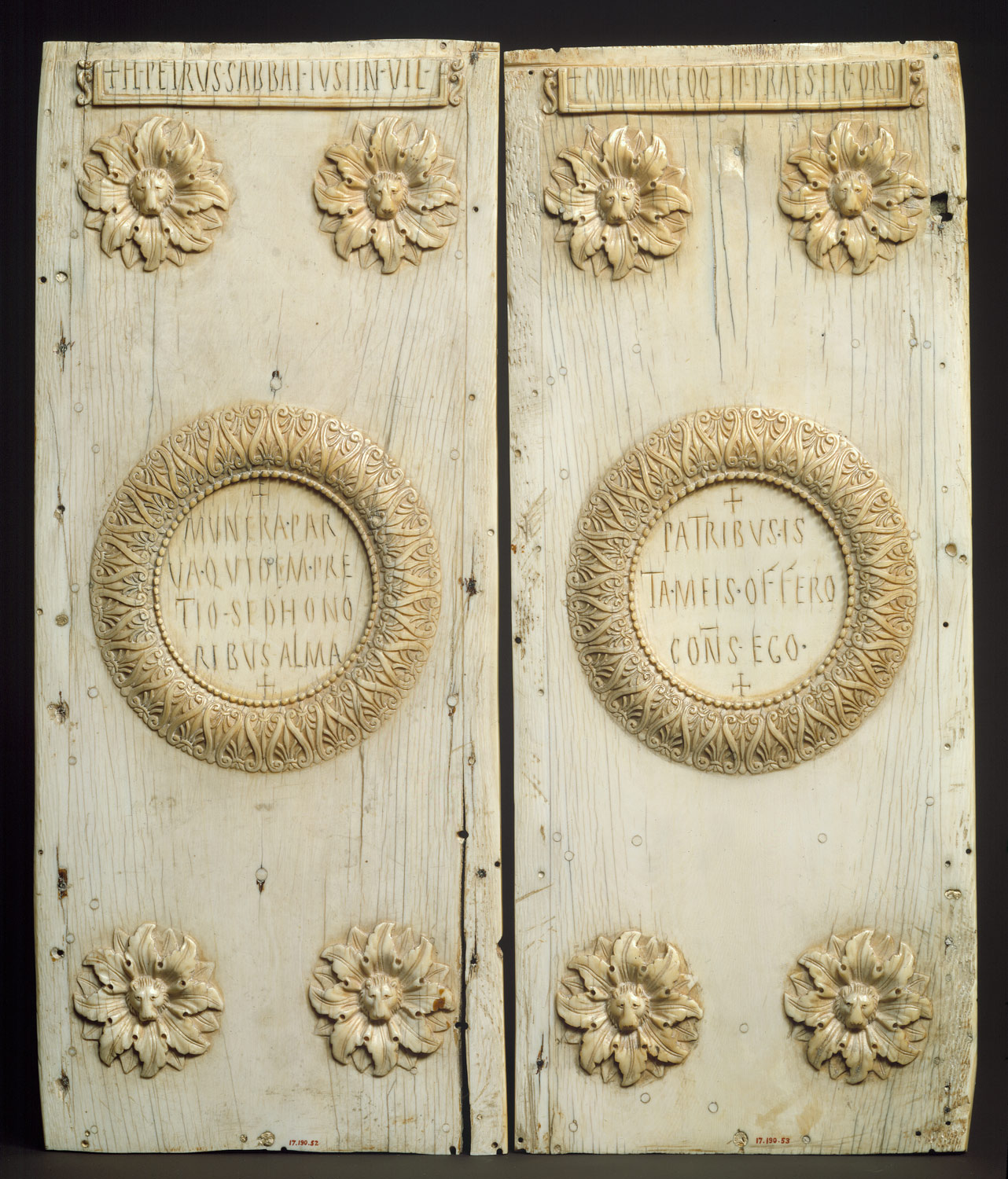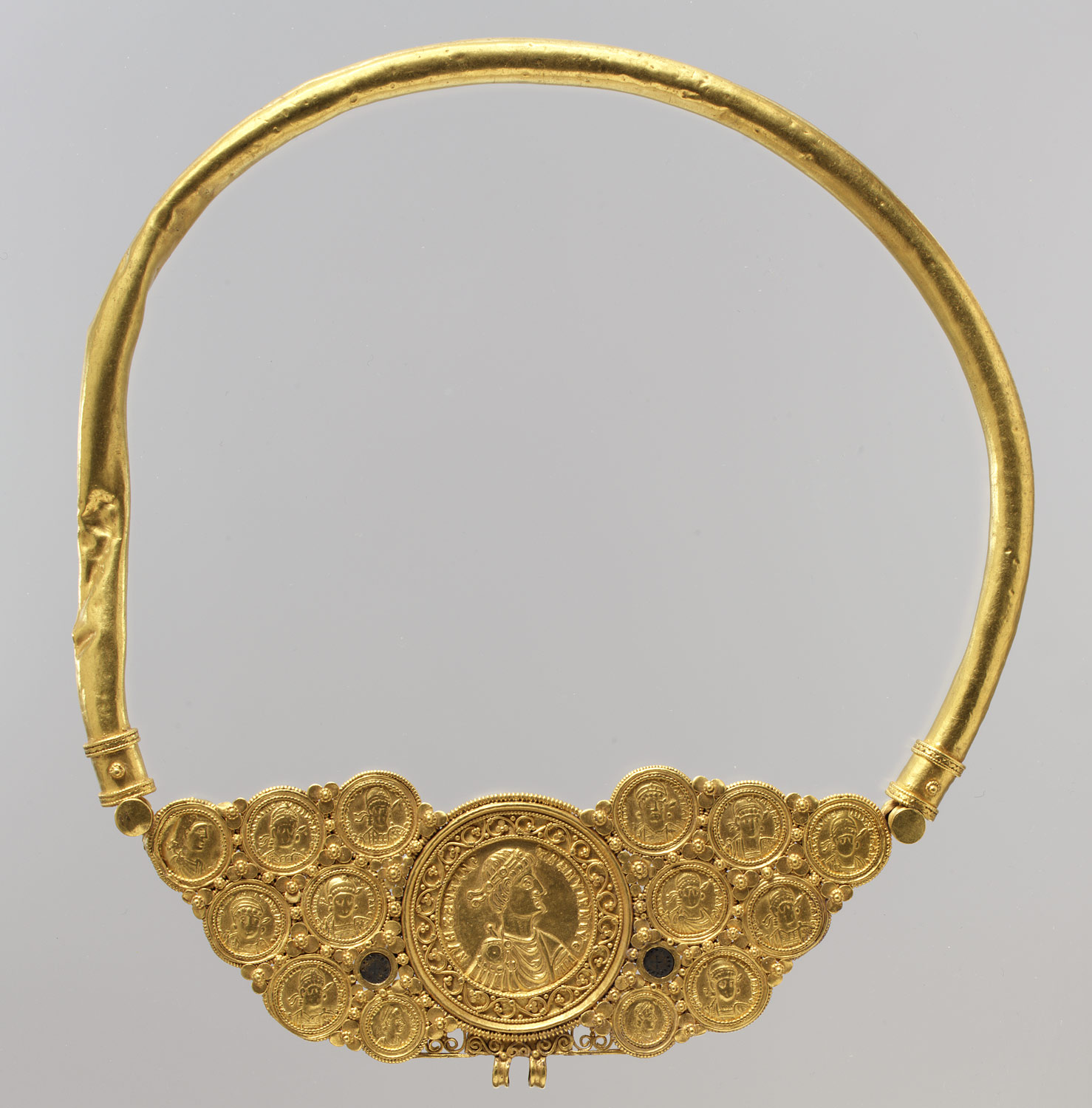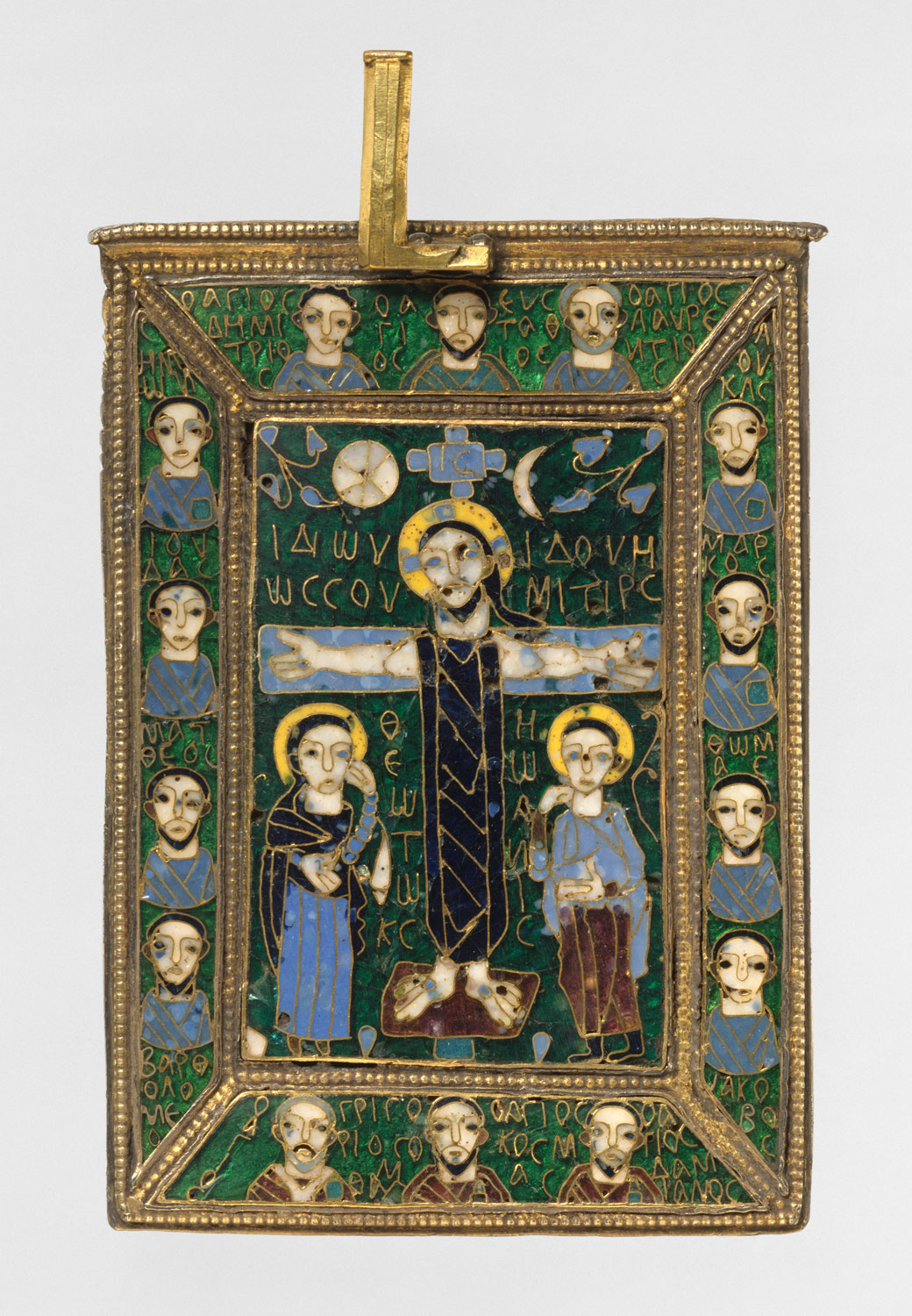
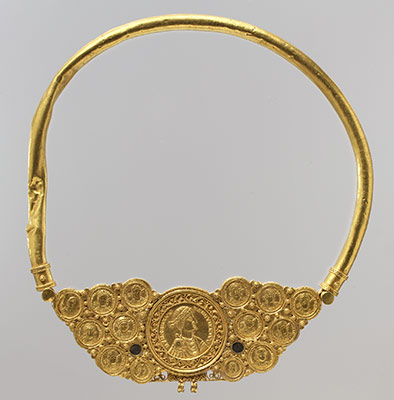
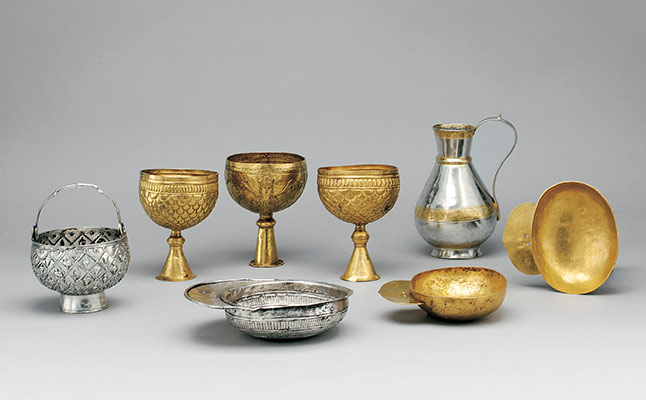
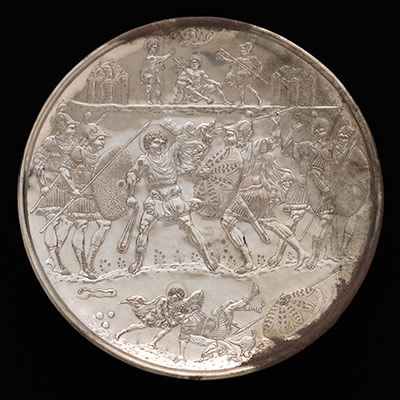
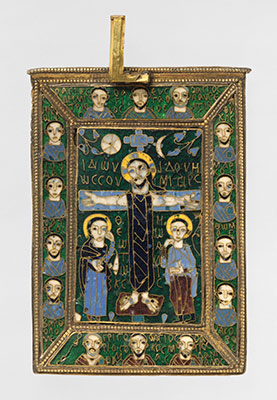
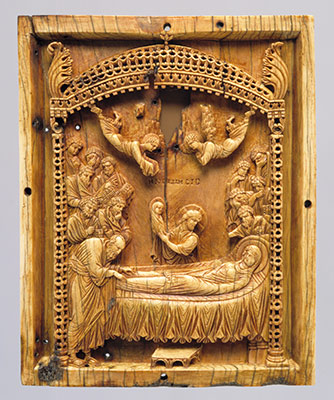
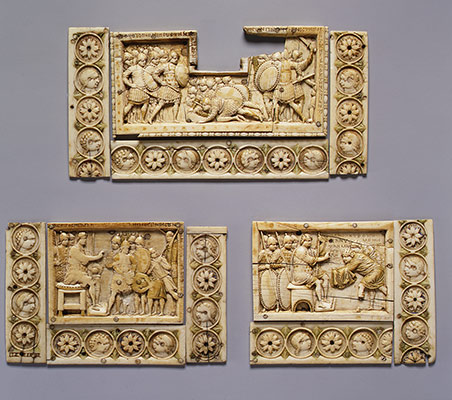
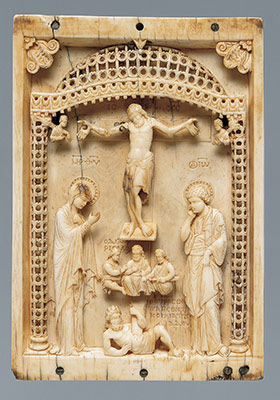
The Byzantine empire remains the dominant political and cultural power in the Balkans during these early medieval centuries. Major urban centers include Constantinople, the empire’s political and religious capital, and Thessaloniki, strategically situated along the major land route connecting Byzantium with the West. Among the most important events in church history are the Iconoclastic controversy (726–843) and the spread of the Orthodox Christian faith beyond the empire’s borders. The development of a large, domed, centrally planned building type is among the great advances in Byzantine architecture of the period. In the arts, silk weaving and cloisonné enameling emerge as new techniques for which Byzantine craftsmen became famous throughout the medieval world.
Balkan Peninsula, 500–1000 A.D.
-
 2006.569
 -
 17.190.52,53
 -
 17.190.1664
 -
 17.190.1673-1712
 -
 17.190.396
 -
 17.190.715ab
 -
 17.190.132
 -
 17.190.137a-c
 -
 17.190.44
Timeline
500 A.D.
625 A.D.
625 A.D.
750 A.D.
750 A.D.
875 A.D.
875 A.D.
1000 A.D.
Overview
Key Events
-
529
Christianization of the classical city of Athens continues as schools for ancient philosophy are closed by the emperor Justinian I (r. 527–65). During the sixth century, the Parthenon is converted for use as the city’s cathedral and the temple’s interior is decorated with Christian frescoes.
-
537
Hagia Sophia, the cathedral of Constantinople and seat of the Byzantine patriarch, is dedicated by the emperor Justinian I; its lavish decoration includes silver and marble revetments and figural icons. Justinian’s great domed building follows damage to the cathedral by fire during the Nika riot, January 11–19, 532, a popular revolt that begins in the Hippodrome and spreads to all areas of the capital.
-
ca. 600
Greek gradually becomes the predominant language of the Byzantine state and church, supplanting the former bilingualism of Latin and Greek.
-
ca. 600
From this time onward, Constantinople is the premier center of Byzantine silk weaving, a technique said to have been smuggled into the empire from China by sixth-century itinerant Christian monks. By the tenth century, additional centers for silk production have been established in the Greek cities of Athens, Corinth, Thebes, and Thessaloniki.
-
626
An icon of Christ repels the Sasanian-Persian and Avar assault on Constantinople. Throughout the history of the Byzantine capital, icons are credited with the city’s defense. In the Arab attack on Constantinople (674–78), a painted panel icon of the Virgin defends the city.
-
681
Following a peace treaty with the Byzantine empire, the First Bulgarian Kingdom (681–1018), with its capital at Pliska, is founded by Asparuch (ca. 650–700). Medieval Bulgaria occupies territories in the northern Balkans, bordered by the Danube River, the Black Sea, the Iskur River, and the Balkan mountain range. The diverse population of the new state includes Bulgars as well as Slavs, Vlachs, and Greeks.
-
ca. 700
Avar and Slavic tribes conquer Byzantine territories in the Balkans, occupying lands as far south as the Peloponnesos in southern Greece. Thessaloniki’s patron saint, Demetrios, is credited with the city’s defense during these attacks.
-
726
The icon of Christ decorating the Chalke (Bronze) Gate of the imperial palace in Constantinople is removed by the Byzantine emperor Leo III (r. 717–41), marking the beginning of Iconoclasm. Four years later, Leo legislates the removal of figural images from all churches.
-
740
The renowned Iconoclastic-period church Hagia Eirene (Holy Peace) in Constantinople is rebuilt following its destruction in an earthquake (740). Decoration is restricted to nonfigural mosaics, including the apse mosaic representing the Cross.
-
843
The empress Theodora (r. 842–56), with her young son Michael III, restores icons, ending the period of Iconoclasm. The image of Christ is reinstalled on the Chalke Gate and redecoration soon begins at Hagia Sophia in Constantinople, with the addition of figural mosaics.
-
860
Expeditions against Byzantium by the Rus’ people, including attacks on Constantinople itself in 860 and later in the early 900s, secure the rights of Rus’ mercenaries, ambassadors, and tradesmen living in the Byzantine capital.
-
864
Czar Boris I of Bulgaria adopts Byzantine Christianity as the state religion. To facilitate the spread of the new Christian faith, a means of writing in the Slavic vernacular is developed nearly two decades later, in 885. The Slavic alphabet (Glagolithic) as well as Slavic literature and church liturgy are introduced to Bulgaria, strengthening ecclesiastical and theological connections between Bulgaria and Byzantium.
-
ca. 900
Byzantine influence on Bulgarian culture increases, with the arrival of artists in Bulgarian centers, intermarriage between the two ruling families, increased trade, and the translation of Byzantine church literature into Church Slavonic, the language of the Slavs written first in the Glagolithic alphabet (ninth to tenth century) and later in the Cyrillic alphabet (beginning in the eleventh century).
-
927
The independent kingdom of Serbia is established by Caslav (d. 960), uniting territories in modern Bulgaria and Croatia; Orthodox Christianity is adopted as the state religion. Serbia soon becomes an important ally and, alternatively, a formidable rival of Byzantium
-
ca. 950
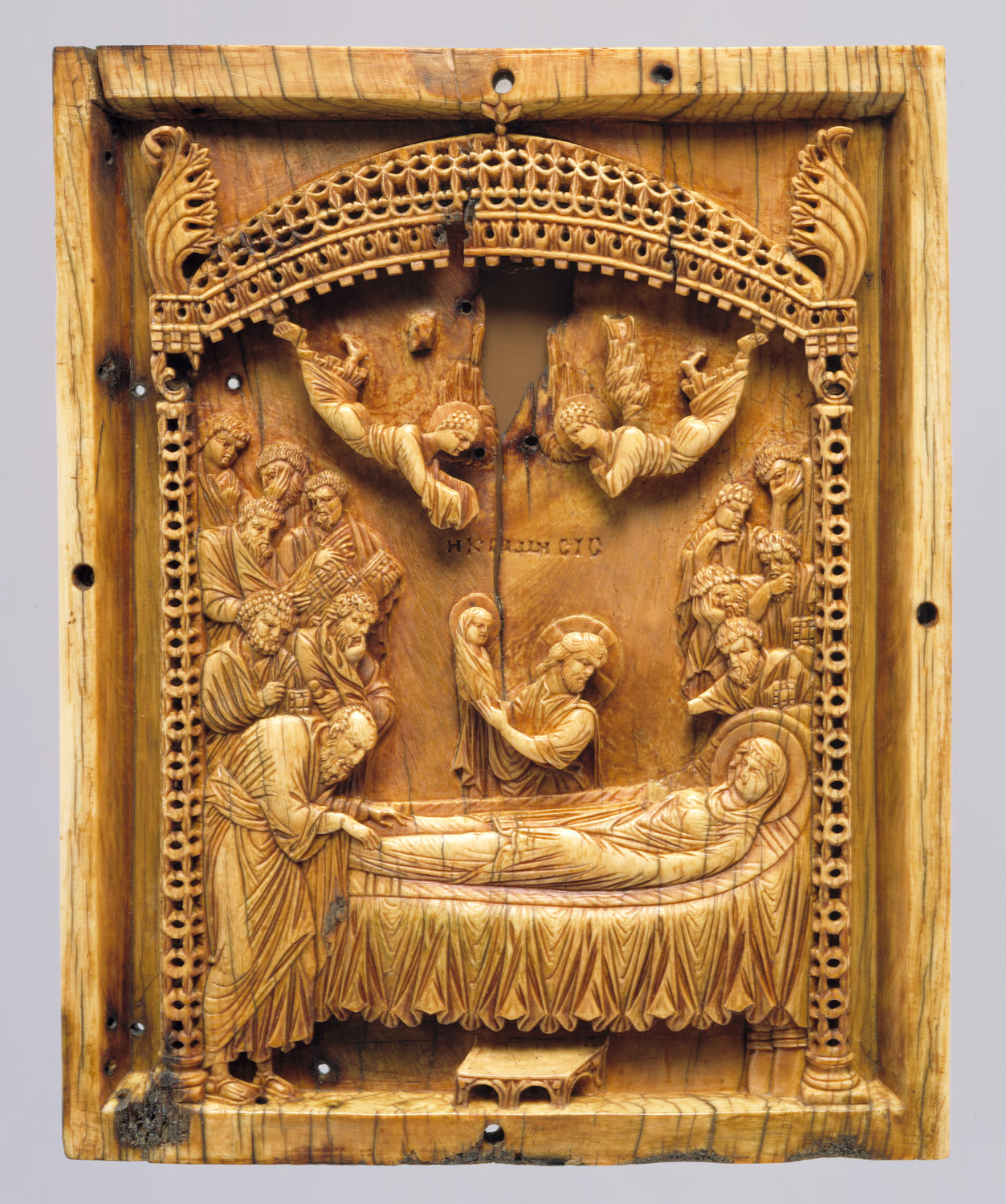
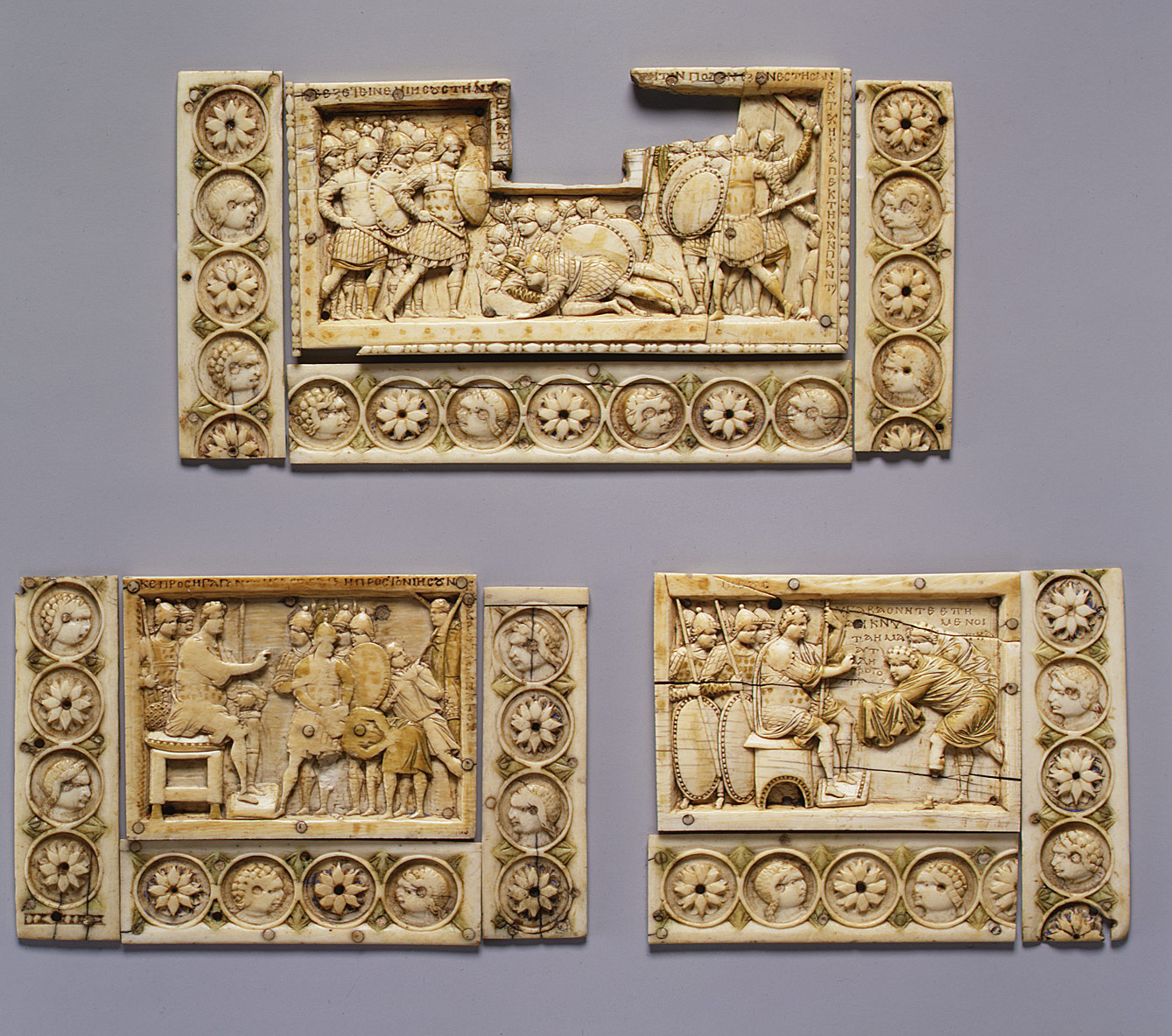
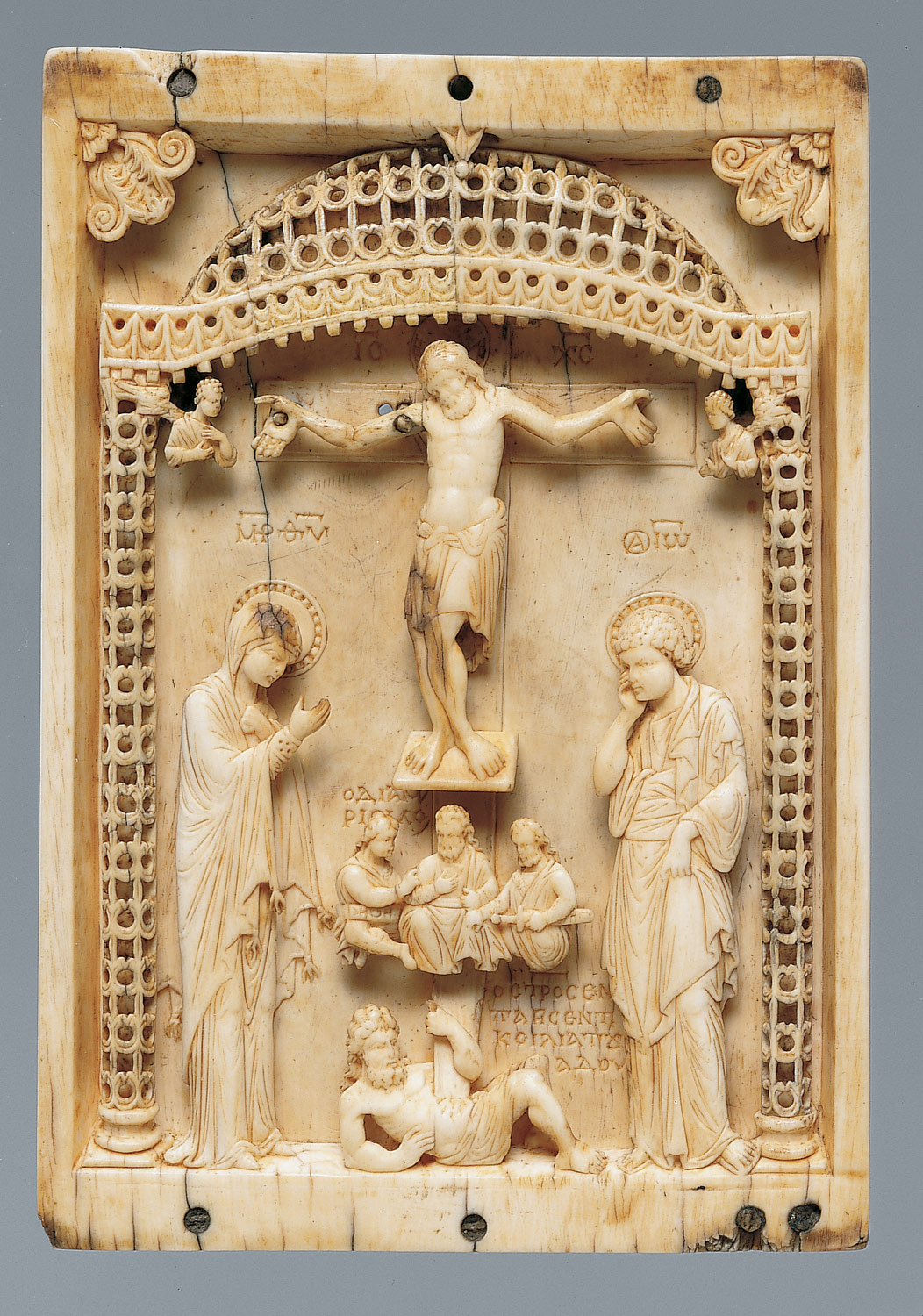
An intense interest in systematizing knowledge and preserving past traditions is seen in Byzantine culture under the patronage of tenth-century emperors, including Constantine VII Porphyrogennetos (r. 945–59). Treatises on imperial ceremony, as well as history, foreign affairs, and the military, are undertaken during Constantine’s reign. Classicizing, naturalistic styles in tenth-century manuscript painting and ivory carving are linked to this increased interest in the past. Contemporary historians praise Constantine himself as a painter of realistic, lifelike images.
-
962
The Great Lavra, the leading monastic community of Mount Athos, is founded by the monk Athanasios. From the late tenth century onward, Mount Athos becomes the most important international center for Orthodox monasticism, with forty-six monasteries functioning on the site by the late 900s.
Citation
“Balkan Peninsula, 500–1000 A.D.” In Heilbrunn Timeline of Art History. New York: The Metropolitan Museum of Art, 2000–. http://www.metmuseum.org/toah/ht/?period=06®ion=eusb (October 2001)