Heilbrunn Timeline of Art History


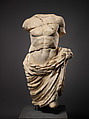
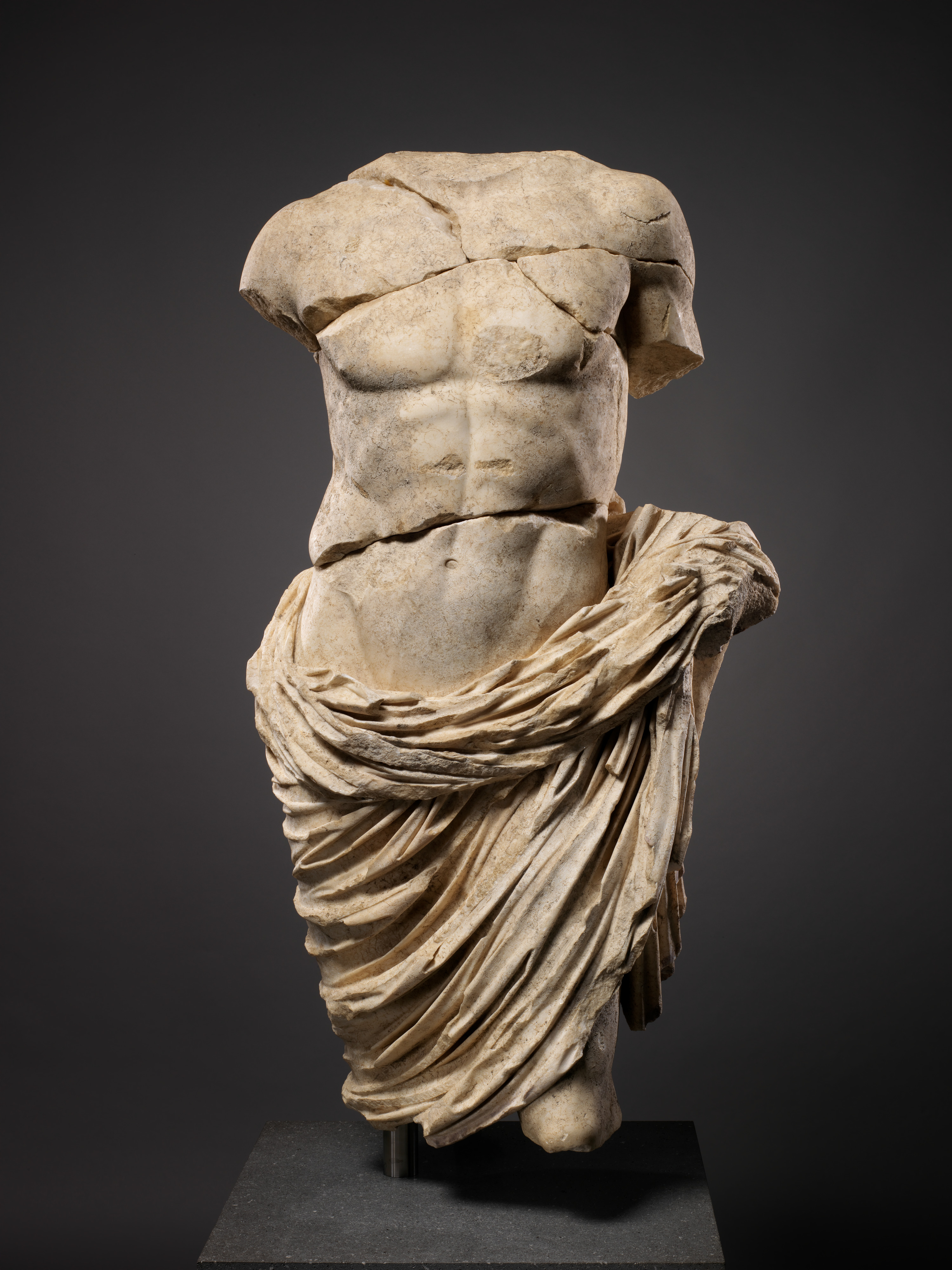
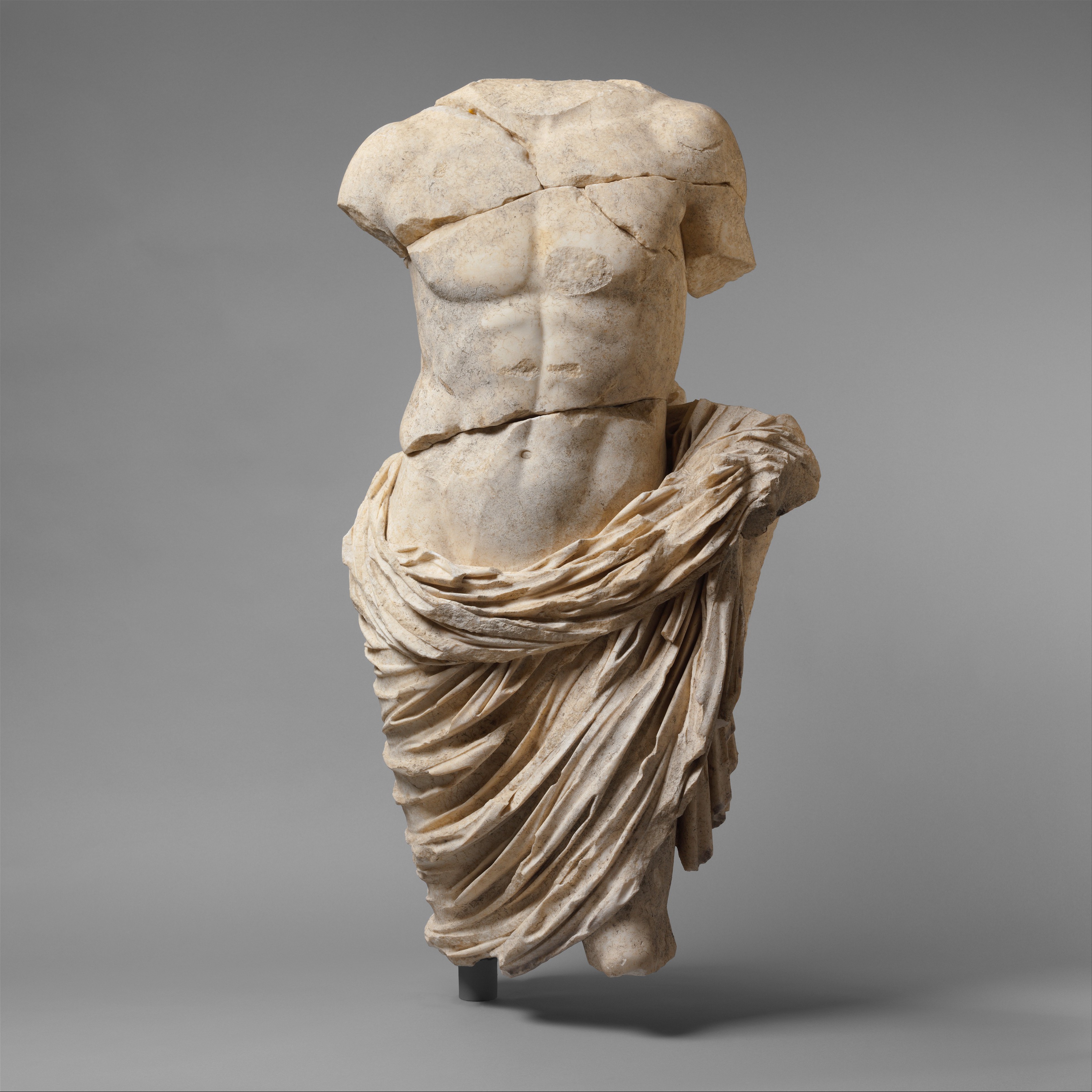
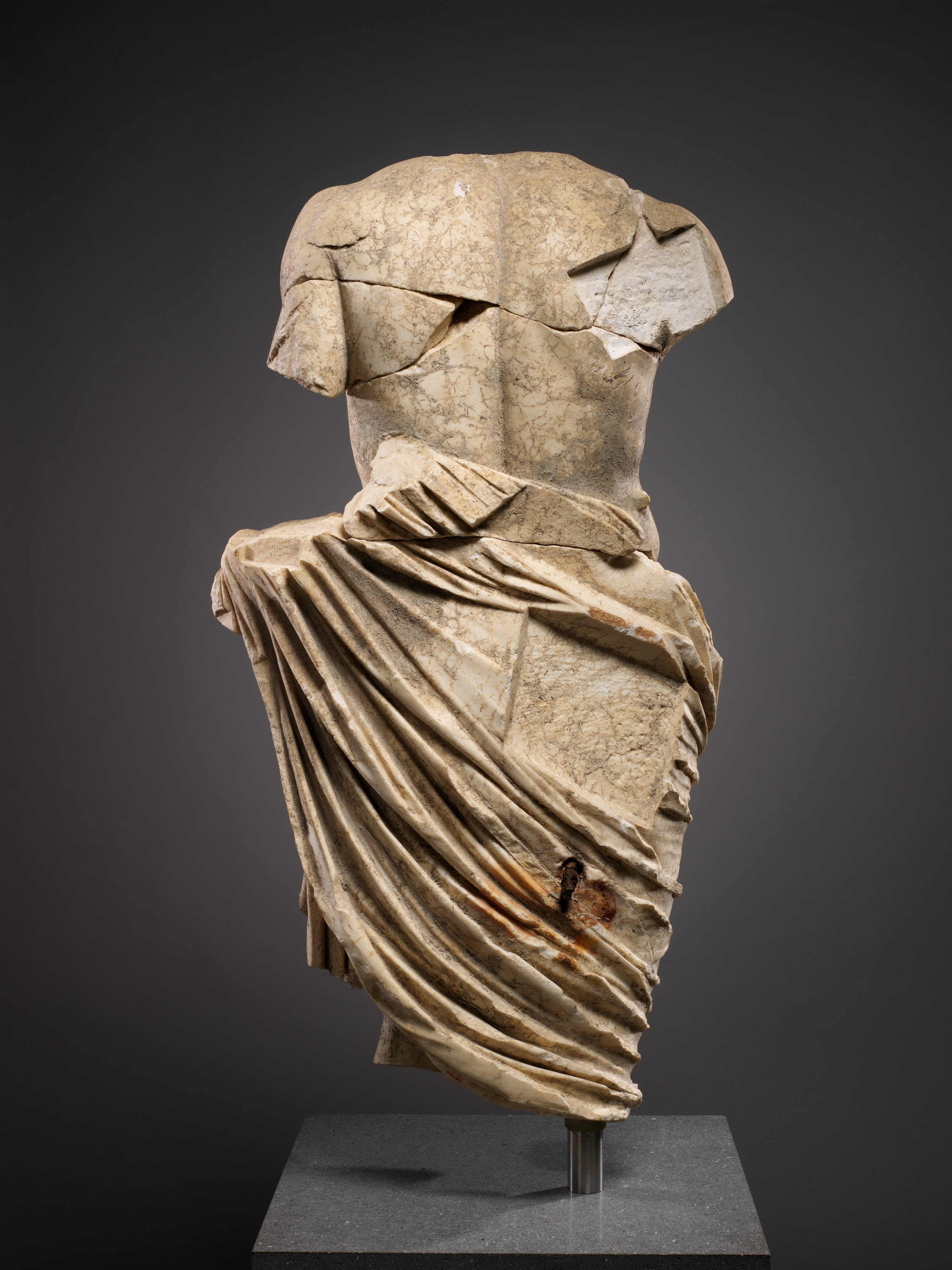
  • Statue of a member of the imperial family shown in heroic semi-nudity, Early Imperial, Augustan or Julio-Claudian, 27 b.c.–68 a.d.
    Roman
    Marble, pigment, gilding

    H. 46 in. (116.8 cm)
    Bequest of Bill Blass, 2002 (2003.407.9)

    Although headless, this powerful Roman portrait statue immediately communicates the impressive grandeur of its subject. In antiquity, this statue was paired with a similar figure, now also in the Metropolitan Museum (2002.407.8a,b), which together probably formed part of a statuary group honoring the Julio-Claudian dynasty. Gaius and Lucius, the adopted grandsons of the emperor Augustus, are most likely represented.

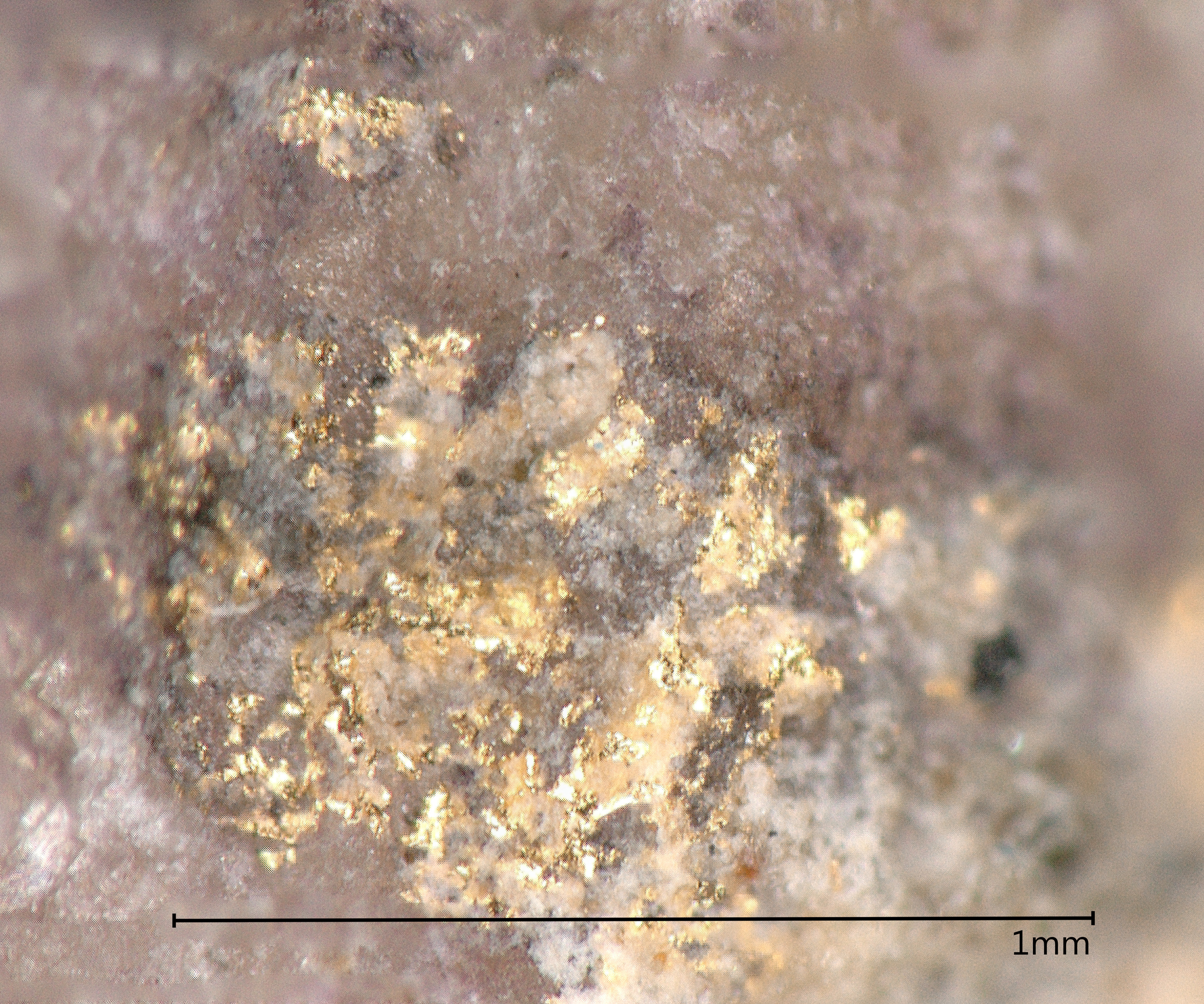
    The figure is depicted in the semi-nude fashion of Greek heroes. His muscular body conveys his youthful, athletic vigor, and he wears a Greek mantle, masterfully carved with deep, slender folds of drapery. The lower edge of the garment preserves a painted narrow purple band that, on close examination, retains vestiges of gold leaf. This gilding sought to evoke the luxurious embroidered gold-thread brocade of the finest textiles.

    This work of art also appears on Connections: Light

    Related


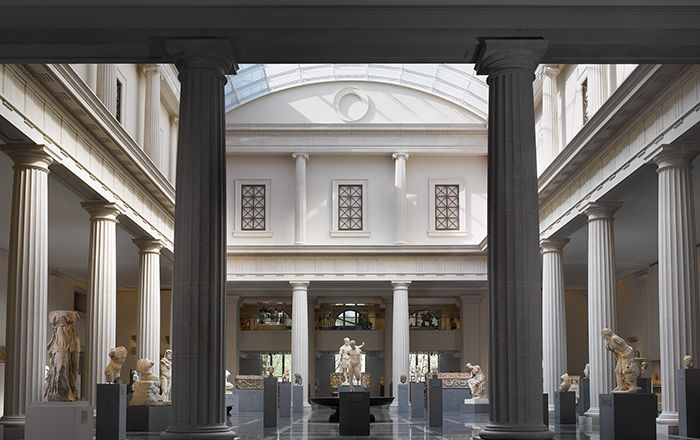
    On view: Gallery 162
    MoveSeparatorPrint
    Close
  • Statue of a member of the imperial family shown in heroic semi-nudity, Early Imperial, Augustan or Julio-Claudian, 27 b.c.–68 a.d.
    Roman
    Marble, pigment, gilding

    H. 46 in. (116.8 cm)
    Bequest of Bill Blass, 2002 (2003.407.9)

    Area of purple band on drapery.

    Detail of purple band on drapery.


    Move
    Close
    fullMultimediaText