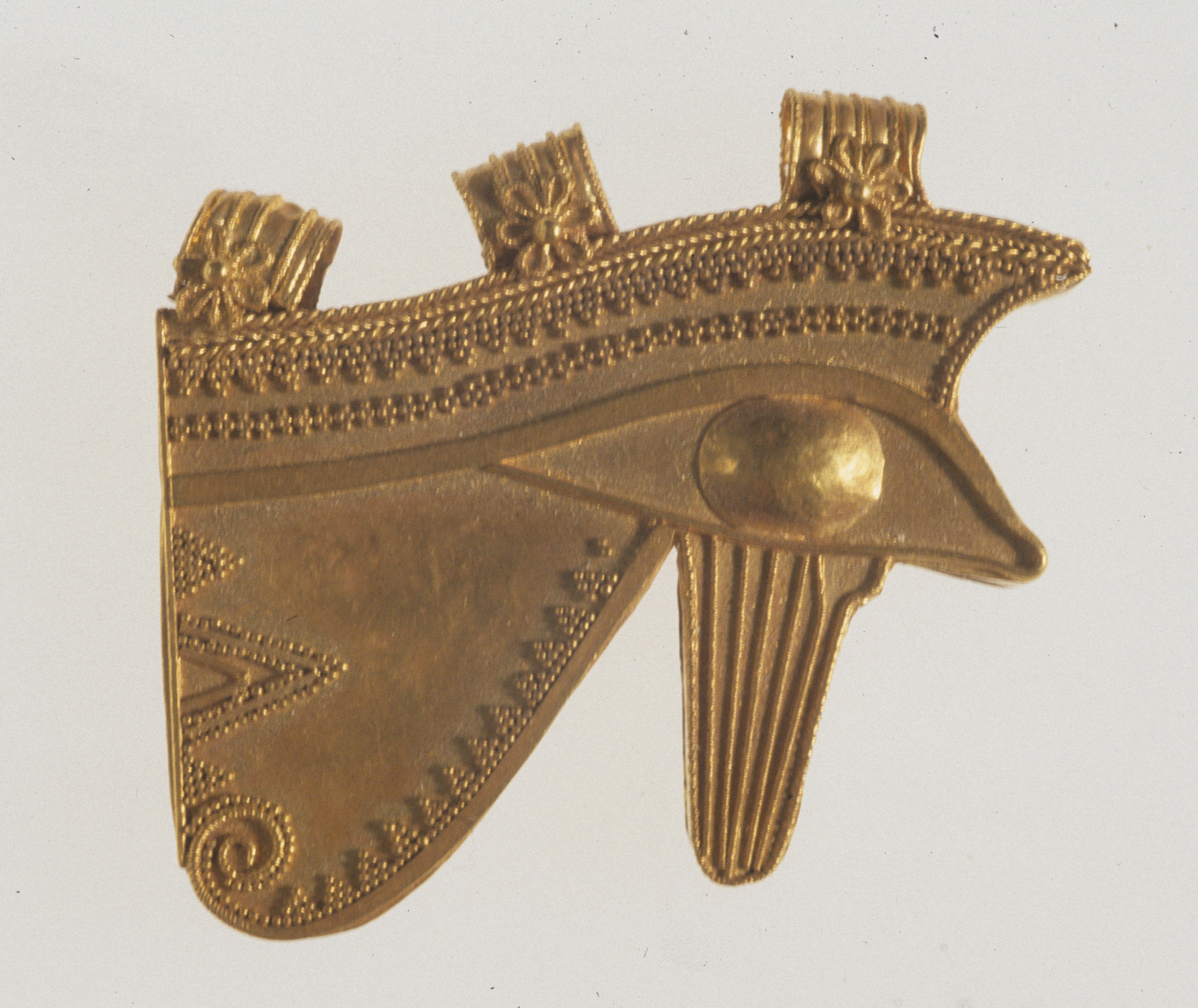
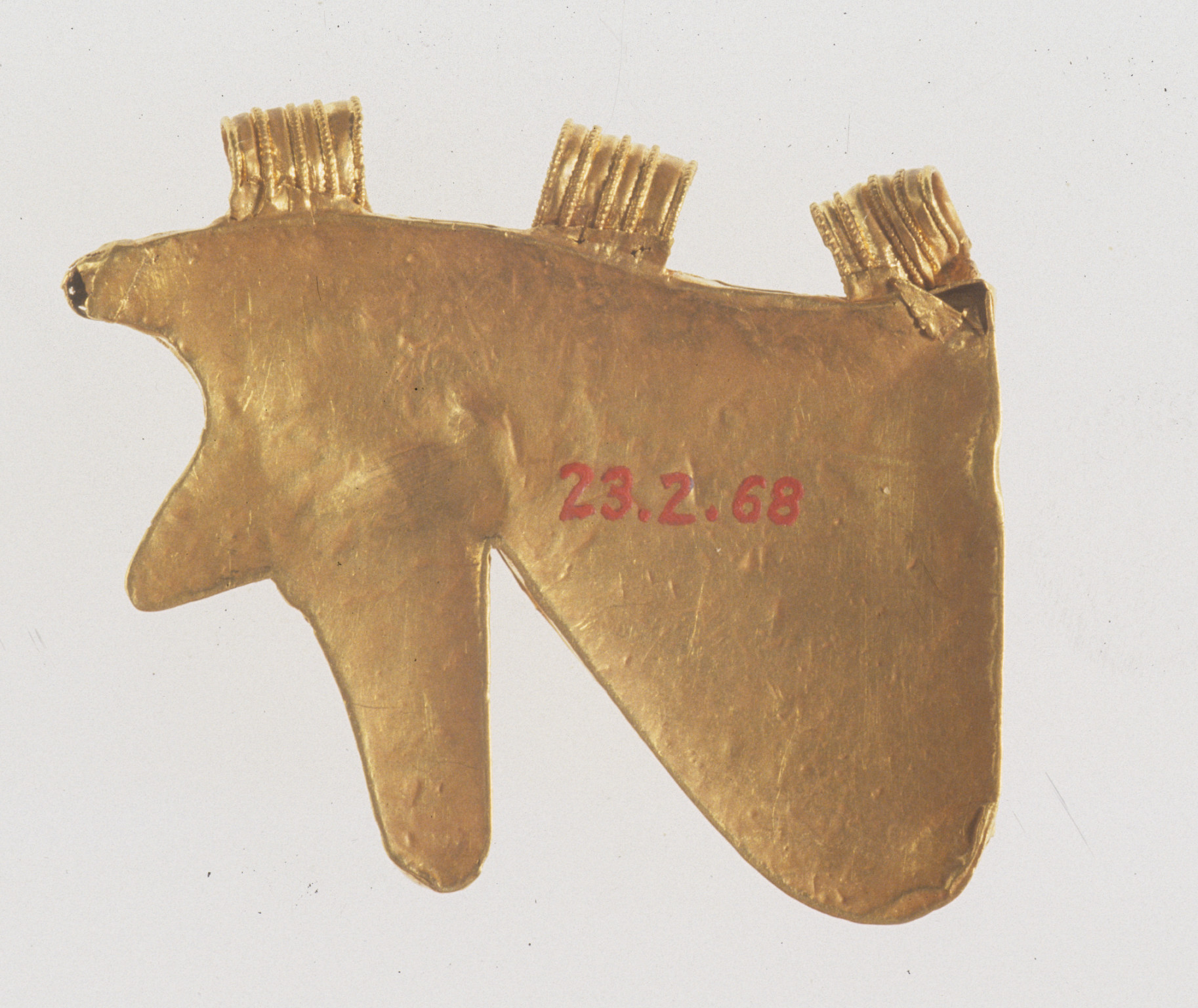
Wedjat Eye Amulet
Ptolemaic Period
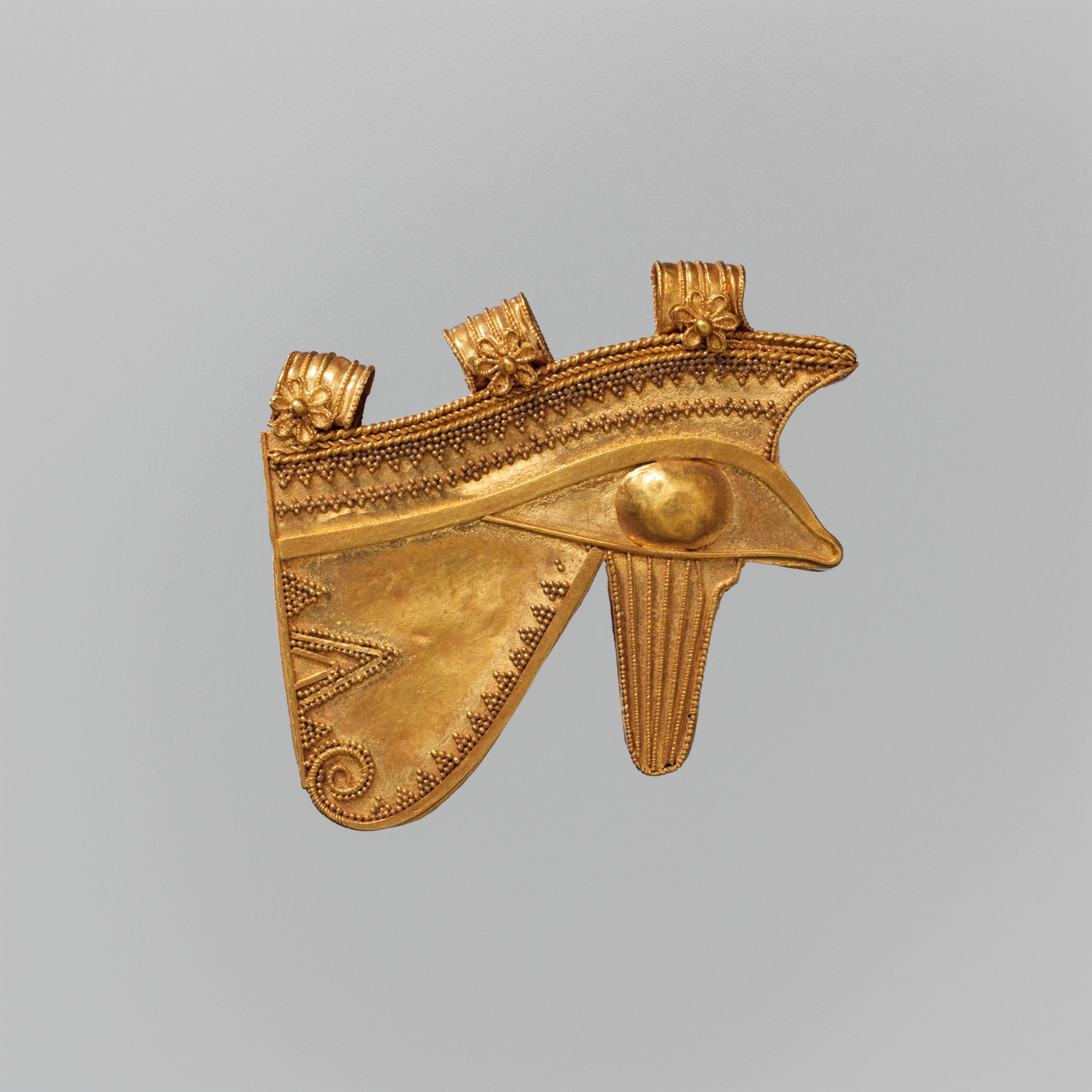
The wedjat eye amulet represents the healed eye of the god Horus, who can be depicted in falcon or human shape, or as a falcon headed man.
The eye features both human and falcon elements. It shows a human eye with a horizontal cosmetic line that extends from its outer corner and combines it with the stylized facial markings of a falcon. The latter are reflected in the vertical extension below the pupil and in the diagonal line that ends in a spiral. The small triangular markings on the amulet’s right side are known from wedjat eye hieroglyphs of the Ptolemaic Period and it is likely that this amulet dates to this period as well.
The ancient Egyptian name "wedjat" means "the one that is sound." In Egyptian mythology Horus’ eye was injured or stolen by the god Seth and then restored by Thoth. The wedjat eye embodies healing power and symbolizes rebirth. An amulet in this shape was thought to protect its wearer and to transfer the power of recovery and regeneration onto him or her. It was very popular and used by the living as well as for the dead.
This image cannot be enlarged, viewed at full screen, or downloaded.

This artwork is meant to be viewed from right to left. Scroll left to view more.