Amor Caritas
Artwork Details
- Title: Amor Caritas
- Artist: Augustus Saint-Gaudens (American, Dublin 1848–1907 Cornish, New Hampshire)
- Date: 1880–98, cast 1918
- Culture: American
- Medium: Bronze, gilt
- Dimensions: 103 1/4 x 50 in. (262.3 x 127 cm)
- Credit Line: Rogers Fund, 1918
- Object Number: 19.124
- Curatorial Department: The American Wing
Audio
4505. Amor Caritas
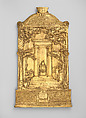
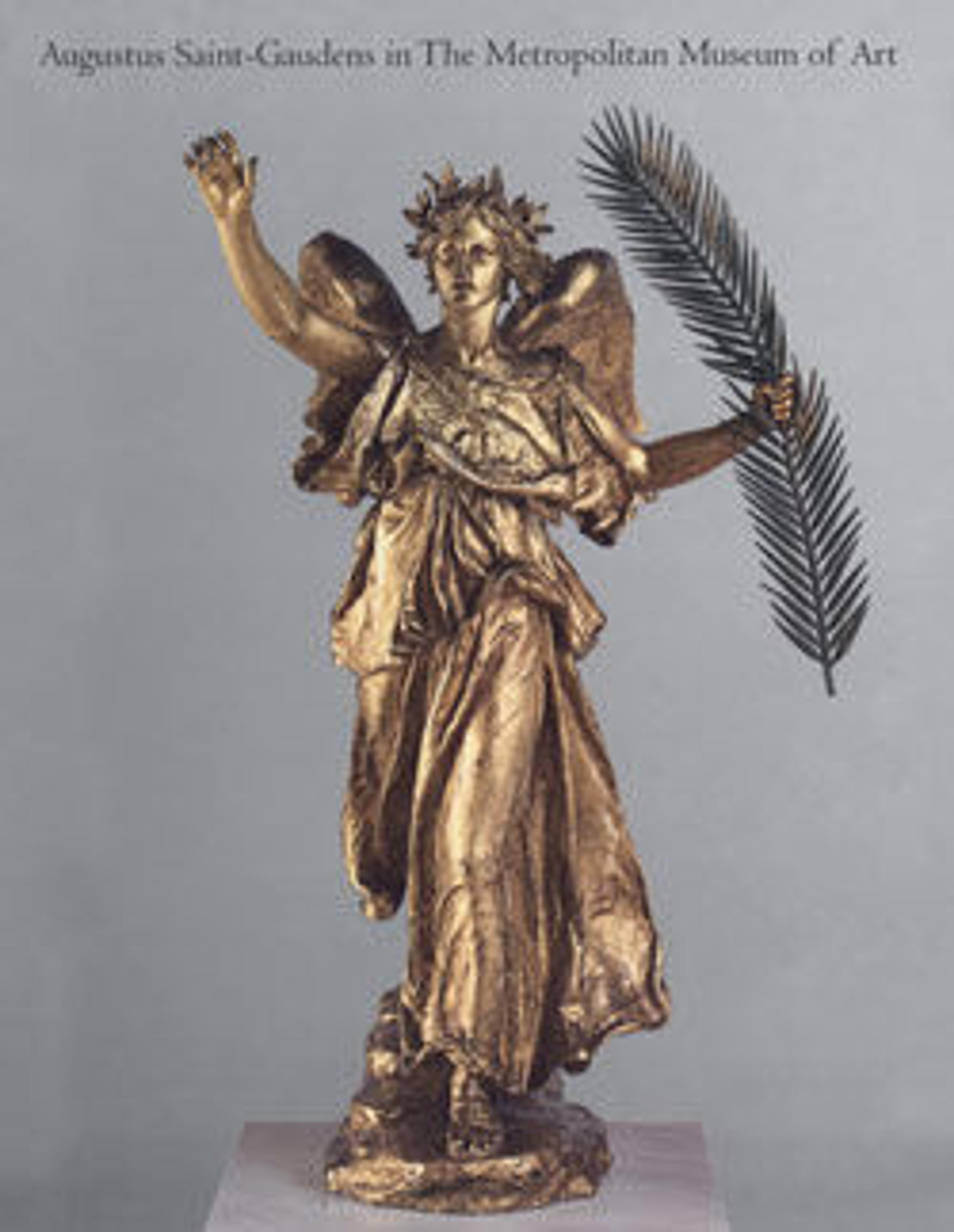
MORRISON HECKSCHER: The renowned sculptor Augustus Saint-Gaudens was a notorious perfectionist. And this bronze sculpture represents the epitome of an enchanting female figure that appeared over and over in his work. Here, the sculptor’s ideal beauty stands upon a semicircular plinth. Between her curving wings, she holds an acanthus-ornamented tablet that is inscribed “Amor Caritas,” or Love and Charity. Her stance is proud and her gaze is outward. Passionflowers form her crown and belt.
Saint-Gaudens first experimented with this classicizing figure in 1880, with three draped angels for a tomb. Like Amor Caritas, these early figures were full-sized, frontally posed, and wore free-flowing garments. Further exploration of this form can be seen in the figures for the Vanderbilt mantelpiece to your left. But Saint-Gaudens' concept of this angelic figure reached its ultimate state of refinement with Amor Caritas. The Metropolitan commissioned its bronze gilt cast from the artist’s widow in 1918.
More Artwork
Related Content

 Free to download
Research Resources
The Met provides unparalleled resources for research and welcomes an international community of students and scholars. The Met's Open Access API is where creators and researchers can connect to the The Met collection. Open Access data and public domain images are available for unrestricted commercial and noncommercial use without permission or fee.
To request images under copyright and other restrictions, please use this Image Request form.
Feedback
We continue to research and examine historical and cultural context for objects in The Met collection. If you have comments or questions about this object record, please contact us using the form below. The Museum looks forward to receiving your comments.
Content Notice
The Metropolitan Museum of Art presents over 5,000 years of art from around the world, and our online collection reflects ongoing work conducted over the course of our more than 150-year history. You may encounter objects or images that may be inappropriate for some viewers or information that may be outdated.