English
DonateMembershipTickets

Dalmatic back

Late 19th century
Not on view
Responding to the Gilded Age's enthusiasm for Renaissance style, this garment is a pastiche, created out of repurposed crimson velvet furniture upholstery– thinly piled, with previous wear marks and tack holes clearly visible– paired with what was then brand new, late-nineteenth century needlework. These needlework panels, that representing Saint Luke applied to one side of the garment and Saint Mark to the other, were very competently executed by talented professionals, their design and technique emulating sixteenth-century examples, but with thinner, shinier metal-threads and garishly bright sewing silks. Though shaped as an oversized tunic-like dalmatic worn by a Catholic priest, this "vestment" was most likely assembled by a dealer to appeal to the art market rather than for use within an ecclesiastic context.

Artwork Details

Object Information
  • Title: Dalmatic back
  • Date: Late 19th century
  • Culture: Spanish, possibly
  • Medium: Silk and metal thread
  • Dimensions: L. 49 x W. 39 inches (124.5 x 99.1 cm)
  • Classifications: Textiles-Velvets, Textiles-Ecclesiastical
  • Credit Line: The Friedsam Collection, Bequest of Michael Friedsam, 1931
  • Object Number: 32.100.403b
  • Curatorial Department: European Sculpture and Decorative Arts
More Artwork
Dalmatic front, Silk and metal thread, Spanish, possibly
Spanish, possibly
Late 19th century
God save us from such a bitter fate; a bandit threatening a woman and a child with a knife, page 41 from the "Black Border Album" (E), Goya (Francisco de Goya y Lucientes)  Spanish, Brush, carbon black gray ink and was, scraper
Goya (Francisco de Goya y Lucientes)
ca. 1816–20
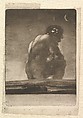
Seated Giant, Goya (Francisco de Goya y Lucientes)  Spanish, Burnished aquatint, scaper, roulette, lavis (along the top of the landscape and within the landscape)
Goya (Francisco de Goya y Lucientes)
by 1818 (possibly 1814–18)
Apparels for a Requiem Mass, Silk and metal thread, Spanish
Spanish
ca. 1700 (embroidery) patched and reassembled to current shape in the 19th century
Self-Portrait, Goya (Francisco de Goya y Lucientes)  Spanish, Brush and point of brush, carbon black ink
Goya (Francisco de Goya y Lucientes)
Sitter Goya (Francisco de Goya y Lucientes)
ca. 1796

Research Resources

The Met provides unparalleled resources for research and welcomes an international community of students and scholars. The Met's Open Access API is where creators and researchers can connect to the The Met collection. Open Access data and public domain images are available for unrestricted commercial and noncommercial use without permission or fee.

To request images under copyright and other restrictions, please use this Image Request form.

Feedback

We continue to research and examine historical and cultural context for objects in The Met collection. If you have comments or questions about this object record, please contact us using the form below. The Museum looks forward to receiving your comments.

Send feedback

Content Notice

The Metropolitan Museum of Art presents over 5,000 years of art from around the world, and our online collection reflects ongoing work conducted over the course of our more than 150-year history. You may encounter objects or images that may be inappropriate for some viewers or information that may be outdated.