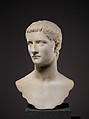
Marble bust of a man
still visible, especially at the back. The expanse of chest and the full, fleshy appearance of the face and neck are characteristics suggesting that the work was carved in the mid-first century A.D., either as a copy of a portrait created in the Republican period or as a new work cast in that realistic style.
Artwork Details
- Title: Marble bust of a man
- Period: Early Imperial, Julio-Claudian
- Date: mid-1st century CE
- Culture: Roman
- Medium: Marble
- Dimensions: H. 14 3/8 in. (36.5 cm)
- Classification: Stone Sculpture
- Credit Line: Rogers Fund, 1912
- Object Number: 12.233
- Curatorial Department: Greek and Roman Art
Audio
1270. Marble bust of a man
What furrowed brows, piercing eyes, and thin, tightly sealed lips! This portrait’s stern expression embodies the austere values of the Roman Republic, which lasted from the fifth century until the late first century B.C. Before then, patrician clans had long preserved images—essentially death masks—of their ancestors in their homes. Roman Republican portraiture developed out of that tradition. Instead of the youthful images favored by the Hellenistic kings, the Roman ruling class preferred sober, realistic portraits. Notice how the bone structure of this head is carefully modeled, and how the heavy jowls are deeply etched with wrinkles. If you walk around the bust, you’ll see rolls of flesh at the back of the neck. You’ll also get a better feel for the closely cropped, military hairstyle.
The Roman Republic called for old-fashioned morality, responsible public bearing, and courage on the battlefield. Prestige came as the result of age and experience. These values were expressed in realistic portraits of grim-faced, middle-aged men, like the one you see here. This particular portrait head was actually made in the later Julio-Claudian period, at a time when there was a revival of interest in Republican portraiture.
More Artwork
Related Content
Research Resources
The Met provides unparalleled resources for research and welcomes an international community of students and scholars. The Met's Open Access API is where creators and researchers can connect to the The Met collection. Open Access data and public domain images are available for unrestricted commercial and noncommercial use without permission or fee.
To request images under copyright and other restrictions, please use this Image Request form.
Feedback
We continue to research and examine historical and cultural context for objects in The Met collection. If you have comments or questions about this object record, please contact us using the form below. The Museum looks forward to receiving your comments.
Content Notice
The Metropolitan Museum of Art presents over 5,000 years of art from around the world, and our online collection reflects ongoing work conducted over the course of our more than 150-year history. You may encounter objects or images that may be inappropriate for some viewers or information that may be outdated.